Hawa Mahal Viewpoints: Best Cafes and Photo Spots in Jaipur
Hey there, fellow travelers and Jaipur lovers! Picture this: you're wandering through the Pink City's bustling streets, the sun dipping low, casting a golden glow on those iconic honeycomb windows of Hawa Mahal. That moment when you find the perfect spot to sip chai while snapping Insta-worthy pics? Pure magic. I've been exploring Jaipur's hidden gems for years, and today I'm spilling all the tea (literally) on the absolute best viewpoints, cafes, and photo spots around Hawa Mahal. Whether you're a first-timer chasing that postcard shot or a local looking to rediscover the vibe, this guide's got you covered. Let's dive in and make your Jaipur trip unforgettable!
If you have ever scrolled through Instagram and paused at a dreamy Hawa Mahal shot framed perfectly with a cup of coffee in the foreground, chances are it was taken from one of the rooftop cafes you’re about to read about. This guide isn’t just a basic list; it’s a full experience breakdown—where to sit, when to go, what to order, and how to click that one photo that makes everyone DM you, “Bhai, yeh shot kaha se liya?”
Why Hawa Mahal Steals the Show Every Time
Hawa Mahal, or the Palace of Winds, isn't just another pretty facade—it's Jaipur's beating heart. Built back in 1799 by Maharaja Sawai Pratap Singh, this five-story wonder was designed for royal ladies to peek at street festivals without being seen, while still feeling the breeze. Those 953 tiny windows? They're like a beehive of sandstone magic, letting air flow through while keeping the mystery alive. Fast forward to 2026, and it’s still the one place in Jaipur where people just stop, look up, and go silent for a second.
What makes it extra special now is how the entire area around it has evolved. Stylish cafes, homestays with rooftop views, budget snack spots, and chilled hangouts have turned this crossroads into a full-blown experience zone. You’re not just coming here to “see” a monument. You’re coming here to sit, sip, watch, listen, and soak in the layers of the city—traffic horns, temple bells, vendors shouting, and that soft, warm evening light on pink sandstone.
A Quick History Lesson (Without the Boredom)
Let’s keep this short and sweet. Legend says the maharaja wanted the royal ladies to enjoy street life and religious processions without stepping out in public. So Hawa Mahal was built with screened windows and jharokhas that let them watch the world discreetly. The entire structure tilts slightly inwards, almost like it’s leaning over the street to stay closer to the city’s energy. The pink sandstone, the intricate lattice work, and the tiered design make it look like a crown sitting atop Jaipur’s forehead.
Today, the inside of Hawa Mahal is a museum and viewpoint in itself, but ask any content creator—the most famous angle is from outside, across the street. The view from the front has that perfect symmetry your camera loves. Pro tip: early morning light gives a soft, pastel tone, while late afternoon brings out deep golden shades. Midday sun, though? It’s harsh and flat, so if you can, plan your shots around the softer hours.
Top Viewpoints for Jaw-Dropping Hawa Mahal Shots
Forget the basic street-level pics. The real magic happens when you elevate—literally. Jaipur's got these genius spots where you can frame Hawa Mahal like a pro. I’ve seen travelers walk past these narrow staircases and tiny signboards, not realizing they’re just a few steps away from one of the best views of their life. From free hacks to rooftop cafes with curated menus, here’s where you should be pointing your camera.
1. The Classic Street View (Free and Fabulous)
Right opposite Hawa Mahal on Badi Chaupar, this is ground zero for tourists. If you’re on a tight budget or just passing through quickly, this angle already gives you that iconic postcard look. Stand on the opposite pavement, wait for a gap in traffic, and you’ll get the full facade rising above the chaos—buses, autos, cycles, everything.
If you explore a bit, you’ll find stairs next to some shops that lead you a little higher for a more elevated street view. It’s not as high as a cafe rooftop, but it’s enough to cut some traffic clutter and make Hawa Mahal more dominant in your frame. Shopkeepers may try to drag you into their stores, but just smile, say “baad mein,” and keep climbing to where the angle feels right.
- Pros: Zero cost, easy access, and raw Jaipur energy in your frame.
- Cons: Heat, honking, and constant movement make photography a little chaotic.
- Photo tip: Use a wide-angle lens or phone wide mode to capture the entire facade plus some street foreground for storytelling.
2. Wind View Cafe Rooftop (The OG Spot)
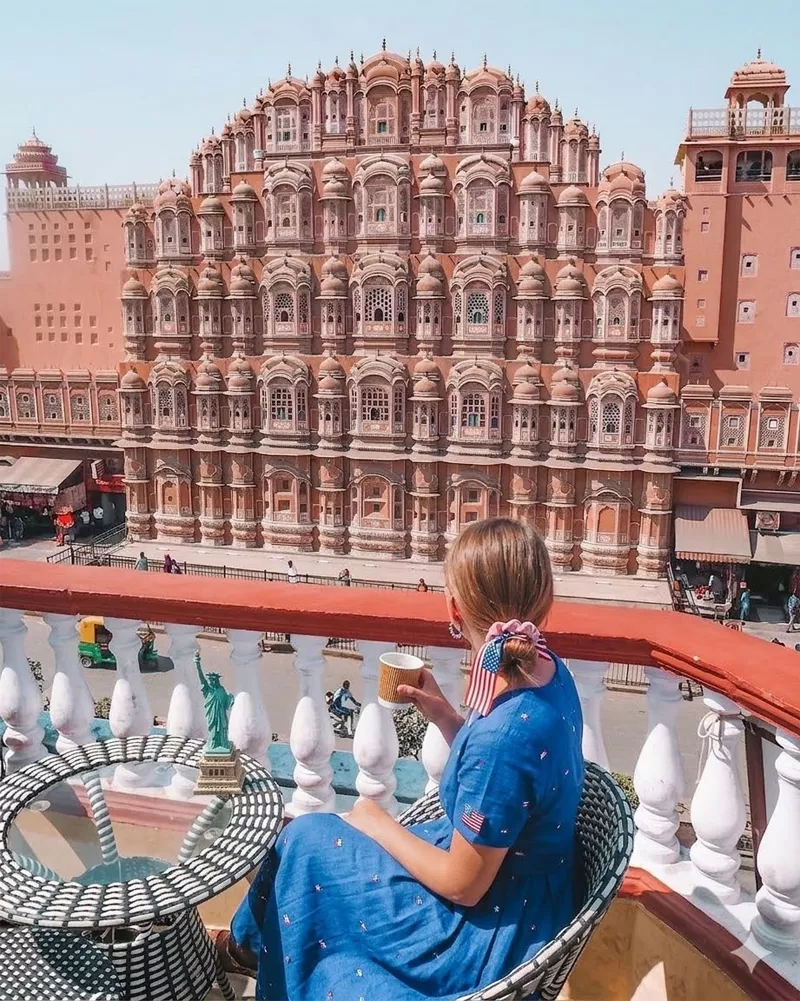
This one’s a classic for a reason. Wind View Cafe sits on the third floor opposite Hawa Mahal and gives you an almost cinema-screen style view of the palace. It’s like sitting in a front-row balcony watching the city perform. The rooftop is compact, with a few tables aligned right along the edge, so you feel like you’re hanging directly above the street while Hawa Mahal fills your background.
They’ve got indoor and outdoor seating, and timings generally run from around 8 AM to 10 PM, with evenings being peak time. Cost for two hovers around ₹700, depending on what you order, but honestly, people come here for the view more than the food. The terrace can get busy during sunset, so if you want the perfect corner, reach a bit early, order chai or cold coffee, and claim your spot calmly.
3. The Tattoo Cafe & Lounge (Insta Heaven)
Right next to Wind View, on another third-floor rooftop, is The Tattoo Cafe & Lounge. If Wind View is the old-school favorite, Tattoo Cafe is the cool cousin that turned up with lights, decor, and full-on Instagram energy. The minute you step up, you’ll notice bright colors, wall art, fairy lights, and carefully placed seating areas that clearly know what your camera wants.
Their menu is slightly more playful—think pastas, shakes, sandwiches, avocado toast, and coffee. Cost for two is roughly around ₹600, and the view you get for that is completely worth it. The real fun begins at golden hour when the sky behind Hawa Mahal starts shifting tones and your photos look straight-up cinematic. Add a coffee cup or a plate of fries in the foreground and you’ve got that “living my best life in Jaipur” vibe locked in.
4. JaiKutir Cafe / Rooftop View (The Hidden Gem of 2026)
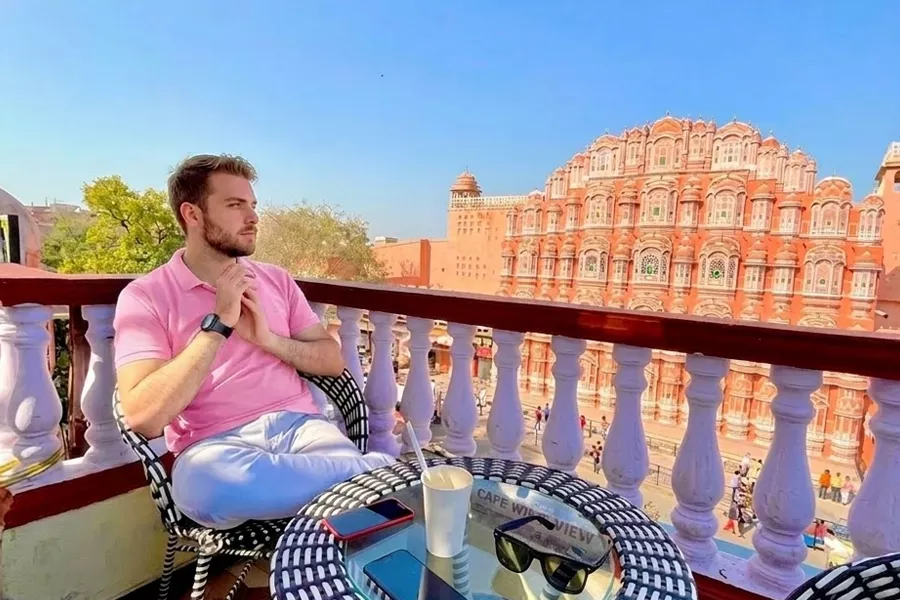
JaiKutir started off as a homestay with an insane view of Hawa Mahal, and now its rooftop hangs are getting a lot of love. You get that slightly more relaxed, residential feel here compared to the more commercial cafe strip. If you prefer a quieter vibe with a similar wow-factor view, this is where you slip away.
The rooftop seating is simple but thoughtfully done—enough to enjoy breakfast, coffee, or an evening snack while looking straight at Hawa Mahal’s facade. It’s especially popular among slow travelers who stay nearby and want a “wake up, grab chai, stare at Hawa Mahal” kind of routine. You’ll see more long-stay backpackers and homestay-style guests here than quick-hit tourists.
5. Free Staircase Hack Near Rang Bihari Temple
Want that elevated view without paying for a table? Here’s the hack people whisper about. On the opposite side of Hawa Mahal near Rang Bihari Temple, there are staircases that lead up to terraces used by shops and temple staff. Some of these have open access, and if you climb carefully and respectfully, you can find a quiet corner with a frame almost as good as the cafes.
This is a pure “local-style” move. No fancy setup, no menu, no soft background music—just you, the city sounds, and the palace in front of you. It’s great for photographers who want flexibility to move around and experiment with angles without worrying about waiters or people needing your table.
Best Cafes with Hawa Mahal Views: Food, Drinks, and Views Ranked
Jaipur’s cafe scene around Hawa Mahal has grown into its own mini culture. These aren’t just places to eat—they’re micro-theaters with Hawa Mahal as the stage. Some lean into cozy, some into aesthetics, some into budget, but all of them serve the same primary dish: that killer view. Here’s a quick comparison table to help you decide where to go first.
| Cafe Name | View Rating (Out of 10) | Food Highlights | Avg Cost for Two | Best Time to Visit | Open Hours |
|---|---|---|---|---|---|
| Wind View Cafe | 9.5 | Samosas, Chai, Maggie | ₹700 | Sunset | Approx. 8:00 AM - 10:00 PM |
| The Tattoo Cafe & Lounge | 9.8 | Avocado Toast, Shakes, Pasta | ₹600 | Golden Hour & Evenings | Often extended / late hours |
| JaiKutir Rooftop | 9.7 | Simple Breakfast, Tea, Coffee | ₹500-800 | Morning Brunch | Typical day hours (check locally) |
| Street Vendors (Bonus) | 8.0 | Pyaaz Kachori, Rabri | ₹200 | Anytime | All Day |
Use this table as your quick starter guide. If you’re chasing that clean, iconic shot with a proper cafe vibe, start with Tattoo Cafe or Wind View. If you want something a little more chilled and homely, drift towards JaiKutir. And if you’re the “just give me street food and good light” type, the vendors and free viewpoints will be your best friends.
Detailed Cafe Breakdowns
Wind View Cafe: Where It All Began
Wind View Cafe feels like the OG rooftop viewpoint that started the whole “cafe with a Hawa Mahal view” trend. The staircase up is narrow, but once you step out onto the balcony, you forget everything else. Hawa Mahal fills your entire field of vision, and the street below turns into a moving background track for your photos and memories.
The menu here keeps it simple—chai, cold coffee, light meals, and snacks. You’ll find classic Indian comfort food like pakoras, Maggi, sandwiches, and basic mains. It’s pure veg, casual, and not trying to be over-styled. What it offers instead is authenticity. The staff is usually chilled out, and there’s something very local about sitting there, feeling the wind (no pun intended), and watching life unfold below.
The Tattoo Cafe & Lounge: Vibes on Point
Tattoo Cafe feels like it was designed for people who live on Instagram and memories. The decor plays with colors, string lights, wall quotes, plants, and creative seating. Everything has a slight “shoot content here” label attached without actually saying it. It’s the kind of place where you casually sit for coffee and end up doing a full mini photoshoot.
The food is a mix of easy-going comfort and cafe favourites—think shakes thick enough to count as dessert, cheesy fries, pasta, sandwiches, and some healthy-ish options like avocado toast and salads. Music usually leans towards soft Bollywood, indie, or chill tracks that sit nicely in the background while you chat or take pictures. For couples, it’s an easy “date with a view” spot; for solo travelers, it’s a safe, friendly place to just chill with a book and your camera.
JaiKutir Rooftop: The New Kid Making Waves
JaiKutir is more than just a cafe—it’s part of a homestay setup, and that gives it a slightly different flavor. Instead of feeling like a busy commercial cafe where tables are constantly turning, the rooftop here feels like you’re at a friend’s house with a ridiculously good view. It’s quieter, slower, and perfect if you want to really sit down, breathe, and just stare at Hawa Mahal without the rush.
You’ll typically find simpler options here—tea, coffee, breakfast items, and light snacks. But the real value is the vibe: less crowd, more space to think, journal, edit photos, or just daydream. If you’re staying nearby, you can come back at different times of day and photograph Hawa Mahal under different skies—from soft morning haze to brilliant afternoon blue and then deep orange evening glow.
Ultimate Photo Spots: Tips from a Jaipur Addict
Photography at Hawa Mahal is one of those things that looks easy until you actually start shooting. The structure is tall, the street is busy, and the light changes faster than you expect. Over time, you start figuring out the sweet spots, angles, and hacks that make your shots look professional—even if you’re just using your phone.
- Golden Hour (4–6 PM): The sandstone glows warm and rich, and shadows soften. This is hands-down the best time if you want that dreamy, cinematic feel.
- Blue Hour (Right After Sunset): The sky goes deep blue while lights start to come on. Hawa Mahal looks like it’s floating, especially from a rooftop.
- Monsoon Mood: Cloudy skies and a slightly diffused light give your photos a soft, moody feel. Just protect your gear and yourself with a light raincoat.
- Street-Level Storytelling: Capture autos, vendors, and pedestrians in the foreground with Hawa Mahal in the back to tell a fuller story of life in Jaipur.
- Rooftop Symmetry: From cafes, center your frame so Hawa Mahal sits perfectly balanced and use tables, cups, or plates in the bottom of the frame as foreground interest.
Phone vs. Camera Gear Guide
You don’t need a fancy camera to do Hawa Mahal justice. Modern smartphones can absolutely crush it here. Use your phone’s wide-angle mode for full-building shots, and portrait mode for closer frames with blurred backgrounds. Turn on gridlines to keep your frame straight so the building doesn’t look like it’s falling backward.
If you’re carrying a camera, a 24mm or 28mm lens works beautifully from across the street, while slightly longer lenses can help compress the scene from rooftops. A lightweight tripod is useful if you want low-light shots during blue hour without raising your ISO too much. Editing apps like Lightroom, Snapseed, or VSCO can help fine-tune colors—warm up the tones slightly to make the sandstone pop and gently increase contrast for that crisp look.
Common Photo Fails and Easy Fixes
- Too much empty sky: Tilt the frame down so Hawa Mahal fills more of the shot and the street adds context.
- Flat, harsh lighting: If the sun’s too strong, switch to tighter compositions, focusing on details like windows and patterns.
- Crowded frames: Patience is key—wait for a small gap in traffic or shoot bursts and pick the cleanest frame later.
- Distracting elements: Use editing tools to crop, straighten, or clone out power lines or random objects.
Planning Your Hawa Mahal Day: Itinerary Ideas
You can either just “drop by” Hawa Mahal or weave it into a full Pink City day. Honestly, it deserves the second option. With the right flow, you can hit great viewpoints, eat well, shoot content, and still not feel rushed. Here are some simple itinerary ideas you can follow or tweak.
Half-Day Explorer (Morning Focus)
- 8:00 AM: Start with street-level shots while traffic is still manageable and the light is soft.
- 9:00 AM: Head up to Wind View Cafe for breakfast—chai, parathas, or Maggi with a view.
- 10:00 AM: Walk to City Palace and Jantar Mantar; both are close enough to do back-to-back.
- 12:00 PM: Slide into Tattoo Cafe for brunch snacks and one more round of Hawa Mahal photos from a slightly different angle.
- Afternoon: Wander around the nearby bazaars—Chandpole, Bapu Bazaar, and Johri Bazaar for shopping and street scenes.
Full-Day Romantic Getaway
If you’re on a couple’s trip, Hawa Mahal is one of those places that practically plans the romance for you. Start with a relaxed brunch with a view, take slow walks, and time your cafe visits around the light.
- Late Morning: Brunch at JaiKutir rooftop, slower pace, fewer people, softer light.
- Early Afternoon: Explore City Palace courtyards and click those royal, pastel-colored door shots.
- Late Afternoon: Head back towards Hawa Mahal, choose Tattoo Cafe or Wind View for golden hour and sunset shots.
- Evening: Take a short rickshaw ride around the old city lanes, then head to a nice dinner spot or, if you’re up for it, drive to a rooftop restaurant elsewhere in Jaipur.
Budget Backpacker Route
- Use the free staircase and street viewpoints for all your Hawa Mahal shots.
- Eat like a local: grab pyaaz kachori, mirchi vada, and chai from nearby stalls instead of full cafe meals.
- Walk everywhere; the old city is compact enough if you’re okay with some heat and dust.
- Return in the evening for one last round of photos when the lights come on.
Practical Tips: Getting There, Best Time, and More
Hawa Mahal sits right in the thick of the old city, so getting there is easy but can feel a little chaotic. If you’re using the metro, Badi Chopar station is your best bet—it drops you fairly close, and from there it’s a short walk. Autos and cabs will happily drop you right in front, but be mindful of peak traffic hours when everything moves slowly.
Weather-wise, October to March is your sweet spot. Mornings are crisp, afternoons are bearable, and evenings feel perfect for rooftop hangs. April to June can be brutal in terms of heat, so if you’re visiting then, protect yourself with hats, sunglasses, sunscreen, and lots of water. Monsoon brings a different charm—cloudy skies and occasional rain, which makes the pink city look fresh and clean.
2026 Updates and Insider Hacks
Recent years have seen better crowd management and some cleanup drives around the old city, which means Hawa Mahal looks fresher in photos and the surrounding lanes feel a little more organized. Several cafes have added AC sections or covered seating to help you survive the summer months more comfortably.
- Palace Entry: Tickets are generally around ₹50 for Indian visitors and a higher slab for foreigners. If you’re planning multiple monuments, check for combo tickets.
- Parking: If you’re driving, look for designated parking spots nearby instead of trying to park right in front. It’s easier and less stressful.
- Accessibility: Old-city staircases and rooftops can be steep and narrow. If anyone in your group has mobility issues, stick to street-level views and palace interiors where possible.
What to Eat Beyond the Cafes
Yes, the cafes are great, but skipping the street food here would be a crime. Around Hawa Mahal and the nearby lanes, you’ll find some legendary snacks. Think hot pyaaz kachori, flaky and stuffed, or mirchi vada that hits you with spice and flavour at the same time. Add a glass of lassi or a kulfi stick, and you’ve basically designed your own walking food tour.
Try to balance your day with both—sit-down cafe moments for comfort and photos, and street stops for taste and authenticity. Carry small change for street vendors, be mindful of hygiene, and if you’re unsure about your stomach’s tolerance, go softer on spicy items in the beginning.
Combining Hawa Mahal with Nearby Attractions
Hawa Mahal can be your anchor point around which you build an entire Jaipur day. Right next to it, you’ve got City Palace with its grand courtyards, museums, and beautiful architecture. A short walk brings you to Jantar Mantar with its fascinating astronomical instruments. If you start early, you can cover these spots comfortably before heading further out.
Later in the day, you can drive to Amber Fort, Nahargarh Fort, or Jal Mahal for sunset and night views. By the time you return to the city, Hawa Mahal will probably be lit up, and if you still have energy, one last late-evening coffee with a night view never hurts.
FAQ Section
What's the best cafe for Hawa Mahal views?
If you want that classic, clean, front-facing view with a buzzing rooftop vibe, The Tattoo Cafe & Lounge is a top pick. Wind View Cafe is fantastic too, especially if you like simple food and a slightly more old-school feel. Both give you unforgettable frames.
Are the viewpoints free?
Yes, some viewpoints are completely free, like the street-level angle and certain staircases or terraces around Rang Bihari Temple. Rooftop cafes usually follow a minimum order system, but that money goes into your drinks or food, not an extra entry fee.
When's the ideal time for photos?
Golden hour—roughly 4 PM to 6 PM depending on the season—is the dream window for photos. If you like night shots, stay till blue hour when the sky goes darker and lights turn on. Mornings are great for clean, less crowded frames too.
Is Hawa Mahal open 24/7?
The palace itself isn’t open 24/7; it usually runs during standard day hours for visitors. But the exterior facade, street view, and rooftop cafes are accessible much longer, so you can enjoy the view even when the museum area is closed.
How to avoid crowds at these spots?
Visit on weekdays, avoid peak holidays, and choose early morning or late afternoon slots. For cafes, arriving a bit before sunset helps you grab a good table before the rush kicks in.
Any dress code or restrictions?
There isn’t a strict dress code for the area, but if you plan to enter the palace or nearby temples, it’s better to dress modestly—shoulders and knees covered is a good guideline. For drones and professional shoots, always check local rules or get permission in advance.
Are any of these cafes pet-friendly?
Policies can change, but some rooftops are relatively relaxed about small, well-behaved pets, especially in outdoor seating. It’s always smart to call or message the cafe in advance if you plan to bring your furry buddy along.