Why Is Jaipur Known As The Pink City? History, Legends, Travel Guide & Local Secrets
Hey buddy! You know those late-night Instagram scrolls when you suddenly freeze—BAM—those insane pink palaces glowing like crazy under Rajasthan's golden sunsets? Yeah, that's Jaipur's Pink City magic slapping you awake. This nickname ain't some cheesy tourism sticker. Nah, it's royal-level drama, deep culture, and that wild mix of ancient vibes with total street madness that hooks you forever.
Picture it: skinny lanes jammed with dusty terracotta walls, aunties in neon saris yelling over bangle prices, elephants trumpeting nearby, and the air thick with hot jalebis frying in ghee that hits you right in the stomach. Pure Jaipur chaos! But the pink? That's the magic glue holding all this craziness together. Grab your chai (this guide's massive—settle in!), 'cause we're digging into the real paint job story, hitting every pink landmark, swapping market hacks and food tips, old vs new Jaipur breakdown, plus your perfect trip plan. First Rajasthan run? Or just obsessed with that viral Hawa Mahal pic? I've walked these streets at dawn, haggled till sunset, sipped rooftop chai watching the city light up—this ain't brochure BS, it's straight from a guy hooked on Jaipur's soul. Let's roll!

The Royal Paint Job: How Jaipur Turned Pink Overnight
Alright, let's get to the heart of it. Jaipur became the Pink City back in 1876, all thanks to a royal visit that demanded a grand welcome. The man behind it? Maharaja Sawai Ram Singh II, the ruler at the time. Britain’s Prince of Wales (who'd later become King Edward VII) was touring India, and the Maharaja wanted to roll out the red carpet – except, well, pink. In Indian culture, pink symbolizes hospitality, warmth, and friendship, so painting the entire walled city in this welcoming shade was like throwing the ultimate housewarming party for a VIP guest.
What started as a temporary makeover for the Prince's arrival turned permanent. The city dazzled with its fresh terracotta glow, complete with grand processions, decorated elephants, fireworks, and feasts. Journalists and artists raved about it, and just like that, "Pink City" stuck. But here's the kicker: the Maharaja didn't stop at one coat of paint. He made it law. Any building in the old city had to maintain that pinkish hue, enforced even today by municipal rules. Homeowners repainting? Pink only. New shops opening? Pink facade mandatory. It's this unwavering commitment that's kept Jaipur looking like a living postcard for nearly 150 years.
Fun fact: before 1876, the buildings were mostly whitewashed or yellowish. The pink came from local lime mixed with natural pigments – think earthy terracotta, not Barbie pink. Sunlight hits it just right at golden hour, turning walls into shades of salmon, rust, and soft rose. No wonder every influencer and their dog flocks here for photos.
The Prince of Wales Visit: Drama, Elephants, and Pink Glory
Let's paint the scene. It's 1876, colonial India is buzzing with royal fever. Prince Albert Edward arrives in a blaze of pomp – think steam trains, military bands, and thousands lining the streets. Jaipur's Maharaja spares no expense: the entire old city gets scrubbed and painted in record time. Workers climb scaffolds day and night, mixing lime wash with gerua (red earth pigment) to create that signature shade.
The Prince enters through massive gates decked with flowers and flags. Elephants in gold-embroidered howdahs lead the way, dancers perform, and the pink walls create a stunning backdrop. Eyewitness accounts describe it as "a city bathed in rosy hospitality." The Prince was impressed, gifting jewels and praising the gesture publicly. Mission accomplished – but the pink stayed, evolving from gimmick to identity.
Was Pink Always Jaipur's Color? Digging Deeper Myths
Some history buffs argue pink wasn't brand new. Rajput architecture often used red sandstone (like in nearby Amer Fort), and terracotta tones echoed forts in Delhi and Agra. Maybe the Maharaja just standardized what was already there, giving it a fresh coat for the VIP. Others whisper legends: pink honoring goddess Lakshmi (prosperity), or chosen because it stays cool in scorching Rajasthan summers (light colors reflect heat).
Whatever the truth, 1876 cemented it. Today, Jaipur's UNESCO-nominated old city proudly wears this color like a badge, drawing 10 million visitors yearly who come to see if the hype matches the hue.
Not Candy Pink: Decoding Jaipur's Actual Shade
Expectations vs. reality: tourists arrive dreaming of hot pink Disney castles, only to find a warmer, muted terracotta. It's more "sun-baked brick" than "bubblegum blush." Made from chuna (lime) and natural ochre, it weathers beautifully – fresh paint looks peachy, aged walls turn rusty rose. Dust from Rajasthan's arid air adds texture, making every facade unique.
This shade pairs perfectly with Jaipur's chaos: turquoise doors on pink walls, marigold garlands dangling from balconies, women in neon saris weaving through rickshaws. Photographers geek out because it shifts with light – dawn gives purple undertones, noon is fiery orange, dusk melts into lavender. Pro tip: visit during monsoon for wet walls that deepen to maroon, or winter fog for dreamy softness.
Outside the walled core, colors explode – blues, yellows, greens in modern neighborhoods. But step through those pink gates, and bam, uniform hospitality awaits.
Jaipur's Royal Roots: From Planned City to Pink Icon
Jaipur didn't just happen – it was engineered genius. Founded in 1727 by Maharaja Sawai Jai Singh II, who moved from clifftop Amer Fort to build a sprawling new capital. This astronomy-loving king consulted Vastu Shastra texts and a young Bengali architect named Vidyadhar Bhattacharya. Result? India's first planned city: grid streets, 90-degree angles, market zones, and seven protective gates.
Wide avenues allowed elephant processions, central squares hosted fairs, and the layout funneled breezes through "wind catcher" designs. Jai Singh built Jantar Mantar (world's largest stone observatory) here too. Fast-forward 150 years, and Ram Singh II's pink upgrade amplified this perfection, turning functional urban planning into visual poetry.
Post-independence, Jaipur grew wildly – now Rajasthan's capital with 4 million people, IT hubs, and malls. Yet the Pink City core remains frozen in time, a heritage bubble amid urban sprawl.
Must-See Pink Landmarks: Your Hit List
Jaipur's pink shines brightest at its monuments. Here's your ultimate guide to the stars, ranked by "wow" factor and photo ops.
Hawa Mahal: The Pink Palace of Winds
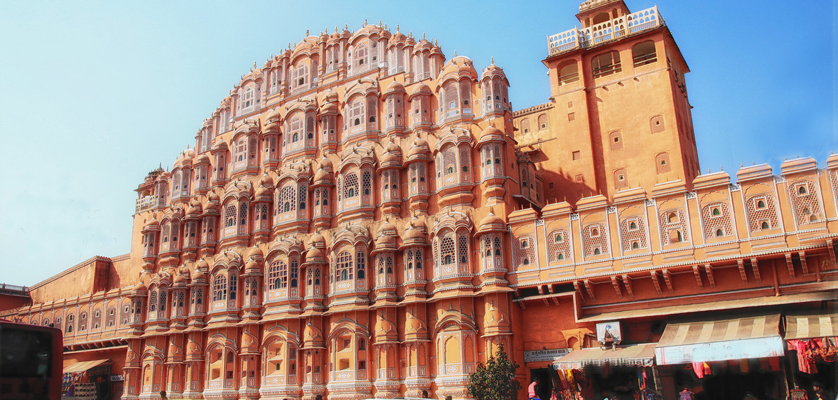
If Jaipur had a logo, it'd be Hawa Mahal's five-story honeycomb facade – 953 tiny windows (jharokhas) like a giant beehive. Built in 1799 by Maharaja Sawai Pratap Singh for royal ladies to peep at street life veiled from view. Pink sandstone latticework cools incoming breezes, hence "Palace of Winds."
Stand across the road at dawn for empty-street magic, or climb inside for maze-like corridors and City Palace views. Entry: ₹50 Indians, ₹200 foreigners. Best light: 7-9 AM or 4-6 PM. Skip the crowded noon selfie scrum.
City Palace: Living Royal Residence in Pink
Heart of the Pink City, still home to the Jaipur royals. Sprawling complex with Chandra Mahal (private palace), Mubarak Mahal museum (costumes, textiles), and Diwan-e-Aam (public hall). Pink walls frame peacock gates, silver urns (world's largest), and mirror-work courtyards.
Spend 2 hours wandering; audio guides add juice. Tickets: ₹200-700 combo. Don't miss Pritam Niwas Chowk's painted doors – Instagram gold against pink backdrops.
Old City Bazaars: Pink-Framed Shopping Heaven
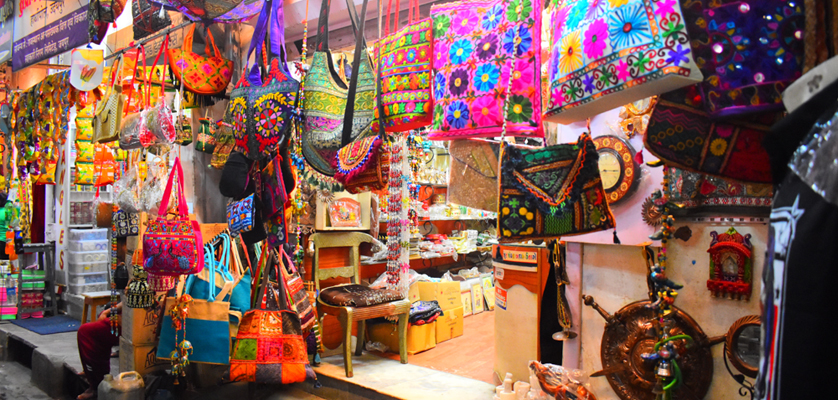
Johari Bazaar (jewels), Bapu Bazaar (textiles, juttis), Chandpole (leather, antiques). Pink shopfronts burst with Kundan necklaces, block-printed bedsheets, lac bangles in 50 shades. Bargain hard – start at half price, settle at 60%. Hidden gems: rooftop cafes overlooking pink alleys.
Gates and Havelis: Underrated Pink Jewels
Ajmeri Gate, Chandpole Gate – massive pink arches with white filigree. Lesser-known havelis (mansions) like Bagore-ki-Haveli host puppet shows. Walk Sanganeri Gate to Tripolia Bazaar for authentic, tourist-light vibes.
Bonus: Amber Fort (Pink's Dramatic Neighbor)
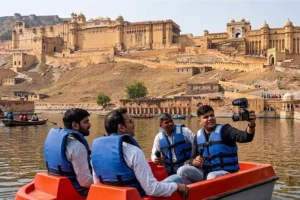
10km out, not strictly pink but red sandstone complements perfectly. Elephant rides up the hill (ethical ones only), Sheesh Mahal mirrors, light-and-sound shows. Pair with Pink City for full-day tour.
Pink City vs. Modern Jaipur: Side-by-Side Breakdown
Jaipur's split personality is its charm. Here's a quick comparison to help you navigate:
| Feature | Pink City (Old Walled Core) | Modern Jaipur (Outer Rings) |
|---|---|---|
| Color Palette | Uniform terracotta pink (law-enforced) | Every color imaginable – blues, whites, neons |
| Architecture | Rajput havelis, jharokhas, narrow lanes | High-rises, malls, gated societies |
| Vibe | Bustling heritage chaos, sensory overload | Suburban calm with urban buzz |
| Best For | Photos, shopping, history immersion | Relaxing stays, nightlife, malls |
| Traffic | Nightmare (rickshaws everywhere) | Manageable highways, parking easier |
| Food Scene | Street eats, thalis in alleys | Trendy cafes, fine dining |
| Stay Options | Boutique havelis (₹5k-15k/night) | 5-stars, resorts (₹3k-30k) |
Pro strategy: Stay modern (MI Road area), day-trip Pink City. Avoid old city hotels if you hate honking at 6 AM.
Pink's Cultural Soul: More Than Meets the Eye
In Rajasthan, colors whisper stories. Pink = atithi devo bhava (guest is god). Royals used it for welcome; today, it welcomes 15 million tourists yearly. Festivals amp it up: Teej's pink processions, Diwali's pink-lit rangolis, Gangaur's pink-veiled idols.
Locals repaint annually before monsoon – community event with music, snacks. It's pride: "Our city stays pink so the world remembers us." Artists draw from it too – pink motifs in Phad paintings, blue pottery glazes echoing walls.
Ultimate Experiences: Live the Pink City Like a Pro
Dawn Heritage Walk
5 AM start from Hawa Mahal. Empty pink streets, temple bells, chaiwallahs brewing. Join free walking tours (Intach or local guides, ₹500/person). Spot hidden stepwells, 200-year havelis.
Bazaar Safari
Johari for gems (test real Kundan by weight), Bapu for juttis (custom embroidery ₹800/pair), Sanganer for block prints. Rule: Smile, chat family history, bargain playfully. Lunch: kachori at Rawat Misthan (₹40/plate, since 1950).
Street Food Crawl
- Mirchi vada at Laxmi Misthan: spicy potato-stuffed chili fritters
- Pyaaz kachori at Niros: onion-filled flaky pastry
- Ghewar at Bhagat Singh: disc-shaped sweet soaked in syrup
- Lassi at Sahu: frothy yogurt drink in clay kulhads
- Rabri at Chhotaram: thickened milk dessert
Hygiene hack: crowded spots = fresh food. Eat where locals queue.
Rooftop Sunset Magic
Pearl Palace Rooftop (Hawa view, ₹200 thali), 1135 AD (City Palace vista). Watch pink turn purple as minarets silhouette. Monsoon bonus: peacocks calling.
Night Gate Drive
Uber through pink gates post-9 PM. Lights make walls glow amber. Stop at roadside jalebi carts – hot, crispy, sugar-drenched perfection.
Modern Jaipur: Pink's Cool Younger Sibling
Beyond walls: World Trade Park mall (ice rink!), Statue Circle cafes, Jal Mahal lake palace (photo only), Nahargarh Fort sunset (bikes ₹100). IT crowd fuels hip spots like Play Lounge, Anand Sagar Lake picnics. Jaipur Airport's new terminal handles 12M passengers/year.
Travel Bible: Plan Your Pink City Adventure
Best Time? Winter Wins
Oct-Mar: 10-25°C days, sweater nights. Avoid Apr-Jun (45°C inferno). Monsoon (Jul-Sep): romantic rains but slippery lanes. Peak Dec-Jan: book 3 months ahead.
Getting There & Around
- Fly: Jaipur Int'l (JAI), direct from Delhi/Mumbai (1-2hr, ₹3k-6k)
- Train: Shatabdi from Delhi (5hr, ₹1200 AC)
- Road: NH48 from Delhi (5hr, safe highways)
- Local: Uber/Ola (₹10/km), autos (fixed ₹100/ride), RTDC buses (₹30/sight)
Tickets & Tours
| Attraction | Indian Ticket | Foreign | Hours | Tip |
|---|---|---|---|---|
| Hawa Mahal | ₹50 | ₹200 | 9-4:30 | Outside free, best |
| City Palace | ₹200 | ₹700 | 9:30-5 | Audio guide ₹200 |
| Amber Fort | ₹100 | ₹600 | 8-5:30 | Jeep ₹1000 up |
| Jantar Mantar | ₹50 | ₹200 | 9-5 | UNESCO site |
Full-day tours: RTDC ₹1500/person (AC car+guide), private ₹3000. Rajasthan Tourism app for e-tickets.
Where to Crash
- Luxury: Rambagh Palace (Taj, ₹40k/night, royal suites)
- Mid: Pearl Palace Heritage (rooftop, ₹4k)
- Budget: Zostel Pink City (₹800/dorm, social vibe)
- Heritage: Narain Niwas (haveli, pool, ₹6k)
Packing Essentials
Cotton kurtas (breezy), scarves (temples/AC buses), comfy juttis (walkable), hat/sunglasses, power bank (dead zones in bazaars), cash (small shops no UPI).
Safety & Etiquette
Solo female? Stick to main drags daytime, Uber nights. Pink City crowded = safe. Ask before close-up photos. No shoes in temples. Tip guides ₹200/day. Veggie heaven – 99% options meat-free.
Why Pink Endures: Jaipur's Timeless Glow
That 1876 paint job? It's more than history – it's Jaipur's soul. A symbol of hospitality that lured empires, now lures influencers. As the city booms (metro rail opening 2026!), pink walls remind us: blend tradition with tomorrow. Next time you're lost in those lanes, chasing the perfect shot, remember – you're walking where princes paraded.
Jaipur doesn't just look pink. It feels pink – warm, welcoming, wonderfully chaotic. Go make memories amid the terracotta glow.
Frequently Asked Questions About the Pink City
Why exactly is Jaipur called the Pink City?
In 1876, Maharaja Ram Singh painted the old city pink to welcome Britain's Prince of Wales. Pink meant hospitality, the look wowed everyone, and a law locked it in forever.
Is every building in Jaipur pink?
Nope, just the walled old city core. Newer areas are colorful chaos, but pink gates mark where the magic starts.
What's the real color – bright pink or something else?
Terracotta/salmon, not neon. Lime + earth pigments weather to gorgeous rusty tones. Best at golden hour.
Top 5 must-dos in Pink City?
1. Hawa Mahal dawn photo. 2. Bazaar bargaining. 3. Rooftop sunset. 4. Kachori breakfast. 5. Gate night drive.
Best time and how many days?
Oct-Mar, 2-3 days core +1 Amber. Budget ₹5k/day all-in.
Safe for solo women? Budget tips?
Very, daytime anywhere. Eat street (₹100/meal), stay hostel (₹1k), auto hop (₹50/ride). Total 3-day: ₹10k comfortable.
Pink enforced by law still?
Yes! Jaipur Municipal Corp fines non-pink facades in heritage zone. Annual repaints mandatory.
Day trip from Delhi possible?
Tight but doable: early Shatabdi train, RTDC tour, evening return. Better overnight.