Ranthambore Trip Plan for 2 Days: Complete Itinerary, Budget & Safari Guide (2026)
Planning a quick 2-day Ranthambore National Park trip and want everything sorted in one place – itinerary, safari booking, budget, best time, zones, and real-world tips? You’re in the right place. This guide is written exactly like you’d explain things to a friend who’s visiting Rajasthan and doesn’t want to waste time or money.
In this long-form Ranthambore travel guide, we’ll break down how to plan a perfect 2-day or 2 nights stay, which safaris to pick, how to choose your zone, realistic trip costs in 2026, how to reach from Jaipur or Delhi, and what to pack so you don’t freeze in the morning or melt in the afternoon. You’ll also get a simple day-wise plan you can literally copy and follow.

Whether you’re a family travelling with kids, a couple on a short getaway, or a hardcore wildlife lover chasing that perfect tiger shot, this 2-day Ranthambore itinerary will help you structure everything clearly and avoid common mistakes that first-time visitors often make.
Why Ranthambore Is Perfect for a 2-Day Trip
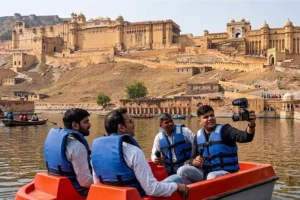
Ranthambore National Park, located in the Sawai Madhopur district of Rajasthan, is one of India’s most famous tiger reserves and forms part of India’s Project Tiger network. The park combines wild jungle, rocky hills, serene lakes, and the ruins of Ranthambore Fort, which sits dramatically above the forest. This mix gives Ranthambore a very cinematic vibe – it feels raw and wild, but also royal and historic at the same time.
The best part is that it fits beautifully into a short 2-day plan. You can leave Jaipur or Delhi, reach Ranthambore, do two or even three safaris, visit the fort, relax at your lodge, and be back without taking a long break from work. Because it’s well connected and the park is managed with fixed safari timings and online booking systems, you can plan most of it in advance and just show up with your bookings done.
Quick facts about Ranthambore
- Location: Near Sawai Madhopur town in south-eastern Rajasthan
- Best known for: Bengal tigers, scenic lakes, fort ruins, rocky hills and dry deciduous forest
- Safari type: Open gypsy (6-seater) and canter (20-seater) vehicles
- Number of safari zones: 10 zones (1–10), including classic core zones and newer buffer zones
- Main season: 1 October to 30 June, with monsoon restrictions in July–September
Ranthambore works really well for a short trip because you don’t need a week here. Two full days with 2–3 safaris is usually enough to get a feel of the park and a decent chance of spotting a tiger and other wildlife.
Best Time to Visit Ranthambore for a 2-Day Trip
The classic safari season in Ranthambore runs from October to June, and different months offer different weather, crowd levels, and wildlife moods. Your ideal time really depends on whether you care more about comfort, tiger sightings, or lush green scenery.
Ranthambore in winter (November to February)
If you’re planning with family or you hate extreme heat, winter is your safest bet. Days are generally pleasant and sunny, while early morning and late evening can be quite cold – you’ll be happy to have a jacket, cap, and maybe even gloves in an open jeep. This is peak tourist season, especially around Christmas, New Year, and school holidays, so safari permits and hotels get booked out early.
- Weather: Mild days with clear skies; chilly mornings and evenings where layers are essential.
- Wildlife: Good activity through the day, with comfortable conditions for long safaris.
- Vibe: Busy, lively, and social – expect more vehicles and higher prices.
If this is your first ever wildlife trip and you want maximum comfort plus a decent chance of sightings, a 2-day trip in November–February works beautifully.
Ranthambore in summer (March to June)
Summer is hot, no sugar-coating that. By April and especially May–June, afternoons can get intense in open vehicles. The upside is that this same heat can make wildlife sightings, especially tigers, more predictable because water sources shrink and animals tend to stay closer to lakes and waterholes.
- Weather: Sharp rise in temperatures, with very hot afternoons and warm evenings.
- Wildlife: Higher chances of spotting tigers and other large animals near remaining water sources.
- Vibe: Slightly fewer casual tourists, more serious wildlife and photography crowd.
If your priority is tiger photography and you’re okay dealing with heat using caps, sunscreen, and plenty of water, late March to early June is an excellent window for a focused 2-day safari trip.
Ranthambore in monsoon (July to September)
During the monsoon, certain zones in Ranthambore are usually closed to allow the forest to rest and because tracks can get damaged after heavy rain. Some buffer zones may remain open depending on road conditions and forest department decisions, but access is limited compared to the main season.
- Weather: Humid, with alternating spells of rain and fresh, cool breaks.
- Wildlife: Lush green foliage, which looks stunning but can reduce visibility.
- Vibe: Off-season feel – fewer tourists, quieter lodges, slower pace.
Monsoon is not ideal if your main aim is tiger spotting on a short 2-day plan, but if you’re a repeat visitor or want to experience a monsoon forest with fewer people, it has its own charm.
Best overall months for a 2-day trip
If you want a simple, safe recommendation for a 2-day Ranthambore itinerary, aim for November to April. In this window, core zones are usually open, temperatures are manageable, and safari timings are comfortable enough for back-to-back drives.
Within that range, November–February is best for comfort, while March–April gives you a nice middle ground of warmer weather and improving sighting chances near water. For a short trip where you don’t want to suffer from extreme heat or extreme crowds, those shoulder months are a sweet spot.
Understanding Safari Timings & Park Zones in 2026
Ranthambore safaris run in two fixed slots each day – one in the morning and one in the afternoon. Exact timings shift slightly across the season as day length changes, but the pattern stays consistent, and the park always opens after sunrise and closes around sunset.
Ranthambore safari timings (approximate)
Timings can be updated by the forest department, but they generally follow this pattern across the main season:
| Month Range | Morning Safari | Evening Safari |
|---|---|---|
| 1 Oct – 31 Oct | 06:30 am – 10:00 am | 02:30 pm – 06:00 pm |
| 1 Nov – 31 Jan | 07:00 am – 10:30 am | 02:00 pm – 05:30 pm |
| 1 Feb – 31 Mar | 06:30 am – 10:00 am | 02:30 pm – 06:00 pm |
| 1 Apr – 15 May | 06:00 am – 09:30 am | 03:00 pm – 06:30 pm |
| 16 May – 30 Jun | 06:00 am – 09:30 am | 03:30 pm – 07:00 pm |
You’re usually out for around three to three-and-a-half hours per safari, including driving to and from your assigned zone. If you’re only in Ranthambore for two days, you typically get time for two or three safaris depending on your arrival and departure.
Safari zones in Ranthambore (1–10)
Ranthambore is divided into 10 safari zones. Earlier, only zones 1–5 existed, but as tourist numbers increased, more zones were added so that wildlife pressure and visitor load could spread out across the larger tiger reserve. Zones 1–5 are often called “core” zones, while zones 6–10 are sometimes referred to as “buffer” zones, though all are part of the overall ecosystem.
- Zones 1–5: Classic Ranthambore landscapes – lakes, ancient structures, dense forest, and some of the park’s most famous tigers.
- Zone 3: Particularly popular among photographers thanks to the combination of lakes and fort views.
- Zones 6–10: Slightly different terrain, often more open and less crowded, with increasing tiger and leopard activity in recent years.
You cannot choose your zone freely at the park gate; it is allotted when you book your safari permit, or your travel agent or lodge selects it for you during booking. For a short 2-day trip, try to have at least one safari in a core zone if possible, but don’t treat buffer zones as “wasted” – they are also seeing strong sightings now.
Types of Safaris: Gypsy vs Canter
You have two main options for vehicle type in Ranthambore: gypsy (open jeep) and canter (open mini-bus). Both go into the same zones, follow the same forest rules, and use the same time slots, but the experience inside feels different.
Gypsy safari (6-seater jeep)
- Capacity: Up to 6 tourists, plus driver and guide.
- Experience: More intimate and flexible, easier to turn and reposition for photos.
- Price: Usually more expensive per person than canter, especially if you book the full vehicle.
- Best for: Couples, families, small groups, and photographers.
Canter safari (20-seater open vehicle)
- Capacity: Around 20 tourists, plus driver and guide.
- Experience: Bigger, more social vehicle; a bit noisier, but still open and good for general wildlife viewing.
- Price: Cheaper per person compared to gypsy, so it’s better for tight budgets.
- Best for: Budget travellers, large groups, solo travellers booking at the last minute.
| Feature | Gypsy Safari | Canter Safari |
|---|---|---|
| Vehicle Type | Open 6-seater jeep | Open 20-seater bus |
| Comfort & Space | More personal space, flexible for small groups | Shared with many others, less control over seating |
| Typical Price (Indian) | Often around ₹1,900–2,100 per person per safari | Often around ₹1,300–1,600 per person per safari |
| Best For | Photographers, couples, families | Budget travellers and larger mixed groups |
| Booking Demand | High demand, sells out quickly | Relatively better availability |
For a short 2-day trip, if your budget allows, at least one gypsy safari is highly recommended because of the more focused, private feel. If you’re controlling costs, a mix of one gypsy and one canter works as a balanced combo.
How to Book Safaris for Your 2-Day Trip
Ranthambore safaris are controlled by the forest department and are booked through authorised online portals, licensed agents, or hotels that handle the process for you. Because permits are limited and demand is high in peak season, advance booking is essential if you don’t want to return disappointed.
Step-by-step safari booking process
- Decide your exact travel dates and whether you want 2 or 3 safaris during your trip.
- Choose your preferred vehicle (gypsy or canter) for each safari.
- Select your time slots (morning/evening) based on your arrival and departure timings.
- Book through a reliable website, tour operator, or your chosen hotel’s travel desk.
- Provide full names, age, gender, and ID details for every guest – these are mandatory.
- Complete payment online to confirm your permits.
- Carry the same ID proof used at the time of booking when you go for the safari.
For a 2-day plan, the ideal combination is one evening safari on Day 1 and one morning safari on Day 2. If you’re really into wildlife or have the budget, add a third safari – either another morning or another evening, depending on your schedule.
Realistic 2-Day Ranthambore Itinerary (From Jaipur or Delhi)
Now let’s turn all this information into something you can actually follow. Here’s a practical 2-day Ranthambore itinerary you can copy and tweak slightly depending on whether you’re coming from Jaipur, Delhi, or another city.
Option 1: 2 Days / 1 Night (Tighter but budget-friendly)
Day 1: Travel + Evening Safari
Morning: Start early from Jaipur or catch a morning train from Delhi to Sawai Madhopur. From Jaipur, it usually takes about 3.5–4 hours by road. Aim to reach your hotel around lunchtime.
- Check in, freshen up, and have an early lunch or snacks.
- Keep camera batteries charged and your safari clothes ready.
- Carry a cap, sunglasses, sunscreen, and a light jacket if it’s winter.
Afternoon: Your evening safari will typically start between 2:00 and 3:30 pm depending on the month. The jeep or canter either picks you up from your hotel or you report to a common starting point.
- Reach the pickup point well before reporting time to avoid last-minute rush.
- Keep your permit or booking confirmation handy on your phone or printed.
- Once inside the park, treat this first safari as your introduction to Ranthambore.
Evening/Night: You’ll get back to your hotel around sunset. Freshen up, have dinner, review your photos, chat with the naturalist if your lodge has one, and sleep early – the next morning will start very soon.
Day 2: Morning Safari + Fort Visit + Departure
Very early morning: Wake up 60–90 minutes before safari time. In winter, layer up with a warm jacket, scarf, and maybe gloves. In summer, light breathable clothing plus a cap is enough.
- Have tea or coffee and light snacks at the hotel before leaving.
- Carry your camera, binoculars, and water bottle.
- Head to the meeting point for your morning safari.
Morning safari: Morning drives often feel more peaceful and are great for spotting birds, deer, and sometimes predators on the move. Stay alert and trust your guide’s judgement about where to wait and when to move.
Late morning: Return to the hotel for a relaxed breakfast or early lunch. If your return journey is in the evening, you can squeeze in a quick visit to Ranthambore Fort in the late morning or early afternoon, then collect your luggage and head back to Jaipur or Delhi.
Option 2: 2 Days / 2 Nights (Relaxed and recommended)
If you can afford an extra night, this is the version that feels less rushed and more enjoyable. You get time to breathe between safaris, enjoy your lodge, and explore the fort properly.
Day 1: Arrival + Evening Safari
Follow the same flow as Option 1 – arrive by early afternoon, check in, freshen up, and go for your first evening safari. Come back, have dinner, and stay overnight.
Day 2: Morning Safari + Fort + Evening Safari
Morning: Head out for a morning safari, ideally in a different zone from your evening drive if possible. This immediately increases your chances of diverse sightings and landscapes.
- Return for a big breakfast at your lodge.
- Late morning or midday, visit Ranthambore Fort for a few hours.
- Head back for lunch and rest before your second evening safari.
Evening: Go for your second evening safari (third overall). By now you’ll be familiar with how the guides track tigers using alarm calls and pugmarks, so the whole experience feels more intuitive and exciting.
Day 3: Easy Morning + Departure
On your last morning, you can finally relax a bit instead of rushing into another jeep. Sleep in, enjoy a slow breakfast, maybe do a short village walk or birding session near your lodge, then check out and head back to your next destination.
Expected Trip Budget for 2 Days in Ranthambore (2026)
Costs in Ranthambore depend on your hotel category, number of safaris, and whether you choose gypsy or canter. Let’s build a rough, practical estimate so you know what to expect.
Safari charges (approximate, 2026)
Exact prices vary slightly by operator and inclusion (pickup, taxes, etc.), but a practical range for Indian nationals in 2026 looks roughly like this:
- Shared gypsy: Around ₹1,900–2,100 per person per safari.
- Shared canter: Around ₹1,300–1,600 per person per safari.
- Foreign nationals pay higher rates, often roughly double or more per seat depending on category and booking source.
If you’re travelling as a couple and doing two gypsy safaris, you’re looking at roughly ₹8,000–9,000 in safari costs alone. Mixing one gypsy and one canter can bring this down a bit without losing the experience.
Accommodation cost (per night)
- Budget lodges/guesthouses: Around ₹1,000–2,500 per night for a double room.
- Mid-range resorts: Around ₹3,000–6,000 per night.
- Premium/luxury lodges: From about ₹8,000 up to ₹15,000+ per night.
For most travellers planning a 2-day trip, a mid-range property hits the sweet spot between comfort and cost, especially if you’re prioritising safaris in your budget.
Transport costs
- Jaipur – Ranthambore by private cab: Roughly a few thousand rupees each way, depending on vehicle type and season.
- Jaipur – Sawai Madhopur by train: More budget friendly; you then take an auto or taxi to your hotel.
- Delhi – Sawai Madhopur by train: A popular option, with several trains running this route.
If you travel as a group and split cab expenses, the per-person cost drops quite a bit, especially from Jaipur.
Sample budget for 2 days / 1 night (for 2 Indian travellers)
- Accommodation (mid-range, 1 night): ₹3,500–5,000
- Safaris (2 gypsy safaris): About ₹8,000–8,400 total for two
- Transport (Jaipur to Ranthambore and back by cab): Around ₹4,000–5,000 total
- Food and extras: ₹1,500–3,000 depending on eating style
So a realistic ballpark comes to roughly ₹17,000–21,000 for two people for a compact 2-day break, with plenty of flexibility to go lower or higher based on hotel and safari choices.
What Wildlife Can You See in Ranthambore?
Ranthambore is famous for tigers, but there’s a lot more to see. Part of the magic of a safari is that every drive is different – one might be slow and quiet, another might be packed with action.
Big mammals
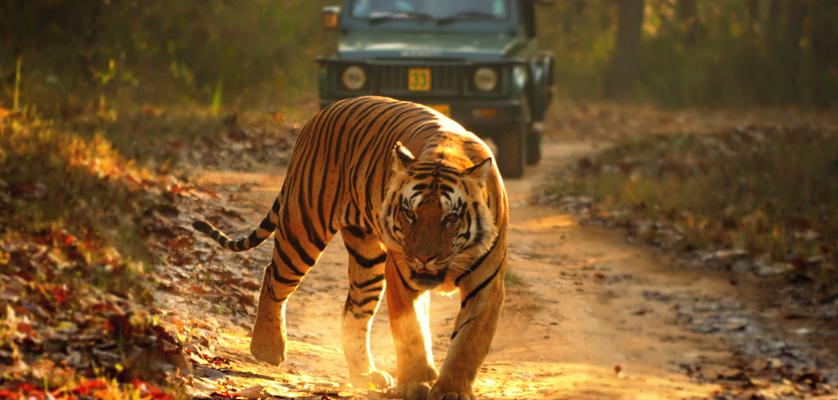
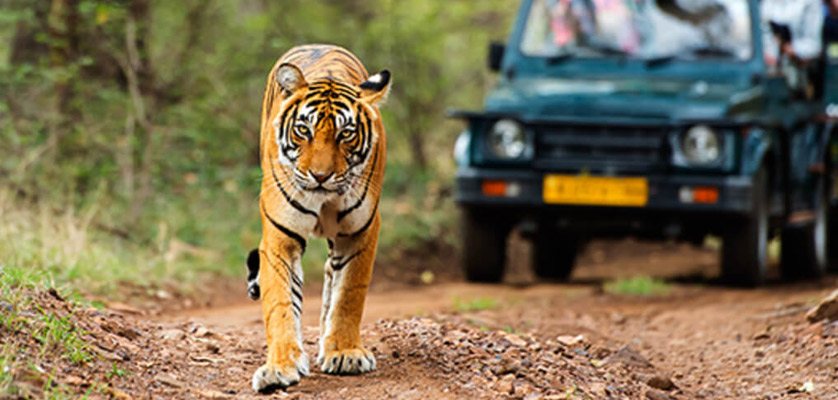
- Bengal tigers: The main draw, often seen patrolling tracks, resting in the shade, or cooling off in water.
- Leopards: Shy and elusive, usually hugging rocky or hilly areas and seen less often than tigers.
- Sloth bears: Shaggy, termite-eating bears; sightings have become more common and are always a treat.
Deer, antelope and other mammals
- Sambar deer: Large, dark deer often seen near water; their alarm calls are taken very seriously by guides.
- Spotted deer (chital): Beautiful, spotted deer appearing in groups in grasslands and under tree shade.
- Nilgai and chinkara: Antelope species that prefer more open spaces.
- Others: Jackals, wild boar, langur monkeys, and occasionally striped hyenas or foxes.
Birds
Ranthambore is also a great destination for bird lovers. Expect to see kingfishers near water, eagles circling above, owls in tree hollows, herons and storks at lakes, plus countless smaller species you might not recognise but will enjoy watching through binoculars.
The key is to go in with realistic expectations. No one can guarantee a tiger, and sometimes your best safari memory might be a sambar staring at you through morning mist or a flock of birds taking off from the lake at sunrise.
What to Pack for a Short Ranthambore Trip
Packing smart for Ranthambore is all about balancing comfort, practicality, and the fact that you’ll be in open vehicles exposed to sun, dust, and wind.
Clothing
- Neutral-coloured T-shirts or shirts – greens, browns, beiges are ideal.
- Light jacket or fleece for mornings and evenings, especially in winter.
- Warmer layers like a thicker jacket, scarf, and cap if visiting from November to January.
- Comfortable trousers or track pants; avoid very tight or very loose outfits.
- Closed shoes or sneakers that you can climb in and out of vehicles with easily.
Sun and dust protection
- Cap or hat with a brim.
- Sunglasses with good UV protection.
- Sunscreen with a decent SPF rating.
- A scarf or bandana to cover your mouth and nose on dusty tracks, if needed.
Gear and personal items
- Camera with zoom lens, or at least a phone with a good camera.
- Binoculars to enjoy distant animals and birds.
- Power bank and necessary charging cables.
- Reusable water bottle to stay hydrated.
- Basic medicines, motion sickness tablets if you need them, and insect repellent.
Since this is only a 2-day trip, resist the urge to overpack. A small backpack dedicated to safari essentials will make your life much easier.
Tips to Make Your 2 Days Truly Count
When your time inside the park is limited, a few smart choices can really upgrade the overall experience.
Book early in the main season
For visits between November and April, don’t wait to book safaris. As soon as your travel dates are confirmed, reserve your permits and at least lock down a decent hotel. Last-minute plans often end with only canter options or less flexible timings.
Prioritise morning safaris if you can only do one
If you have to choose between morning and evening because of travel time, go for a morning safari. You get cool temperatures, softer light, better bird activity, and a more gentle, calm feel to the forest.
Stay patient and trust your guide
Guides and drivers spend most of their season in the park and know individual tigers, routes, and patterns well. If they suddenly switch off the engine and wait in silence, it’s usually based on alarm calls, fresh pugmarks, or experience – not laziness. Patience often turns into great sightings.
Respect wildlife and park rules
- Do not shout, play music, or throw anything from the vehicle.
- Never ask the driver to go off the designated track.
- Stay seated at all times when the vehicle is moving or near animals.
- Follow the instructions given by the guide in case an animal comes very close.
A calm and respectful vehicle is more likely to be tolerated by animals, which can mean longer and more natural interactions when you do spot something interesting.
Sample 2-Day Plans for Different Travellers
To make your planning even easier, here are three quick-cut versions of a 2-day Ranthambore itinerary based on your travel style.
1. For tiger-focused photographers
- Best months: March–April, or even May if heat is manageable for you.
- Stay: 2 nights in a mid-range or wildlife-focused lodge.
- Safaris: 3 gypsy safaris (1 evening, 2 mornings) in different zones if possible.
Day 1: Arrive by noon, evening gypsy safari, overnight. Day 2: Morning gypsy safari, mid-day rest, evening gypsy safari, overnight. Day 3: Sleep in a bit, breakfast, check out and depart.
2. For families and casual travellers
- Best months: November–February for comfortable weather.
- Stay: 1–2 nights in a family-friendly resort with a bit of space for kids to run around.
- Safaris: 2 safaris (1 evening, 1 morning) – gypsy preferred, canter if budget is tight.
Day 1: Drive in from Jaipur, check in, relax, evening safari. Day 2: Morning safari, breakfast, fort visit (if kids have energy), then depart.
3. For first-time wildlife visitors wanting balance
- Best months: November–April, avoiding the super-peak holiday weeks if possible.
- Stay: 2 nights in a comfortable mid-range property.
- Safaris: 2–3 total, perhaps a mix of gypsy and canter to manage costs.
Day 1: Arrive by early afternoon, evening safari, overnight. Day 2: Morning safari, fort visit, relax at lodge in the evening. Day 3: Easy morning with short walks or birding around the property, then head back.
How to Reach Ranthambore for a 2-Day Trip
Because Ranthambore is attached to Sawai Madhopur, a fairly important rail junction, and is also well connected by road, it is easy to fit into a Rajasthan or Golden Triangle plan.
By train
- Sawai Madhopur Railway Station is around 10–30 minutes from most Ranthambore hotels.
- Trains from Jaipur, Delhi, Agra, and other cities make it convenient to arrive and depart around safari timings.
- Upon arrival, you can take an auto rickshaw or taxi to your lodge.
By road
- From Jaipur: Approximately 3.5–4 hours drive.
- From Delhi: Around 7–8 hours by road, so many travellers prefer the train option instead.
- From Agra: Well connected through a mix of road and rail routes.
For a tight 2-day schedule, taking a morning train into Sawai Madhopur and an evening or night train out can work perfectly around your safari times.
Food and Stay Experience in Ranthambore
Ranthambore’s hospitality scene has grown a lot thanks to its popularity. You can choose exactly the kind of vibe you want – from simple and homely to super luxurious and curated.
Types of stays
- Budget guesthouses: Basic, clean rooms with simple amenities, often family-run.
- Mid-range resorts: Comfortable rooms, lawns, small pools, and an in-house restaurant.
- Luxury lodges: Designer tents or villas, fine dining, spas, pools, and guided activities.
Food
- Most hotels serve a combination of Indian and simple continental dishes.
- Breakfast can be early or delayed to match safari timings – often both options exist.
- Some places provide packed breakfast or snacks for morning safari guests.
- Vegetarian, vegan, or Jain options are usually available if you inform them in advance.
For a 2-day trip, it’s often convenient to choose a property with an in-house restaurant so you don’t waste time hunting for food outside between safaris.
Season-wise Pros and Cons for a 2-Day Ranthambore Trip
To make your date selection easier, here’s a simple season-wise comparison of what your 2-day trip might feel like.
| Season | Pros | Cons |
|---|---|---|
| Winter (Nov–Feb) | Very pleasant days, comfortable safaris, great for families and first-timers | High demand, higher prices, very cold morning drives |
| Summer (Mar–Jun) | Better chances of seeing tigers near water, lighter crowds | Intense heat, especially in jeeps; can be tiring |
| Monsoon (Jul–Sep) | Green landscapes, moody skies, quieter lodges | Limited zones open, lower predictability for tiger sightings |
FAQ: 2-Day Ranthambore Trip
Is 2 days enough for Ranthambore?
Yes, 2 days can be enough to experience Ranthambore if you plan at least two safaris and keep your schedule tight but realistic. You may not explore every corner of the park, but you get a strong first impression and a decent chance of spotting major wildlife.
How many safaris should I book?
Ideally, plan for at least two safaris – one evening and one morning. If you are staying two nights, go for three safaris to improve your chances of good sightings and to experience different zones.
Which is better for a short trip – gypsy or canter?
Gypsy safaris usually feel more personalised and flexible and are the preferred choice if your budget allows. Canter is perfectly fine for general wildlife viewing and works well for larger groups or tighter budgets. Many travellers mix one gypsy and one canter during a 2-day visit.
What is the best time of day to go on safari?
Morning safaris are often considered the best for light, temperature, and activity, especially in winter and summer. Evening safaris, however, have their own charm with golden light, cooler late afternoon air, and a relaxed end-of-day feel. Doing one of each is ideal if possible.
Can I do Ranthambore as a weekend trip from Jaipur?
Yes, Ranthambore is a popular weekend getaway from Jaipur. If you leave early on Day 1 and return on Day 2 evening or Day 3 morning, you can comfortably fit 2–3 safaris, a fort visit, and some downtime at your lodge.
Do I really need to book safaris in advance?
Absolutely. In the main season, safari permits for preferred dates, zones, and vehicles can sell out well in advance. For a short 2-day trip, you don’t have the flexibility to “wait and see”, so securing permits ahead of time is crucial.
Is Ranthambore good for kids and older travellers?
Yes, Ranthambore is generally safe and suitable for kids and older travellers as long as you pick the right season and follow basic comfort rules. Winter months are usually more comfortable for them, while peak summer’s heat can be tough, especially for very young children or seniors.
Can I combine Ranthambore with other Rajasthan destinations?
Definitely. Many travellers combine Ranthambore with Jaipur, Agra, and Delhi as part of a longer Golden Triangle itinerary. You can also add Udaipur, Jodhpur, or other Rajasthan cities before or after your 2-day Ranthambore break.
What if I don’t see a tiger?
There is always a chance you won’t see a tiger – that’s part of the reality of wild safaris. Instead of focusing only on that, pay attention to the overall atmosphere: the forest, the birds, the deer, and the thrill of tracking. If you do spot a tiger, it feels like a genuine bonus.
Is monsoon a bad time for a 2-day trip?
Monsoon isn’t “bad” as such, but it is different. If your main focus is tiger sightings, monsoon is not ideal because fewer zones are open and foliage is very dense. If you simply want peace, greenery, and lower prices, a short monsoon visit can still be enjoyable.