Backpacking In India
If backpacking across India has been on your mind for a while but you still don’t really know where to start, relax—you’re in the right place. In this guide I’ll skip the fluff and walk you through the things that actually matter on the road: daily budgets, safety basics, flexible routes, simple cultural etiquette and a few practical tips that make planning your first (or next) India trip feel a lot less intimidating. India is still one of the most affordable and intense countries you can travel through, and with a bit of smart planning it quickly goes from a scary idea to a trip you’ll keep talking about for years.

Unlike many destinations where backpacking is slowly getting expensive and standardized, India is still wild, chaotic, ridiculously diverse, and surprisingly budget-friendly. You can go from desert forts to snowy mountains to tropical beaches, all while spending less per day than a single night out back home. The key is knowing where to go, how much to spend, what to avoid, and how to stay safe without being paranoid.
This guide is written for solo backpackers, couples, and small groups who want to experience India in a raw but comfortable way. You’ll learn how much you realistically need per day in 2026, which regions are best for first-timers, how to use trains and buses like a pro, and what cultural habits actually matter on the ground. We’ll also touch on how India is improving its trekking and tourism infrastructure, especially in the mountains and heritage circuits.
Why India Is Still A Backpacker’s Dream In 2026
India has always had a reputation as a classic backpacker destination, but in 2026 it’s honestly better equipped than ever. You’ve got a mix of cheap hostels, digital payments almost everywhere, better transport connectivity, and a huge ecosystem built around budget travellers. On top of that, the government has been actively investing in tourism trails, trekking routes, and cultural circuits, which means you can reach more places with less friction than a decade ago.
What makes India different is how deep the experience can go for a relatively small budget. You’re not just taking photos of monuments; you’re drinking chai with shopkeepers, bargaining in local markets, chatting with fellow travellers in rooftop hostels, and hopping on sleeper trains to wake up in a completely different world. When people say “India changes you,” that usually happens not in five-star hotels, but while backpacking on simple, real, everyday experiences.
A Quick Reality Check: India Isn’t “Easy” Travel
Let’s be honest: India can be overwhelming, especially if it’s your first time in Asia. The crowds, noise, heat, honking, and sheer sensory overload can hit hard in the first few days. That’s actually part of the charm, but it also means India rewards slow travel and flexibility more than a hyper-structured, minute-by-minute schedule.
Things will go wrong sometimes: delayed trains, overbooked buses, closed attractions, or sudden festivals that throw your plans out of the window. If you can lean into the chaos and treat those moments as part of the journey, you’ll have a much better time. India is not designed for perfection; it’s designed for stories.
Backpacking Budget For India In 2026
Let’s talk money, because that’s what usually makes or breaks a backpacking plan. India is still one of the few major destinations where you can comfortably travel on a low daily budget without feeling like you’re punishing yourself. Many long-term travellers manage around a few hundred US dollars per month by staying in budget hostels, eating local food, and using trains and buses instead of flights.
If you want a bit more comfort—private rooms sometimes, AC trains, occasional internal flights, paid activities, and guided tours—you’re still often under what you’d pay in a single week in Western Europe or North America. On top of that, upcoming tourism and trekking projects funded in recent budgets aim to make nature and heritage experiences more accessible, especially in mountain regions and cultural hubs.
Average Daily Cost Breakdown (Backpacker Style)
Below is a rough idea of costs per day if you’re travelling on a budget but still want to enjoy your trip. These numbers will vary by city, season, and comfort level, but they’re realistic starting points for 2026.
| Category | Shoestring Budget | Comfortable Backpacker | Notes |
|---|---|---|---|
| Accommodation | 6–10 USD (dorm) | 12–25 USD (private) | Cheaper in smaller towns; higher in metros and beach hotspots. |
| Food & Drinks | 5–8 USD | 10–18 USD | Street food and local eateries keep costs low; cafés and bars add up. |
| Transport (local & intercity) | 3–8 USD | 8–20 USD | Non-AC buses and sleeper-class trains are cheapest; AC coaches cost more. |
| Activities & Entry Fees | 2–6 USD | 6–20 USD | Fort entries, museum tickets, yoga classes, rafting, etc. |
| Miscellaneous | 2–4 USD | 4–8 USD | SIM card, laundry, small shopping, tips, emergencies. |
| Approx. Total / Day | 18–36 USD | 40–70 USD | Very low budgets are possible but get uncomfortable fast. |
Many travellers report being able to live comfortably on a low daily spend if they don’t move too fast, stay in dorms, and skip expensive tours. If you want more comfort, internal flights, and a lot of paid experiences, think in a mid-range daily budget. Either way, India gives you more days on the road per dollar than almost any other big travel destination right now.
Where Your Money Stretches The Most
Your budget in India will feel very different depending on where you go. Big metros like Mumbai and Bangalore hit your wallet harder on accommodation, while smaller cities and hill towns are usually cheaper overall. Regions like Rajasthan, Himachal Pradesh, Uttarakhand, and much of North India offer plenty of cheap stays and easy public transport, which is why they’re so popular with backpackers.
South India can be slightly pricier on accommodation in coastal and touristy areas, but you save a lot on food and local transport. Meanwhile, offbeat Northeast states remain quite affordable but may lack hostel infrastructure, which nudges you toward homestays or guesthouses. The sweet spot for first-time backpackers tends to be North India plus Goa and a slice of Kerala, where costs, infrastructure, and experiences balance nicely.
Is Backpacking In India Safe In 2026?
“Is India safe?” is probably the biggest question that pops up once you start seriously planning your trip. The honest answer: India can be safe for backpackers if you travel smart, stay aware, and respect local norms. Millions of domestic and foreign travellers explore India every year without serious issues, and there’s been growing focus on improving tourist infrastructure, safety, and regulated services.
That said, India is not a bubble. Petty theft, scams, harassment, and uncomfortable situations exist, just like in many other large, densely populated countries. Solo travellers—especially women—need to be more careful about where they go at night, who they trust, and how they move around in unfamiliar places. The goal is not to scare you, but to make sure you arrive informed rather than naïve.
General Safety Tips For All Backpackers
Most safety advice for India is basic common sense, but it matters more here because of the crowds and chaos. If you stick to a few grounded principles, you significantly reduce the odds of any serious problems.
- Keep valuables secured in hostel lockers, money belts, or anti-theft daypacks; don’t flash cash or expensive gadgets in crowded spaces.
- Use registered taxis or reliable cab apps from stations and airports instead of random touts.
- Avoid deserted alleys or beaches late at night, even in tourist hubs.
- Trust your instincts; if a situation feels off, excuse yourself and leave.
- Be cautious with alcohol or substances so you stay aware and in control of decisions.
- Save emergency contacts and local helpline numbers on your phone, and share basic itinerary details with someone you trust.
India’s major tourist circuits—Rajasthan, Goa, Kerala, Himachal Pradesh, Uttarakhand, and popular city routes—are generally considered more comfortable for travellers, with lots of backpacker-oriented services. Bigger cities are a mixed bag: they can feel intense but also offer better hospitals, transport, and online services if you need help fast.
Is India Safe For Solo Female Backpackers?
This is the tougher, more nuanced question. Many solo women travel across India every year and have positive experiences, especially when they choose safer regions, research their routes, and stay in well-reviewed accommodations. At the same time, public surveys and advisories keep highlighting that public spaces and late-night public transport can feel unsafe, particularly in some big cities.
Women often report issues like staring, unwanted attention, or verbal harassment—but also describe countless moments of kindness and support from locals. The reality sits in between: India is neither a complete no-go zone nor a carefree backpacker playground; it’s a place where planning, boundaries, and cultural awareness matter a lot.
Practical Safety Tips For Solo Women
If you’re a solo female traveller, you don’t have to avoid India, but you do need a strategy. Think of it as picking your battles: choose your destinations, transport timings, and social interactions with intention.
- Choose guesthouses and hostels with high safety ratings and lots of recent reviews from women.
- Book trains in higher classes (like 2AC or 3AC) and avoid very late-night arrivals when possible.
- Dress modestly in most regions—cover shoulders and knees—to blend in and reduce attention.
- Use ride-hailing apps when moving around cities at night instead of local buses.
- Say no firmly if you feel uncomfortable; you don’t owe anyone politeness at the cost of your comfort.
- Consider joining group tours for treks, safaris, and offbeat places where infrastructure is basic.
Many women find Rajasthan, Kerala, Goa, some Himalayan towns, and spiritual hubs like Rishikesh and Dharamshala more relaxed and community-oriented. If this is your first solo trip to India, starting in these areas can give you confidence and a good read on how you personally handle the environment.
Best Time To Backpack In India
Because India is huge and geographically diverse, there’s no single “perfect” time that works for every region. Instead, you’ll want to match your route to the seasons. In general, the cool and dry months from late October to March are the most comfortable for most of the country, while the monsoon months transform some regions into lush, green wonderlands but can disrupt transport.
North India—Delhi, Rajasthan, Agra, Amritsar—is most pleasant from November to February, when temperatures drop and sightseeing becomes much easier. South India and coastal areas like Goa and Kerala are also fantastic in winter, though they stay warmer and more humid overall. Hill stations and Himalayan towns work best from late March to June or again in October, avoiding deep winter snow and peak monsoon landslides.
Seasonal Snapshot
Here’s a quick overview of how seasons typically play out for backpackers in India:
- October–March: Prime time for most routes in North and West India; cooler, drier weather and lots of festivals.
- April–June: Good for higher-altitude regions like Himachal and Uttarakhand, but lowland cities can be brutally hot.
- July–September: Monsoon brings heavy rain, especially to Western Ghats, Goa, and Kerala; landscapes are gorgeous but travel can be slower.
If you’re planning treks, keep an eye on current advisories and updates for mountain routes. Recent initiatives have aimed to develop ecologically sustainable mountain trails in key Himalayan and hill regions, which should gradually improve route marking, safety information, and basic amenities on popular treks.
Classic Backpacking Routes In India
India is too big to “do” in one trip, especially if you only have a few weeks. The smartest way to plan is to pick a theme or region and go deep rather than rushing. Below are some tried-and-tested backpacking routes that give you a solid taste of India without burning you out.
Two-Week North India Route (Delhi – Agra – Rajasthan)
If it’s your first time in India, a classic North India loop is a powerful introduction. Think old Delhi chaos, sunrise at the Taj Mahal, camel-dotted desert landscapes, and pastel palaces in cities that look like movie sets.
- Delhi: 2–3 days – Explore Old Delhi, Humayun’s Tomb, India Gate, and trendy neighbourhoods.
- Agra: 1–2 days – Visit the Taj Mahal, Agra Fort, and nearby viewpoints.
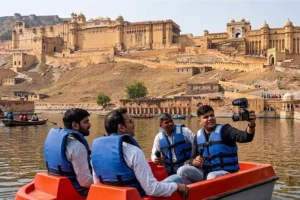
- Jaipur (Rajasthan): 3 days – Amber Fort, city palace, Nahargarh sunset, bazaars, and rooftop cafés.
- Pushkar or Jodhpur: 2–3 days – Sacred lakes or blue houses, depending on your vibe.
- Udaipur: 2–3 days – Lakes, palaces, and a slower, romantic energy, even for solo travellers.
This route keeps transport distances manageable and offers heaps of budget stays, homestays, and hostels, making it perfect for first-timers. Trains and buses connect most sections, and you can always mix in a short domestic flight if you’re short on time and long on cash.
Spiritual & Himalayan Route (Delhi – Amritsar – Dharamshala – Rishikesh)
If you’re more into spiritual vibes, yoga, and mountains than forts and deserts, you can trace a different arc through North India. This one leans toward reflective spaces, temples, and gentle outdoor adventures rather than heavy sightseeing schedules.
- Delhi: 1–2 days to get your bearings.
- Amritsar: 2 days – Home of the Golden Temple, one of Sikhism’s most important holy sites.
- Dharamshala / McLeod Ganj: 3–4 days – Tibetan culture, monasteries, short hikes, and a strong community of travellers.
- Rishikesh: 3–5 days – Yoga capital and adventure base for rafting, bungee jumping, and river-side sunsets.
This route is ideal for solo backpackers who want a mix of calm spaces and communal environments. Rishikesh and Dharamshala in particular are full of cafés, hostels, yoga centres, and travellers staying for weeks or even months at a stretch.
South India Tropical Route (Mumbai – Goa – Hampi – Mysore – Kerala)
South India feels like a completely different country compared to the north: slower, greener, more coconut trees, more rice and seafood, and a distinct cultural rhythm. A popular backpacker route here starts in Mumbai, moves along the coast, and drifts into hill stations and backwaters.
- Mumbai: 2–3 days – Intense, energetic, and more expensive on stays, but famous for food, markets, and seafronts.
- Goa: 4–6 days – Beach life, shacks, parties, yoga retreats, or just lazy scooter days depending on which part you choose.
- Hampi: 3–4 days – Ancient ruins, boulders, and dreamy landscapes; a favourite among backpackers who like cycling and exploring.
- Mysore: 2–3 days – Palaces, heritage markets, and strong yoga culture.
- Kerala (Kochi – Munnar – Thekkady – Alleppey): 5–7 days – Tea plantations, wildlife, and backwater experiences.
This route can comfortably fill a month if you slow it down, or you can compress pieces into a two-week southern highlights trip. Buses, trains, and occasional night journeys connect most stops, and there’s a decent network of homestays and guesthouses even where hostels are limited.
One-Month Backpacking Ideas
A month in India is where things get really fun. You stop racing and start living. Rather than counting sights, you fall into rhythms: your chai stall, your favourite thali joint, your go-to sunset spot. With around four weeks, you can either go deeper into one half of the country or combine north and south into one longer arc.
North India Deep Dive (4 Weeks)
If you decide to focus on the north for a full month, you can blend culture, mountains, and spiritual stops without constantly packing and unpacking.
- Delhi & Agra: 4–5 days combined.
- Rajasthan (Jaipur, Jodhpur, Udaipur, Pushkar): 10–14 days, depending on pace.
- Amritsar: 2–3 days.
- Dharamshala / McLeod Ganj: 4–5 days.
- Rishikesh: 4–7 days, especially if you want yoga classes or multi-day activities.
You can tweak the order to suit train and bus schedules, but this structure gives you a blend of iconic landmarks, smaller towns, and hill retreats to decompress between intense city days. Public transport connections between these hubs are well established and backpacker-friendly.
North + South Combo (4 Weeks)
If you feel like doing “the greatest hits” of both halves of India in one go, you can. Just keep in mind that you’ll probably want at least one domestic flight in the mix to save time and energy.
- Week 1: Delhi, Agra, Jaipur (classic Golden Triangle).
- Week 2: Jodhpur and Udaipur, plus Pushkar if it fits.
- Week 3: Fly or train down to Goa, spend 4–5 days between different beaches.
- Week 4: Hampi and a Kerala segment (for example Kochi and Alleppey).
This month-long route doesn’t “cover” India—nothing really does—but it hits an impressive spread of architecture, food, landscapes, and subcultures. With careful planning of overnight trains and at least one flight, it stays surprisingly manageable on a backpacker budget.
Accommodation: Hostels, Homestays & Budget Hotels
Accommodation in India has changed a lot in the last decade. Where older travellers might remember only basic guesthouses and occasional ashrams, you’ll now find modern hostels with Wi-Fi, common areas, coworking corners, and organised activities in almost every major backpacker hub. Alongside that, homestays and small family-run hotels give you a more local experience, often for a similar price.
Dorm beds in many cities still start around the equivalent of a few US dollars per night, while simple private rooms can be found in a modest range if you shop around and avoid peak dates. In big metros or very popular beach zones, prices can climb higher, especially in season. The trick is to mix and match: stay cheaper in cities where you’re out all day anyway, and invest in nicer places when you plan to slow down and rest.
Types Of Places You’ll Stay
You’ll encounter a few common styles of stays across India:
- Backpacker hostels: Shared dorms, social common areas, tours, pub crawls, yoga classes; great for meeting people.
- Guesthouses: Simple, family-run, sometimes bare-bones, but often friendly and flexible.
- Homestays: You live with or next to a local family, often including meals and cultural experiences.
- Budget hotels: Basic private rooms, sometimes with AC and private bathrooms; quality varies a lot.
In more offbeat destinations where there’s no hostel scene yet, homestays fill the gap and can be incredibly rewarding. You might pay a bit more than a dorm, but you gain local knowledge, home-cooked meals, and a more grounded perspective on the place you’re visiting.
Food: Eating Well On A Budget
If you love food, India will spoil you. You can eat like royalty on a backpacker budget, and you’ll rarely have the same thing two days in a row unless you want to. A lot of travellers say the biggest surprise isn’t how spicy Indian food is, but how varied it is—every region feels like a different culinary universe.
Local vegetarian thalis, South Indian dosas, North Indian curries, coastal seafood, street chaats, fluffy parathas, and endless chai breaks: it’s all part of the daily routine. If you stick to local eateries, thali joints, and street food stalls with good turnover, you can comfortably stay within a modest daily cost for food and non-alcoholic drinks, even if you eat out every single meal.
Street Food & Hygiene
Yes, “Delhi belly” is a thing, but it’s not inevitable. A lot of food issues come from big, sudden changes in diet, dehydration, and eating at the wrong places. Basic precautions go a long way:
- Pick busy stalls where food is cooked fresh in front of you.
- Avoid raw salads and cut fruit from street vendors unless you see them peeled in front of you.
- Stick to bottled or filtered water, or carry a reliable purifier bottle.
- Ease your stomach into local spices instead of going maximalist on day one.
India is a vegetarian paradise, which helps a lot if you’re nervous about meat hygiene. That said, coastal regions like Goa and Kerala are famous for seafood, and many northern states serve rich non-vegetarian dishes everyone raves about. Just combine curiosity with common sense and you’ll eat very well.
Transport: Trains, Buses, Flights & Tuk-Tuks
Getting around India is half the adventure. The country runs on a web of trains, buses, shared jeeps, metro systems, and tiny auto-rickshaws, and as a backpacker you’ll almost certainly try most of them. Choosing the right mode at the right time is the difference between a fun story and a miserable day.
Trains are the backbone of long-distance travel, buses fill in the gaps where rail lines don’t reach, and domestic flights are useful for crossing big distances when you’re short on time. Inside cities, you’ll mix metro lines (where available) with cabs and auto-rickshaws, depending on your budget and patience level.
Indian Railways For Backpackers
Indian Railways is one of the largest rail networks on earth, and backpackers rely heavily on it for both budget and experience. Overnight sleeper trains save you the cost of a night’s accommodation and drop you in new cities at dawn.
- Popular classes: Sleeper Class is cheap and basic; 3AC and 2AC offer bunks with AC, bedding, and slightly more security and comfort.
- Advance booking: Long-distance routes and popular dates can sell out, so book important legs early.
- Night arrivals: When possible, aim to arrive in new cities in the morning or early evening, especially if you’re alone.
Many backpackers fall in love with train journeys: chai sellers walking through the coaches, families sharing snacks, station chai breaks, and long conversations with fellow travellers. It’s often the most memorable part of the trip.
Buses, Shared Cars & Local Transport
Buses are your backup (and sometimes main) plan where trains are less convenient. Private and state buses run between cities day and night, with varying levels of comfort. Sleeper buses with reclining seats or bunks handle routes like Goa–Hampi, Karnataka–Kerala stretches, and lots of hill station connections.
Inside cities and towns, you’ll use a mix of:
- Auto-rickshaws (tuk-tuks) for short hops.
- Ride-hailing apps in major cities for safer, trackable rides.
- Metro systems in cities like Delhi, Mumbai, and a few others where available.
Always agree on a price or insist on the meter before starting a tuk-tuk ride if there’s no app and no fixed rate. For long journeys in remote or hilly regions, shared jeeps and taxis are common and can be split with other travellers.
Cultural Etiquette & Respectful Travel
India has countless languages, religions, and customs, but a few simple habits will help you move through the country respectfully almost anywhere. Even when people are used to tourists, they still appreciate travellers who show curiosity and sensitivity rather than treating the place like a theme park.
You don’t have to understand every ritual or norm, but you should show basic respect in religious spaces, family homes, and smaller towns. Doing this not only makes interactions smoother; it often leads to invitations, conversations, and experiences you’d never get otherwise.
Dress Code & Behaviour
Clothing expectations vary a lot between Goa’s beaches and a small temple town in North India, but covering shoulders and knees is a safe rule in most places. Loose trousers, long skirts, t-shirts, and kurtas are breathable and respectful.
- Avoid public displays of affection, especially in conservative areas.
- Remove shoes before entering homes, temples, and some shops.
- Ask before photographing people, especially in rural or religious contexts.
- Use your right hand when giving or receiving items; it’s a small but appreciated gesture.
Big cities are more relaxed with fashion and behaviour, but even there, reading the room is smart. Watching how locals around your age are dressed is a quick way to calibrate your own outfits.
How India Is Changing For Backpackers
India is not the same place backpackers explored 20 years ago. There’s more infrastructure, more digital connectivity, and more intention behind how tourism is being developed. Recent national budgets have included plans to upgrade trekking trails, create eco-friendly hiking routes in mountain ranges, and invest in experiential cultural destinations across the country.
This matters for you because it slowly translates into better signage, safer trails, trained guides, and clearer information in historically confusing spaces. Heritage sites, Buddhist circuits, coastal eco-trails, and mountain routes are all seeing renewed focus, which should expand the areas you can explore comfortably over the next few years.
Growing Focus On Guides & Experiences
New schemes are in the works to upskill guides at major tourist sites, especially in iconic destinations and heritage areas. The idea is to offer more standardised, high-quality guiding and storytelling, which is great if you enjoy context and depth beyond basic photo stops.
As a backpacker, this means you’ll have more opportunities to join well-organised walks, treks, and cultural tours without having to rely solely on word-of-mouth or random touts. It doesn’t replace the joy of getting lost in a bazaar, but it gives you better options when you want structured experiences.
Backpacking With A Local Agency Or Driver
Even if you’re an independent traveller, there are parts of India where having local support—like a trusted driver or trip planner—can make life a lot easier. Distances can be long, timetables confusing, and online information incomplete, especially for offbeat routes or complex multi-stop itineraries.
Some agencies specialise in budget-friendly, flexible itineraries that still keep the backpacker spirit intact. They help with route planning, booking trains and buses, suggesting hostels and homestays, and being on call when plans change suddenly. This hybrid style is great if you want independence but don’t have endless time to troubleshoot logistics on the road.
What A Good Local Partner Can Do For You
A solid local operator or driver can help with:
- Optimising your route so you’re not backtracking unnecessarily.
- Breaking down your costs clearly so you understand where your money goes.
- Suggesting offbeat stops that match your interests—history, food, trekking, spirituality, or wildlife.
- Helping with last-minute transport changes when trains or buses are full.
- Offering rapid help if you fall sick, lose something, or get stuck somewhere.
This doesn’t mean you need a fully packaged tour. You can still stay in hostels, take trains, and make spontaneous plans, but having a local safety net can dramatically reduce stress, especially on your first trip.
Responsible & Sustainable Backpacking In India
With more travellers discovering India, responsibility matters. Backpacking can be incredibly positive—supporting small businesses, homestays, and local guides—but it can also strain resources if people treat destinations carelessly. India’s most beautiful places are often the most fragile: Himalayan villages, coastal stretches, forests, and heritage towns.
Responsible travel in India means paying attention to your plastic footprint, your behaviour in religious and natural spaces, and the types of services you choose to support. The good news is that more eco-conscious stays, treks, and tours are slowly emerging across popular states, especially in the mountains and wildlife belts.
Simple Ways To Travel More Responsibly
You don’t have to be perfect; you just have to be intentional. Small choices add up over a long trip.
- Carry a refillable water bottle and refill from safe sources instead of buying endless plastic bottles.
- Respect local rules in nature reserves and trekking areas; stay on marked trails and don’t disturb wildlife.
- Dress respectfully and follow photo guidelines at temples, mosques, and gurdwaras.
- Buy directly from local artisans, guides, and family businesses whenever you can.
- Learn a few basic phrases in Hindi or the local language; it shows respect and builds quick rapport.
India gives you an insane amount of value and experience for your money. Being a thoughtful guest is the best way to give something meaningful back.
Sample Two-Week Backpacking Itinerary: North India Focus
To make this more concrete, here’s a sample two-week itinerary that mixes classic sights with downtime so you don’t burn out. Feel free to adapt it based on your arrival city and personal interests.
Days 1–3: Delhi
Spend your first couple of days settling into India in Delhi. Explore Old Delhi’s lanes, visit Jama Masjid and the Red Fort, and decompress with evenings in more chilled neighbourhoods. Use the metro and app cabs to get around, and stay in a hostel area that backpackers already love for easy food and transport access.
Days 4–5: Agra
Take an early train to Agra, leave your bag at your stay, and hit the Taj Mahal either at sunrise or later in the afternoon for softer light and smaller crowds. Visit Agra Fort and nearby viewpoints of the Taj on the opposite side of the river. One or two nights here are enough for most travellers.
Days 6–9: Jaipur & Pushkar
Head to Jaipur for forts, palaces, and pink-hued architecture. Visit Amber Fort, the city palace, and head to a hilltop for sunset views. After a couple of days, take a short bus or train to Pushkar, a smaller sacred town built around a lake, with a slower pace, cafés, and easy walks.
Days 10–14: Udaipur
End your trip in Udaipur, known for lakes, white buildings, and rooftop views. You can take a boat ride, visit the city palace, wander narrow streets, and just relax. It’s also a good place to take a cooking class or pick up last-minute souvenirs before you fly out or head back to your starting point.
Sample One-Month Backpacking Itinerary: North & South Mix
If you have a full month, you can chain together a north–south combo without completely exhausting yourself. This rough outline assumes you want a little bit of everything: history, beaches, ruins, hills, and backwaters.
Week 1: Delhi, Agra, Jaipur
Follow the earlier Golden Triangle idea: arrive in Delhi, get used to India, see the major sites; pop down to Agra; loop over to Jaipur. This sets the tone and gives you the classic postcard experiences early on.
Week 2: Rajasthan Extension
Add Jodhpur and Udaipur, and optionally Pushkar if it fits your flow. Sleep in a guesthouse with fort views, wander blue lanes, and spend time in rooftop cafés. This week is where you sink deeper into Rajasthani culture and architecture.
Week 3: Goa & Hampi
Fly or take a long-distance train to Goa. Spend a few days switching off—rent a scooter, test different beaches, and enjoy cheap seafood and sunset shacks. Then catch a bus or train toward Hampi for a dose of history and surreal boulder landscapes.
Week 4: Mysore & Kerala
Drift down to Mysore for a mix of palace heritage and yoga culture, then into Kerala for at least a few days. Kochi for art and history, Munnar for tea fields, and Alleppey for a night on a houseboat or a simple backwater stay are common picks. Fly out from a southern hub or loop back north if your flights demand it.
FAQs About Backpacking In India
How much money do I need per day to backpack in India?
Most backpackers manage comfortably on a low-to-medium daily budget if they stay in dorms, eat local food, and use trains and buses. If you want private rooms, frequent activities, and more comfort, plan for a bit more per day. These figures naturally shift between ultra-cheap towns and more expensive metros or beach destinations.
Is India safe for solo backpackers?
India can be safe for solo backpackers who stay aware, research their routes, and follow basic precautions like avoiding deserted streets at night and using well-reviewed accommodations. Many solo travellers—both men and women—complete long trips across India without major issues, but it’s important not to ignore safety advisories and local advice, especially in big cities after dark.
Is India safe for solo female travellers?
Many solo female travellers visit India every year and share positive experiences, particularly in tourist-friendly states like Rajasthan, Goa, Kerala, Himachal Pradesh, and Uttarakhand. At the same time, surveys and international advisories highlight that women should be more cautious at night and on crowded public transport, and should stick to trusted accommodations, pre-booked transport, and conservative dress in many areas.
What’s the best time of year to backpack in India?
For most first-time routes, the best time is between October and March, when temperatures are more comfortable and rainfall is lower. If you want to explore the Himalayas or higher-altitude regions, aim for late spring to early summer or the post-monsoon window around October, avoiding the heaviest rains and deep winter snow.
Do I need to book everything in advance?
You don’t need every night booked before you land, but it’s smart to reserve key trains, some longer bus routes, and your first few nights in each city—especially in peak season or around major festivals. Keeping a few open days here and there lets you stay longer in places you love or move on if something doesn’t click.
Can I work or freelance while backpacking in India?
Legally, you can’t work for Indian companies on a tourist visa, but lots of digital nomads and freelancers continue remote work for clients abroad while travelling. Bigger cities, Goa, and some backpacker hubs offer decent Wi-Fi and café-style work spots, though connectivity can drop in very remote or mountainous areas. Always check current visa conditions before planning long work-stays.
Do I need travel insurance for backpacking in India?
Travel insurance is strongly recommended, especially if you plan to trek, ride motorcycles, or do adventure sports. Medical care in India ranges from extremely basic to world-class, but costs for private hospitals, evacuations, or lost-stolen belongings can add up fast without proper coverage.
Is vegetarian or vegan travel easy in India?
India is one of the easiest countries in the world for vegetarians, since many regions are culturally geared toward meat-free diets. Vegans will need to navigate dairy-heavy traditions, but with some communication and flexibility, it’s still very doable, especially in cities and tourist hubs with more aware cafés and restaurants.
What about connectivity and SIM cards?
Mobile data in India is generally cheap, and coverage is solid in cities and along major travel routes. Buying a local SIM card soon after arrival makes navigation, language translation, and ride-hailing far easier, and helps you stay in touch with local contacts and family back home. Expect slower or patchier coverage in remote mountains and forests.