Rajasthan Travel Guide 2026: Real-World Itineraries, Hidden Corners & Street-Smart Tips
If you’ve been daydreaming about colorful cities, sandstone forts and ridiculous desert sunsets, Rajasthan in 2026 is basically your playground. This guide is your “friend-who’s-been-too-many-times” version, not some dry brochure stuffed with clichés. You’ll get practical routes, current prices, real festival dates and those small details that actually make or break a trip.
Read this with a cup of chai, keep Google Maps handy, and picture yourself wandering blue lanes in Jodhpur, cruising on Lake Pichola or bouncing across the Thar in a dusty jeep. By the end you’ll have a clear plan: when to go, which cities to combine, what to eat, how much to budget and how to avoid tourist traps without turning the trip into a full-time logistics job.
Also, quick reassurance: Rajasthan in 2026 is properly connected, surprisingly digital, and way more traveler-friendly than most first-timers expect. Think e-tickets for big forts, UPI payments almost everywhere, upgraded trains and better safari systems. You still get the raw, old-world vibe – just with fewer headaches and a lot more choice.
The Rajasthan Vibe: Why This State Hits Different
Rajasthan isn’t just “another beautiful place in India”; it’s the state that people end up looping back to again and again. The contrast hits you first – desert on one side, green Aravalli hills on the other, mirror-bright lakes, chaotic bazaars, and then total silence in some forgotten stepwell. It feels cinematic, but also weirdly homely once you settle into the rhythm.
Every major city has its own personality. Jaipur is loud, confident and a little show-off, all pink facades and busy streets. Udaipur is that soft-focus romantic type, forever framed in lake reflections. Jodhpur feels lived-in and rugged, with a giant fort casually hovering over your head. Jaisalmer is straight out of a desert fantasy, glowing gold at sunrise and filled with stories after dark.
What really hooks most travelers though is how much fits into one trip: history, wildlife, street food, crafts, luxury, backpacker chaos and offbeat villages. You can do palace stays and spa days or sleep under the stars in a basic desert camp, and both will feel like “peak Rajasthan” in totally different ways.
What’s New in Rajasthan Travel in 2026
Travel in Rajasthan has shifted a lot in the last couple of years, and 2026 is a sweet spot where infrastructure is better but the classic charm is still intact. High-speed and semi-high-speed trains on busy routes like Delhi–Jaipur and Jaipur–Udaipur make it easier to hop between cities without burning a full day in transit. Many major forts and museums now support online ticket booking, which helps you skip some of the queues and random ticket touts.
On the safari side, Ranthambore’s jeep and canter systems have tighter booking rules and clearer pricing, which is good if you plan a bit in advance. Wildlife trips still sell out for popular zones in peak season, but at least you know what you’re paying for and can book official tickets instead of chasing agents last minute.
Tourism boards and local tour operators are also pushing more eco-conscious experiences: village walks, homestays, craft workshops and low-plastic policies in some desert camps. You’ll still see plenty of not-so-eco things, but it’s getting easier to travel in a way that doesn’t trash the place for the next wave of visitors.
Best Time to Visit Rajasthan in 2026
You can technically visit Rajasthan any month of the year, but the way your trip feels will change completely depending on the season. Weather, crowd levels and even the type of photos you get will shift with the calendar. The single biggest planning hack is to match what you want (festivals, safaris, low prices, green landscapes) with the right window.
Broadly, October to March is comfy and popular, April to June is blazing hot but cheaper, and July to September is moody and green with patchy showers. If this is your first Rajasthan run, you’ll almost certainly enjoy the October–March window the most, especially if forts and city wandering are high on your list.
October to March: Comfortable Winter & Festival Season
This is the classic “Rajasthan is perfect” season. Days stay pleasant, nights get cool enough to justify bonfires and shawls, and you can actually climb fort ramparts without feeling like you’re being slow-roasted. Popular cities like Jaipur, Udaipur and Jodhpur feel alive but not unbearable, and desert areas like Jaisalmer are at their best.
On top of the good weather, this stretch is crowded with festivals: desert festivals near Jaisalmer in February, multiple religious and cultural fairs, and local celebrations in almost every major city. If you’re into photography or just love seeing a destination in full festive mode, winter is your playground. Just accept that prices and crowd levels will rise around big festival dates and Christmas–New Year.
April to June: Heat Games & Budget Wins
These are the months when the sun goes full villain. Daytime temperatures easily cross 40°C in many parts of Rajasthan, especially in Jaisalmer, Bikaner and Jodhpur. For a lot of travelers, that’s an automatic no. But if you don’t mind early mornings, long afternoon breaks and evenings outdoors, you can actually hack this season for better deals.
Hotel prices dip in many places, and some of the bigger properties throw offers to attract domestic travelers. Wildlife lovers also quietly target this window because the heat drives animals, especially tigers in Ranthambore, toward water sources, increasing your chances of sightings on a safari. You just need to be serious about hydration, sun protection and siesta culture.
July to September: Monsoon Magic & Offbeat Moods
Monsoon in Rajasthan sounds weird to a lot of people, because they picture only desert, but big parts of the state actually turn lush. The Aravalli hills around Udaipur, Mount Abu and parts of eastern Rajasthan go green, and lakes fill up dramatically. If you’re into romantic brooding skies, reflection shots and fewer crowds, this can be a really underrated time.
The flip side is that some desert activities are limited or less fun in heavy rain, and road trips can be slower or slightly risky in intense downpours. If your heart is set on dunes, sunset camel rides and clear starry nights, choose winter instead. If you want a different, quieter Rajasthan and don’t care about ticking every postcard shot, monsoon has its own charm.
How to Reach Rajasthan in 2026
You’ve got three main entry styles: flying in, using India’s huge railway network, or doing a road-based trip with buses, self-drive or a hired car and driver. The right combo depends on your budget, time and how much energy you have for Indian train stations and highways.
Flying Into Rajasthan
Jaipur is still the easiest air gateway into the state for most travelers, with regular domestic flights from Delhi, Mumbai, Bengaluru and several other big cities. Udaipur and Jodhpur mostly handle domestic routes but are great if you’re doing a multi-city hop or combining Rajasthan with other parts of India. Some travelers also fly into Delhi and then immediately train or drive down to Jaipur to start the loop.
If you’re planning a shorter trip – like a week only in Rajasthan – it’s often worth paying a bit more to save time with flights. Just remember that smaller airports might have limited schedules, so factor in backups and don’t book very tight layovers when connecting to international flights home.
Trains: The Classic India Experience
Trains are still the backbone of budget- and mid-range travel across Rajasthan. You can do Delhi–Jaipur, Jaipur–Jodhpur, Jodhpur–Jaisalmer, Jaipur–Udaipur and more with overnight or day trains, and if you grab AC classes, the experience is usually fine or even fun. Booking in advance is key if you want confirmed tickets, especially on popular routes in peak season.
One of the smartest tricks is to use overnight trains between far-apart cities. You crash on the train, wake up in a new city, and save both time and a night’s hotel cost. For anyone traveling more than a week on a budget, this combo makes a huge difference. Always triple-check station names though; many cities have more than one station that sounds similar.
Road Trips, Buses & Private Cars
If you enjoy open roads and flexible stops, Rajasthan is pretty rewarding by road. Highways on major tourist routes are usually decent, and you get to throw in random photo stops, chai breaks and tiny village detours whenever something catches your eye. You can either self-drive (if you’re comfortable with Indian traffic) or hire a car with a driver, which is common and surprisingly affordable when split among a group.
For backpackers, state-run and private buses link almost every major city in the region, including some smaller destinations that trains ignore. Sleeper buses are often the backup when trains are full. They’re not glamorous, but they get the job done and give you another overnight travel option to squeeze more out of your days.
Where to Stay: Hostels, Havelis, Palaces & Camps
Picking the right stay type is half the fun in Rajasthan. You can crash in a backpacker hostel in an old city lane, live out a small royal fantasy in a heritage haveli, splash out on a palace hotel, or go full desert nomad in a camp near the dunes. Mixing at least two or three types across your itinerary keeps the whole trip feeling fresh.
| Stay Type | Ideal For | Typical Price Range (per night) | What It Feels Like |
|---|---|---|---|
| Backpacker Hostel | Solo travelers, budget pairs, social vibes | ₹600 – ₹2,000 | Common rooms, rooftop hangouts, mixed crowd, lots of tips flying around |
| Mid-Range Hotel / Haveli | Couples, small groups, families | ₹2,500 – ₹7,000 | Comfort, character, decent amenities, some heritage flair |
| Luxury Palace / 5-Star | Special occasions, honeymoon, “bucket list” nights | ₹12,000 – ₹60,000+ | Big rooms, manicured gardens, pools, spa, polished service |
| Desert Camp | Adventure lovers, photographers, experience hunters | ₹4,000 – ₹20,000 (often per person with meals) | Sand dunes, starry skies, cultural shows, bonfires |
In big tourist cities like Jaipur and Udaipur, you’ll find all four types easily. Smaller places may lean more toward guesthouses and havelis. Always read recent reviews instead of just staring at pretty photos; management quality can change fast, and you want up-to-date feedback about cleanliness, noise and staff attitude.
If you’re planning to travel in peak season or around major festivals, try to lock in at least your first and last city well in advance. It’s still possible to wing the in-between nights if you’re flexible, but for lake-view rooms in Udaipur or fort-facing terraces in Jaisalmer, advance bookings are basically mandatory.
Jaipur: The Loud, Loving Gateway to Rajasthan
Most Rajasthan trips either start or end in Jaipur, and the city knows it. Jaipur hits you with a full package right away: forts on hills, mansions in the city, colorful bazaars, good food, and a constant buzz of traffic and commerce. It’s a proper capital city that also happens to be ridiculously photogenic.
Three days here is a nice sweet spot if you’re not in a rush. It gives you time to see the main sights without sprinting, shop a bit, eat properly and maybe sneak in a half-day side trip or some relaxed cafe time. You can go harder or softer depending on your energy, but with three days you won’t feel cheated.
Must-Do Experiences in Jaipur
Start with the obvious: the hill-top fort, the city palace, that honeycomb facade everyone posts on Instagram, and the old observatory. You get a good mix of history, architecture and perspective on how Jaipur was planned and run back in the day. Don’t skip the viewpoints either; the city looks completely different from rooftop cafes and fortress walls.
- Amber Fort for big “this is why I came” views and detailed interiors.
- City Palace for royal collections and crafted courtyards.
- Hawa Mahal for quick photos and that iconic pink frontage.
- Jantar Mantar observatory if you like clever old-school science.
- Local bazaars for fabrics, jewelry and general sensory overload.
In the evenings, you can either go local with street food and chai, or head to a cultural village-style setup where you get dances, puppet shows and huge thalis in one go. It’s touristy, yes, but also a full-on crash course in Rajasthani food and folk performances if you’re on a tight timeline.
Where Jaipur Fits in Your Itinerary
If this is your first time in North India, Jaipur also works well as a bridge between Delhi and the rest of Rajasthan. You can easily do Delhi–Agra (for the Taj Mahal)–Jaipur as a classic triangle, then push deeper into the state from there. Or, if you hate backtracking, start in Jaipur and exit from another city like Udaipur or Jodhpur by air or train.
For shoppers, Jaipur is dangerous in a good way. Block-printed fabrics, jewelry, blue pottery and leather all show up here, and it’s very easy to lose a half day wandering lanes and bargaining. If you’re traveling light, consider leaving some luggage space open specifically for this city.

Udaipur: Lakes, Rooftops & Slow Evenings
After the noise and rush of bigger cities, Udaipur feels like a sigh of relief. The heart of the city wraps around Lake Pichola, with palaces, ghats and rooftop restaurants stacked along the shore. It’s the place where you slow down, drink something cold while the sky changes color, and finally process everything you’ve seen so far.
Give yourself at least two full days here, three if you can. The main sights are close together, but Udaipur really shines when you’re not running from one attraction to another. Half the charm is just wandering around the old lanes, stepping through small temples, and catching random views of the lake through doorways and alleys.
Top Things to Do in Udaipur
The big palace complex is the obvious starting point, taking you through royal rooms, courtyards, collections and insane views over the lake. After that, it’s a mix of temples, gardens, folk shows and lakeside strolls that keep you busy. Don’t underestimate the pleasure of simply sitting on a rooftop for ages though; Udaipur rewards people who linger.
- City Palace for architecture and lake panoramas.
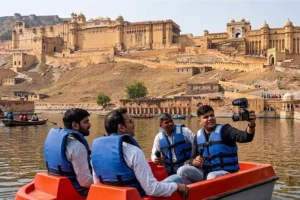
- Boat ride on Lake Pichola around sunset for classic skyline shots.
- Bagore Ki Haveli in the evening for cultural performances in an intimate courtyard.
- Local temples and ghats for quieter, more everyday moments.
- Day trips to nearby fort walls and Jain temples if you’ve got extra time.
If you’re traveling as a couple, Udaipur is almost always the favorite city on the route. If you’re solo, it’s a good place to reset your energy before another burst of moving around. Either way, don’t rush it just because your map makes things look close together.

Jodhpur: Blue Lanes Under a Giant Fort
Jodhpur feels a little more raw and local than Udaipur, and a bit less polished than Jaipur, in a good way. The old city spreads out under a massive fort that sits on a rocky hill, and from above it really does look like someone knocked over a bucket of blue paint. Down at street level, you’re dodging bikes, grabbing snacks and getting happily lost.
Two days in Jodhpur works for most travelers: one for the fort and nearby sights, one for markets and slow alley wandering. Add a third if you want to fit in a village safari, a cooking class or just more aimless walking and photography.
What Not to Miss in Jodhpur
The fort is the heart of the city, and one of the most impressive in India – not just from the outside, but also for its interiors, courtyards and views. After that, there’s a mix of cenotaphs, museums and markets that fill your days pretty quickly. You’ll probably end up circling through the same old-town lanes a few times, and that’s part of the charm.
- Mehrangarh Fort for heavy history and sweeping city views.
- White marble cenotaphs at the foot of the fort for quieter photo spots.
- Old city bazaars for spices, snacks and random treasures.
- Local eateries for spicy snacks and lassis between wanders.
- Optional village trips to see pottery, weaving and rural life up close.
If you’re into photography, Jodhpur is a goldmine of textures: peeling paint, blue walls, intricate doors, street shrines and sunlight slicing through narrow lanes. Just be respectful when shooting people and private homes; a quick smile or gesture asking permission goes a long way.

Jaisalmer: Golden Fort & Desert Adventures
Jaisalmer is where Rajasthan goes full storybook. The old fort rises straight out of the desert, walls glowing honey-gold at sunrise and sunset, and the narrow lanes inside feel more like a lived-in maze than a museum. Step just outside the city, and suddenly you’re surrounded by dunes, camels, jeeps and long, silent stretches of sand.
Plan at least two nights here if you want both fort time and a proper desert experience. A lot of travelers do one night in town and one in a camp; if you have the budget and time, adding an extra night in the city lets you explore without feeling rushed after late-night desert activities.
Inside the Fort & Beyond
The living fort is the main show – families, shops, temples and guesthouses all squeezed inside ancient walls. It’s atmospheric, and a little surreal when you realize people are hanging out on the same balconies that travelers have admired for centuries. Outside the fort, you get carved mansions, lakes, memorials and that big-ticket desert day.
- Walking the fort’s lanes, temples and viewpoints at different times of day.
- Visiting old merchant havelis with mind-blowing stonework.
- Sunrise or sunset at a local tank or cenotaph complex for quiet golden hours.
- Camel or jeep excursions to nearby dunes for sunsets, dinners and music.
- Optionally, stargazing outside camp lights if the sky is clear and dark.
When picking desert camps, read up on how “real” the experience is versus how performative. Some are mostly designed for quick package tours, with loud sound systems and bright lights, while others keep it lower-key with quieter music and a bigger focus on the actual desert. Choose based on your vibe, not just the photos.

Other Places Worth Slotting In
Once you’ve covered the big four (Jaipur, Udaipur, Jodhpur, Jaisalmer), you start seeing names like Pushkar, Bikaner, Bundi, Mount Abu and Ranthambore pop up over and over again. You don’t have to do all of them – in fact, please don’t try in a single short trip – but adding one or two can completely change the flavor of your route.
Think of these as “seasoning cities”: you sprinkle them around your main route to match your mood. Want spirituality and chill cafes? Pushkar. Want wildlife and tiger safaris? Ranthambore. Want stepwell art and slower streets? Bundi. You get the idea.
Pushkar
Pushkar is a small holy town wrapped around a lake, with temples, ghats, sadhus, smoldering incense and a very strong backpacker cafe scene. It’s a mix of genuinely sacred, slightly chaotic and endearingly scruffy. The vibe depends heavily on when you visit – quiet and reflective in off-season, absolutely wild during the famous camel fair.
One or two nights is enough for most people: you can walk the lake loop, visit key temples, soak in the evening aarti and drift between rooftop cafes. Just remember it’s a religious town; alcohol and non-vegetarian food are restricted in many places, and you should dress and behave respectfully near the lake and temples.
Bikaner
Bikaner doesn’t hit every standard Rajasthan itinerary, but that’s exactly why some travelers end up loving it. You get a solid fort, old city lanes, famous snacks and a couple of very quirky stops – including a temple dedicated to rats that’s legendary for those who dare.
If your route naturally passes through, one or two nights are enough to sample the city, visit the fort and decide how brave you feel about certain “only in India” experiences. It’s also a reminder that Rajasthan isn’t just the four most famous cities over and over again; the smaller hubs have their own identity and loyal fans.
Bundi & Shekhawati Region
Bundi is the kind of place that makes people start saying things like “I could stay here for a week and just write or paint.” It has a hilltop fort, faded murals, stepwells and a much sleepier pace than the big tourist centers. You walk more slowly, talk more to locals and notice little things you might rush past elsewhere.
The Shekhawati region, on the other hand, is all about painted havelis and decorative facades. Several small towns there feel like living open-air art galleries, with murals covering courtyard walls and gateways. It’s more offbeat, great if you’ve already done the usual route once and want something different the second time around.
Ranthambore & Mount Abu
Ranthambore National Park is the big tiger-spotting name in Rajasthan. People either add it right after or right before Jaipur, doing two or three safaris in a couple of days and hoping for that iconic tiger-plus-ruin shot. Even without a tiger sighting, the park’s landscapes and other wildlife make the rides worthwhile if you enjoy being out in nature.
Mount Abu is Rajasthan’s lone hill station, perched in the Aravallis with cooler air, forests, viewpoints and beautifully carved Jain temples. It doesn’t fit every itinerary, but if you’re traveling in peak summer or need a break from hot plains, it can be a smart detour that resets your body temperature and your mood.
Sample Itineraries for Different Trip Lengths
Instead of giving you one “perfect” itinerary (which doesn’t exist), here are a few realistic outlines for different schedules. Use them as a base, then tweak based on your arrival city, budget and tolerance for back-to-back travel days.
7-Day Classic Rajasthan Loop
This one is tight but doable if you only have a week and you want a quick taste of “big Rajasthan” without disappearing completely into the desert. It skips the very long drives and focuses on two or three major hubs.
- Day 1–2: Jaipur – forts, city palace, bazaars and food.
- Day 3: Travel to Jodhpur – evening in the old city.
- Day 4: Mehrangarh Fort and markets, optional sunset views.
- Day 5: Udaipur via road or rail – sunset by the lake.
- Day 6: Udaipur palace, boat, cultural show.
- Day 7: Wrap up Udaipur and depart.
You’ll leave wanting more, but you’ll also cover a lot of ground for a single week without falling apart. If you’re flying in and out of different cities (Jaipur in, Udaipur out), the logistics become even smoother.
10-Day Desert-Focused Route
If the words “sand dunes” make your eyes light up, this route leans into the desert feel while still giving you a couple of city centers to explore. Expect longer distances and at least one overnight journey.
- Day 1–2: Jaipur – main sights and markets.
- Day 3: Jaipur to Bikaner – fort visit.
- Day 4–5: Jaisalmer – fort plus one night in a desert camp.
- Day 6–7: Jodhpur – fort, old city, optional village trip.
- Day 8–9: Udaipur – lakes, palace, slow time.
- Day 10: Exit via Udaipur or back toward Jaipur/Delhi.
This version gives you both enough desert time and enough city variety to keep things interesting. Just build in margin for delays; long road stretches don’t always run exactly on schedule, and you don’t want to stress about tight onward connections.
14-Day Deep-Dive Rajasthan Journey
With two weeks, you can stop rushing, loop in some less obvious places and still leave space for slow mornings and random discoveries. This is where Rajasthan really opens up and starts feeling like more than a checklist.
- Days 1–3: Jaipur – full city plus maybe a side trip or extra free day.
- Days 4–5: Ranthambore – two or three safaris, downtime between rides.
- Day 6: Travel toward Bundi or another small town for stepwells and quiet time.
- Days 7–8: Udaipur – lakes, palace, day trips if you’re keen.
- Days 9–10: Jodhpur – fort, blue lanes, markets, optional rural visit.
- Days 11–13: Jaisalmer – fort days and desert nights.
- Day 14: Exit or buffer day in a convenient city before your flight home.
The magic of a 14-day trip is the flexibility. You can decide to add an extra night somewhere you fall in love with, or slow down when your energy dips. Rajasthan rewards that kind of loose, responsive planning.
How Much Does Rajasthan Really Cost in 2026?
The most honest answer is: anywhere from “surprisingly affordable” to “how did I just burn my entire savings on one hotel night.” Rajasthan can stretch to meet your budget, whether you’re counting every rupee or throwing down for once-in-a-lifetime palace stays and private cars.
Daily costs will vary a lot based on whether you’re in hostels or heritage hotels, eating street snacks or sit-down meals, and using trains versus taxis. Safaris and certain activities also bump up the total for specific days, so think in ranges instead of one fixed number.
| Travel Style | Approx. Daily Budget (excluding flights) | What’s Included |
|---|---|---|
| Backpacker | ₹2,000 – ₹3,300 | Hostel bed, local transport (buses/trains), street food and basic entries |
| Mid-Range | ₹5,000 – ₹8,000 | Comfortable hotel or haveli, mix of restaurants and cafes, taxis/occasional car hire, most entries |
| Comfort/Luxury Mix | ₹10,000 – ₹20,000+ | Nice heritage or luxury stays, private car most days, activities, safaris, guided tours |
For a 10-day mid-range trip in 2026, many travelers land somewhere in the ₹50,000 to ₹70,000 per person range before flights, if they’re sharing rooms and using trains or shared cars instead of going fully private all the way. Add in flights and occasional splurges, and you can nudge that higher without even trying.
The good news is that it’s very easy to push the cost down if needed: eat more local meals, use state buses and trains, skip one or two big-ticket activities, and choose simpler rooms. You still get the same streets, sunsets and general Rajasthan magic; you just trade some convenience and cushy touches for extra savings.
Food in Rajasthan: Ghee, Spice & Comfort
If you love food that actually tastes like something, Rajasthan will keep you happy. A lot of traditional dishes were born from scarcity and harsh climate, so they’re heavy on spices, ghee and preserved ingredients. The result is plates that feel rich, satisfying and totally addictive after a couple of days.
At the same time, the bigger cities all have plenty of “global” options now – pizza, pasta, burgers, fusion bowls – thanks to hostels and cafes catering to younger crowds. So if you need a break from heavy curries and deep-fried snacks, it’s not hard to find lighter or more familiar meals.
Must-Try Dishes
You don’t have to hunt too hard for classics; most hotels, dhabas and thali joints will proudly throw them at you. The key is to pace yourself, because ghee-heavy feasts three times a day will slow anyone down.
- Dal baati churma – baked wheat balls dunked in dal and ghee, with sweet crumbled wheat on the side.
- Laal maas – spicy red mutton curry that’s rich, smoky and not for the faint-hearted palate.
- Ker sangri – desert beans and berries cooked with spices, often tangy and unique.
- Gatte ki sabzi – gram flour dumplings in yogurt gravy, a proper comfort dish.
- Pyaaz kachori and mirchi vada – stuffed, deep-fried street snacks that go perfectly with a glass of chai.
- Ghevar and mawa kachori – sweet treats that show up heavily around festive times.
If you’re vegetarian, Rajasthan will feel like home. Many local restaurants default to veg menus by habit, and even mixed places usually have more plant-based options than meat. Just remember that “mild” can still mean a solid kick of heat by some people’s standards, so communicate clearly if you’re sensitive to spice.
Eating Safe & Smart
Street food is tempting and honestly a huge part of the fun, but pick your stalls wisely. Busy places with high turnover are your best friends; that usually means fresher oil, quicker cooking and less time for things to sit around. If you see locals lining up, that’s always a solid sign.
Carry a small stash of basic medicines – something for an upset stomach, oral rehydration salts, and any personal prescriptions you need. Rajasthan is hot and dry for most of the year, so staying hydrated and not skipping meals matters more than people realize when they’re distracted by sightseeing.
Shopping & Souvenirs: How Not to Go Broke in the Bazaars
Shopping in Rajasthan feels like walking into a live-action Pinterest board: textiles everywhere, jewelry flashing from every angle, leather bags, woodwork, mini paintings, pottery, you name it. It’s very easy to get carried away, overspend or end up with stuff you can’t carry home.
The trick is to pace your buying and learn to bargain without turning it into a fight. The first price is almost never the real price in tourist markets. Take it all as a game: smile, counter-offer, be willing to walk away, and respect that sellers also need to make a living.
What to Look For
Each city has certain things it’s especially known for, and locals will happily point you toward their specialties. Focus on a few quality pieces instead of hauling home suitcases of impulse buys you’ll never use.
- Jaipur – block-printed fabrics, jewelry, blue pottery, traditional quilts.
- Jodhpur – antiques, metalware, handwoven textiles, spices.
- Jaisalmer – leather products, patchwork, desert-themed decor.
- Udaipur – miniature paintings, silver jewelry, decor items.
If you’re buying gemstones or precious metals, stick to reputable shops with proper bills and certifications. Avoid random “friend’s shop” detours where the pressure is high but the authenticity is questionable. For everything else, trust your eye and your budget more than pushy sales pitches.
Safety, Culture & Etiquette
Rajasthan is generally considered one of the more traveler-friendly states in India, especially along the main tourist circuit. You’ll still want to stay switched on – like you would anywhere – but in most cases you’ll be dealing more with touts and over-enthusiastic salespeople than actual danger.
Dress codes are usually relaxed in the touristy areas, but shoulders and knees covered in religious places and smaller towns are appreciated. A scarf or light shawl is a simple fix that also doubles as sun protection and dust shield on busy roads.
Solo & Night-Time Considerations
If you’re traveling solo, especially as a woman, the standard advice applies: stick to busy areas at night, use registered transport apps or trusted taxi companies, and listen to your gut. Many travelers report feeling comfortable in big hubs like Jaipur and Udaipur, with a few extra precautions late at night.
In smaller towns, things tend to wind down earlier, and walking alone in deserted lanes after dark is rarely worth it. If you’re out late at a rooftop restaurant or event, arrange your return transport in advance instead of hoping to find something convenient last minute.
Respectful Behavior & Local Norms
Rajasthan gets a huge amount of tourism, and most locals are used to all kinds of visitors. Still, basic respect goes a long way: ask before photographing people close-up, don’t climb on fragile old structures just for a shot, and be mindful in temples and around religious sites.
You’ll run into begging, aggressive selling and the occasional scam attempt. A firm but polite “no” plus walking away solves most of it. Pickpocketing is more about crowded city centers and bus stands than quiet lanes, so keep your valuables close and zipped, especially in tight spaces.
Practical Travel Tips That Actually Help
There are a bunch of tiny, unglamorous details that make your day smoother but rarely show up in glossy brochures. These are the sort of things you normally only learn after messing up once or twice – or by stealing them from someone else’s experience.
- Carry a reusable water bottle and keep refilling from reliable sources; the heat and dryness will sneak up on you.
- Use UPI or card payments where possible, but keep a buffer of cash for smaller shops, rural areas and backup situations.
- Screenshots of train tickets, hotel addresses and key bookings save you when networks drop at the wrong moment.
- Start your days early in peak season to dodge crowds and get softer light for photos.
- Build at least one “lazy” half-day into every three or four days of travel, so you don’t burn out.
If you’re using a lot of trains and buses, keep a light daypack separate from your main bag with essentials: power bank, snacks, water, documents, a spare shirt, basic meds. That way even if your big backpack is overhead or at the back of a bus, you’re not constantly digging for things.
FAQ: Rajasthan Travel 2026
What’s the best month to visit Rajasthan in 2026?
If you want cool mornings, comfortable afternoons and pleasant evenings, target November, December, January or February. March is also nice but starts edging warmer, and festival crowds spike around certain dates. Avoid peak summer if you dislike heat, and choose monsoon only if you’re okay with occasional rain in exchange for fewer tourists and greener landscapes.
Is Rajasthan safe for solo female travelers?
Many solo female travelers manage Rajasthan smoothly each year, especially on the main Jaipur–Jodhpur–Udaipur–Jaisalmer circuit. Stick to well-reviewed hostels and guesthouses, use trusted cabs or transport apps, avoid wandering through isolated areas late at night, and trust your instincts with people who feel pushy. Having your accommodation and night-time transport sorted in advance helps a lot.
How many days do I realistically need?
A bare-minimum “I just want a taste” trip can work in 5–7 days, hitting two or three major cities. For a more balanced route with desert time and at least one quieter stop, aim for 10 days. If you want to move slowly, add smaller towns and maybe a wildlife park or hill station, two full weeks will feel about right without turning into a sprint.
Do I need to book everything in advance?
That depends on your season and travel style. In peak winter and around big festival dates, it’s smart to lock in your key stays and long-distance trains well ahead. In shoulder seasons, you can usually keep more flexibility, booking city to city as you go. Safaris, special experiences and iconic stays (like popular palace hotels or lake-view rooms) almost always require advance booking.
How bad is the heat really?
In April, May and June, daytime heat in much of Rajasthan is intense – not just “a bit warm.” Afternoon streets can feel almost empty because locals know better than to be out at the worst hours. If you do travel then, schedule sightseeing early in the morning or after 4 pm, spend midday in shade or indoors, drink constantly and don’t underestimate how draining the combination of sun and dryness can be.
What should I wear in Rajasthan?
Light, breathable fabrics are your best friend: cotton shirts, loose trousers, long skirts, comfortable t-shirts. Covering your shoulders and knees in religious or conservative areas keeps things easier and more respectful. A scarf or shawl handles temple visits, unexpected chills on overnight trains and dusty auto rides, and can double as quick sun cover for your neck and head.
Can I use cards and UPI everywhere?
In big cities and touristy neighborhoods, cards and UPI are normal now – cafes, mid-range hotels, bigger shops, many online ticket counters. Once you drift into smaller towns, rural zones or roadside stalls, cash becomes more important again. Keep a healthy mix: enough notes to get through a few days, plus your usual digital payment tools for when they’re available.
Is it worth adding Ranthambore to my itinerary?
If you care about wildlife, especially tigers, Ranthambore is absolutely worth considering. You’ll want at least two or three safari slots to improve your odds of sightings, and the rides themselves offer good chances to spot deer, birds and other animals in beautiful, ruin-dotted landscapes. It does add extra travel and costs, so if your schedule is very tight you might want to save it for a longer trip when you can do it justice.
How do I avoid common scams?
The greatest hits are inflated prices, “special deals,” commission-driven shop detours and fake guides outside major monuments. Stick to official counters for tickets, confirm prices beforehand for taxis and tours, and politely decline offers that feel too keen. If someone is weirdly insistent on taking you to a particular shop or gem dealer “only for looking,” that’s usually your cue to walk the other way.
Is Rajasthan suitable for families with kids?
Yes, as long as you build in downtime and don’t stuff each day with five different monuments. Kids tend to love forts, elephants and camels, boat rides, folk shows and colorful markets. Just keep snacks, water, hats and sunscreen on hand, and be realistic about how much walking their legs can handle in a day.