Taj Mahal Sunrise - Tickets, Timings, Best Season, Agra Itinerary & Travel Tips
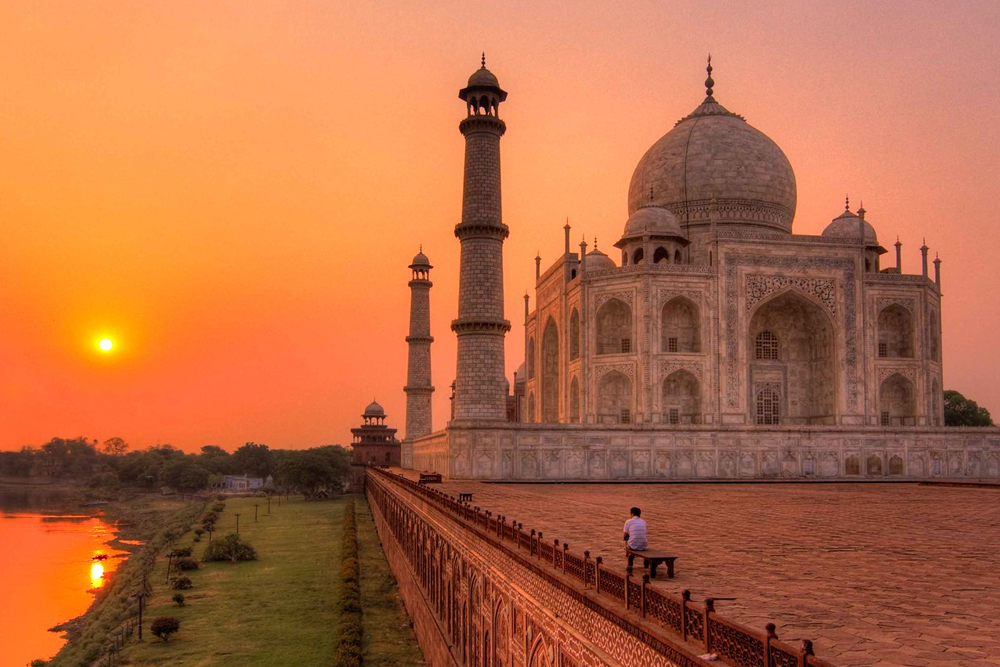
There are some places in the world that are beautiful, and then there are places that feel almost unreal the first time you see them. The Taj Mahal at sunrise belongs firmly in the second category. As the first light of the day washes over the white marble, the monument seems to glow from within, slowly shifting from soft blue to pale gold. The air is cooler, the crowds are thinner, and for a few quiet minutes Agra feels completely still while the Yamuna drifts by in the background.
Experiencing the Taj Mahal at dawn is not quite as simple as showing up whenever you like. You need to think about gate opening times, tickets, what to bring (and what to leave at the hotel), how to get from Delhi to Agra, which entrance to use, and how to fit the rest of Agra’s sights and food scene around your early start. Done right, you can turn a single sunrise into the centrepiece of a short, satisfying North India trip that feels both magical and manageable.
This in‑depth guide walks you through everything you need for a Taj Mahal sunrise visit in 2026 and beyond. You will find a brief story of how this legendary mausoleum came to be, clear reasons why sunrise truly is the best time to go, a practical 1–3 day Agra itinerary with a table, an honest look at ticket prices and typical costs, advice on trains and road transfers from Delhi, and a section on what to pack and how to prepare. You will also discover lesser‑known viewpoints, useful food and hotel suggestions, and a detailed FAQ that answers the questions most travellers worry about. Use it as your step‑by‑step companion to plan a dawn visit you will remember for the rest of your life.
The Taj Mahal in Context: History, Architecture and Setting
The Taj Mahal is often mistaken for a palace, but it is actually a mausoleum built in memory of Mumtaz Mahal, the beloved wife of Mughal emperor Shah Jahan. Construction began in the 17th century and involved thousands of craftsmen, calligraphers, stone inlay specialists and labourers over many years. The result is one of the most refined examples of Mughal architecture, blending Persian, Central Asian and Indian influences into a perfectly balanced whole.
The complex is set on the banks of the Yamuna River on the edge of Agra, around 200 kilometres south of Delhi. The central white marble structure is framed by four slender minarets, a large gateway, gardens laid out in the classical char‑bagh (four‑part) style, and subsidiary buildings including a mosque and a jawab (mirror building) that maintains visual symmetry. Intricate pietra dura inlay work, Quranic calligraphy and geometric details cover the surfaces, yet the overall effect remains calm rather than overwhelming.
Agra itself was once a major Mughal capital, and the city still holds several important monuments beyond the Taj: Agra Fort, Itmad‑ud‑Daulah’s tomb (sometimes nicknamed the “Baby Taj”), Mehtab Bagh across the river and the nearby abandoned city of Fatehpur Sikri. Modern Agra can feel hectic and a little rough around the edges, but with a bit of planning you can focus on its highlights while keeping your base and logistics simple and comfortable.
Top Reasons to See the Taj Mahal at Sunrise
You can technically visit the Taj Mahal any time the gates are open, but sunrise has some clear advantages that make the early alarm worth it.
- Magical light and colours – At dawn, the sky often shifts through blues, pinks and golds while the marble reflects these tones. As the sun climbs, shadows soften and the monument appears almost translucent in places, creating photographs and memories you simply cannot replicate at midday.
- Cooler temperatures – Agra can be very hot later in the day, especially from March to October. Early morning is usually the most comfortable time to walk through the gardens, climb steps, and wait patiently for your perfect photo angle without feeling drained.
- Relatively fewer crowds – The Taj Mahal is never truly empty, but sunrise is still quieter than late morning and sunset. If you arrive near gate opening time, you have a good chance of enjoying some perspectives with only small groups in the background.
- More relaxed overall schedule – By starting at dawn, you finish your main visit before late morning. This leaves the rest of the day free for breakfast, a nap, Agra Fort, Mehtab Bagh, cafés or your onward journey, instead of trying to squeeze everything into the hottest and busiest hours.
- Best use of a short trip – If you only have one or two days for Agra as part of a Golden Triangle or North India tour, a sunrise visit lets you see the Taj at its most atmospheric while still keeping room for other sights and good meals.
- Calmer, more reflective mood – Early mornings tend to bring a quieter, more reverent atmosphere. You are more likely to find moments where you can simply stand, breathe and take it all in, rather than constantly weaving through dense crowds and queues.
Planning Your Trip: Getting to Agra and Around
Most travellers reach Agra from Delhi, either as a day trip or as part of a longer loop that includes Jaipur, Ranthambore or other Rajasthan destinations. The two main options are by train or by road.
Travelling by Train from Delhi to Agra
The distance between Delhi and Agra is roughly 200 kilometres, and fast trains typically cover it in around 1.5–3 hours depending on the service. Multiple daily trains run between New Delhi (NDLS or Hazrat Nizamuddin stations) and Agra Cantt, including semi‑fast services such as the Gatimaan Express and Shatabdi Express, as well as the newer Vande Bharat train and several other chair‑car options.
Seats can be reserved online through the official IRCTC system or via reputable booking platforms that integrate with Indian Railways. For sunrise visits, look for early‑morning departures from Delhi that reach Agra by mid‑morning the day before your planned Taj visit, so you have time to rest and get oriented. Trying to arrive from Delhi and go straight to a sunrise slot on the same day is too rushed for most visitors.
Travelling by Road from Delhi to Agra
By road, the expressway between Delhi and Agra usually takes about 3–4 hours depending on traffic. You can book a private car and driver through your hotel or a trusted tour operator, or join a small group transfer. This option gives more flexibility with pickups and stops along the way, and it works well if you are combining Agra with other nearby destinations where trains are less convenient.
Getting Around Agra
Within Agra, local movement is typically by auto‑rickshaw, taxi, or pre‑arranged car and driver. Around the Taj complex itself, motorised vehicles are restricted in the immediate vicinity for pollution reasons, so you will walk or use official battery‑operated shuttles or cycle‑rickshaws from parking points to the gates. It is wise to stay at a hotel in the Taj Ganj area or on Fatehabad Road if sunrise is your priority, as this keeps transfer times short and predictable.
Step-by-Step: Sunrise Visit Structure and Sample Agra Itinerary
To make planning easy, here is a suggested structure for a 2‑night Agra stay that includes one sunrise visit to the Taj Mahal and key nearby highlights. You can adapt it into a long day trip, a one‑night stay, or a 3‑night base depending on your pace.
| Day | Time of Day | Suggested Plan |
|---|---|---|
| Day 1 | Morning | Travel from Delhi (train or road) and arrive in Agra; check into a hotel near the Taj Ganj or Fatehabad Road area. |
| Day 1 | Afternoon | Visit Agra Fort for 1.5–2 hours; learn about Mughal history and enjoy distant views of the Taj Mahal from within the fort walls. |
| Day 1 | Late Afternoon / Sunset | Head to Mehtab Bagh or another riverside viewpoint for a sunset perspective of the Taj from across the Yamuna; return to town for dinner. |
| Day 1 | Evening | Early night; prepare clothes, camera, water and tickets for the sunrise visit. Confirm sunrise time and gate opening time with your hotel. |
| Day 2 | Pre‑dawn | Leave your hotel roughly 45–60 minutes before gate opening; walk or take a short ride to the chosen entrance (usually East or West gate). |
| Day 2 | Sunrise | Enter the Taj Mahal complex as soon as security opens; walk straight to the main platform area for first views and photographs in soft light. |
| Day 2 | Morning | Explore the gardens, side buildings, mosque and riverfront viewpoints; optionally visit the inner mausoleum chamber if you have the add‑on ticket. |
| Day 2 | Late Morning | Exit the complex before your three‑hour ticket limit; enjoy a relaxed breakfast or brunch near your hotel. |
| Day 2 | Afternoon | Rest, shop for handicrafts, or visit another site such as Itmad‑ud‑Daulah (“Baby Taj”) if you have the energy. |
| Day 2 | Evening | Either stay a second night for a slower pace, or travel back to Delhi or onward to Jaipur depending on your broader itinerary. |
This outline gives you a calm arrival day, a dedicated sunrise morning and flexible time for food, shopping and lesser‑known sights. If you must compress the schedule into a single night, prioritise Agra Fort and Mehtab Bagh on arrival and keep the rest as is.
Tickets, Prices and Practical Cost Comparisons (2026)
Ticket structures for the Taj Mahal are periodically updated, but as of 2026 the broad pattern is that there is a base entry fee for the main complex and an additional charge if you want to access the inner mausoleum chamber. Children below a certain age band are usually free, and there are separate rates for domestic visitors and foreign nationals.
| Item | Approx. Cost (INR, 2026) | Notes |
|---|---|---|
| Base Taj Mahal Entry (Foreign Tourist) | ~1,100 | Covers entry to main complex and gardens; mausoleum access extra. |
| Mausoleum Add‑On Ticket | ~200 | Optional extra fee for entering main inner chamber; must be combined with base ticket. |
| Online Booking Discount | ~50 off | Small reduction per ticket when booking via official online portal instead of at the counter. |
| Agra Fort Entry (Foreign Tourist) | ~600 | Separate ticket; plan 1.5–2 hours inside. |
| Mehtab Bagh Entry (Foreign Tourist) | ~300 | Riverside gardens opposite Taj, popular at sunset. |
| Delhi–Agra Train (Chair Car, one‑way) | ~500 – 1,500 | Varies by train type and class; faster services like semi‑high‑speed trains sit at the upper end. |
| Private Car & Driver Delhi–Agra (one‑way) | ~4,000 – 7,000 | Cost depends on vehicle type, agency and whether tolls are included. |
| Mid‑Range Hotel Near Taj (per night, for 2) | ~3,500 – 8,000 | Comfortable rooms, often with breakfast; higher rates for views or pool access. |
| Higher‑End Hotel with Taj Views (per night, for 2) | ~12,000 – 35,000+ | Premium properties with direct or partial Taj views, landscaped grounds and fine dining. |
These figures are broad guidelines rather than fixed quotes, but they help you sketch out a realistic budget. To keep expenses under control, consider combining one splurge night at a view hotel with one or two nights in a simpler but well‑reviewed property, using online booking discounts for tickets, and sharing transport where it makes sense.
Best Time to Visit, What to Pack and On-the-Ground Tips
The Taj Mahal is open year‑round, but your experience will vary by season. The monument normally opens around 30 minutes before sunrise and closes 30 minutes before sunset, with Fridays reserved for mosque prayers and closed to visitors. A separate night‑viewing programme operates on select full‑moon evenings with its own rules and tickets.
Seasonal Considerations
- October to March: Generally the most comfortable period, with cooler temperatures and clear skies. These months form the main tourist season, so expect higher hotel rates and more visitors, especially around Christmas–New Year and major holidays.
- April to June: Hot to very hot, often exceeding 35–40°C in the afternoons. Sunrise visits are especially valuable in this period because they help you avoid the most intense heat.
- July to September: Monsoon brings humidity and some rain, but also dramatic skies and fewer foreign tourists. Cloud cover can soften sunrise light, which some photographers enjoy.
What to Pack for a Sunrise Visit
Your packing list does not need to be complicated, but a few small choices can make your dawn trip much more comfortable:
- Light, modest clothing that covers shoulders and knees; this shows respect and keeps you comfortable in both cool mornings and warm later hours.
- A light layer such as a shawl, scarf or thin jacket for chilly winter dawns or breezy mornings by the river.
- Comfortable walking shoes or sandals with good grip for moving around marble floors, gardens and steps.
- A small daypack or cross‑body bag to carry water, phone, tickets, and a simple snack if needed.
- Camera or smartphone with enough battery and storage; a microfiber cloth to wipe off any mist or dust from lenses.
- Reusable water bottle (you can fill it at your hotel) and, if you have a sensitive stomach, basic medication and hand sanitiser.
Practical Tips for a Smooth Sunrise Experience
- Check the exact sunrise time for your date and confirm gate opening time with your hotel the evening before; build in a buffer for walking and security queues.
- Buy your ticket online in advance through official or authorised channels where possible, to skip at least one line in the morning.
- Carry only what you need. Large bags, tripods and certain items may be restricted or slow you down at security checks.
- Head straight through the main gate towards the central view and reflecting pool first, then circle back later for side angles and detail shots.
- Respect marked areas and signs about where you can and cannot sit, stand or use flash; security is strict but usually polite.
- Keep your ticket handy; guards may check it again near the mausoleum entrance and at exit points due to the three‑hour time limit.
Agra Beyond the Taj: Forts, Parks, Food and Stays
While the Taj Mahal may be your main reason for coming to Agra, it is not the only place worth your time. With even one extra day you can add several rich experiences around the city.
Agra Fort
Agra Fort, a UNESCO World Heritage Site, was the main residence of several Mughal emperors before Delhi became the primary capital. Its red sandstone walls enclose a series of palaces, courtyards, halls and mosques that tell the story of imperial life and politics. Several vantage points within the fort offer excellent distant views of the Taj Mahal, providing a powerful sense of how closely the two sites are connected.
Mehtab Bagh and Riverside Views
Mehtab Bagh is a garden complex across the Yamuna River, laid out on an axis with the Taj. It is especially popular at sunset, when the monument is lit from behind and appears in silhouette or soft warm light, depending on the season. Some travellers also seek informal viewpoints along the riverbank outside the official garden; if you choose to do this, go with a local guide and be respectful of residents and farming plots.
Eating and Drinking in Agra
Agra’s food scene reflects both its North Indian roots and its Mughal legacy. Street snacks such as samosas, kachoris, chaat and jalebis are widely available, while sit‑down restaurants serve rich curries, biryanis and kebabs alongside lighter dishes. The city is particularly famous for petha, a translucent sweet made from ash gourd in plain, saffron and other flavoured varieties.
In the Taj Ganj and Fatehabad Road areas, you will find a mix of rooftop cafés, mid‑range restaurants, simple thali places and a handful of higher‑end hotel dining rooms. If you have a sensitive stomach, start with cooked foods from busy, well‑reviewed spots before experimenting with street stands. For a special splurge, consider a fine‑dining restaurant in a luxury hotel where you can pair careful preparation with ambience, sometimes including glimpses of the Taj from a distance.
Hotel Suggestions and Location Choices
For most visitors, staying within a short drive of the Taj’s East or West gates keeps logistics easy for sunrise. High‑end hotels with direct or partial Taj views offer beautifully framed glimpses of the monument from balconies, pools or gardens, but they come at a premium. Mid‑range and boutique options along Fatehabad Road and in Taj Ganj can still provide comfort, good service and quick access without the highest price tags.
When choosing where to stay, weigh up your priorities: view versus value, classic luxury versus smaller character stays, and whether you want in‑house dining or are happy to explore local restaurants. In all cases, reading recent guest reviews gives you the clearest picture of current standards and service.
Hidden Details and Less Obvious Insights
Beyond the famous postcard angles, there are subtler aspects of a Taj Mahal sunrise visit that many people only notice once they are already there. Being aware of them in advance will help you appreciate the monument more deeply.
- Changing colours of the marble: The white marble of the Taj does not have a single fixed tone; it mirrors the sky. Watch how it looks bluish before dawn, then blushes with the first pink light and eventually brightens into a clean, luminous white as the sun rises higher.
- Optical illusions and symmetry: Many of the design choices create deliberate illusions. For example, the calligraphy grows in size as it goes higher on the gate to appear uniform from below, and the minarets lean slightly outwards so they would fall away from the tomb in an earthquake.
- Reflections and water features: The long reflecting pool along the main axis offers iconic mirror photographs, but smaller water basins and subtle puddles after rainfall can also create interesting reflections if you look carefully.
- Soundscape at dawn: Listen for the mix of distant calls to prayer, soft conversations, footsteps on stone and the occasional bird calls. This audio backdrop contributes as much to the atmosphere as the visuals.
- Alternative vantage points inside the complex: After you have enjoyed the classic frontal view, wander to the side mosque area, the riverfront edge and the platform corners for less crowded angles and more space to pause.
- Night viewing options: On a limited number of nights each month around the full moon, specially arranged night visits inside the complex offer a very different mood, with the monument glowing under moonlight and strict visitor caps to keep numbers low.
Frequently Asked Questions About Sunrise at the Taj Mahal
Do I really need to visit the Taj Mahal at sunrise, or is any time fine?
You can appreciate the Taj Mahal at any time of day, but sunrise offers the best combination of soft light, lower temperatures and relatively lighter crowds. If your schedule allows only one visit, dawn is usually the most rewarding choice. If you have more time, some travellers enjoy pairing a sunrise visit inside the complex with a separate sunset view from Mehtab Bagh or across the river.
How early should I arrive at the gate for a sunrise visit?
As a rule of thumb, aim to reach the chosen gate 45–60 minutes before the posted opening time. This gives you leeway for walking from your hotel, buying or validating tickets, and passing through security. In peak season months, queues can form well before opening, so arriving early helps you get into the first wave of visitors and enjoy quieter moments near the main viewing platform.
Which gate is best for entering the Taj Mahal at dawn?
The East and West gates are both commonly used for sunrise. The South gate is generally exit‑only. Which gate is “best” depends largely on where your hotel is located; you do not want to waste time in a pre‑dawn taxi ride crossing the city if you can simply walk to the nearest entrance. Some travellers feel that large tour groups often favour one side or the other in certain seasons, so you can ask your hotel or guide which gate tends to be less crowded at the time of your visit.
Is it better to buy tickets online or at the counter?
Buying tickets online ahead of time is usually more convenient and can come with a small discount. It also lets you go directly to the security queue instead of waiting once to buy a ticket and then again for entry. That said, counter tickets remain available, and if your online booking fails or you decide last‑minute, you can still purchase a ticket in person as long as you factor in extra time for queues.
What should I wear to the Taj Mahal for sunrise?
Wear modest, comfortable clothing that allows you to move easily and stay warm or cool as temperatures change. Outfits that cover your shoulders and knees are a good baseline. In winter, bring a light jacket, shawl or scarf for early‑morning chills, especially if you plan to sit or stand still for long periods while watching the sky change. Shoes should be easy to walk in and easy to slip on and off if you choose to enter areas where shoe covers or bare feet are preferred.
Can I bring a tripod or drone for sunrise photography?
Tripods and drones are generally restricted or not allowed inside the Taj Mahal complex due to security and crowd‑flow concerns. Small handheld cameras and smartphones are fine, but you should avoid large, intrusive gear. Always check the latest official rules, as policies can change, and if in doubt, leave non‑essential equipment at your hotel to avoid delays at security.
Is it safe to visit the Taj Mahal at dawn as a solo traveller?
For most visitors, a sunrise visit is safe as long as you follow basic precautions. Stick to well‑lit routes, use registered transport arranged by your hotel or a reliable operator if you are not walking, and keep valuables secure and out of sight. Inside the complex, there is a visible security presence and the majority of people are focused on enjoying the monument. If you feel unsure, you can also join a small group tour or hire a local guide to accompany you.
How long should I plan to spend inside the Taj Mahal complex?
Tickets typically allow a maximum stay of around three hours inside the complex. Most travellers find that 2–3 hours is enough to watch the sunrise, take photos, walk the gardens, visit side buildings and optionally go inside the mausoleum. If you are a keen photographer or architecture enthusiast, you may want to use the full allotment and explore every angle; if you like a quick overview, you might leave sooner once you feel satisfied.
Can I combine a sunrise visit with a same-day return to Delhi or Jaipur?
It is possible to see the Taj Mahal at sunrise and return to Delhi or travel onward to Jaipur on the same day, but it makes for a long and tiring schedule. For a more relaxed experience, consider at least one night in Agra on either side of your sunrise visit. This gives you time to rest, enjoy local food and see other sights without rushing from gate to train or car immediately afterwards. If your time is extremely limited, a well‑planned guided day trip can work, but be prepared for a very early start and a late return.
Turn Your Taj Mahal Sunrise Dream into a Real Plan
Standing in front of the Taj Mahal as the sky slowly brightens is one of those rare travel experiences that genuinely lives up to its reputation. With a little preparation, you can enjoy it without stress: you will know exactly how to get there, when to arrive, what your ticket covers, how long you can stay, and what else you can do with your time in Agra. You will also have a sense of where to eat, where to sleep and how to explore beyond the main postcard angles.
Now is the moment to turn that picture in your mind into dates on a calendar. Choose your month based on weather and crowds, block out at least one or two nights in Agra, and line up your transport from Delhi or your previous stop. Reserve a hotel within easy reach of the Taj, secure your tickets through official channels, and sketch a simple schedule using the itinerary ideas above. Once those basics are in place, all that is left is to set your alarm, wake before dawn, and let the Taj Mahal do the rest.
Recent Posts
 Amer Fort Boating 2026 Guide: Maota Lake Tickets & Timings
Discover Amer Fort’s new Maota Lake boating, updated 2026 ticket rates, timings, safety rules and best visiting months.
 Luxury Rajasthan Tour with Oberoi, Taj & Leela Hotels
Experience royal Rajasthan in comfort with Oberoi, Taj and Leela luxury palace stays.
 Luxury Tempo Traveller & Van Hire in India 2026 – Rates, Features & Booking
Enjoy luxury van hire in India for safe, comfortable family and group travel.
 Top 10 Vehicle Hire Companies in India for Tourists
Discover the top 10 vehicle hire companies in India offering safe, comfortable tourist travel.
 Delhi Agra Jaipur Tour by Luxury Car and Private Driver
Enjoy a Delhi Agra Jaipur tour with a luxury car, private driver and flexibility.
 Luxury Car and Driver for Comfortable Rajasthan Tour
Explore Rajasthan in comfort with a luxury car, private driver and flexible custom tour.
 Jaisalmer Travel Guide for Foreign Tourists: Best Time, Desert Tours & Tips
Plan your Jaisalmer trip with ideal seasons, desert tour packages and essential foreigner tips.
 Hidden Villages of Rajasthan: Offbeat Rural Experiences & Village Travel Guide
Hidden Villages of Rajasthan: Offbeat Rural Stays, Homestays & Authentic Village Life.
-
Amer Fort Boating 2026 Guide: Maota Lake Tickets & Timings
Discover Amer Fort’s new Maota Lake boating, updated 2026 ticket rates, timings, safety rules and best visiting months.
-
Luxury Rajasthan Tour with Oberoi, Taj & Leela Hotels
Experience royal Rajasthan in comfort with Oberoi, Taj and Leela luxury palace stays.
-
Luxury Tempo Traveller & Van Hire in India 2026 – Rates, Features & Booking
Enjoy luxury van hire in India for safe, comfortable family and group travel.
-
Top 10 Vehicle Hire Companies in India for Tourists
Discover the top 10 vehicle hire companies in India offering safe, comfortable tourist travel.
-
Delhi Agra Jaipur Tour by Luxury Car and Private Driver
Enjoy a Delhi Agra Jaipur tour with a luxury car, private driver and flexibility.
-
Luxury Car and Driver for Comfortable Rajasthan Tour
Explore Rajasthan in comfort with a luxury car, private driver and flexible custom tour.
-
Jaisalmer Travel Guide for Foreign Tourists: Best Time, Desert Tours & Tips
Plan your Jaisalmer trip with ideal seasons, desert tour packages and essential foreigner tips.
-
Hidden Villages of Rajasthan: Offbeat Rural Experiences & Village Travel Guide
Hidden Villages of Rajasthan: Offbeat Rural Stays, Homestays & Authentic Village Life.