21 Best Shopping Places in Jaipur: Real Local Guide to Bazaars, Malls, and Hidden Gems
If you love wandering through colorful lanes, bargaining for that perfect pair of mojris, or stepping into an air-conditioned mall after a long day in the sun, Jaipur is going to feel like your playground. As locals, we don’t just shop here, we live inside these markets – from early morning chai near Johari Bazaar to late-night momos outside Gaurav Tower. In this guide, I’m walking you through the best shopping places in Jaipur in a way you can actually use: what to buy, realistic price ranges, how much to bargain, and which spots are worth your energy.
This isn’t a dry list of “top 10 places.” Think of it like a friendly local taking you around the Pink City with honest opinions, tiny shortcuts, and a few warnings. We’ll cover the big historic bazaars like Johari and Bapu, the specialized markets for razai, woolens, and wedding shopping, plus modern malls like Crystal Court and Gaurav Tower. By the time you’re done reading, you’ll know exactly where to go for jewelry, textiles, blue pottery, mojris, winter wear, and designer pieces – without feeling completely lost in the chaos.

Why Shopping in Jaipur Feels Different
Jaipur isn’t one of those cities where you only shop in malls and call it a day. The old walled city still runs on traditions that go back 200–300 years. Entire lanes are dedicated to one craft – jewelry, marble, spices, textiles – and families pass down skills the way others pass down property papers. At the same time, you have modern shopping malls, clean washrooms, food courts, and all the big brands sitting comfortably in the newer parts of town.
The fun part is mixing the two. You might spend your morning comparing gemstone prices in Johari Bazaar, hop over to a fixed-price government emporium on MI Road to sanity-check quality, and then end your day with coffee and window shopping at Crystal Court Mall. If you plan it right, you can do all of this without burning yourself out or blowing your entire budget in the first lane you enter.
Section 1: Iconic Historic Bazaars in the Pink City
Let’s start inside the walled city – the “Pink City” you see in postcards. These bazaars are loud, busy, slightly overwhelming, and absolutely worth it. Wear comfortable shoes, carry some cash, and don’t be shy about bargaining.
1. Johari Bazaar – Jewelry & Gemstone Capital
Johari Bazaar is the place everyone talks about when they say “shopping in Jaipur.” The name literally comes from “johari,” meaning jeweler, and you feel that the moment you step in. Showcases are full of kundan, meenakari, polki, and gemstone jewelry – from tiny silver toe rings to heavy bridal sets that look like they walked out of a royal wedding.
If you’re serious about buying jewelry, don’t rush. Walk around, talk to a few shops, ask questions. Good stores will happily explain the difference between real gemstones, semi-precious stones, and imitation pieces. Always ask for hallmarking on gold and a certificate for expensive stones. If someone gets irritated just because you’re asking for proof, that’s your sign to walk away.
- What to buy: Kundan sets, meenakari earrings, gemstone rings, silver anklets.
- Price idea: Simple silver pieces start around ₹800–₹1,500, decent gemstone rings from ₹3,000+, and bridal sets can easily go from ₹25,000 to several lakhs depending on design and stones.
- Bargaining: Possible, but more limited in high-end shops. Expect 10–25% in many mid-range showrooms.
2. Chandpole Bazaar – Marble, Crafts & Blue Pottery Nearby
Chandpole sits close to the old city gate and has this slightly slower, more old-school vibe. It’s known for marble work, stone carvings, and traditional handicrafts. You’ll see statues of gods and goddesses, tabletops, coasters, and decor pieces that can easily become the highlight of your living room back home.
A lot of marble you see here comes from the same region that supplied stone for famous monuments in Rajasthan. If you’re buying something heavy like a big statue or table, ask about shipping. Most established shops ship across India and overseas, they’ve been doing it for years.
- What to buy: Marble idols, tabletops, inlay work, home decor pieces.
- Price idea: Small decorative pieces from around ₹1,000–₹2,000, larger items from ₹5,000 and up.
- Tip: Don’t forget to check the finish. Good marble work feels smooth and solid, not flaky or chalky.
3. Tripolia Bazaar – Lac Bangles & Traditional Vibes
Tripolia is where things start to look very “filmy” – bright lac bangles stacked to the ceiling, brass utensils, and tiny shops where artisans are actually working right behind the counter. If you want those classic Rajasthani bangles you see in wedding pictures, this is where you go.
Lac is a natural resin, and the real ones have a certain weight and feel. Avoid super-cheap plastic “lac-style” bangles that look too perfect and too light. The charm of lac is in the slightly uneven handwork and rich colors.
- What to buy: Lac bangles, traditional jewelry, brass utensils, decorative items.
- Price idea: Simple bangle sets from around ₹200–₹400, heavier or more intricate ones ₹700–₹2,000+.
- Bonus: Great place to pick up small gifts for friends – easy to pack and very “Jaipur.”
4. Bapu Bazaar – Mojris, Razai & Souvenir Heaven
If you want one market where you can quickly tick off half your Jaipur shopping list, Bapu Bazaar is that place. It’s noisy, colorful, and packed with everything from leather mojris and bags to block-printed bedsheets, kurtas, razai (Jaipuri quilts), and random souvenirs.

You’ll see piles of mojris in every design imaginable. Don’t just grab the first pretty pair – try them on properly. Walk a little, check the stitching, and always buy one size up if they feel tight, because leather tends to soften but not magically grow.
- What to buy: Mojri shoes, leather bags, block-printed textiles, quilts, handicrafts.
- Price idea: Mojris from around ₹300–₹1,200 depending on quality and work, double-bed bedsheets ₹700–₹2,500, quilts from around ₹1,500+.
- Bargaining: Very much expected. Start at about half of what they quote and settle somewhere in the middle.
5. Nehru Bazaar & Badi Chaupar – Juttis, Fabrics & Daily Wear
Nehru Bazaar sits not too far from Bapu and is another spot where locals and tourists mix. You get a good mix of daily wear clothing, fabric, juttis, and basic home items. Badi Chaupar is like the big open square where a few roads and markets meet, and it often becomes your navigation anchor inside the walled city.
This area is great if you’re looking for inexpensive kurtas, dupattas, or juttis you don’t mind wearing to death. It’s not as curated as a boutique, but that’s part of the charm – you dig, you explore, you find your own stuff.
- What to buy: Juttis, everyday kurtas, cotton fabrics, basic souvenirs.
- Price idea: Basic juttis from ₹250–₹700, kurtas from ₹400–₹1,200.
- Tip: Mix and match here, but if you want top-tier quality textiles, save that budget for designer and boutique sections later.
Section 2: Specialized & Wholesale Markets
Once you’ve had a taste of the main bazaars, you can go a little deeper and visit markets that specialize in one category – quilts, winter wear, wedding shopping, spices, and more. This is where Jaipur really starts feeling like “insider territory.”
6. Kishanpole Bazaar – Woodwork & Dyed Fabrics
Kishanpole is best known for its woodcraft and traditional dyed fabrics. The smell of polished wood hits you as you walk along, and it’s easy to get distracted by carved frames, cabinets, and decor pieces. Interspersed among these are stores selling leheriya and bandhani – those wavy, colorful tie-dye patterns you see in Rajasthani dupattas.
If you’ve been thinking of adding a handcrafted wooden piece to your home, this is where you check options. Just remember: bigger furniture usually needs shipping, and that’s a separate cost, so ask clearly before you swipe your card.
7. Sireh Deori Gate – Jaipuri Razai & Hawa Mahal Views
Right opposite the famous Hawa Mahal, you’ll find shops bursting with quilts and bedspreads. This area near Sireh Deori Gate is known for Jaipuri razai – super-light yet surprisingly warm quilts that everyone falls in love with in winter.
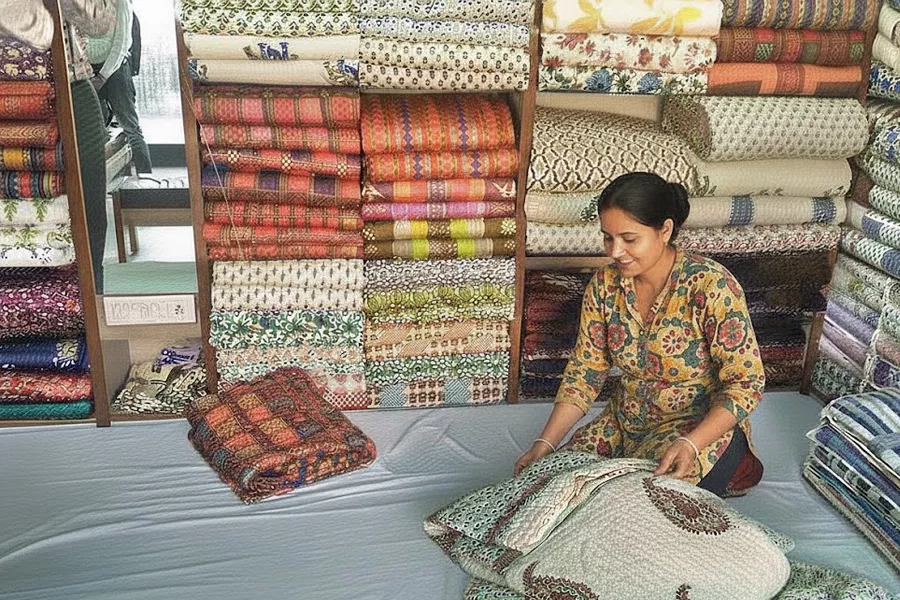
The good razai feel almost weightless when you pick them up, but still fluffy. Ask what’s inside – pure cotton filling is always better for breathability. Also check the stitching; dense, neat stitching keeps the filling from shifting over time.
- What to buy: Razai, bedspreads, cushions, winter bedding.
- Price idea: Single razai from around ₹800–₹2,500, double razai from ₹1,500–₹4,000 depending on quality and print.
8. Tibbati Bazaar – Seasonal Winter Market
If you visit Jaipur in peak winter (roughly November to January), you’ll likely stumble across Tibbati Bazaar – a seasonal market run by Tibetan vendors with racks of sweaters, jackets, shawls, and woolen accessories.
It’s not fancy, but it’s warm, affordable, and full of character. You’ll see families trying on sweaters right at the stalls, kids running around with woolen caps, and shopkeepers chatting in a mix of Hindi and Tibetan. It’s the kind of place you remember later, not just for what you bought, but for the vibe.
9. Purohit Ji Ka Katla & Indira Bazaar – Wedding Shopping Hub
This is where the serious wedding shopping happens. Purohit Ji Ka Katla looks like a maze of shops and staircases, but once you find your way inside, it’s a gold mine for sarees, lehengas, sherwanis, jewelry sets, packaging items, and all the small details that go into an Indian wedding.
Most shops here are used to dealing with bulk buyers – families buying sets for multiple functions and relatives. If that’s you, don’t be shy about asking for wholesale pricing once your bill crosses a certain amount. And always keep some buffer time for alterations and stitching.
10. Khazane Walon Ka Rasta & Haldiyon Ka Rasta – Brass, Copper & Spices
These old lanes still operate on craft-based identities: one area for brass and copper utensils, another for spices and traditional ingredients. If you love cooking, this is the place to look for heavy-bottomed kadhai, spice boxes, and pure masalas that smell like heaven.
Whole spices usually give you better quality than pre-ground mixes. Buy what you need, store in airtight containers, and you’ll have a little bit of Jaipur aroma in your kitchen for months.
Section 3: Modern Malls & New-Age Shopping
After a day or two of dodging traffic in the old city, you’ll probably crave clean washrooms, lifts, and air conditioning. Jaipur’s malls have grown a lot in the last decade, and they’re honestly pretty fun now – especially if you’re traveling with kids or people who aren’t into hardcore bargaining.
11. Gaurav Tower – Old-School Jaipur Mall Energy
Ask any Jaipur local about “GT” and they’ll give you at least one story. Gaurav Tower in Malviya Nagar is one of the oldest and most famous mall-style complexes in the city. It has proper showrooms on the upper levels and a more budget, bazaar-style vibe in the lower and basement areas.

You’ll find everything from branded clothes and footwear to small stalls selling affordable tops, jeans, accessories, and mobile covers. Even if you don’t buy much, it’s a fun place to walk around in the evening, grab a snack, and people-watch.
- What to buy: Budget fashion, casual wear, accessories, some handicrafts, electronics.
- Best for: Teenagers, college crowd, casual evening hangouts.
12. Crystal Court Mall – Modern, Compact & Convenient
Crystal Court, also in the Malviya Nagar area, feels more compact and modern compared to the big giants. It’s popular with local families who want a mix of branded stores, cafes, and a multiplex, all without the overwhelming size of some mega malls.
It’s a good choice if you’re staying nearby or if you want to squeeze in some mall time after visiting other attractions in the same part of the city. Think of it as an all-rounder – not the biggest, not the fanciest, but very usable.
13. MI Road (Mirza Ismail Road) – Street + Store Combo
MI Road is what I’d call Jaipur’s “shopping boulevard.” It’s not a mall, but it has that feeling of a structured, main commercial street with a mix of government emporiums, branded stores, handicraft showrooms, cafes, and old-school bakeries.
If you’re confused about textile or handicraft prices in the bazaars, one smart thing to do is first check out the government-run emporium on MI Road. The prices there are fixed and quality is reliable. You might pay a bit more than a hardcore bargain in the market, but you get peace of mind and clear labeling.
14. Ganpati Plaza & Saraogi Mansion – Fashion Complexes
Close to MI Road, these commercial complexes focus heavily on clothing and fashion. Ganpati Plaza has a mix of western and ethnic wear, while Saraogi Mansion leans more towards bridal and traditional outfits.
If you’re short on time but want to see a concentrated selection of sarees, lehengas, or men’s ethnic wear, these buildings let you compare multiple stores quickly without having to hop around the whole city.
Section 4: Boutiques, Designers & High-End Stores
Once you’ve had your fill of bargaining and mass-market stuff, it’s worth stepping into Jaipur’s boutique and designer world. The prices jump, but so does the quality and uniqueness.
15. Amrapali & Other Heritage Jewelry Houses
Names like Amrapali and a few other legacy jewelers around MI Road and Panch Batti have taken Jaipur’s jewelry to the global stage. These are the places you visit when you’re thinking of investment pieces, not impulse buys.
Expect curated designs, knowledgeable staff, and proper certification. You won’t bargain much here, but you’ll walk out feeling like you bought something that truly reflects the soul of Jaipur craftsmanship.
16. Anokhi & Soma – Block Print & Ethical Fashion
If you love soft cotton, earthy colors, and hand-block prints, Anokhi and Soma in areas like C-Scheme and MI Road should definitely be on your list. These brands work closely with artisans, focus on sustainable production, and keep their designs wearable and timeless.
Prices are higher than street markets, but the fabric quality, stitching, and longevity make up for it. Many locals who are done experimenting with fast fashion eventually end up building their everyday wardrobe around stores like these.
17. Teatro Dhora & Concept Stores
On the more experimental side, you have concept stores like Teatro Dhora and a bunch of newer spaces that mix fashion, art, home decor, and sometimes even a cafe under one roof. These are for days when you want to browse slowly and discover something unexpected.
Pieces here feel more like art than “just clothes.” If you’re building a statement wardrobe or you love the idea of supporting new-age designers who still work with traditional crafts, this is your playground.
18. Heritage Textiles & Specialty Fabric Stores
Then there are textile-focused spaces that almost feel like museums – racks of handwoven, hand-embroidered, and heritage fabrics that you may never see in a normal market. Some sell ready pieces, others focus on lengths of fabric you can later get stitched in your own city.
If you’re a designer, stylist, or just a textile nerd, keep a day aside for this side of Jaipur. It’s easy to lose track of time when you’re staring at real handwork from different regions and eras.
Section 5: Hidden Gems & Local-Only Spots
Apart from the famous names, Jaipur has lots of local markets that almost never show up in generic travel guides but are loved by residents. These are great for more realistic prices and less touristy interactions.
19. Aravali Bazaar – Everyday Home Shopping
Aravali Bazaar is the kind of place locals visit when they need bedsheets, curtains, cushions, or basic decor for the house. The designs are still very “Jaipuri,” but the pricing and atmosphere are more grounded compared to the old city tourist lanes.
20. Riddhi Siddhi Area – Fabric & Wholesale Feel
Around certain inner-city pockets, you’ll find buildings packed with fabric wholesalers and exporters. These areas aren’t fancy, but if you know what you’re doing (or you go with a local), you can get excellent fabrics at much better prices than standalone boutiques.
21. Artisan Lanes Near Johari – Workshops Behind the Shops
Behind the polished showrooms of Johari and other main markets, narrow lanes hide tiny workshops where artisans are quietly doing the real work – cutting stones, setting kundan, doing enamel work, painting miniatures. Not every space is open to visitors, but if a shop owner you trust takes you to see “their” workshop, that’s a special experience.
Quick Comparison: Markets vs Malls vs Boutiques
To make planning easier, here’s a simple table showing what each type of place is best for. You can mix and match depending on your budget, time, and patience level for bargaining.
| Type of Place | Examples | Best For | Price Level | Bargaining |
|---|---|---|---|---|
| Historic Bazaars | Johari, Bapu, Tripolia, Nehru | Jewelry, mojris, quilts, souvenirs | ₹–₹₹₹ (wide range) | Essential in most shops |
| Specialized Markets | Kishanpole, Sireh Deori, Purohit Ji Ka Katla | Woodwork, razai, wedding wear | ₹₹–₹₹₹ | Expected, especially on bulk |
| Modern Malls | Gaurav Tower, Crystal Court | Branded fashion, casual shopping | ₹₹–₹₹₹ | Mostly fixed price |
| Boutiques & Designers | Anokhi, Soma, Amrapali | High-quality, unique pieces | ₹₹₹–₹₹₹₹ | Minimal or none |
| Hidden Local Spots | Aravali Bazaar, local fabric lanes | Everyday items, better local prices | ₹–₹₹ | Yes, but more low-key |
Jaipur Shopping Essentials: Practical Tips
How to Bargain Without Being Rude
Bargaining is normal here, but how you do it matters. Start by asking the price, react calmly (even if it sounds high), and then give your counter offer with a smile. Saying “Yeh thoda zyada lag raha hai” (this feels a bit high) works better than getting aggressive. Most shopkeepers are friendly if you are.
- Check a few shops before committing on big-ticket items.
- For small souvenirs, don’t fight over ₹20–₹50; save your energy for the big buys.
- If you really like something and the difference is small, just take it – you’ll regret leaving it behind more than the extra ₹100.
Payments & Safety
UPI has made life much easier in Jaipur. Even tiny stalls in big markets will often have a QR code. Cards work well in malls and bigger stores. Still, keep some cash handy for rickshaws, street food, and older shops.
- Keep wallets and phones in front pockets or zipped bags in crowded lanes.
- Avoid flashing huge bundles of cash while bargaining.
- For large purchases like jewelry, use cards or bank transfers where possible.
When to Go & How to Plan Your Day
Mornings are calmer; evenings are more atmospheric but also more crowded. In peak winter, bazaars can get quite chilly after sunset, while summers flip the story – evenings become bearable and afternoons can be brutal.
- Do old city bazaars (Johari, Bapu, Tripolia) in the morning or late afternoon.
- Save malls like Gaurav Tower and Crystal Court for the hottest part of the day or late evenings.
- Wear good walking shoes; heels and narrow lanes are not friends.
FAQ: Shopping in Jaipur
Is Jaipur good for budget shopping?
Yes, absolutely. If you stick to bazaar lanes like Bapu, Nehru, and parts of Tripolia, you can get mojris, kurtas, bags, and small decor items at very reasonable prices. The key is bargaining patiently and comparing a few shops before you decide.
Which market is best for authentic jewelry?
Johari Bazaar is still the main hub for jewelry and gemstones. For expensive pieces, choose well-known, established shops and always ask for proper certificates for gold and gemstones. If you’re not confident, it’s better to buy fewer but better pieces from trusted stores.
Where should I go for Jaipuri quilts?
Areas around Sireh Deori Gate, near Hawa Mahal, and some parts of Bapu Bazaar are great for razai and quilts. Look for shops that clearly explain the filling, stitching, and fabric, and don’t be afraid to pick up and feel the weight and softness yourself.
Are malls in Jaipur worth visiting if I’m mainly into local stuff?
Yes, but for different reasons. Malls like Gaurav Tower and Crystal Court are good for a break from the heat, for branded clothing, clean washrooms, and easier food options. You might also find some local-style clothes in modern cuts, which can be a nice balance.
Can I ship my purchases home?
Many shops dealing in marble, big decor pieces, carpets, and furniture offer shipping services. Always get the details in writing – cost, time frame, and whether insurance is included. For smaller items, people often pack things in their checked-in luggage and carry them themselves.
What are the best souvenirs under ₹1,000?
Block-printed scarves, lac bangles, small blue pottery pieces, puppets, and mojris all fit comfortably under a thousand if you shop in the bazaars. These make great gifts because they’re light, easy to pack, and clearly “from Jaipur.”
Is it safe for solo women to shop in Jaipur?
Generally, yes. Stick to busier lanes, avoid very late nights in isolated areas, and dress comfortably. Malls and main bazaars are usually full of families and tourists. If you feel unsure, hire a local driver or guide to stay with you for the day.
How many days do I need just for shopping?
If you’re serious about it, two full days is a good minimum: one for the old city bazaars, and one for malls and boutiques. Add a third day if you want to visit workshops, designer stores, or do detailed wedding shopping.