Taj Mahal Entry Timings & Ticket Prices 2026: Complete Guide to Fees, Hours, Online Booking & Night Viewing
If you’re planning a Taj Mahal visit in 2026, you’ve probably asked the same three questions everyone else does: how much is the ticket really, what time does it open, and do you actually need to book online? A lot of blogs throw numbers at you without context. This guide is different. It’s written the way a local tour planner would brief a friend—clear, updated, and focused on how the monument actually works today.
We’ll walk through current ticket prices for Indians, foreign tourists and SAARC/BIMSTEC visitors, show you exactly how the sunrise–sunset timing rule works, explain night viewing in plain language, and then tie it all together with a practical “how to visit” plan you can follow step by step. Everything is tuned for 2026 and fits perfectly with Rajasthan Tour Driver’s Taj Mahal entry timing and ticket page.

By the time you finish reading, you’ll know your exact ticket cost, the smartest time to go, and how to avoid the classic mistakes that waste time and energy in Agra. You can literally copy‑paste this onto a tour website and your visitors will feel like someone sat them down and explained everything over a cup of chai.
Overview: Taj Mahal Tickets & Timings in 2026
Let’s start with the big picture. The Taj Mahal in 2026 follows a simple structure: tiered ticket prices based on nationality, entry that follows sunrise and sunset instead of fixed clock hours, and a weekly Friday closure. On top of that, there’s a special setup for full‑moon night viewing and a modern online ticket system that uses QR codes instead of paper slips.
The official Taj Mahal website clearly states that the monument opens 30 minutes before sunrise and closes 30 minutes before sunset, with Fridays closed for general viewing. Updated ticket charts aligned with the Archaeological Survey of India show a basic entry fee plus an optional add‑on for visiting the main mausoleum chamber. Children under fifteen enter free. Once you understand those core rules, everything else is just fine‑tuning your timing and budget around them.
Taj Mahal Ticket Prices 2026: Complete Breakdown
Taj Mahal tickets look complicated when you see them in a long government table, but the structure is very straightforward. There are four main visitor categories: Indian/OCI, SAARC/BIMSTEC, foreign tourists, and children under fifteen. For each paying category, there are two elements: main complex entry and an optional mausoleum add‑on.
Multiple 2026 visitor guides that cross‑check with the official Taj ticketing page and ASI notices confirm the same core prices: ₹50 for Indian complex entry, ₹540 for SAARC/BIMSTEC, ₹1,100 for foreign tourists, and an additional ₹200 for anyone who wants to step inside the main mausoleum chamber. Children under fifteen are free for both complex and mausoleum access.
Indian Citizens and OCI Cardholders
If you’re an Indian citizen or hold an Overseas Citizen of India card, the Taj Mahal is still remarkably affordable even in 2026. The fee structure is kept intentionally low to encourage domestic tourism while still contributing to monument maintenance.
- Main complex entry: ₹50 per adult.
- Main mausoleum add‑on: ₹200 per adult (optional but highly recommended).
- Total for full experience: ₹250 per adult.
The ₹50 ticket alone gets you into the gardens, platforms and general complex. The extra ₹200 allows you to walk into the inner chamber where you can see the cenotaphs and the finest marble inlay work up close. Most Indian visitors who make the trip choose the full ₹250 experience because the mausoleum interior is a huge part of what makes the Taj feel so special.
SAARC and BIMSTEC Nationals
Citizens of SAARC and BIMSTEC countries—such as Nepal, Bangladesh, Sri Lanka, Bhutan, Maldives, Myanmar and Thailand—have their own dedicated pricing slab. It sits between the Indian and “general foreign tourist” levels, reflecting a regional cooperation approach to tourism.
- Main complex entry: ₹540 per adult.
- Main mausoleum add‑on: ₹200 per adult (optional).
- Total for full experience: ₹740 per adult.
You’ll need to show a valid passport from a recognised SAARC or BIMSTEC country at booking or at the gate to receive this rate. If you turn up with a passport from outside this group, you’ll be charged at the regular foreign tourist rate instead.
Foreign Tourists (Non‑SAARC/BIMSTEC)
Visitors from everywhere else—Europe, the Americas, Australia, East Asia and other regions—fall into the foreign tourist category. This pricing is higher but still very competitive compared to other world‑famous monuments and UNESCO sites.
- Main complex entry: ₹1,100 per adult.
- Main mausoleum add‑on: ₹200 per adult (optional but usually chosen).
- Total for full experience: ₹1,300 per adult.
Given that this ticket gives you access to the entire Taj complex plus the main tomb chamber, the value is excellent, especially when you consider what visitors routinely pay for iconic sites in cities like Paris or Rome. It’s also worth noting that the pricing is stable and published widely across official and semi‑official channels, so any huge deviation from these numbers is a red flag.
Children Below 15 Years
One of the friendliest aspects of Taj Mahal ticketing is its child policy. Children below fifteen years of age get free entry, regardless of nationality. That includes free access to both the complex and the main mausoleum. Families only pay for the adults and older teens in their group.
In practice, staff may not always ask for age proof if a child clearly looks under fifteen, but carrying a basic ID or school card for older teenagers is smart. It avoids any awkwardness if a ticket checker wants to verify age at the gate on a busy day.
Night Viewing Ticket Prices
On certain nights, the Taj Mahal opens for special moonlight viewing sessions. These nights are limited to the full moon and two days before and after, making a five‑night window each lunar cycle. The night viewing ticket structure is separate from normal daytime tickets and has its own pricing and rules.
- Indicative Indian night ticket: mid‑range amount tailored for locals.
- Indicative foreign night ticket: higher than Indian, but still in a similar range to daytime foreign tickets.
- Children above a small age threshold pay a reduced but non‑zero fee, while very small kids may still be free.
Exact night viewing amounts can vary slightly from one published table to another, so the safest way to present them on a website is to describe them as “separate night viewing tickets with different rates for Indian and foreign visitors, booked directly through the ASI office in Agra.” That keeps you accurate even if minor changes are introduced year to year.
Taj Mahal Ticket Price Table 2026
Here’s a clean, copy‑ready table you can use on a travel website to explain Taj Mahal ticket prices in 2026. It pulls the commonly accepted ASI‑aligned numbers into one place in a visitor‑friendly format.
| Visitor Category | Main Complex Entry | Main Mausoleum Add‑On | Total Ticket (Full Access) | Notes |
|---|---|---|---|---|
| Indian Citizens / OCI | ₹50 | ₹200 | ₹250 | Standard ASI rate; ID recommended. |
| SAARC / BIMSTEC Nationals | ₹540 | ₹200 | ₹740 | Passport required as proof of nationality. |
| Foreign Tourists (Other Countries) | ₹1,100 | ₹200 | ₹1,300 | Most international visitors fall into this category. |
| Children (Below 15 Years) | Free | Free | Free | All nationalities; age proof may be requested. |
| Night Viewing (Example) | Separate night ticket | Included in night ticket | Indian and foreign rates differ | Full moon nights only; limited slots via ASI office. |
You can keep this table as is or slightly tweak the night viewing row if you decide to publish exact rupee amounts from the latest ASI notice. The main three paid categories plus child policy are stable across official and reputable 2026 visitor guides, so they’re safe to rely on.
Taj Mahal Entry Timings 2026: Opening, Closing & Weekly Holiday
Ticket prices are only half the story. The other half is timing. Showing up at the wrong time is one of the most common Taj Mahal mistakes—especially for people who plan everything around a “9 to 5” mentality. The Taj doesn’t work like that. It runs on the sun.
The official Taj Mahal visiting hours page states the rule clearly: the Taj opens 30 minutes before local sunrise and closes 30 minutes before local sunset. On normal days, that roughly looks like a window from about 6:00 am to around 6:00 pm, but the exact times move slightly each month based on the sun’s path over Agra.
Official Opening and Closing Rule
The simple, memorable rule is this:
- Opening time: about 30 minutes before sunrise.
- Closing time: about 30 minutes before sunset.
- Closed every Friday for general visiting.
Updated 2026 visiting guides use this same wording and then offer examples to make it easier to visualise. If sunrise on a given day is at 6:30 am, expect gates around 6:00 am. If sunset is at 6:00 pm, expect the monument to close down around 5:30 pm. That pattern holds throughout the year, even though the clock times shift with the seasons.
Approximate Timings by Season
To make your life easier, here’s how the daily schedule tends to look in different seasons. These are approximate, but they capture the pattern accurately enough for planning.
- Winter (October–March): gates around 6:00–6:30 am; closing around 5:00–5:30 pm.
- Summer (April–June): gates as early as 5:00 am; closing around 6:30 pm.
- Monsoon (July–September): gates around 5:30–6:00 am; closing around 6:00 pm.
If you need precise times for a specific month and date, you can check a sunrise–sunset table for Agra and then simply adjust by half an hour. But even without exact minutes, knowing that the Taj opens around dawn and winds down before dark is enough to structure a good visit.
Last Entry and Ticket Counter Closing Time
One important detail catches many visitors off guard: last entry is earlier than closing time, and ticket counters stop even earlier than last entry. Think of it as a two‑step slowdown as the day ends.
- Last entry: usually around 30 minutes before closing.
- Ticket counter cut‑off: typically 45 minutes or more before sunset.
So if sunset is at 6:00 pm, you shouldn’t be planning to buy a ticket at 5:30 pm. Realistically, you’ll want to have your ticket in hand by around 3:30–4:00 pm if you’re planning a late‑afternoon visit, both to avoid cut‑offs and to give yourself enough time inside the complex before staff begin gently moving people toward the exit.
Friday Closure Explained
The Taj Mahal is closed for general viewing every Friday. This policy is consistent in all official announcements and visitor guides. On Fridays, the mosque inside the complex is used for prayers, and tourist entry is not permitted for sightseeing.
If you’re building an Agra itinerary, treat Friday as your “everything except Taj” day. You can still visit Agra Fort, Mehtab Bagh, Itmad‑ud‑Daulah or Fatehpur Sikri. Just don’t plan your Taj visit for a Friday and expect any flexibility—the closure is firm, not a soft guideline.
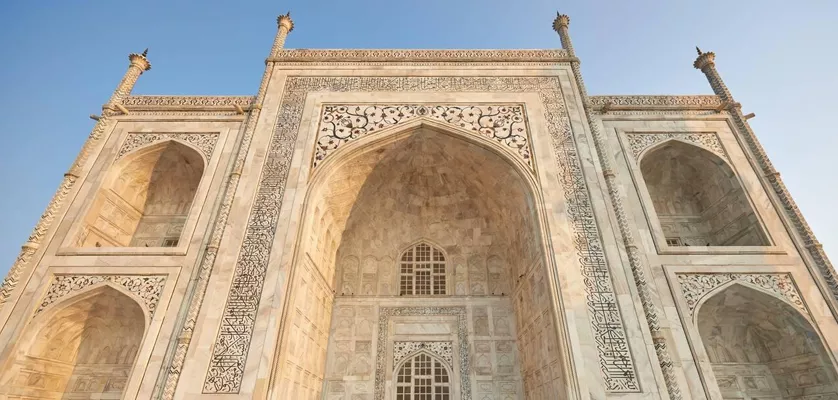
Night Viewing at the Taj Mahal in 2026
For many visitors, the idea of seeing the Taj Mahal in full moonlight is irresistible. Night viewing is real, regulated and available in 2026—but it’s not handled like a normal daytime ticket. It has its own dates, rules and booking system.
When Night Viewing Happens
Night viewing typically runs on five nights each lunar cycle:
- On the night of the full moon.
- Two nights before the full moon.
- Two nights after the full moon.
These are the only nights when visitors are allowed to enter the Taj precinct after dark. If your dates are flexible and you really care about the full moon view, check an updated full moon calendar for your travel month and plan around those five nights.
Night Viewing Timings and Batches
Night viewing doesn’t mean people roam the complex freely all night. Instead, visitors are divided into batches with fixed thirty‑minute slots. The window generally looks like this:
- Overall night viewing window: roughly 8:30 pm to 12:30 am.
- Batch duration: 30 minutes per batch.
- Total visitors: limited number per night, spread across around eight batches.
Each batch is escorted in, given time to view from a designated area (usually near the main gate or plaza, not right up at the tomb), and then escorted out so the next group can come in. You don’t wander into the gardens on your own; the experience is controlled and quiet by design.
Night Viewing Ticket Booking
Unlike regular tickets, Taj Mahal night viewing tickets are usually not sold online. Instead, they’re booked directly via the Archaeological Survey of India office in Agra. Guidelines typically recommend booking at least one to two days before your chosen night in person.
For a website visitor, the key points worth highlighting are:
- Night viewing tickets must be booked in advance.
- Slots are limited and can sell out for peak full moons.
- Security is stricter; visitors can only carry limited belongings inside.
If your travel site offers full‑moon packages, it’s a good idea to clearly state you handle night viewing ticket arrangements and transport as part of a bundle, because many independent travellers find the ASI office requirement confusing.
How to Book Taj Mahal Tickets Online in 2026
Most 2026‑era Taj Mahal guides strongly encourage online booking for day tickets. Not because counter tickets are gone, but because online booking reduces lines, avoids last‑minute stress, and gives you a digital QR code you can reuse even if you misplace the printout.
Official Online Ticket Portal
The official ASI ticket system is accessed through its heritage ticketing portal, which is clearly identified as handling tickets for major Indian monuments. Many reliable travel blogs and tour operators link visitors to this portal rather than hosting tickets themselves, because it ensures your booking is recorded in the government system.
When buying online, always confirm that you’re on the legitimate heritage portal or a clearly authorised booking engine. If a site claims to be the “only official Taj Mahal ticket seller” but doesn’t reference ASI or government sources anywhere, treat it cautiously.
Details You’ll Need to Book Online
Before you open the booking form, collect these details for everyone in your group:
- Full names exactly as they appear on ID or passports.
- Ages and genders.
- Nationality and relevant ID numbers.
- Preferred date of visit.
- Whether each person wants mausoleum access.
- An email address and phone number for confirmations.
Having this ready turns a potentially annoying form into a quick two‑minute task, especially for families or tour leaders booking on behalf of multiple travellers.
Step‑by‑Step Online Booking Flow
The visual design may shift slightly from year to year, but the flow generally follows this pattern:
- Select Taj Mahal from the monument list on the ASI ticketing site.
- Pick your date from an on‑screen calendar.
- Choose your ticket category: Indian/OCI, SAARC/BIMSTEC, or Foreign.
- Enter the number of adults and children in each category.
- Tick the option to include mausoleum access if desired.
- Fill in personal details for each visitor.
- Review the full amount and proceed to payment.
- Complete payment using card, net banking or supported local methods.
- Download or save the e‑ticket with QR codes for each visitor.
Once booked, you can print the QR code or simply show it on your phone at the scanning point near the entrance. Many visitors prefer keeping both a printout and a screenshot, just in case mobile data is weak at the gate.
Online Booking vs Counter Purchase
Online booking is ideal if:
- You plan to visit during peak season (roughly October to March).
- You’re targeting sunrise and want to walk straight in at opening.
- You dislike the idea of standing in a long queue with luggage or kids.
- You’re managing tickets for a group and need everything organised in advance.
Counter tickets are still fine if:
- You’re visiting in off‑season or shoulder months with lower crowds.
- You’re arriving after peak hours, when queues are much shorter.
- You prefer paying cash in person and are not chasing precise timing.
Most modern travel planners simply treat online as the default and counter as a safe backup option if something goes wrong with the portal or if a guest decides to visit last‑minute.
Entry Rules, Security & What You Can Carry Inside
Once your ticket and timing are sorted, there’s one more practical layer to understand: what you can and cannot bring into the Taj Mahal complex. The security screening is thorough and professional, but it moves smoothly if you come prepared.
Security Screening Process
At all main entrances, visitors pass through metal detectors similar to airport security. Bags are scanned or checked, and guards may ask you to open them for a quick visual inspection. It’s straightforward and usually takes a few minutes, unless you arrive at an absolute peak time.
To keep things smooth, empty your pockets of keys, coins and metal objects before walking through the detector, and pack your bag in a way that makes it easy for staff to inspect if needed. Photography equipment is fine as long as it’s personal and not part of a full‑blown commercial setup.
Items Allowed Inside the Taj Mahal
Rules can evolve slightly, but most 2026 visitor guides and first‑hand trip reports agree that the following items are generally allowed:
- Small backpacks and day bags.
- Mobile phones and personal cameras.
- Water bottles (reusable or sealed store‑bought).
- Basic medicines and personal care items like sunscreen.
- Simple photography accessories such as small tripods, within reason.
If you’re carrying professional‑grade video rigs, drone equipment or large lighting setups, that’s a different story and requires prior permission. Casual visitors with phones and normal cameras almost never run into issues.
Items Not Allowed Inside
The Taj Mahal, like any major monument, has a banned items list. The exact wording can vary, but it typically includes:
- Weapons or anything resembling a weapon.
- Explosives, fireworks or flammable chemicals.
- Large bags, suitcases and heavy luggage.
- Alcohol, tobacco, and smoking materials.
- Drones or remote‑controlled flying devices.
If you arrive straight from a long journey with full luggage, it’s best to leave large bags at your hotel or vehicle before heading to the Taj. Some nearby locker facilities exist, but relying on them is always less comfortable than just dropping bags at a secure hotel room or pre‑booked car.
Best Time to Visit the Taj Mahal in 2026
Now for the fun part: when should you actually be there if you want the experience to feel magical rather than exhausting? Every updated Taj guide offers the same basic answer—early morning wins, winter and shoulder months are friendliest, and midday in peak summer is a punishment you should only accept if you absolutely have to.
By Season: When the Weather Helps You
Here’s a quick season‑by‑season view of what 2026 looks like for Taj visitors:
- October–March: widely considered the best season. Cool mornings, mild days, and clear light. Crowds are bigger, but the experience is more comfortable.
- April–June: hot to extremely hot. If you visit, do it at opening time and leave by late morning. The reward is fewer crowds and sometimes lower rates on hotels and tours.
- July–September: monsoon season. Humidity is up and sudden showers happen, but crowds are lower and the gardens are greener. Photographers often love the dramatic skies.
If you’re building packages on a travel site, you can honestly say: “Weather‑wise, October to March is best. Budget‑wise, April and monsoon months can be surprisingly good if you’re willing to adjust your schedule for heat and rain.”
By Time of Day: Why Sunrise Is So Popular
Whether you’re visiting in January or July, time of day matters a lot. Crowd patterns and light quality change dramatically as the sun moves.
- Early morning (opening to around 8:00 am): soft light, cooler temperatures, and far fewer crowds. This is the prime photography and “quiet appreciation” window.
- Late morning to early afternoon (around 10:00 am–2:00 pm): harsh overhead light, peak heat, and maximum crowds. Visit in this window only if you have no other choice.
- Late afternoon (around 4:00–sunset): gentler light returns, some crowd thinning begins, and the monument takes on warm tones.
Sunrise visits require waking up early, especially if you’re coming from Delhi or further away, but almost everyone who does it says the extra effort was worth it. The combination of light, temperature and relative quiet simply beats any other time slot.
Building a Simple Taj Mahal Day Plan
If you’re combining the Taj with other Agra attractions like Agra Fort and Mehtab Bagh, it helps to have a rough structure in mind. This not only keeps your day relaxed but also makes your ticket and timing decisions more logical.
Classic One‑Day Agra Itinerary with Taj
Here’s a sample pace that works well for most visitors:
- 6:00–8:00 am: Taj Mahal visit (arrive as early as you can manage).
- 8:30–9:30 am: Breakfast and short break back at hotel or a nearby restaurant.
- 10:30 am–12:30 pm: Agra Fort, with plenty of time to appreciate architecture and views toward the Taj.
- 1:00–2:00 pm: Lunch and rest in air‑conditioning.
- 4:30–6:00 pm: Mehtab Bagh for sunset views of the Taj across the river.
This approach gives you two very different Taj experiences in one day: close‑up morning detail from inside the complex, and wide, reflective views at sunset from Mehtab Bagh. It spaces walking and heat exposure in a way that feels manageable for most people, including kids and older travellers.

Frequently Asked Questions About Taj Mahal Tickets & Timings 2026
What is the Taj Mahal ticket price for Indian visitors in 2026?
Indian citizens and OCI cardholders pay ₹50 for main complex entry and can add ₹200 if they want to enter the main mausoleum chamber. Most visitors choose the full package, which makes the total ₹250 per adult. Children under fifteen enter free.
How much is the Taj Mahal ticket for foreign tourists?
Foreign visitors from outside SAARC and BIMSTEC countries pay ₹1,100 for main complex entry, plus an optional ₹200 for mausoleum access. The full experience therefore costs ₹1,300 per adult in 2026. This includes access to the gardens, main plinth and the interior viewing area around the cenotaphs.
What are the Taj Mahal opening and closing times?
The Taj Mahal opens 30 minutes before sunrise and closes 30 minutes before sunset. Exact clock times change throughout the year as daylight shifts. A simple way to think about it is roughly 6:00 am to 6:00 pm, with some seasonal variation. Last entry and ticket sales happen earlier than closing time, especially in the late afternoon.
Is the Taj Mahal closed on Fridays?
Yes. The Taj Mahal is closed for general sightseeing every Friday. On that day, only people attending prayers at the mosque inside the complex are allowed in specific areas. For regular visitors, Friday is effectively a non‑visiting day. Plan your Agra schedule so you visit the Taj between Saturday and Thursday instead.
Do I need to book Taj Mahal tickets online?
Online booking is not strictly mandatory, but it is strongly recommended—especially if you’re visiting during the busy October–March period or aiming for sunrise. Booking online through the official ASI ticketing portal gives you a QR code ticket, reduces time in queues and makes the whole process smoother. Ticket counters at the monument do still exist as a backup.
Are Taj Mahal night viewing tickets available online?
No. Night viewing tickets are usually sold separately through the Archaeological Survey of India office in Agra, not through the regular online portal. If you want a full‑moon visit, you’ll need to buy your night viewing ticket in advance at the ASI office and carry the printed ticket for your chosen batch and time slot.
Can children enter the Taj Mahal for free?
Yes. Children below fifteen years old can enter the Taj Mahal free of charge, regardless of nationality. This covers both the main complex and the mausoleum. Families only pay fees for adult and older teen members of their group.
What should I wear and carry for a Taj Mahal visit?
Wear comfortable, breathable clothing suitable for the season and a pair of closed‑toe walking shoes or sturdy sandals. Carry a small day bag with water, sunscreen, sunglasses and basic personal items. Avoid bringing large bags, alcohol, sharp objects, drones or anything that could be considered hazardous or disruptive; these will either be refused at security or slow down your entry.
Is the mausoleum interior worth the extra ₹200?
For most travellers, yes. The interior mausoleum fee gives you access to the inner chamber where the cenotaphs are located and allows you to see the detail of marble inlay work from much closer than outside views alone. If you’ve travelled all the way to Agra and are not on an ultra‑tight budget, the extra ₹200 is usually considered money well spent.