Historical Monuments in Delhi – Tickets, Timings and Easy Travel Tips (2026)
Delhi is one of those cities where you can walk from a busy market into a centuries‑old fort in just a few minutes. Old Delhi and New Delhi look different on the surface, but both are full of stories, monuments and everyday local life. If you enjoy history, architecture or simply slow walks through interesting places, the city is a fantastic playground.
The only challenge is choosing where to go and how to fit everything into your schedule. Ticket prices, opening hours and experiences are different at each site, and it is easy to feel lost when you start planning your day. This long guide brings everything together in one place in simple, casual English so you do not have to jump between multiple tabs.
Below you will find Delhi’s most popular forts, tombs, mosques and modern landmarks, each with a short story, what to look out for, approximate entry fees, usual timings and a few low‑stress tips. You can read it like a friendly conversation, pick the places that match your style and then create your own relaxed itinerary around them.
Ticket prices and timings can change with new ASI or local updates, so it is always a good idea to double‑check the latest details on official or trusted websites before your visit.
Humayun’s Tomb – A Peaceful Mughal Garden Tomb
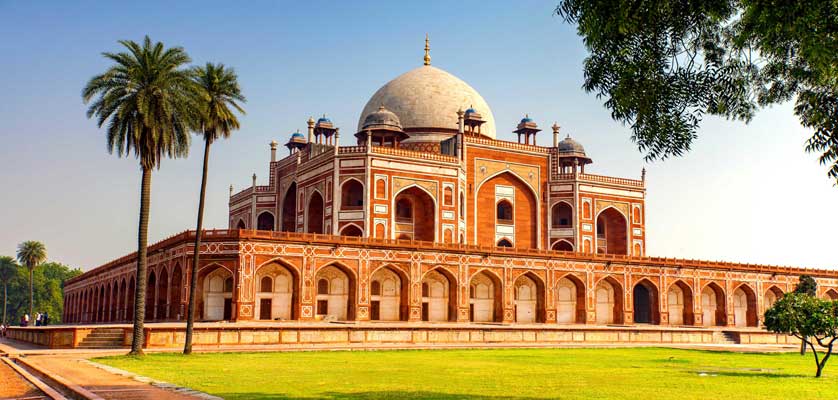
Humayun’s Tomb is one of the most beautiful and calm monuments in Delhi. It sits inside a large charbagh‑style garden, with straight walkways, water channels, lawns and smaller tombs scattered around. Even on a busy day, you can usually find a quiet corner to sit down and just enjoy the view of the main structure.
The tomb was commissioned by Haji Begum, Humayun’s wife, and it is often called a “pre‑Taj Mahal” monument because its style directly influenced the design of later Mughal tombs. The combination of red sandstone, white marble, delicate patterns and the big central dome gives it a classic, timeless feel. If you like photography, symmetry and peaceful gardens, this spot will easily become one of your favourites.
Humayun’s Tomb – Approximate Entry Fee (2025–2026)
| 1 | Indian citizens | Around ₹40–₹50 per person |
|---|---|---|
| 2 | Foreign visitors | Around ₹600 per person |
| 3 | SAARC / BIMSTEC visitors | Often similar to Indian tickets |
| 4 | Children below 15 years | Usually free entry |
Humayun’s Tomb – Usual Timings
The complex is normally open daily from around 6:00 AM to 6:00 PM. Early morning and late afternoon are ideal if you want gentle light and lower temperatures.
Friendly tip: Do not rush this place. Give yourself one to two hours, walk down the side paths and climb the main platform slowly. The monument looks different from each angle, so take time to notice the details.
Hauz Khas – Old Ruins, Lake Views and Modern Cafés

Hauz Khas is perfect if you prefer places that feel lived‑in rather than museum‑like. The monument complex includes the remains of an old madrasa, a mosque and several tombs surrounding a water reservoir, all dating back to the Delhi Sultanate period. Just below the ruins is Hauz Khas Lake, which adds a quieter, green touch to the area.
Right next to the historic section lies Hauz Khas Village – a narrow cluster of boutiques, art studios, bars and rooftop cafés. You can easily spend a relaxed half‑day here: old stones and lake views in the afternoon, followed by a coffee or dinner with a view from one of the terraces in the evening. It is very popular with local youngsters, photographers and couples looking for a slightly artsy vibe.
Hauz Khas Fort – Approximate Entry Fee
| 1 | Indian citizens | Around ₹20 per person |
|---|---|---|
| 2 | Foreign visitors | Around ₹250 per person |
| 3 | Children below 15 years | Usually free |
Hauz Khas – Usual Timings
The historic complex generally remains open from around 10:30 AM to 7:00 PM, with Sundays often being a closed or reduced‑access day. Shops and cafés nearby stay open much later into the night.
Friendly tip: The stones inside the ruins can be uneven and slightly slippery in monsoon, so comfortable shoes are important. Try to be near the lake viewpoint around sunset for some of the nicest photos of the day.
Qutub Minar – Delhi’s Tall Stone Landmark

Qutub Minar is probably the monument most people picture when they think of Delhi. The tall tower, detailed stone carvings and open ruins around it make the whole complex feel both grand and slightly mysterious. It is also a UNESCO World Heritage Site and one of the busiest spots on most travellers’ lists.
The minaret has five storeys with projecting balconies and is covered in intricate Arabic inscriptions and geometric patterns. Around it you will find the famous Iron Pillar, which has stood for centuries without rusting, as well as one of the earliest mosques in India and different gateways and walls. You can simply wander, stop whenever something catches your eye, and slowly piece together the story of the place.
Qutub Minar – Approximate Entry Fee (2025–2026)
| 1 | Indian citizens | Around ₹40–₹50 per person |
|---|---|---|
| 2 | Foreign visitors | Around ₹600 per person |
| 3 | Children below 15 years | Usually free |
Qutub Minar – Usual Timings
The complex normally remains open every day from around 7:00 AM to 5:00 PM. On weekends and public holidays, expect more crowds and longer lines at the entry gate.
Friendly tip: If you are visiting in peak season, try reaching soon after opening time. You will avoid the biggest groups and get cleaner shots of the tower and ruins.
Jantar Mantar – A Monument for Sky Watchers

Jantar Mantar is where history, science and design meet in a very unusual way. Instead of walls and domes, you see large, sculptural instruments arranged in an open courtyard right in the middle of New Delhi. These were built in the 18th century to observe the position of the sun, moon and stars and to measure time accurately without any modern devices.
The huge triangular sundial is the star attraction, but the other instruments are also fun to look at once you understand what they do. The shapes are bold and minimalist, which also makes the site surprisingly photogenic. If you are travelling with children or anyone who enjoys clever design, this place adds a nice twist to your monument circuit.
Jantar Mantar – Approximate Entry Fee
| 1 | Indian citizens | Around ₹20 per person |
|---|---|---|
| 2 | Foreign visitors | Around ₹250 per person |
| 3 | Children below 15 years | Usually free |
Jantar Mantar – Usual Timings
The site is generally open daily from around 6:00 AM to 6:00 PM.
Friendly tip: Consider hiring a short guided explanation at the entrance or reading a bit about the instruments beforehand. Knowing what you are looking at makes the visit a lot more interesting.
Red Fort – Old Delhi’s Massive Mughal Fortress
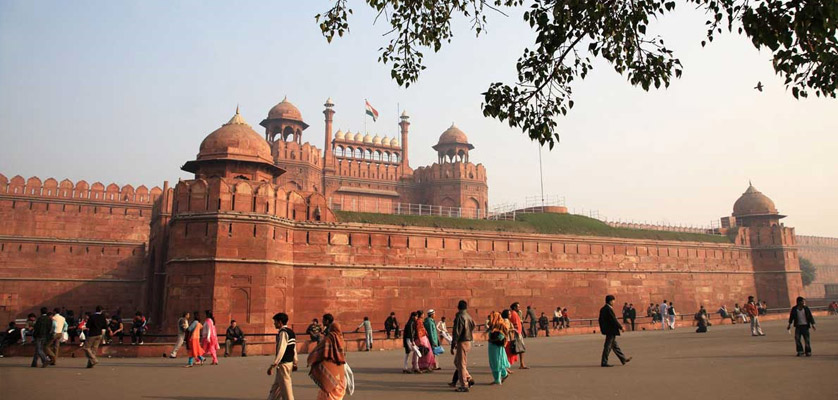
The Red Fort is one of India’s most iconic monuments and a symbol you will see often in books and news. Built by Shah Jahan, it was once the main residence and power centre of the Mughal emperors. The high red sandstone walls, long walkways and multiple courtyards inside give you a sense of how grand the capital must have felt in its time.
Today, the fort is not just about old buildings. It holds museums with objects from the Mughal period, and it is also the site of the Independence Day flag‑hoisting ceremony. As you move through the different halls and structures, it helps to imagine the space filled with courtiers, soldiers and royal processions rather than just tourists with cameras.
Red Fort – Approximate Entry Fee (2025–2026)
| 1 | Indian citizens | Around ₹50 per person |
|---|---|---|
| 2 | Foreign visitors | Around ₹600–₹950 per person, depending on category |
| 3 | SAARC / BIMSTEC visitors | Often slightly lower than standard foreign tickets |
| 4 | Children below 15 years | Usually free entry |
Red Fort – Usual Timings (2026)
As of early 2026, the Red Fort is open on all days of the week, including Mondays, generally from sunrise to around 9:00 PM. Earlier it used to be closed on Mondays, but that rule has now been removed.
Friendly tip: Evening visits can be a nice change if you have already spent your day sightseeing elsewhere, but mornings are still better if you want fewer crowds and softer light for photos.
Red Fort Archaeological Museum – A Peek into Mughal Everyday Life

Inside the Red Fort complex you will also find the Archaeological Museum, which many visitors overlook but is worth stepping into if you enjoy objects and stories more than just architecture. The galleries display miniature paintings, weapons, textiles, coins, royal costumes and other items that help you imagine everyday life in the Mughal world.
Instead of rushing past, slow down and read a few of the descriptions. A single sword, piece of jewellery or handwritten text can sometimes tell you more about the past than a large empty hall. It is also a nice way to take a break from the sun in the middle of your fort visit.
Red Fort Museum – Approximate Entry Fee
| 1 | Indian citizens | Around ₹60 per person |
|---|---|---|
| 2 | Foreign visitors | Around ₹900 per person |
| 3 | Children below 15 years | Usually free |
Red Fort Museum – Usual Timings
The museum typically follows fort timings and remains open on all days now that Monday closure has been removed, with visiting hours roughly between 9:00 AM and 5:00 PM.
Friendly tip: If you are short on time, pick one or two sections instead of trying to see every single display. Focus on what genuinely interests you.
Safdarjung Tomb – A Quiet Mughal‑Style Escape

Safdarjung’s Tomb is sometimes called the last grand Mughal garden tomb in Delhi. Compared to Humayun’s Tomb, it is less famous and less crowded, which actually works in your favour if you enjoy peaceful walks and photography without too many people in the frame.
The main structure rises from the centre of a large garden, surrounded by pathways and water channels. Red and buff sandstone with marble details, arches and a central dome create a familiar Mughal look, but the slightly faded feel of the place adds its own charm. It is a good “bonus” stop if you have already ticked off the bigger monuments.
Safdarjung Tomb – Approximate Entry Fee
| 1 | Indian citizens | Around ₹20 per person |
|---|---|---|
| 2 | Foreign visitors | Around ₹250 per person |
| 3 | Children below 15 years | Usually free |
Safdarjung Tomb – Usual Timings
The tomb is usually open daily from around 7:00 AM to 5:00 PM.
Friendly tip: If you are staying nearby in South or Central Delhi, visit early in the morning for a calm start to your day. You might find you have the gardens almost to yourself.
Tughlaqabad Fort – Wild Ruins and Wide Views

Tughlaqabad Fort feels very different from polished tourist sites. It is large, broken and a little wild, spread over rocky ground on the edge of the city. Built in the 14th century as a powerful defensive capital, it was abandoned not too long after, which is why it looks more like a dramatic ruin than a restored fort today.
If you like climbing, exploring and open spaces, this is a fun place to wander. High walls, bastions and scattered stone sections give you plenty of viewpoints. It is less about reading detailed plaques and more about walking, looking around and imagining how it must have functioned in its prime.
Tughlaqabad Fort – Approximate Entry Fee
| 1 | Indian citizens | Around ₹20 per person |
|---|---|---|
| 2 | Foreign visitors | Around ₹250 per person |
| 3 | Children below 15 years | Usually free |
Tughlaqabad Fort – Usual Timings
The fort is generally open on all weekdays from around 7:00 AM to 5:00 PM.
Friendly tip: There is very little shade, so avoid the hottest part of the day. A hat, water bottle and strong shoes are almost mandatory here.
Feroz Shah Kotla – A Fort Full of Layers

Feroz Shah Kotla stands between Old and New Delhi and offers a mix of palaces, mosque remains, underground rooms and an Ashokan pillar that was transported here centuries ago. It was once part of a planned city called Firozabad and still holds traces of that ambition in its layout and surviving structures.
The fort has a slightly mysterious reputation because of the dark corridors, quiet corners and personal rituals some people perform there. For everyday visitors, though, it is simply an interesting, less‑crowded site to walk through and photograph. You can feel the contrast between the ruins inside and the modern stadiums and roads just outside the walls.
Feroz Shah Kotla – Approximate Entry Fee
| 1 | Indian citizens | Around ₹20 per person |
|---|---|---|
| 2 | Foreign visitors | Around ₹250 per person |
| 3 | Children below 15 years | Usually free |
Feroz Shah Kotla – Usual Timings
The fort is usually open daily from around 10:00 AM to 7:00 PM.
Friendly tip: If you are not comfortable with dark, closed spaces, avoid going too deep into underground sections and stick to open areas and terraces.
Purana Qila – Old Fort with a Relaxing Lake

Purana Qila, or Old Fort, is another large historical complex that feels slightly more relaxed than some of the big‑name monuments. The walls and gates are impressive, and inside you will find lawns, pathways and a few main structures such as Sher Mandal and the Qila‑i‑Khuna mosque, each with its own story.
In the evenings, a sound‑and‑light show is often organised here, which takes you through the history of Delhi with narrated stories and colourful lights. Even if you skip the show, the fort is a good place for a simple walk. The fact that there is also a lake nearby makes it feel like a mini escape from the city’s usual pace.
Purana Qila – Approximate Entry Fee
| 1 | Indian citizens | Around ₹20 per person |
|---|---|---|
| 2 | Foreign visitors | Around ₹250 per person |
| 3 | Children below 15 years | Usually free |
Purana Qila – Usual Timings
The fort is normally open every day from around 7:00 AM to 5:00 PM.
Friendly tip: Keep some extra time aside if you also want to try boating at the nearby Old Fort Lake. The two experiences complement each other nicely.
Old Fort Lake – Simple Boating Beside Ancient Walls

Old Fort Lake sits just outside Purana Qila and is a nice break from monuments and history. You can rent a paddle boat or row boat and gently move across the water while looking at the fort walls and trees around you. It is not a high‑adrenaline activity, but that is exactly why it works so well after a long day of sightseeing.
Families with kids enjoy it, couples like the calm setting and even solo travellers can use it as a short “reset” before heading back into the city. It is one of those simple experiences that stays in your memory because of how different it feels from Delhi’s usual noise.
Old Fort Lake – Approximate Entry Fee
| 1 | Entry for adults (Indian or foreign) | Around ₹20 for access |
|---|---|---|
| 2 | Children below 15 years | Usually free entry; boating charges extra |
Old Fort Lake – Usual Timings
The lake area is typically open daily from around 7:00 AM to 5:00 PM, though exact boating timings may vary with season and light.
Friendly tip: Go during cooler hours and carry a light jacket in winter, as being on the water can feel slightly cooler than on land.
Archaeological Museum, Purana Qila – Objects from Many Eras

Within the Purana Qila complex, the Archaeological Museum displays finds from excavations in and around Delhi, covering a long span from ancient times to the Mughal period. Pottery, coins, tools, small figurines and carved stones are all arranged in a way that lets you trace how the city developed over centuries.
It is not a huge museum, but it adds a rich layer of context to everything you have seen outside. Walking through the galleries after exploring the fort makes it easier to connect the dots between different time periods and styles.
Purana Qila Museum – Approximate Entry Fee
| 1 | Indian citizens | Around ₹5 per person |
|---|---|---|
| 2 | Foreign visitors | Around ₹5 per person |
| 3 | Children below 15 years | Usually free |
Purana Qila Museum – Usual Timings
The museum is generally open from around 10:00 AM to 5:00 PM and often remains closed on Fridays.
Friendly tip: Because the entry fee is very low, it is worth a quick visit even if you only have 30–40 minutes. Pick a few displays that catch your eye instead of trying to read every single label.
India Gate and Kartavya Path – Evening Walk and Street Snacks
While India Gate is not a “ticketed monument” like the forts and tombs, it is an important war memorial and one of the most loved public spaces in Delhi. Locals come here in the evenings for walks, ice‑cream and casual time with family and friends, and travellers get to see a softer side of the city.
There is no entry fee for India Gate, and the lawns around Kartavya Path (the renovated Rajpath area) stay active well into the evening. You can combine this stop with Rashtrapati Bhavan views and a quick photo session without needing a full formal tour.
Friendly tip: Come after sunset in winter or later in the evening in summer. The lighting, cool breeze and relaxed crowd make it a very easy place to end your day.
Rashtrapati Bhavan – A Glimpse of the Presidential Estate
If you are interested in institutions and formal architecture, you can also look into guided tours of Rashtrapati Bhavan, the official residence of the President of India. These tours have to be booked online in advance and usually run on selected days with a small ticket fee.
The schedule and access rules change from time to time, especially around special events and security requirements, so always rely on the official booking website for the latest information. Even if you do not go inside, a simple drive‑by or quick stop outside the gates gives you a good sense of New Delhi’s ceremonial heart.
Free Entry Monuments in Delhi
Jama Masjid – A Living Place of Worship
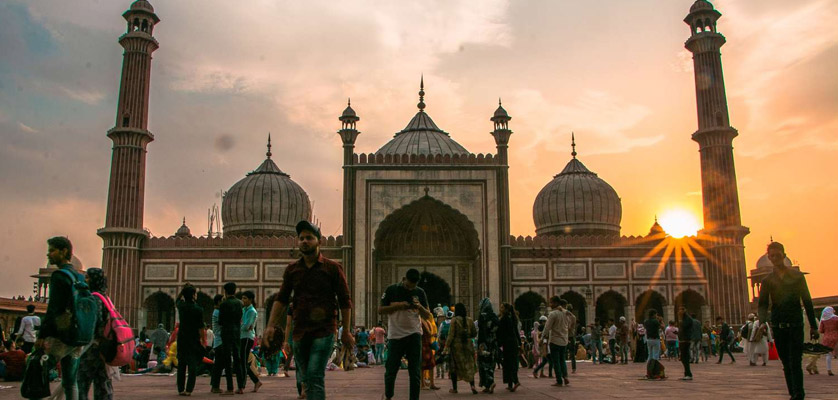
Jama Masjid is one of the largest mosques in India and sits right in the heart of Old Delhi, just a short walk from the chaos of Chandni Chowk. Built by Shah Jahan, it took several years and thousands of workers to complete. Today it continues to function as an active place of worship while also welcoming respectful visitors from around the world.
The mosque has three main gates, a large courtyard that can hold thousands of people and two tall minarets. From the steps, you can look down at the busy streets outside; from inside, you get a surprisingly calm space, especially between prayer times. If you climb the minaret (when allowed), you get one of the best views over Old Delhi’s rooftops.
Jama Masjid – Entry and Timings (usually)
Entry to the mosque itself is generally free for visitors. The place usually opens from around 7:00 AM to 12:00 PM, and again from around 1:30 PM to 6:30 PM. There may be a separate charge for photography or for climbing the minaret.
Friendly tip: Dress modestly, keep your voice low and avoid visiting during main prayer times unless you know the local customs well. This is very much a living religious space, not just a photo stop.
Lotus Temple – Quiet Reflections in a Modern Building

The Lotus Temple is one of Delhi’s most photographed modern landmarks. Built as a Bahá’í House of Worship, it is shaped like a half‑open lotus flower with white marble petals and sits in the middle of carefully maintained gardens. It is open to people of all faiths and encourages quiet personal reflection rather than any fixed rituals.
Inside the main hall there are no statues, pictures or loud announcements. You simply sit in silence with other visitors, which can feel rare and refreshing in a city as busy as Delhi. Outside, the curves of the building and water bodies around it make it a favourite spot for photographers and architecture lovers.
Lotus Temple – Entry and Timings (2026, usually)
Entry to the temple is generally free. In most seasons it stays open from about 9:00 AM until late afternoon or early evening, and it is usually closed on Mondays. Exact opening and closing hours can shift with season, so it is safest to check the latest timing on the official Lotus Temple website before you head out.
Friendly tip: Plan to spend at least 30–40 minutes inside the hall if you can. The longer you sit, the more you notice how quiet and calming the place feels.
Suggested 1‑Day and 2‑Day Delhi Monument Itineraries
When you look at a long list of monuments, it can feel a bit overwhelming to decide what to see first. To make things easier, here are a couple of simple, realistic plans you can follow or modify based on your own pace and interests.
Classic 1‑Day “First Time in Delhi” Plan
This route is ideal if you are visiting Delhi for the first time and want a good mix of Old Delhi, New Delhi and a few iconic landmarks without making the day too exhausting.
Morning: Start early at Humayun’s Tomb. The light is soft, the air is relatively cool and the gardens are usually quiet. Spend at least 90 minutes here walking through the complex and taking photos from different angles.
From there, head towards India Gate and Kartavya Path. You can simply drive by for photos or stop for a short walk if the weather is pleasant. It is an easy way to see the ceremonial heart of New Delhi and get a feel for the wide avenues and official buildings.
Afternoon: After lunch, move to Qutub Minar. Give yourself a good 1.5 to 2 hours to explore the complex slowly. Look at the carvings, the Iron Pillar and the different ruined structures instead of just taking a quick picture of the tower and walking away.
If you still have energy and time, you can add a short visit to Hauz Khas in the late afternoon for lake views and a relaxed coffee break at one of the rooftop cafés.
Evening: Finish your day at India Gate if you did not stop there earlier. The atmosphere in the evening is completely different from the morning – families, kids with balloons, ice‑cream carts and a cooler breeze. It is a gentle way to end a full sightseeing day.
Relaxed 2‑Day Heritage Plan
If you have two days, you can split Old Delhi and New Delhi areas and avoid feeling rushed. This also gives you more time to sit, observe and enjoy small details.
Day 1 – Old Delhi and around: Start with Red Fort in the morning. Explore the fort, its museums and the different pavilions at a calm pace. From there, walk or take a short ride to Jama Masjid and experience the transition from a formal royal complex to a living religious space.
After lunch in or around Chandni Chowk, you can either explore the markets or head to Feroz Shah Kotla for a quieter, offbeat fort experience. If you still have time in the evening, add India Gate as a final stop.
Day 2 – New Delhi and South Delhi: Begin at Humayun’s Tomb, then visit Safdarjung Tomb or Lodhi Garden for more green space and tomb architecture. After lunch, include Qutub Minar, and finish at Hauz Khas for sunset and dinner.
This spread keeps your daily travel time reasonable while still covering most of the big names plus a few quieter gems.
Best Season and Time of Day to Visit Delhi’s Monuments
Delhi’s weather can change quite dramatically through the year, so the season you choose makes a big difference to how enjoyable your monument visits feel. You can technically travel any time of year, but some months are definitely more comfortable than others.
October to March is usually considered the best window for sightseeing. Days are cooler, the sun feels gentler and you can walk around large complexes like Red Fort or Purana Qila without feeling completely drained. In December and January, mornings can be foggy, but that fog sometimes adds a soft, almost dreamy mood to your photos if you like that kind of atmosphere.
April to June is hot, with afternoons that can feel very harsh if you are out in the open. If you have to visit during these months, try to plan your outdoor stops for early morning and late afternoon and keep the hottest hours for indoor museums, malls or your hotel.
The monsoon months around July and August bring occasional showers and more humidity. Some people enjoy the fresh, washed‑clean look of gardens and trees after rain, but you need to be careful on wet stone steps and paths. A light rain jacket or umbrella can be very useful then.
Whatever the season, early morning is almost always the most pleasant time of day for monuments. The light is softer, crowds are thinner and even busy sites like Qutub Minar or Jama Masjid feel a bit more peaceful. Late afternoon and golden hour are the second best choices if you prefer not to wake up too early.
Simple Food and Snack Ideas Around the Monuments
A good monuments day in Delhi almost always includes some memorable food. You do not need to plan a complicated fine‑dining schedule; a mix of simple local snacks, cafés and one or two proper meals can keep you energised and happy throughout the day.
Around Old Delhi (Red Fort and Jama Masjid), you will find countless options for chaat, kebabs, parathas and sweets. If you are not used to heavy or very spicy food, start slow, share plates with your group and carry basic medicines just in case something does not agree with you. Choosing slightly busier, well‑known shops is usually a safer bet.
Near Humayun’s Tomb and India Gate, you can combine your monument visit with a stop at a simple café or restaurant in central Delhi. Many travellers like to have a relaxed sit‑down lunch in this part of town before heading out again in the afternoon.
Around Hauz Khas and Qutub Minar, you will find a mix of modern cafés, small bakeries and casual restaurants serving everything from coffee and sandwiches to North Indian and international dishes. This is a good area for people who like comfortable seating, clean washrooms and an easy, contemporary vibe.
Whatever your plan, it helps to carry a reusable water bottle and a few light snacks like nuts or biscuits in your bag. That way, if you get hungry in the middle of a fort or on the way to the next stop, you do not have to rush your visit just to hunt for food.
More Quick Questions Travellers Often Ask
Q. Do I need to book monument tickets online in advance?
For most Delhi monuments, you can still buy tickets at the gate, but online booking
is becoming more common and can save you time at popular sites, especially on weekends
and holidays. It is worth checking if an official online option is available
for the places on your list.
Q. Can I visit all these monuments using the metro?
You can cover many of them with a mix of metro and short cab or auto‑rickshaw rides.
Stations near central and south Delhi are well connected. For example, Qutub Minar,
Hauz Khas and parts of Old Delhi all have convenient metro access within a short ride
of the main sites.
Q. Is it okay to visit monuments alone?
Yes, solo travellers visit Delhi’s monuments all the time.
As with any big city, it helps to stay aware of your surroundings,
avoid flashing expensive items unnecessarily and use reliable transport.
During normal visiting hours, the main sites are busy enough
that you will rarely feel isolated.
Q. Are there any dress codes I should keep in mind?
At forts and tombs, there is usually no strict dress code, but comfortable,
modest clothing always works best. At religious places like Jama Masjid and nearby shrines,
shoulders and knees should be covered and you may be asked to remove your shoes
or use a shawl provided at the entrance.
Q. Can I use drones for photography?
In most cases, drones are not allowed over protected monuments without special permission.
Even tripods and professional shooting setups can require prior approval.
If in doubt, ask at the ticket counter or security before unpacking your gear.
Practical Tips for a Comfortable Monuments Tour
Delhi’s monuments are best enjoyed at a relaxed pace. Start early to avoid harsh heat, keep a water bottle and small snacks with you and wear shoes you can walk in for several hours. Metro plus cabs or auto‑rickshaws make a good combination for moving between far‑apart sites.
Try not to pack too many places into a single day. Three or four major monuments, with a proper lunch break and maybe a short market or food stop, will feel much better than ticking off eight places with no time to actually look around. Always check the latest timings and ticket information from official or updated sources, because these can change due to maintenance or special events.
Above all, give yourself permission to slow down. Sit in a garden, watch the light change on a stone wall, listen to the sounds around you. Delhi’s monuments are not just about dates and rulers; they are about how the past quietly sits inside the present, waiting for you to notice it.
Recent Posts
 Amer Fort Boating 2026 Guide: Maota Lake Tickets & Timings
Discover Amer Fort’s new Maota Lake boating, updated 2026 ticket rates, timings, safety rules and best visiting months.
 Luxury Rajasthan Tour with Oberoi, Taj & Leela Hotels
Experience royal Rajasthan in comfort with Oberoi, Taj and Leela luxury palace stays.
 Luxury Tempo Traveller & Van Hire in India 2026 – Rates, Features & Booking
Enjoy luxury van hire in India for safe, comfortable family and group travel.
 Top 10 Vehicle Hire Companies in India for Tourists
Discover the top 10 vehicle hire companies in India offering safe, comfortable tourist travel.
 Delhi Agra Jaipur Tour by Luxury Car and Private Driver
Enjoy a Delhi Agra Jaipur tour with a luxury car, private driver and flexibility.
 Luxury Car and Driver for Comfortable Rajasthan Tour
Explore Rajasthan in comfort with a luxury car, private driver and flexible custom tour.
 Jaisalmer Travel Guide for Foreign Tourists: Best Time, Desert Tours & Tips
Plan your Jaisalmer trip with ideal seasons, desert tour packages and essential foreigner tips.
 Hidden Villages of Rajasthan: Offbeat Rural Experiences & Village Travel Guide
Hidden Villages of Rajasthan: Offbeat Rural Stays, Homestays & Authentic Village Life.
-
Amer Fort Boating 2026 Guide: Maota Lake Tickets & Timings
Discover Amer Fort’s new Maota Lake boating, updated 2026 ticket rates, timings, safety rules and best visiting months.
-
Luxury Rajasthan Tour with Oberoi, Taj & Leela Hotels
Experience royal Rajasthan in comfort with Oberoi, Taj and Leela luxury palace stays.
-
Luxury Tempo Traveller & Van Hire in India 2026 – Rates, Features & Booking
Enjoy luxury van hire in India for safe, comfortable family and group travel.
-
Top 10 Vehicle Hire Companies in India for Tourists
Discover the top 10 vehicle hire companies in India offering safe, comfortable tourist travel.
-
Delhi Agra Jaipur Tour by Luxury Car and Private Driver
Enjoy a Delhi Agra Jaipur tour with a luxury car, private driver and flexibility.
-
Luxury Car and Driver for Comfortable Rajasthan Tour
Explore Rajasthan in comfort with a luxury car, private driver and flexible custom tour.
-
Jaisalmer Travel Guide for Foreign Tourists: Best Time, Desert Tours & Tips
Plan your Jaisalmer trip with ideal seasons, desert tour packages and essential foreigner tips.
-
Hidden Villages of Rajasthan: Offbeat Rural Experiences & Village Travel Guide
Hidden Villages of Rajasthan: Offbeat Rural Stays, Homestays & Authentic Village Life.