How Much is Agra Fort Ticket 2026? Entry Fee, Hours & Visiting Tips
You're standing at Lahore Gate, the red sandstone fortress looming before you. But before you can step through and explore one of India's most strategically important Mughal monuments, you need answers: How much will this cost? What time should I arrive? Will I have enough time? What should I actually expect once I'm inside?
I've visited Agra Fort dozens of times across different seasons, and I can tell you this—most travelers arrive unprepared. They show up mid-morning with vague expectations, pay more than necessary, rush through in 45 minutes, and leave thinking "it was fine" without ever understanding what they missed. This shouldn't be you. Agra Fort deserves better than that rushed experience, and proper planning transforms it from a checkbox monument into a genuinely moving encounter with Mughal imperial architecture.
This guide contains everything I've learned from years of visiting this fortress, researching current pricing, and talking with local guides. It covers exact ticket prices (verified directly from ASI official sources January 2026), realistic opening hours, the psychological best times to visit, and practical tips that separate comfortable experiences from exhausting ones.
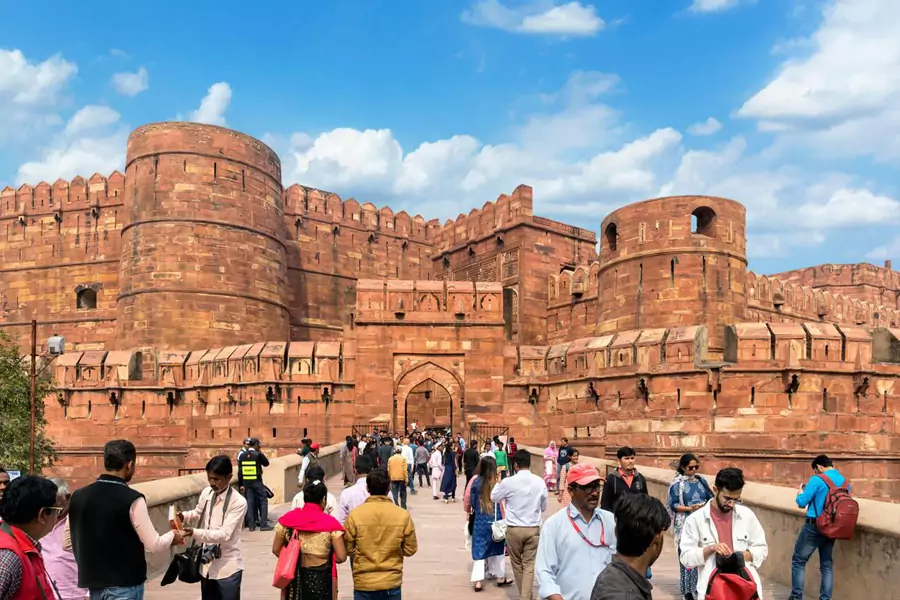
Agra Fort Ticket Prices 2026: What You'll Actually Pay
Let me be direct about pricing. The tariff structure for Agra Fort is clearer than many assume, but it's also layered with several components. Understanding each piece prevents invoice surprises.
ASI entry fees (Archaeological Survey of India)
The Archaeological Survey of India manages ticket sales for Agra Fort. Here's what the official 2026 pricing looks like:
Indian Citizens: ₹50 on weekdays (Mon–Thu, Sat–Sun). ₹40 on Fridays. Children below 15 years enter free—no catches, no additional fees.
SAARC/BIMSTEC Nationals: ₹90 weekdays, ₹40 Fridays. This category includes Afghanistan, Bangladesh, Bhutan, Maldives, Nepal, Pakistan, and Sri Lanka citizens. If you're from these countries with a passport, you qualify for this rate.
Foreign Tourists (all other nationalities): ₹650 weekdays (Mon–Thu, Sat–Sun), ₹600 Fridays. This is the most common rate for international visitors.
The additional ASI World Heritage fee (optional but often misunderstood)
Here's where confusion enters. Because Agra Fort is a UNESCO World Heritage site, the ASI offers an optional additional fee of ₹850 per person for foreign nationals. This is genuinely optional—not mandatory. The fee theoretically entitles you to "additional facilities," though in practice, most travelers never see what these additional facilities are. Skip it unless you want to support heritage conservation.
Indian citizens and SAARC/BIMSTEC nationals do not pay this extra fee. The pricing I listed above is their complete entry cost.
ADA toll tax (Pathkar) – Only for foreign tourists
Foreign tourists also encounter an ADA toll tax (called Pathkar) of ₹500. However—and this is crucial—this toll is shared across monuments. Purchase a ₹500 ADA ticket at Taj Mahal, Agra Fort, Fatehpur Sikri, Akbar's Tomb, or Itmad-ud-Daulah, and you don't pay the toll again at other monuments on the same day. It's a single-day pass, not per-monument. On Fridays, the ADA waives this toll entirely—so Friday visits are genuinely cheaper for foreign tourists.
Indian and SAARC/BIMSTEC tourists do not pay this ADA toll.
Photography fees (optional but clarify upfront)
Still photography for personal use is free. If you're a professional photographer or commercial videographer, a ₹200 still photography fee and ₹25 video fee apply. Casual travelers with smartphones pay nothing. This is rarely enforced on phones; it's designed for obvious commercial equipment like tripods and professional cameras.
Real-world total cost example
A foreign couple visiting on a Tuesday (weekday): ₹650 per person (ASI entry) + ₹500 one-time ADA toll per person = approximately ₹1,300 total for both (if not sharing a toll). If they visit Taj Mahal first and already paid ADA toll there, Agra Fort is just ₹650 × 2 = ₹1,300. Conversely, an Indian couple: ₹50 per person = ₹100 total. The price gap is substantial but reflects different budget categories.
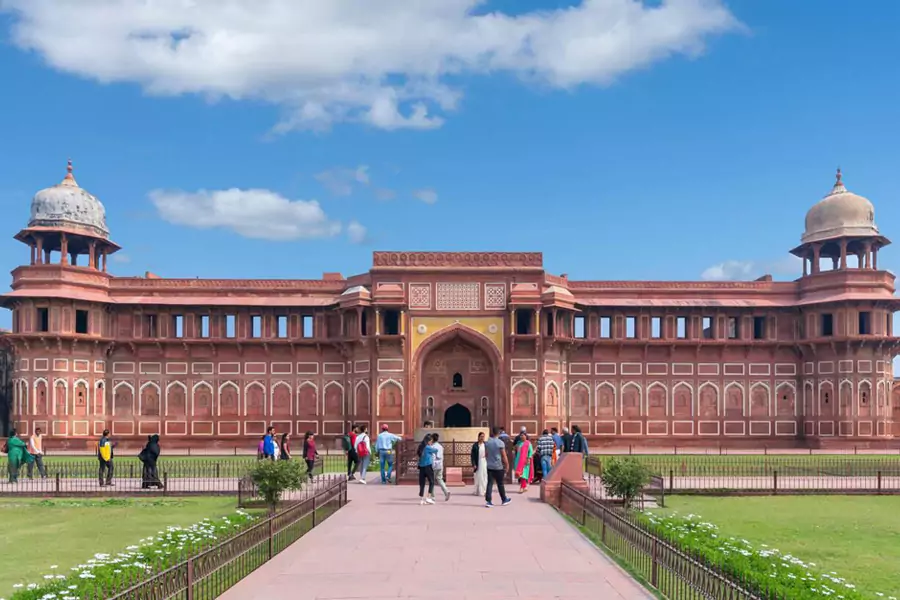
Agra Fort Timings 2026: When You Can Actually Enter
Agra Fort operates on a straightforward sunrise-to-sunset model. It's not complicated, but the details matter if you're planning your day precisely.
Official opening and closing hours
The fort opens at sunrise (approximately 6:00–6:30 AM depending on season) and closes at sunset (approximately 6:00–6:30 PM depending on season). There are no fixed "gates open at exactly 6:00 AM" rules. In January (peak season), sunrise is around 6:45 AM; by March, it's 6:15 AM; in November, it's later around 6:45 AM. The fort physically cannot admit visitors before sunrise due to lack of natural light on interior stairs and courtyards.
Closing time similarly follows sunset, not a fixed clock time. In winter, this means 5:00–5:30 PM closure; in summer, 7:00–7:30 PM. Staff begin closing procedures 30 minutes before sunset, so arriving at 5:45 PM in January when sunset is 5:15 PM means you won't get meaningful time inside.
Seasonal timing reality check
Winter (October–March): Opens 6:30–7:00 AM, closes 5:00–5:30 PM. You have roughly 10 hours of daylight. Early morning is essential for quality light and minimal crowds.
Summer (April–September): Opens 5:00–5:30 AM, closes 7:00–7:30 PM. You have roughly 14 hours of daylight. However, midday (11:00 AM–3:00 PM) is brutally hot. Early morning (5:00–8:00 AM) is preferable even more than winter.
What "sunrise to sunset" actually means for visitors
The fort genuinely does not allow entry before sunrise. This isn't arbitrary—internal stairs lack electric lighting in most areas. You need natural light. Similarly, they enforce sunset closure because navigating interior courtyards becomes genuinely unsafe in darkness. Plan accordingly. If sunrise is 6:45 AM and you want early morning light, arrive by 7:00 AM to be inside by 7:15 AM.
The Friday advantage
Agra Fort operates normally on Fridays. Unlike the Taj Mahal (completely closed to tourists on Fridays), this fort is open all day. Friday visits are strategically smart if you're combining monuments—visit Agra Fort on Friday when Taj is inaccessible, then visit Taj on Saturday, maximizing your two-day coverage.
How to Book Your Agra Fort Tickets: Three Methods
You have options for ticket purchase, each with different convenience levels.
Method 1: On-site physical ticket counter (most common)
Simply arrive at Lahore Gate, find the ticket counter (immediately visible upon approach), and purchase your entry. The process takes 5–10 minutes on light-traffic days, 30–45 minutes during peak hours (10:00 AM–1:00 PM). No advance booking required. Payment is cash or digital (many counters now accept UPI, debit cards). You receive a printed ticket. This is straightforward, needs no pre-planning, and works for spontaneous visits.
Method 2: ASI online booking (asi.payumoney.com)
The Archaeological Survey of India operates an online booking portal. You select the monument (Agra Fort), visitor category, date, and complete payment. You receive a digital ticket via email and SMS. Present this on your phone at the gate. Advantages: no on-site queue, confirms availability in advance. Disadvantages: requires internet access while booking, slightly slower actual entry (verification takes a few minutes). This is ideal if you're pre-planning or visiting during peak hours (11:00 AM–2:00 PM) when queues exceed 45 minutes.
Method 3: Hotel concierge or tour operator ticket service
Many hotels offer ticket booking as a complimentary service for guests. Tour operators also arrange tickets, though they typically mark up 10–20%. This is convenient if you're unorganized or time-constrained, but costs more than direct booking. Use only if you value convenience over cost-saving.
Which method saves money?
Prices are identical across methods—no early-bird discounts or booking-platform markups. Choose based on convenience. On-site is fastest if arriving during quiet hours (6:00–10:00 AM). Online booking makes sense if you're arriving during peak congestion or want to confirm availability in advance.
Entry Rules and What You Need to Know Before You Arrive
What you must bring
Your ticket (physical or digital on phone). Valid identification if asked (though rarely requested for domestic tourists; foreign tourists should have passports available). That's genuinely it. You don't need special cards, permits, or advance registration for standard tourist visits.
What you absolutely cannot bring inside
Weapons of any kind. Explosives or flammable materials. Sharp tools (large knives, scissors, etc.). Drones. Helmets. Large luggage or briefcases. Religious items (flowers, flags, religious texts). Intoxicants and alcohol. Smoking materials and gutkha. Food products (though this is sometimes flexible for sealed snacks). Anything obviously commercial or professional without declared photographer fees.
What you CAN bring: day packs (small backpacks under 20 liters), water bottles (reusable or sealed), cameras with or without tripods, mobile phones, sunscreen, medications, glasses, and casual clothing. Security screening is basic—you'll go through a metal detector and your bag will be visually inspected. Takes 2 minutes.
Photography guidelines (for actual photographers)
Personal photography with smartphones is free and unrestricted. If you're carrying professional-grade equipment (DSLRs, tripods, lighting, microphones), the ₹200 still photography or ₹25 video fee applies. This is rarely enforced on tourists with basic camera gear. It's directed at obvious commercial filmmaking.
Accessibility and physical considerations
Agra Fort involves considerable walking (estimate 3–4 km total) on uneven stone surfaces, stairs, and occasional slopes. There are no elevators or ramps within the fort's interior. Wheelchairs are impractical. Elderly visitors and those with mobility issues should plan for frequent rests and realistic time allocations. The ground courtyard is relatively flat; upper levels involve stairs. Children enjoy the fort but may tire on extended visits; 2–3 hours is reasonable for families with young kids.
Best Time to Visit: Season, Time of Day, and Crowds
Why winter (Oct–Mar) is universally recommended
Winter offers perfect conditions. Temperatures range 10–25°C—cool enough for 2–3 hour exploration without exhaustion, warm enough to be comfortable. Humidity is low. Light is golden and photogenic. The only downside: peak tourist season means moderate crowds (you won't be alone, but it's manageable). Booking accommodations and transport requires 6–8 weeks advance planning. Prices are 15–25% higher than off-season.
Why summer (Apr–Sep) is brutal but rewards early risers
Temperatures exceed 40°C from May–June. The red sandstone absorbs heat, making interior courtyards oppressive. However, if you're willing to visit exclusively 5:00–8:00 AM, summer has profound advantages: almost no crowds (fewer than 50 tourists in the early hours), dramatic morning light, and prices 30% cheaper than winter. The tradeoff: you must be disciplined about early arrival.
Why Friday specifically matters
Friday is strategically superior because the Taj Mahal is completely inaccessible (closed to tourists per Islamic tradition). This means overall tourism traffic in Agra on Fridays is noticeably lower. Agra Fort sees reduced crowds. Foreign tourists pay ₹50 less (₹600 vs ₹650). Indian tourists pay ₹10 less (₹40 vs ₹50). Friday isn't peak-day crowded; it's genuinely quieter. If your dates are flexible, prioritize Friday for Agra Fort and Saturday for Taj Mahal.
Best time of day: Morning wins decisively
Early morning (6:00–9:00 AM): Soft, warm golden light. Crowds are 90% smaller than midday. Air is cool. You're psychologically fresher. This is universally recommended for both photography and experience. Late afternoon (3:30–5:30 PM): Decent light, manageable crowds, slightly cooler than midday. Still worthwhile but inferior to morning. Midday (10:00 AM–3:00 PM): Harsh overhead light. Peak crowds. Heat is oppressive. Photography is poor. Only visit if you have no other option.
Nearby Monuments and Building Your Agra Itinerary
Taj Mahal (6 km away, 30 minutes by car)
The obvious companion. Taj Mahal entrance fee: ₹50 (Indian), ₹1,100 (foreign). Combined with Agra Fort, most travelers spend 5–6 hours total exploring both monuments. Ideal itinerary: Taj sunrise (6:00–8:30 AM), breakfast (8:30–10:00 AM), Agra Fort (10:30 AM–1:00 PM), lunch (1:00–2:00 PM). This avoids exhaustion and weather extremes.
Itmad-ud-Daulah (Baby Taj) – 4 km away, 15 minutes by car
An underrated white-marble monument often ignored in favor of Taj Mahal. Entry fee: ₹30 (Indian), ₹310 (foreign). Genuinely beautiful and far less crowded. Can be added to full-day itineraries without time pressure. Worth 1–1.5 hours.
Mehtab Bagh – 4 km away, 20 minutes by car
A garden opposite the Taj Mahal offering the best sunset Taj views and reflection photography. Entry fee: ₹25 (Indian), ₹300 (foreign). Essential if photography is your priority. Visit 4:30–5:30 PM for golden hour light. Takes 1 hour.
Fatehpur Sikri – 37 km away, 1.5–2 hours drive
A complete Mughal city complex. Entry fee: ₹50 (Indian), ₹610 (foreign). Genuinely significant and worth half a day. Requires separate day planning or 2-day tour structure. Combined Agra Fort + Fatehpur Sikri requires 8+ hours total.
One-day itinerary for maximum coverage
5:30 AM: Early alarm. 6:00 AM: Taj Mahal entry (sunrise viewing). 8:30 AM: Exit Taj, breakfast. 10:30 AM: Agra Fort entry. 1:00 PM: Lunch. 3:00 PM: Mehtab Bagh for sunset photography. 6:00 PM: Return to hotel. This requires discipline but captures three monuments without exhaustion.
Practical Travel Tips: Making Your Agra Fort Visit Comfortable
Hydration and heat management (non-negotiable)
Carry 1.5–2 liters of water per person. The fort's expansive courtyards offer minimal shade. You will be exposed for 1–3 hours. Dehydration is real and unpleasant. Drink proactively, not reactively. Wear lightweight cotton clothing. SPF 50+ sunscreen is essential year-round (even winter sun reflects intensely off sandstone). A wide-brimmed hat or scarf protects your head. In summer, consider light long sleeves—they paradoxically keep you cooler than exposure.
Footwear selection
Wear supportive walking shoes. The sandstone is sometimes slippery, especially after rain. Flip-flops are uncomfortable on uneven surfaces. High heels are impractical. Flat, closed-toe walking shoes are ideal.
Timing your private car or taxi experience
If hiring a private car (₹1,200–₹1,600 for 4–5 hour Jaipur sightseeing, or ₹2,300–₹2,800 for Delhi-Agra one-way), request early morning arrival at Agra Fort to catch sunrise/early light. Most private drivers know Agra's traffic patterns and can optimize timing. Communicate your priorities clearly: "I want to be inside by 7:00 AM" rather than vague requests.
Crowd management strategy
Arrive by 7:00–8:00 AM to beat crowds. This requires early hotel checkout, but the experience difference is profound. If stuck arriving at 10:00 AM+, prioritize less-crowded interior areas (women's quarters, administrative sections) rather than main courtyards where tour groups congregate.
Hiring a local guide (recommended)
Local guides (₹500–₹800 for 2–3 hours) transform generic monument visits into historically immersive experiences. They explain defensive architecture, Mughal daily life, and the political significance of specific spaces. Not mandatory, but worthwhile for history enthusiasts or first-time India travelers. Guides can be arranged at the gate or through your hotel.
Agra Fort Entry Fee Comparison Table (January 2026)
| Visitor Category | Weekday Price (Mon–Thu, Sat–Sun) | Friday Price | Additional Fees | Notes |
|---|---|---|---|---|
| Indian Citizens | ₹50 | ₹40 | None | ID may be requested |
| Children Below 15 Years | Free | Free | None | All nationalities. No age verification typically required. |
| SAARC/BIMSTEC Nationals | ₹90 | ₹40 | None | Requires valid passport. Includes Afghanistan, Bangladesh, Bhutan, Maldives, Nepal, Pakistan, Sri Lanka, Myanmar, Thailand. |
| Foreign Tourists | ₹650 | ₹600 | ₹500 ADA Toll (one-time daily pass). Optional ₹850 World Heritage fee. | ADA toll shared across all Agra monuments same day. Waived on Fridays. |
| Professional Photography | — | — | ₹200 still + ₹25 video | Only if using professional equipment (tripods, DSLRs, etc.). Mobile phone photography is free. |
Key takeaway: Foreign tourists visiting Friday pay ₹600 entry + ₹500 ADA (if not purchased at another monument) = ₹1,100 total. Indian tourists pay ₹40 Friday, ₹50 weekdays. Children are always free. Online booking (asi.payumoney.com) costs identical prices; it's purely for convenience. Plan according to your nationality and visit day for optimal pricing.
Frequently Asked Questions About Agra Fort (2026)
Q: What is the exact ticket price of Agra Fort in 2026?
A: As of January 2026 (per ASI official sources): Indian citizens ₹50 (weekdays) or ₹40 (Friday). SAARC/BIMSTEC nationals ₹90 (weekdays) or ₹40 (Friday). Foreign tourists ₹650 (weekdays) or ₹600 (Friday). Children below 15 are always free. Foreign tourists also pay ₹500 ADA toll (shared across monuments same day), though this is waived on Fridays. Professional photography is ₹200 additional.
Q: What are the exact opening and closing times?
A: Sunrise to sunset daily. In winter (Oct–Mar): approximately 6:30–7:00 AM opening, 5:00–5:30 PM closing. In summer (Apr–Sep): approximately 5:00–5:30 AM opening, 7:00–7:30 PM closing. Exact times vary based on solar position. Plan to arrive 15–30 minutes after sunrise for optimal light and minimal crowds.
Q: Is Agra Fort included in a Taj Mahal ticket, or are they separate?
A: They are completely separate monuments requiring separate tickets. Taj Mahal ticket is ₹50 (Indian), ₹1,100 (foreign). Agra Fort is ₹50 (Indian), ₹650 (foreign). However, if you're a foreign tourist, the ₹500 ADA toll (Pathkar) purchased at one monument covers all Agra monuments same day, so you're not charged toll twice.
Q: Can I enter Agra Fort after sunset?
A: No. The fort closes at sunset. Interior areas lack electric lighting, and navigation becomes unsafe in darkness. Plan to arrive with at least 1–2 hours before sunset to have meaningful time inside. In winter, this means arriving by 3:30 PM latest; in summer, by 6:00 PM.
Q: Is online booking mandatory, or can I buy tickets at the gate?
A: Tickets are available at both on-site counters and online. Neither is mandatory. On-site purchase is faster during off-peak hours (6:00–10:00 AM) with no waiting. Online booking makes sense if you're arriving during peak hours (11:00 AM–2:00 PM) when queues exceed 30 minutes. Prices are identical; choose based on convenience.
Q: How much time should I allocate for Agra Fort?
A: Realistic allocations: Rushed visit (45 minutes–1 hour) covers only main highlights. Moderate visit (2 hours) allows comfortable exploration of Jahangir's Palace, Diwan-i-Khas, and courtyards. Leisurely visit (2.5–3 hours) permits deep appreciation, guide explanations, and reflection time. First-time visitors should allocate 2–2.5 hours minimum.
Q: Can I do Taj Mahal and Agra Fort on the same day without exhaustion?
A: Yes, but requires discipline and early planning. Recommend: Taj sunrise (6:00–8:00 AM), breakfast and rest (8:00–10:00 AM), Agra Fort (10:30 AM–1:00 PM), lunch. This gives 2–2.5 hours at each monument and avoids exhaustion. Attempting three monuments (Taj + Fort + Mehtab Bagh/Itmad-ud-Daulah) in one day is possible but requires starting by 5:30 AM and accepting rushed experience.
Q: Is photography allowed inside Agra Fort?
A: Yes. Personal photography with smartphones is completely free and unrestricted. Professional-grade photography (DSLRs, tripods, microphones, lighting) requires ₹200 still photography fee or ₹25 video fee. This is rarely enforced on casual tourists. Drones and commercial filming require special permits beyond these fees.
Q: Is Agra Fort accessible for elderly visitors or those with mobility issues?
A: Partially. The ground courtyard is relatively flat. However, many areas involve stairs and uneven stone surfaces. There are no ramps or elevators. Elderly visitors can manage 1–1.5 hours at a leisurely pace focusing on accessible areas. Those with significant mobility constraints may find it challenging. Plan realistic time allocations and bring comfortable walking shoes.
Conclusion: Plan Smart, Visit Fully Present
Agra Fort is profound, but only if you experience it properly. Most tourists treat it as a 45-minute sidebar to the Taj Mahal—a checkbox rather than a destination. This misses the point entirely. The fort reveals Mughal imperial strategy, daily governance, and architectural sophistication in ways the Taj cannot. Its red sandstone glows differently across seasons. Its courtyards reward contemplation more than rushing.
Book tickets online if you're arriving midday. Arrive early morning if possible (6:00–8:00 AM). Allocate 2–2.5 hours minimum. Hire a local guide for ₹500–₹800 if history matters to you. Carry water. Wear appropriate footwear. Friday visits are strategically superior for pricing and crowds. Winter is most comfortable; summer rewards early risers with solitude and discounts.
The fort is open 365 days a year. It costs ₹40–₹650 depending on your nationality and day of visit. It operates sunrise to sunset. This simple information, combined with realistic expectations and proper planning, transforms Agra Fort from an obligatory monument visit into a genuine encounter with Mughal legacy.
Plan accordingly. Arrive prepared. Then let the red sandstone, the courtyards, and the imperial history speak to you.
Recent Posts
 Amer Fort Boating 2026 Guide: Maota Lake Tickets & Timings
Discover Amer Fort’s new Maota Lake boating, updated 2026 ticket rates, timings, safety rules and best visiting months.
 Luxury Rajasthan Tour with Oberoi, Taj & Leela Hotels
Experience royal Rajasthan in comfort with Oberoi, Taj and Leela luxury palace stays.
 Luxury Tempo Traveller & Van Hire in India 2026 – Rates, Features & Booking
Enjoy luxury van hire in India for safe, comfortable family and group travel.
 Top 10 Vehicle Hire Companies in India for Tourists
Discover the top 10 vehicle hire companies in India offering safe, comfortable tourist travel.
 Delhi Agra Jaipur Tour by Luxury Car and Private Driver
Enjoy a Delhi Agra Jaipur tour with a luxury car, private driver and flexibility.
 Luxury Car and Driver for Comfortable Rajasthan Tour
Explore Rajasthan in comfort with a luxury car, private driver and flexible custom tour.
 Jaisalmer Travel Guide for Foreign Tourists: Best Time, Desert Tours & Tips
Plan your Jaisalmer trip with ideal seasons, desert tour packages and essential foreigner tips.
 Hidden Villages of Rajasthan: Offbeat Rural Experiences & Village Travel Guide
Hidden Villages of Rajasthan: Offbeat Rural Stays, Homestays & Authentic Village Life.
-
Amer Fort Boating 2026 Guide: Maota Lake Tickets & Timings
Discover Amer Fort’s new Maota Lake boating, updated 2026 ticket rates, timings, safety rules and best visiting months.
-
Luxury Rajasthan Tour with Oberoi, Taj & Leela Hotels
Experience royal Rajasthan in comfort with Oberoi, Taj and Leela luxury palace stays.
-
Luxury Tempo Traveller & Van Hire in India 2026 – Rates, Features & Booking
Enjoy luxury van hire in India for safe, comfortable family and group travel.
-
Top 10 Vehicle Hire Companies in India for Tourists
Discover the top 10 vehicle hire companies in India offering safe, comfortable tourist travel.
-
Delhi Agra Jaipur Tour by Luxury Car and Private Driver
Enjoy a Delhi Agra Jaipur tour with a luxury car, private driver and flexibility.
-
Luxury Car and Driver for Comfortable Rajasthan Tour
Explore Rajasthan in comfort with a luxury car, private driver and flexible custom tour.
-
Jaisalmer Travel Guide for Foreign Tourists: Best Time, Desert Tours & Tips
Plan your Jaisalmer trip with ideal seasons, desert tour packages and essential foreigner tips.
-
Hidden Villages of Rajasthan: Offbeat Rural Experiences & Village Travel Guide
Hidden Villages of Rajasthan: Offbeat Rural Stays, Homestays & Authentic Village Life.