Ultimate Guide to Luxury Car and Driver Hire for Delhi, Agra & Jaipur Golden Triangle Tours in 2026
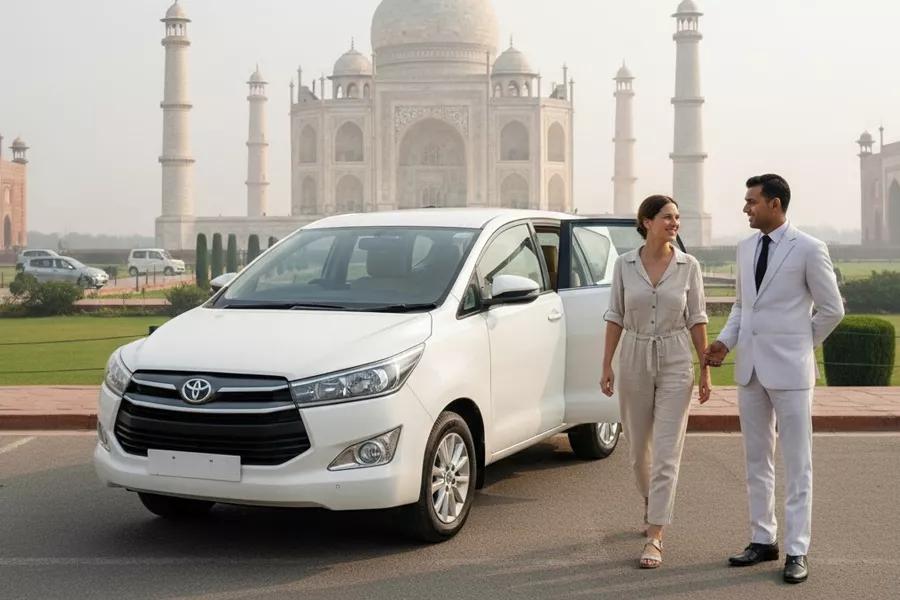
Look, hiring luxury car with private driver changes everything for Golden Triangle. Everything. Instead of stressing about logistics, negotiating with random taxi guys at every stop, or missing photo opportunities because you're stuck figuring out which exit leads to Taj Mahal parking, you just sit back in climate-controlled sedan or SUV while your driver handles literally every single detail that usually makes travel exhausting.
Routes. Parking headaches. Timing between cities. Local knowledge about which gate at Amber Fort has shorter lines.
You know what I always say – Golden Triangle without good driver is just three cities you rushed through, with driver it becomes proper experience you actually remember fondly.
American couple last month tried doing Delhi-Agra-Jaipur on their own using app cabs, gave up by Agra and hired private driver for rest of trip, told me honestly they should've started with driver from day one. French family booked luxury Innova Crysta with experienced driver, smooth four-day circuit without stress, driver even suggested best sunset spot at Nahargarh Fort they wouldn't have found otherwise. Canadian tourists at Jaipur said their driver became friend by end of trip, took them to local chai place, made entire Golden Triangle feel personal instead of touristy checklist everyone does.
Ever wonder what separates good Golden Triangle experience from mediocre rushed one everyone complains about? Or how to book driver you can actually trust before you land in Delhi hoping for best?
This guide explains everything for booking confidently. What to look for. What to avoid. How to travel comfortably through India's famous circuit without transit confusion ruining days. I think getting this part right makes difference between trip you enjoy and trip you just survive, honestly.
Why Choose a Private Luxury Car and Driver for the Golden Triangle?
The Delhi-Agra-Jaipur route remains India's most popular tourist circuit for good reason: it connects three architecturally and culturally distinct cities that together represent North India's imperial heritage. Yet the route also presents practical challenges—heavy metropolitan traffic in Delhi and Jaipur, congested highways during tourist season, confusing local taxi negotiations, and the exhaustion of managing multiple transportation changes across three days or more.
A dedicated driver eliminates these stressors entirely. Your vehicle becomes your mobile base—secure luggage storage, reliable air-conditioning, your own schedule, spontaneous photo stops, and consistent comfort across 900+ kilometres of road travel. For first-time India visitors especially, the psychological security of having one trusted professional handle transportation while you observe the landscape, make mental notes, and actually rest during driving time represents extraordinary value.
Beyond logistics, private drivers on popular tourist circuits accumulate practical knowledge that guidebooks miss: the least-congested traffic routes at specific times, which monuments reward early-morning visits versus late afternoon, where to stop for authentic chai without tourist markup, and how to navigate cultural etiquette at religious sites. This accumulated wisdom, shared conversationally during drives, transforms a journey into genuine cultural education rather than hurried sightseeing.
- Complete control over daily timing—no bus schedules, train delays, or group-tour inflexibility.
- Safe, secure luggage management throughout your entire trip across multiple cities.
- Spontaneous stops for photography, roadside chai, or unexpected discoveries without schedule pressure.
- One-person continuity across your entire journey, reducing repeated explanations of your preferences and needs.
- Access to professional knowledge about optimal sightseeing times, traffic patterns, and local insights.
Understanding Current Golden Triangle Pricing: What You'll Actually Pay in 2026
Transparency around costs prevents frustration and enables realistic budgeting. Current market rates for private car-and-driver hire on the Golden Triangle reflect vehicle type, season, inclusivity of services, and duration of hire. January 2026 rates show clear patterns that help you evaluate quotes properly.
Daily rate basis (most common for short tours): Sedan vehicles (Maruti Dzire, Toyota Etios) operate at ₹3,000–₹3,800 per day ($36–$45 USD). SUVs (Innova Crysta, Toyota Hycross) range ₹4,200–₹5,500 daily ($50–$66 USD). These daily rates typically include fuel, driver salary, tolls, parking, and interstate taxes—the complete package needed for tourist travel.
Fixed package pricing for complete Golden Triangle tours: A 4-day/3-night Delhi-Agra-Jaipur-Delhi tour costs approximately ₹17,999–₹28,500 for the entire journey depending on vehicle category (sedan to premium SUV). This covers roughly 900–1,100 kilometres of driving. For 5-6 day packages with extended stays and flexibility, operators quote ₹22,000–₹35,000 total for sedan-class vehicles. These package prices are often superior to daily-rate calculations because operators absorb slight downtime costs.
Luxury tier pricing: Premium vehicles (Toyota Fortuner, Mahindra XUV700) and higher-end service levels command ₹6,500–₹8,000 daily. These cater to honeymooners, corporate teams, or travellers prioritizing maximum comfort.
What these rates typically include: Professional driver with tourist-route experience, fuel for planned distances, highway tolls, parking fees at major sites, driver's daily allowance and meals (whether hotel-covered or reimbursed). What usually requires separate payment: Monument entry fees (Taj Mahal ₹250 for foreigners, Amber Fort ₹100-300), licensed guide services if hired separately (₹500–₹1,000 per guide per day), meals for yourself at restaurants outside hotels, and tips for service staff.
A realistic 4-day trip budget combining car-and-driver with mid-range hotels and self-guided sightseeing: ₹40,000–₹60,000 ($480–$720) for accommodation, ₹20,000–₹25,000 ($240–$300) for car-and-driver, ₹3,000–₹5,000 ($36–$60) for monument entries, ₹15,000–₹25,000 ($180–$300) for meals. Total per person on budget-moderate travel: approximately ₹78,000–₹115,000 ($940–$1,380).
Optimal Timing: When to Travel the Golden Triangle
Season dramatically affects both your comfort level and pricing. The Golden Triangle experiences temperature extremes that directly impact outdoor sightseeing enjoyment.
Winter (October–March): The clear choice for most travellers. Temperatures range 8–25°C (46–77°F) depending on specific month and time of day. October-November offers pleasant 15–28°C days with clear skies and manageable crowds. December-January brings cool 8–20°C temperatures (requiring light jacket layers) but guarantees excellent visibility for photographs and monument exploration. February-March return to comfortable 18–32°C conditions with continued clarity. This entire 6-month window represents peak tourist season, resulting in 80-90% hotel occupancy in November-January and full availability of guides and services. The best time to visit the Golden Triangle aligns with this winter window for 95% of first-time visitors.
Summer (April–June): Temperatures exceed 35°C (95°F) regularly, reaching 40–45°C (104–113°F) in May-June. Outdoor sightseeing becomes physically uncomfortable; monument visits require very early starts (6-7am) and late afternoon returns (after 4pm) with midday confinement to air-conditioned spaces. Hotels offer significant discounts (20-40% off winter rates), appealing to budget-conscious travellers with heat tolerance. Highway driving remains feasible due to vehicle air-conditioning, though fuel costs increase due to heavier AC usage. Crowds drop significantly—you may be nearly alone at Taj Mahal during May afternoon visits. Suitable for: extremely budget-conscious travellers, those with high heat tolerance, photographers seeking minimal-crowd conditions.
Monsoon (July–September): Rainfall transforms the landscape to vivid green; temperatures moderate to 25–35°C (77–95°F). Roads remain navigable despite showers; highways don't typically close. Cloud cover reduces harsh sun exposure, making afternoon sightseeing more tolerable. Hotels offer 30-50% discounts. Tourist numbers drop to lows. The primary disadvantage: unpredictable rain can disrupt outdoor plans, though major sightseeing at monuments remains possible. Humidity increases significantly. Best for: nature photographers, environmentally-conscious travellers seeking green landscapes, those seeking solitude at major sites, budget-conscious groups willing to adapt plans around showers.
Shoulder season strategy: October and March offer optimal value—pleasant weather, moderate crowds, and better pricing than December-January peak. February also works excellently. These three months balance comfort, availability, and cost more effectively than strict peak-season travel.
Vehicle Selection: Sedan vs. SUV vs. Premium Options
Vehicle choice depends on three practical factors: passenger count, luggage volume, and ride-quality preference. Each category has legitimate advantages.
Sedan (Maruti Dzire, Toyota Etios, Hyundai i20): Ideal for couples or solo travellers with moderate baggage. Seating for 4-5 comfortably (5th spot tight for long drives). Fuel efficiency superior, translating to lower daily operating costs. AC cooling adequate for highway speeds. Parking easier in old-city narrow lanes (Delhi's Chandni Chowk, Jaipur bazaars). Ride quality on highways acceptable but not luxury-smooth. Cost advantage significant—₹3,000–₹3,800 daily versus SUV ₹4,200–₹5,500. Best for: couples, budget-conscious travellers, those not concerned with ride prestige.
SUV/MUV (Innova Crysta, Toyota Hycross, Mahindra Ertiga): Preferred by families with children, groups of 4-6 people, or travellers with multiple large suitcases. Higher seating position provides superior forward visibility and psychological comfort for many Western passengers. More spacious interiors reduce cramped-feeling after 5-6 hour highway days. Better ground clearance for occasional rough roads (though Delhi-Agra-Jaipur highways are excellent quality). Ride quality noticeably superior on rough patches. AC performance excellent even in extreme heat. Fuel efficiency lower than sedans (approximately 8-10 km/litre versus 12-15 km/litre for sedans, though included in quoted rates). Parking in tight spaces slightly more challenging. Cost approximately 30-40% premium over sedans. Best for: families, groups 4+, those valuing ride comfort, luxury-prioritizing travellers.
Premium vehicles (Toyota Fortuner, Mahindra XUV700, Skoda Superb): Top-tier interior finish, latest technology, maximum comfort. Substantially higher daily costs (₹6,500–₹8,000+). Rarely necessary for Golden Triangle standard itineraries; primarily chosen for honeymoons, special occasions, or corporate travel where image matters. Fuel consumption higher; road tolls identical to other vehicles. Best for: high-end honeymoons, corporate teams, travellers for whom cost is secondary to perceived luxury.
Practical recommendation: For couples: sedan adequate and economical. For families with 2+ children or groups 4+: SUV recommended for genuine comfort benefit, not mere status. For luxury-focused or special-occasion travel: premium SUV justified only if budget comfortably accommodates 40% cost increase.
The Standard 4-Day Golden Triangle Itinerary with Private Driver
Most first-time visitors structure their Golden Triangle journey this way: it balances sightseeing density with reasonable daily driving distances and rest time.
Day 1 – Delhi Sightseeing: Arrive Delhi morning or previous evening. After hotel rest and early breakfast, begin Old Delhi exploration: Jama Masjid area, Chandni Chowk bazaar walk (driver parks car at authorized point; you walk market lanes independently or with separate guide). Late morning: transition to New Delhi for India Gate drive-by, Rajpath views, Rashtrapati Bhavan exterior, Humayun's Tomb exploration. Late afternoon: return to hotel for rest, evening free for personal dinner or cultural performance. Distance driven: 25-30km within city.
Day 2 – Delhi to Agra (3.5–4 hour expressway drive): Early breakfast, 7am hotel departure for Agra. Highway relatively smooth and less-congested before 9am. Mid-journey: optional 20-minute chai and washroom stop. Arrive Agra 11-12 noon, hotel check-in and light lunch. Afternoon: Taj Mahal visit timing strategy—sunset visit (4-7pm) provides softer light, fewer tourist crowds than sunrise, and psychological preparation for next-morning revisit if desired. Evening: dinner at hotel or explore Agra Fort area.
Day 3 – Agra to Jaipur (4–5 hour drive with en-route stop): Optional early-morning Taj Mahal sunrise (4:30am departure, return 8am) if you didn't feel satisfied yesterday. Late morning: Agra Fort exploration (1.5–2 hours). Around noon: begin drive toward Jaipur. Major decision point: Stop at Fatehpur Sikri (16th-century abandoned Mughal city, 45-minute detour, 2–3 hours exploration) or Abhaneri Stepwell (intricately carved 13th-century stepwell, 30-minute detour, 45-minute exploration). Most travellers choose Fatehpur Sikri—more historically significant, better infrastructure. Continue to Jaipur, arriving 5-7pm. Evening: settle into hotel, light dinner.
Day 4 – Jaipur Sightseeing and Departure: Full-day Jaipur exploration: early morning Amber Fort visit (inside tour 2–3 hours), Jaigarh Fort if interested (40-minute walk from Amber), City Palace exterior and courtyard (45 minutes to 1 hour), Jantar Mantar astronomical observatory (1 hour), Hawa Mahal exterior photo stop (15 minutes). Late morning or early afternoon: bazaar visit if desired (Bapu Bazaar for textiles, Johari Bazaar for jewellery). Afternoon: rest at hotel or shopping continuation. Late afternoon: depart Jaipur for Delhi (5–6 hour return drive) or fly if connecting elsewhere. Evening: Delhi hotel arrival or continue elsewhere.
This itinerary covers approximately 1,000km total, generates moderate sightseeing fatigue, and permits genuine rest in each city rather than constant rushing. Most travellers feel satisfied covering these main highlights without exhaustion.
5-6 Day Variations: Deeper Exploration Without Rushing
Adding one or two days improves the experience substantially by reducing daily sightseeing density and permitting spontaneous discoveries.
5-day option: Add one night in Jaipur, giving 2 full days there. This permits leisurely morning at Amber Fort, afternoon market exploration, evening cultural performance or rooftop restaurant experience. Alternatively, add extra night in Agra for sunrise Taj revisit, Mehtab Bagh viewpoint across the river (quiet, contemplative alternative angle on monument), and Itmad-ud-Daulah (Baby Taj).
6-day option: Add nights in multiple cities. Example: Delhi 1 night → Agra 2 nights → Jaipur 2 nights → Delhi 1 night (or continue elsewhere). This rhythm permits rest days, mid-afternoon naps, evening bazaar exploration without rush, and time for small museums or less-famous monuments often skipped due to time pressure.
7+ day extensions: Vehicle hire companies often offer Golden Triangle extensions to Pushkar (pilgrimage town, camel market), Ranthambore National Park (tiger safaris), or deeper Rajasthan (Jodhpur, Udaipur). These extensions justify continued private-car hire through fuller utilization of the vehicle and driver across extended dates.
What's Actually Included in Your Car-and-Driver Quote
Clarity here prevents mid-trip surprises. Always request a detailed written quote breaking down inclusions and exclusions.
Standard inclusions in most packages: Private air-conditioned vehicle of agreed category; professional driver with basic to good English for tourist communication; fuel for planned route and daily city driving; highway tolls on expressways; parking at major sightseeing points; driver's daily allowance covering meals and modest accommodation (either hotel-covered in package or reimbursed to driver); interstate highway tax (if crossing state boundaries, though Delhi-Agra-Jaipur remains Uttar Pradesh/Rajasthan border crossing).
Common exclusions (verify to avoid surprises): Monument entry tickets (your responsibility); licensed guide services if hired separately (negotiated independently); meals for yourself at restaurants; excess mileage if you deviate significantly from quoted itinerary; night-time driving surcharges (some operators add 10-20% premium for 10pm-6am driving); additional city taxes in major metros (Delhi charges vehicle parking tax in some areas); mechanical emergencies or accidents (covered by standard insurance, but you may have deductible).
Payment structure: Most operators require 25-50% advance deposit to confirm booking, with balance due 7-14 days before travel. Some accept payments via bank transfer (INR), PayPal, or international transfers. Confirm payment methods and cancellation policy explicitly—peak-season cancellations may have penalties.
Driver communication protocols: Confirm how you'll communicate daily: WhatsApp, phone call, hotel reception relay. Most professional operators provide driver mobile number 24-48 hours before pickup. Establish expectations: what time does driver arrive for morning pickup, how far in advance should you inform about next-day changes, is driver available for evening drives if plans shift.
How to Select a Reliable Operator: Avoiding Common Pitfalls
The Golden Triangle's popularity attracts both professional operators and casual taxi services. Distinguishing between them protects your experience and money.
Red flags indicating unreliable operators: Quoted price significantly below market (₹15,000 for 4-day sedan when market shows ₹20,000–₹23,000 suggests hidden costs or low-quality vehicle); no written quote or contract (always insist on email confirmation); driver details unavailable until 24 hours before departure (professionals pre-assign drivers); no response to WhatsApp/email within 24 hours (professionalism indicator); strong pressure to pay full amount immediately rather than deposit+balance structure; primarily reviews on Facebook rather than TripAdvisor/Google (easier to manipulate); references only to "best rates" without service details.
Green flags indicating professional operators: Specialization in private India tourism, not just local point-to-point taxis; clear website explaining services, vehicle types, and pricing; responsiveness via email within 4-6 hours; Professional private driver services emphasizing driver training and background verification; transparent cancellation policy in writing; vehicle details (make, model, license plate) provided days in advance; driver name, phone number, photo available 2-3 days before pickup; multiple years in business (verify via business registration if possible); recent reviews (within last 6 months) on established platforms mentioning specific positive details (cleanliness, driving safety, helpfulness) rather than generic praise.
Verification steps before final booking: Read 10+ recent reviews specifically about Golden Triangle tours (not one-off city transfers). Contact operator with specific questions: What happens if vehicle breaks down? Is there replacement vehicle guarantee? What's the driver's typical experience level? Can you request a specific driver if repeat customer? Does the company carry comprehensive insurance? Call operator (not just email) to assess communication quality. Ask for reference contact (previous customer) willing to discuss their experience. Confirm company registration and proper commercial vehicle permit.
Daily Realities: What Happens When You're On the Road
Understanding the actual daily rhythm prevents expectation disappointment.
Morning routine: Driver arrives hotel lobby 15 minutes before agreed pickup time. Vehicle is clean, AC tested, and water bottles provided. Driver helps load luggage into boot. Journey begins with discussion of day's plan, expected arrival time, planned stops, and your preferences (music preference, temperature setting, conversation level—some drivers are chatty, others prefer quiet; both are normal; simply indicate preference). If you're jetlagged or tired, driver respects silence; if chatty, they'll converse comfortably in English about local sights, culture, or stories.
Highway driving: Speed typically 90–110 km/hour on expressways (legal national speed limit 120 km/hour for cars, but professional drivers maintain slightly conservative pace for safety). Highway stops every 2–2.5 hours at quality rest areas (cleaner than expected, with proper washrooms, chai/coffee, light food). Drivers navigate around heavy vehicles expertly—Indian highways see significant truck traffic; professional drivers understand traffic patterns, brake behaviors, and safer passing techniques refined through years of experience.
City driving: Noticeably slower—15–25 km/hour in congested areas, driver using accumulated knowledge of less-congested shortcuts. Parking at monument areas: driver either parks in official lot (at Taj Mahal, Amber Fort, etc.) or designated street areas; you're dropped at entrance, confirmed meeting point established, driver waits with vehicle. Monument visits are unguided unless you arrange separate guide (drivers don't enter; this is guides' professional domain).
Afternoon rhythms: Many drivers suggest 1–2 hour hotel rest during 1–4pm heat peak, when outdoor sightseeing is least comfortable. This isn't laziness—it's physiologically sensible. Evening drives are preferred if covering significant distances (cooler, lighter traffic, more pleasant driving experience). Drivers typically finish work day around 8–9pm (some negotiate for later pickups for specific plans, usually with small additional payment).
Evening wind-down: Driver drops you at hotel, confirms next morning's pickup time, departs for own accommodation (drivers have arranged lodging—either family home, modest hotel, or often hotel staff quarters near your hotel). They remain contactable via phone for emergencies but respect your evening privacy.
Practical Daily Management Tips for Smooth Travelling
Communication clarity: Share your mobile number with driver immediately; confirm their number works (test via WhatsApp message). Send photo of hotel name, address, and landmark descriptions so driver can locate you if navigation apps fail. Establish language for changing plans: "Tomorrow we'll start 30 minutes later" is clearer than "maybe morning" to non-native English speakers.
Luggage organization: Keep one small day bag with valuables, documents, phone charger, medications—this stays with you. Heavy luggage goes in vehicle boot. Many travellers use TSA-approved locks on suitcase zippers despite travelling within India (purely psychological comfort; theft from locked boots is negligible).
Hydration and health: Hotel-provided water bottles are generally safe (filtered/purified); trust these rather than roadside vendors if uncertain. Carry electrolyte powder or coconut water mix for longer drives (dehydration reduces enjoyment). If prone to motion sickness, take medication 30 minutes before morning departure; Indian road conditions are smooth on highways but somewhat bumpy on secondary roads.
Respectful interaction: Drivers are service professionals, not servants—they appreciate respectful conversation. Learning 3-4 Hindi phrases (thank you = shukriya, hello = namaste, yes = haan, no = nahi) genuinely delights drivers. Offering to buy chai/coffee during rest stops is kind but never obligatory. Tips at tour end (₹300–₹500 per day for good service) are appreciated and standard in tourist travel, though not mandatory.
Cultural awareness while sightseeing: Drivers can advise on dress codes for temples (shoulders/knees covered), appropriate photography behavior (avoid close-ups of people without permission), and food customs. Heeding this advice prevents awkward situations and shows respect.
Optimizing Your Sightseeing: Timing, Crowds, and Hidden Elements
Taj Mahal timing strategy: Sunrise (6-7am) guarantees minimal crowds but involves very early 5am hotel departure and produces cool light with subtle colors—not the dramatic golden glow most expect. Sunset (4-7pm) reduces crowds by 60% versus midday, produces warm golden light prized by photographers, and requires afternoon siesta energy. Sunset is superior for most travellers—romantic, less exhausting, better light. Many visit twice if schedule permits.
Amber Fort crowd management: Open 8am-6pm. Visit 8:15-9:30am for minimal crowds; midday (11am-2pm) sees maximum tourist density. Book elephant rides (declining due to animal welfare concerns, but still available) in advance—avoid if animal welfare matters to you. The walk up from parking lot is steep; wear good shoes. Inside fort, the Sheesh Mahal (Hall of Mirrors) justifies the crowds—dozens of minor mirrors create kaleidoscopic light effects when sunlight enters.
Jaipur bazaar exploration: Bapu Bazaar (textiles) and Johari Bazaar (jewellery) are genuine shopping experiences, not tourist traps, IF you enter with negotiation expectations. Quoted prices are opening positions; 20-30% haggling is normal and expected. Small local shops offer better prices and authenticity than main-street stores. Drive with driver to bazaar fringe, then walk independently—you're free to explore without driver's commercial relationships affecting recommendations.
Lesser-known alternatives: Mehtab Bagh (Agra, gardens across Yamuna River from Taj Mahal)—quiet vantage point, evening sunset reflection on river, 60% fewer tourists than main Taj entrance. Itmad-ud-Daulah (Agra, "Baby Taj")—finer marble inlay work than Taj Mahal in some opinions, virtually empty at all times. Jantar Mantar (Jaipur)—elaborate astronomical instrument sculptures, fascinating to architecture enthusiasts, easily missed due to time constraints.
Addressing Common Travel Concerns and Questions
Q: Is private car travel in India safe for foreign visitors? A: Yes. Thousands of foreign tourists use private car transportation safely annually. Professional operators screen drivers; vehicles carry proper insurance; main roads are well-maintained. Follow standard travel safety (don't display expensive jewellery, keep documents secure, travel via registered operators). Women travelling solo or in pairs with professional driver report feeling safer than in unregistered taxis.
Q: What if I want to customize the itinerary mid-journey? A: This is precisely why private car hire excels. Tell your driver the change, confirm timing and feasibility. Most operators accommodate reasonable deviations (adding an hour stop at unexpected attraction, departing earlier to avoid traffic, staying extra night in a city you're enjoying) without major cost increases. Document agreements via WhatsApp to prevent misunderstandings.
Q: Do I need to arrange guides separately, or does the driver explain monuments? A: Drivers provide contextual information and practical advice; they don't enter monuments with you. Professional licensed guides are available at all major sites (hire desk at entrances). Guides cost ₹500–₹1,000 per day and provide historical depth, architectural explanations, and personal anecdotes that drivers cannot match. Skip guides only if you're confident using guidebooks or apps sufficiently; consider guides worthwhile for monuments like Amber Fort where interior complexity benefits from expert explanation.
Q: What happens in medical emergencies? A: Driver knows where nearest hospitals are and will transport you immediately. Delhi, Agra, and Jaipur have modern private hospitals with 24-hour emergency care. Travel insurance covering evacuation and medical costs (₹3,000–₹8,000 policy cost) is strongly recommended for comprehensive protection.
Q: How far can I extend the tour beyond the standard Golden Triangle? A: Your driver and vehicle continue seamlessly. Popular extensions: Pushkar (4 hours beyond Jaipur, pilgrimage town, camel market); Ranthambore National Park (wildlife sanctuary between Agra and Jaipur, 3-4 hour detour); Jaisalmer (desert city, 10 hours beyond Jaipur) or Udaipur (8 hours beyond Jaipur). Operators provide extended quotes for these routes. Your established comfort with driver translates into superior experience on extensions.
Booking Process: Step-by-Step to Confirmation
Step 1 – Define your requirements: Confirm exact dates (arrival/departure dates, not just "around this period"), number of travellers, vehicle preference, must-see attractions, any special requirements (child seat if travelling with toddler, vegetarian meal stops, religious site considerations).
Step 2 – Get multiple quotes: Contact 3-4 reputable operators. Provide identical specifications to each. Request written quotes via email with detailed breakdown of inclusions/exclusions, payment terms, cancellation policy, and vehicle details. This takes 24-48 hours but enables real comparison.
Step 3 – Verify operator credibility: Read reviews specifically about Golden Triangle tours. Call the operator (assess communication quality directly). Ask for a reference customer from previous month. Confirm business registration and proper insurance.
Step 4 – Negotiate if appropriate: Package quotes sometimes have flexibility, especially if booking 2+ months ahead or travelling off-peak season. Request minor adjustments (driver breakfast included, specific vehicle model, driver availability for evening drives) rather than price reductions.
Step 5 – Confirm in writing: Once agreed, request formal confirmation email detailing: dates, vehicle details, driver name/photo/phone, total cost, payment schedule, cancellation terms, 24-hour emergency contact number. Only proceed after this written confirmation.
Step 6 – Pre-trip communication: 1 week before travel: confirm flights/train arrivals, provide hotel addresses, share your mobile number. 2-3 days before: driver will contact you directly to confirm pickup time and location.
The Honest Assessment: When Private Car Hire Makes Sense vs. Alternatives
Private car hire isn't the only way to experience the Golden Triangle—it's simply one approach with distinct advantages and trade-offs.
When private car hire is genuinely superior: First-time India visitors nervous about independent navigation; families with children (safety, comfort priority); groups of 4+ (cost-effective on per-person basis); limited time requiring optimization of sightseeing efficiency; preferences for flexible daily timing; desire to avoid crowded buses or trains; anyone valuing privacy and security over budget minimization.
When alternatives might work equally well: Budget-conscious solo backpackers (trains/buses cheaper per-person); extensive India experience and comfort with independent local transport; interest in meeting other travellers (group tours, hostels); extended timeframe (lower daily-cost priority). Group organized tours (₹15,000–₹25,000 per person) sometimes work for simplicity if you accept fixed itineraries and group pace.
The honest reality: Private car hire with driver represents premium-budget travel—not ultra-luxury, not shoestring, but the optimal balance point between comfort, control, and reasonable cost for most standard tourists. The experience quality and flexibility justify the cost relative to alternatives.
Recent Posts
 Amer Fort Boating 2026 Guide: Maota Lake Tickets & Timings
Discover Amer Fort’s new Maota Lake boating, updated 2026 ticket rates, timings, safety rules and best visiting months.
 Luxury Rajasthan Tour with Oberoi, Taj & Leela Hotels
Experience royal Rajasthan in comfort with Oberoi, Taj and Leela luxury palace stays.
 Luxury Tempo Traveller & Van Hire in India 2026 – Rates, Features & Booking
Enjoy luxury van hire in India for safe, comfortable family and group travel.
 Top 10 Vehicle Hire Companies in India for Tourists
Discover the top 10 vehicle hire companies in India offering safe, comfortable tourist travel.
 Delhi Agra Jaipur Tour by Luxury Car and Private Driver
Enjoy a Delhi Agra Jaipur tour with a luxury car, private driver and flexibility.
 Luxury Car and Driver for Comfortable Rajasthan Tour
Explore Rajasthan in comfort with a luxury car, private driver and flexible custom tour.
 Jaisalmer Travel Guide for Foreign Tourists: Best Time, Desert Tours & Tips
Plan your Jaisalmer trip with ideal seasons, desert tour packages and essential foreigner tips.
 Hidden Villages of Rajasthan: Offbeat Rural Experiences & Village Travel Guide
Hidden Villages of Rajasthan: Offbeat Rural Stays, Homestays & Authentic Village Life.
-
Amer Fort Boating 2026 Guide: Maota Lake Tickets & Timings
Discover Amer Fort’s new Maota Lake boating, updated 2026 ticket rates, timings, safety rules and best visiting months.
-
Luxury Rajasthan Tour with Oberoi, Taj & Leela Hotels
Experience royal Rajasthan in comfort with Oberoi, Taj and Leela luxury palace stays.
-
Luxury Tempo Traveller & Van Hire in India 2026 – Rates, Features & Booking
Enjoy luxury van hire in India for safe, comfortable family and group travel.
-
Top 10 Vehicle Hire Companies in India for Tourists
Discover the top 10 vehicle hire companies in India offering safe, comfortable tourist travel.
-
Delhi Agra Jaipur Tour by Luxury Car and Private Driver
Enjoy a Delhi Agra Jaipur tour with a luxury car, private driver and flexibility.
-
Luxury Car and Driver for Comfortable Rajasthan Tour
Explore Rajasthan in comfort with a luxury car, private driver and flexible custom tour.
-
Jaisalmer Travel Guide for Foreign Tourists: Best Time, Desert Tours & Tips
Plan your Jaisalmer trip with ideal seasons, desert tour packages and essential foreigner tips.
-
Hidden Villages of Rajasthan: Offbeat Rural Experiences & Village Travel Guide
Hidden Villages of Rajasthan: Offbeat Rural Stays, Homestays & Authentic Village Life.