Where to Actually Buy Real Souvenirs in Delhi, Agra & Jaipur
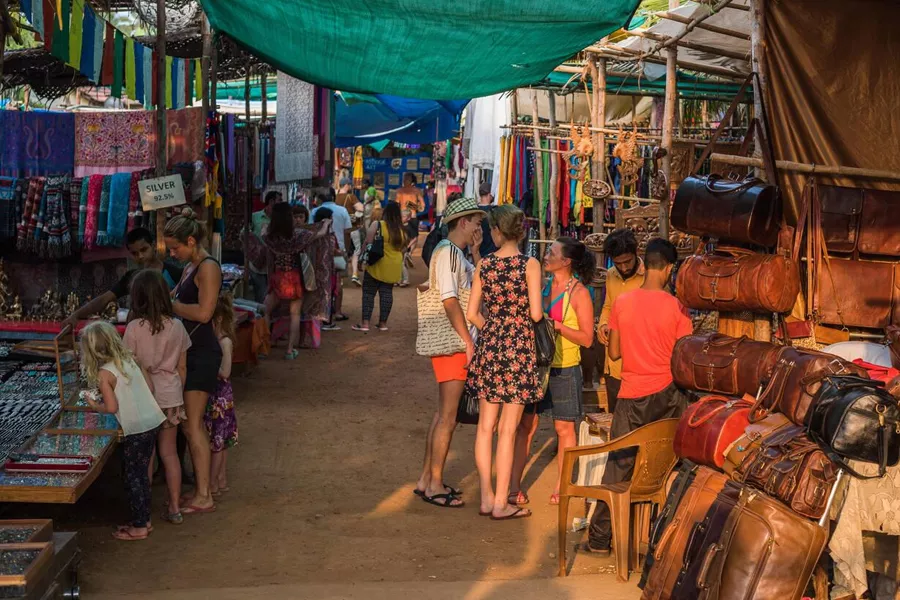
Shopping in Delhi, Agra, and Jaipur isn't about grabbing souvenirs from airport gift shops. The real treasures—handwoven textiles, marble inlay work, blue pottery, brass figurines, block-printed fabrics—are scattered across bustling markets where locals actually shop. The catch? You need to know which markets are worth your time and which ones are tourist traps designed to separate you from your money.
I've spent years navigating these cities and their markets. I've watched tourists pay triple for items available two shops over, and I've seen travellers completely miss the best handicraft spots because they didn't know where to look. This guide cuts through the confusion and tells you exactly where to find authentic crafts, how to negotiate fairly, and which items actually make sense to buy and bring home.
Why Shopping in These Markets Matters (And How It's Different)
When you buy from a reputable market in Delhi, Agra, or Jaipur, you're supporting artisans directly. You're getting items made by people who've been doing this for generations. The quality is better than mass-produced souvenirs because these aren't made for tourists—they're made with the same standards locals demand.
Second, prices are lower when you're buying from the source. Yes, you might negotiate. But you're negotiating with the actual shopkeeper or the family running the stall, not a middleman who's already marked things up 300 percent.
Third, you get stories. When you buy a block-printed dupatta from a shop in Jaipur where the owner's grandfather taught him the craft, that piece means something different than one from a tourist emporium. The shop owner can tell you about the dyes, the process, how long it takes. That context makes the item stick with you.
Shopping Smart: Essential Tips Before You Start
Timing matters more than you think
Early morning (7–9 AM) is when locals shop. Markets are less crowded, shopkeepers aren't tired or irritable, and you get genuine interaction instead of hard sell. Avoid afternoons (1–4 PM) when heat makes everyone cranky and early evenings (6–8 PM) when chaos peaks.
Bargaining isn't rude—it's expected
In fixed-price stores, you pay the sticker. In bazaars and street markets, prices are starting points. A fair counter-offer is 60–70 percent of the asking price. Shopkeepers expect this. Walk away if you're not happy—often they'll call you back with a better deal.
Cash vs. Cards
Smaller shops prefer cash. You'll sometimes get better prices for cash purchases. Larger stores and established markets accept cards, but expect a 2–3 percent surcharge. Bring a mix.
Check quality before committing
Hold textiles up to light to check weaves. Look at the back of block prints—the pattern should be visible (not just stamped on top). Test marble inlay work by running your finger over the surface (quality work feels smooth). Don't assume expensive means better—sometimes you're paying for the shop's reputation, not quality.
Delhi Markets: Where Locals Actually Shop
Chandni Chowk: Chaotic, Overwhelming, and Essential
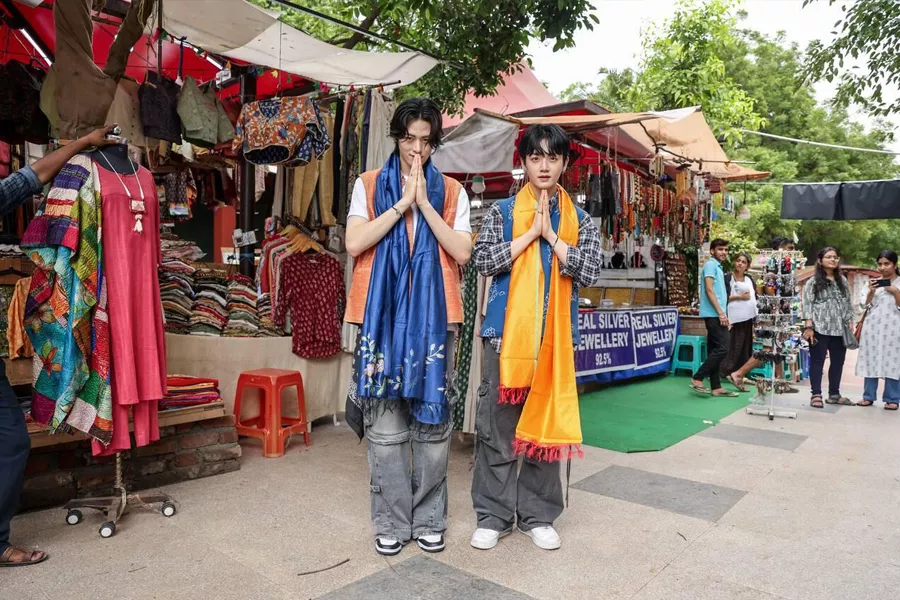
Chandni Chowk isn't one market—it's dozens of markets compressed into Old Delhi's tangle of lanes. Silver jewelry flows into textile areas, which connect to spice shops, which somehow lead to antique dealers. It's sensory overload by design.
Go early or don't bother. By noon, you're fighting crowds, navigating traffic fumes, and feeling genuinely unsafe. Early morning, you can actually move and breathe. The jewelry here is real silver (check hallmarks), and prices are lower than anywhere in New Delhi. For textiles, stick to established shops on the main lane—the side alleys are where tourists get turned around and pressured into overpriced purchases.
What to buy: Silver jewelry, high-quality scarves, traditional textiles, brass items.
Time needed: 1.5–2 hours.
Best time to visit: 7–9 AM, avoid Sundays and evenings.
Dilli Haat: Curated and Overpriced (But Safe)
Dilli Haat is Delhi's government-run handicraft market. It's clean, organized, and designed specifically for tourists. Each stall represents a different region or craft type. No hassle, fixed prices, everything's vetted.
The downside? You pay 30–50 percent more than you would in local markets. But if you value peace of mind and don't have time to hunt through chaos, Dilli Haat makes sense. It's also good for comparing what different regions produce in one place.
What to buy: Block prints, handicrafts from all of India, textiles, souvenirs.
Time needed: 1–2 hours.
Best time: Anytime (it's climate-controlled and consistently organized).
Entry fee: ₹50–100 per person.
Karol Bagh: Where Middle-Class Delhi Shops
Karol Bagh is Delhi's local shopping hub—not a tourist market, but a working market. Narrow lanes, hundreds of shops, prices that locals actually expect to pay. You'll find quality textiles, clothing, and some handicrafts mixed with everyday items.
The benefit? Real prices and no tourist premium. The challenge? It's not organized for visitors, and many shopkeepers won't speak English. Go with a local if possible, or at least armed with phone translation.
What to buy: Textiles, clothing, scarves, some handicrafts.
Time needed: 1–1.5 hours.
Vibe: Authentically local, zero tourist feel.
Nai Sarak and Jama Masjid Area: Textiles and Embroidery
If you specifically want high-quality textiles—silks, embroidered fabrics, traditional dupattas—head to Nai Sarak in Old Delhi. This is where textile traders buy wholesale. Prices are genuinely better because there's no middle markup. Shopkeepers can explain weaves and processes because they actually know them.
The Jama Masjid area is just adjacent, so if you want to combine mosque tourism with shopping, this works logically.
What to buy: Silks, embroidered textiles, high-quality dupattas, fabric by the meter.
Best for: Serious textile buyers who know what they're looking for.
INA Market: Hidden Gem for Genuine Crafts
INA Market in South Delhi is small and local. It's where Delhi residents go when they want quality handicrafts without tourist inflation. You'll find some Rajasthani crafts here, handmade jewelry, textiles, and pottery. Prices are fair, and the market doesn't feel exploitative.
It's also a launching point to the weekend Sunday Bazaar at INA, which is separate and larger.
Best for: Genuine crafts at fair prices without the chaos of Old Delhi.
Agra Markets: Marble Inlay and Carpet Shopping
Sadar Bazaar: The Main Tourist Route (Go Anyway)
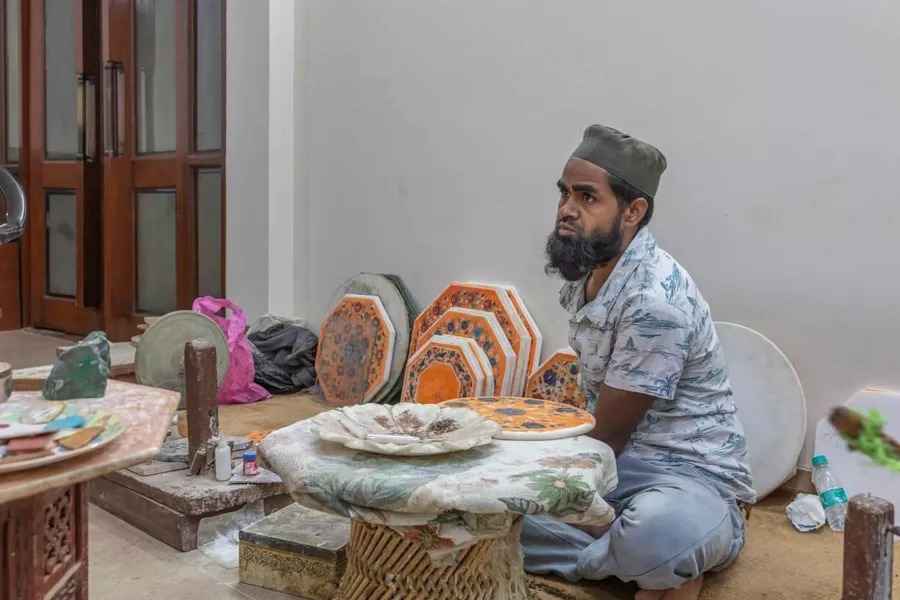
Sadar Bazaar in Agra is the obvious tourist stop near the Taj Mahal. It's lined with shops selling marble inlay work—small boxes, coasters, vases with semi-precious stones inlaid into marble. Quality varies wildly. Some pieces are genuine artisan work taking days to complete. Others are mass-produced tourist trinkets.
The trick? Ask to see the stone work up close. Legitimate inlay is smooth and precisely fitted. Bad work has gaps and feels rough. Ask how long a piece took to make. Real artisans can tell you—if they pause or shrug, it's probably imported cheap goods.
Prices range from ₹200 for small coasters to ₹50,000+ for large decorative pieces. Negotiate aggressively for anything over ₹1,000. You can often get 40–50 percent off initial prices.
What to buy: Marble inlay boxes, coasters, vases, small decorative pieces.
Warning: Don't buy "Taj Mahal replicas" or massive decorative pieces unless you're genuinely committed. They're heavy, tacky, and won't fit in luggage.
Dayal Bagh Area: Where Actual Artisans Work
Instead of shopping at Sadar Bazaar, visit Dayal Bagh where actual marble inlay craftsmen have their workshops. It's 2–3 km from the Taj, slightly off the main tourist route. You'll see artisans actually working—cutting stones, fitting pieces, polishing. Prices are better because there's no retail shop markup.
This is also where you can commission custom work if you want something specific. Give them 2–3 days and they can create pieces to your specs. It takes time, but the quality is incredible.
Best for: Authentic marble inlay and custom commissions.
Kinari Bazaar: Textiles and Local Goods
Kinari Bazaar is Agra's local shopping area, away from the Taj Mahal tourist path. It's where Agra residents buy textiles, clothing, and daily goods. You'll find quality at fair prices here because there's no tourist premium built in.
It's also genuinely interesting to see how locals actually shop—the rhythm, the haggling, the shops designed for repeat customers, not one-time visitors.
What to buy: Textiles, embroidered fabrics, local handicrafts.
Vibe: Authentically local, minimal English spoken, real shopping experience.
Carpet Shops: Exercise Caution
Agra has carpet shops targeting tourists, particularly those near the Taj. Many push expensive "handmade" carpets that cost ₹50,000–₹500,000. Some are genuine, some are machine-made passed off as handwoven.
If you're genuinely interested in a carpet, spend time examining it. Real handwoven carpets have slight irregularities—that's proof they're handmade. The knot density should feel tight. Ask to see the back—handmade carpets look consistent on the reverse. Machine-made ones have obvious patterns.
Better yet, skip the tourist shops and visit carpet cooperatives if you have time. The quality is better and prices are fairer.
Jaipur Markets: Blue Pottery, Textiles & Royal Shopping
Bapu Bazaar: Where Jaipur Lives
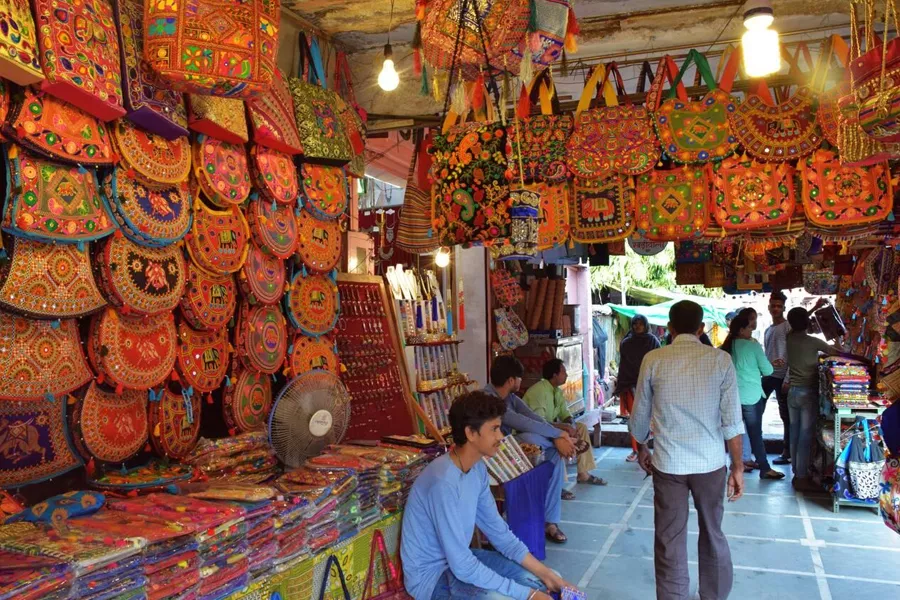
Bapu Bazaar is Jaipur's heart. It's not curated for tourists—it's a working market where locals actually shop. Textile shops line narrow lanes, bandhani (tie-dye) dupattas hang from every stall, and prices are what people actually pay here daily.
This is where you find authentic Jaipur textiles. Bandhani work, block prints, and quality fabrics at prices that would make tourist shops blush. Yes, it's chaotic and crowded. But that's exactly why prices are real.
Start early, bring water, and be ready to negotiate. Most shopkeepers are friendly once they realize you're genuinely interested in quality, not just grabbing cheap souvenirs.
What to buy: Bandhani dupattas, block-printed textiles, traditional Jaipur fabrics, jewelry.
Time needed: 1.5–2 hours.
Best time: 7–9 AM to avoid crowds.
Johari Bazaar: Jewelry and Silver
Johari Bazaar is Jaipur's jewelry market—specifically for silver, precious stones, and traditional jewelry. It's been Jaipur's jewelry hub for generations. Shopkeepers here are serious about quality because reputation matters in a specialized market like this.
For jewelry, Johari is better than tourist shops because prices reflect actual material costs, not tourism markups. You'll pay for silver by weight, and gemstones have market prices. Haggling is normal, but not as dramatic as in textile bazaars.
What to buy: Silver jewelry, precious stone jewelry, traditional Rajasthani designs.
Best for: Serious jewelry buyers who understand gemstones.
Nehru Bazaar: Handicrafts and Blue Pottery
Nehru Bazaar specializes in Jaipur handicrafts—specifically blue pottery, which is what Jaipur is famous for. Blue pottery pieces range from small decorative items to large vases and decorative plates. Quality varies significantly.
Look for pieces with hand-painted details (not just stencils). Tap the pottery gently—it should sound solid, not hollow and cheap. Authentic blue pottery has a slight weight to it and feels well-made.
Nehru Bazaar is also good for other handicrafts—brass figurines, wooden pieces, and traditional crafts from across Rajasthan.
What to buy: Blue pottery, handicrafts, decorative items.
Warning: Small items are portable; large vases are fragile and difficult to transport.
Mirza Ismail Road (MI Road): Shopping District Vibe
MI Road is Jaipur's more upscale shopping area with organized stores, fixed prices, and a less chaotic feel than bazaars. You'll find quality handicrafts here, but at tourist-level markups. It's good if you want the shopping experience without bazaar intensity.
Best for: Organized shopping with fixed prices and no negotiation needed.
Jaipur City Palace Area Markets: Mixed Quality
Around the City Palace, you'll find numerous small shops and stalls targeting tourists. Quality is mixed, and prices are inflated. Unless you're already in the area and have time to browse, it's not worth a special trip.
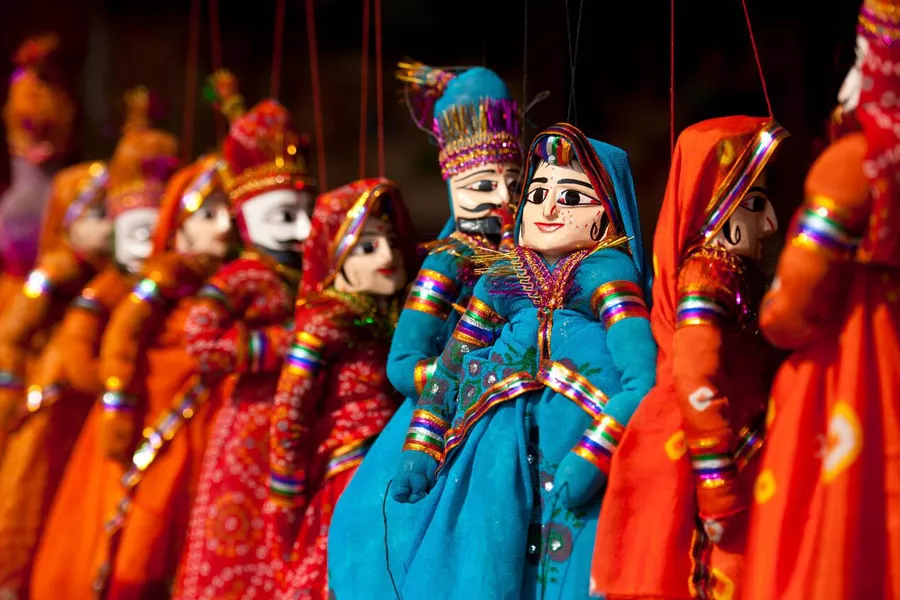
What to Buy: The Real Souvenirs Worth Your Money and Luggage Space
| Item | Best City | Price Range | Portability | Quality Check |
|---|---|---|---|---|
| Block-Printed Textiles | Jaipur or Delhi | ₹300–₹2,000 | Excellent | Pattern visible on back (not stamped) |
| Bandhani Dupattas | Jaipur | ₹400–₹3,000 | Excellent | Knots visible throughout, consistent tying |
| Silver Jewelry | Delhi or Jaipur | ₹500–₹10,000+ | Excellent | Check hallmark (925 or 950), weight, craftsmanship |
| Marble Inlay Work | Agra | ₹200–₹50,000 | Good (small items) | Smooth inlay, no gaps, proper stone fit |
| Blue Pottery | Jaipur | ₹200–₹5,000 | Fair (fragile) | Hand-painted details, solid weight, intact glaze |
| Brass Figurines | Jaipur or Delhi | ₹300–₹3,000 | Excellent | Weight, detailed craftsmanship, no rough edges |
| Embroidered Fabrics | Delhi or Jaipur | ₹400–₹5,000 | Excellent | Hand embroidery (not machine), even stitches |
| Miniature Paintings | Jaipur | ₹500–₹10,000+ | Excellent | Fine detail, traditional subjects, artist signature |
| Pashmina/Silk Scarves | Delhi or Jaipur | ₹800–₹5,000 | Excellent | Soft texture, weight, proper weave consistency |
Items to Skip (Even Though Vendors Push Them Hard)
- Large decorative vases or marble pieces: They're fragile, heavy, and take up your entire luggage. They look impressive in shops, terrible in hotel rooms.
- Cheap "Taj Mahal replicas" and miniature monuments: They're mass-produced, tacky, and will collect dust. Everyone has seen them.
- Items labeled "hand-made" without visible proof: If the shopkeeper can't explain the process or show you the work, it's probably not.
- Anything "authentic" from a tourist emporium: The markup is 200–400 percent. You're paying for the shop, not the item.
- Expensive carpets from tourist shops: Unless you're an expert in carpet quality, skip them. The pressure to buy is intense and the prices are not real.
- Gemstones unless you know gemstones: Agra and Jaipur have shops with "precious stones" that are actually glass or synthetic. Don't buy unless you're certain about quality.
Negotiation 101: How to Actually Get Good Prices
The setup
Shopkeeper quotes ₹1,000. This is their opening bid, not the actual price. Counter with 60 percent of that (₹600). They'll likely come back at 80 percent (₹800). Meeting in the middle at ₹700–₹750 is normal.
When not to negotiate
Fixed-price shops, established stores, and government emporiums won't budge. Dilli Haat, established chains, and stores with displayed prices are fixed. Negotiate only in traditional bazaars and street stalls.
Negotiation signals
If a shopkeeper is patient, friendly, and answers questions in detail, negotiate. If they're pushy, dismissive, or keep raising prices, walk away. You're trying to support good craftspeople, not fund aggressive tactics.
The walk-away move (actually works)
After a few rounds of negotiation, if you're not happy, say "thank you" and start to leave. Often the shopkeeper will call you back with a better final offer. This works because they'd rather sell at a discount than lose the sale entirely.
Shipping Heavy Items Home
If you fall in love with a large marble inlay piece or a heavy brass item, you have options beyond luggage space.
Many reputable shops offer international shipping. Get a quote before buying—sometimes shipping costs more than the item. Ask about packaging and insurance. Established shops know how to pack fragile items properly.
Alternatively, customs shipping services exist in all three cities. They're more expensive than direct shop shipping, but properly handle documentation and customs paperwork.
Pro tip: Resist the urge to buy large items unless they're truly special. Luggage space is precious, and most of these pieces look better in memory than on your actual bookshelf at home.
Real Talk: What You'll Actually Take Home and Love
After years of watching travellers buy, I've noticed patterns. The items people genuinely love are textiles—dupattas, block-printed scarves, embroidered fabrics. They're practical, portable, and they actually get used and worn. Every time someone wraps a Jaipur bandhani dupatta around their shoulders, they remember the market where they bought it.
Small items work too. Silver jewelry, brass figurines, miniature paintings. They pack easily and look great displayed.
Large decorative pieces? They look amazing in the shop and awkward in most homes. Skip them unless you have a specific space in mind and can ship them.
The best souvenir rule: Buy something you'd actually use or display, not something you think you should buy because it's "authentic." You're taking it home, not to a museum.
Quick Reference: Market Guide at a Glance
| Market | City | Best For | Price Level | Hassle Factor |
|---|---|---|---|---|
| Chandni Chowk | Delhi | Silver, textiles, chaos | Budget | Very High |
| Dilli Haat | Delhi | All-India crafts, safety | Mid-High | None |
| Bapu Bazaar | Jaipur | Textiles, authentic local | Budget | High |
| Johari Bazaar | Jaipur | Jewelry, silver | Mid | Medium |
| Nehru Bazaar | Jaipur | Blue pottery, handicrafts | Budget-Mid | Medium |
| Sadar Bazaar | Agra | Marble inlay, tourist items | Mid-High | Medium |
| Dayal Bagh | Agra | Marble craftsmen, custom work | Budget-Mid | Low |
| Karol Bagh | Delhi | Local shopping, textiles | Budget | High |
FAQ: Questions People Actually Ask
Is it safe to shop in these markets alone?
Relatively yes, with common sense. Busy daytime markets are fine solo. Early morning (7–9 AM) is actually when most locals shop. Avoid late evenings. Keep valuables secured. Women generally report feeling safe in markets, though crowding can be overwhelming. If you're uncomfortable navigating chaotic markets alone, hire a local guide for a few hours.
Will I get better prices if I speak Hindi?
Somewhat. Speaking even basic Hindi shows respect and effort. Shopkeepers are often friendlier with people who try. But they also know English speakers will negotiate based on perceived value, not language. What matters more is genuine interest in quality and fair negotiation approach.
How do I know if something is actually handmade?
Ask the shopkeeper to show you how it's made. If they can explain the process, materials, and time involved in detail, it's usually legit. If they're vague or dismissive, it's likely not. Also check for minor irregularities—handmade items have them. Perfect uniformity suggests mass production.
Should I buy "authentic" items from emporiums or tourist shops?
Not if you care about price. Tourist shops and emporiums add 200–400 percent markups. You're paying for convenience and safety, not authenticity. The actual item is the same in a bazaar at half the price. Choose bazaars if you have time and bazaar comfort level.
What if I get scammed?
In established markets, scams are rare because reputation matters. If you buy from a shop and later realize it's not what you thought, confronting the shopkeeper directly often works—they'd rather refund than lose face or future business. Getting the receipt and shop details helps.
Can I return items if I change my mind?
Tourist shops and emporiums often allow returns. Bazaar stalls rarely do. It's why checking quality thoroughly before buying matters. Once you negotiate and agree on a price, it's final.
Is bargaining offensive?
In bazaars? No. It's expected and enjoyable for shopkeepers. It's how the market works. The opening price is never the real price. Friendly, good-natured negotiation is appreciated. Aggressive or insulting haggling is offensive.
How much luggage space should I plan for souvenirs?
Textiles pack small. Jewelry takes almost no space. Pottery and marble pieces are heavy and fragile. If you're planning to buy a lot, consider a lightweight extra bag or plan for international shipping. Trying to fit large items into your luggage usually ends with something breaking.
Final Thoughts: Shop With Intention
The best souvenirs aren't the most expensive ones or the biggest ones. They're the items you genuinely wanted, bought fairly, and actually use at home. That bandhani dupatta you haggled over in Bapu Bazaar. The silver ring from Johari Bazaar that fits perfectly. The marble coaster from Dayal Bagh that reminds you of real craftsmanship.
These markets represent generations of artisans. When you buy from them directly—understanding what you're buying, supporting fair prices, and respecting the work—you're part of that continuation. That makes the souvenir meaningful, not just something to tick off a checklist.
Shop early when you're fresh. Bring cash. Ask questions. Negotiate fairly. Walk away if it doesn't feel right. And remember: the best souvenir is the one that makes you smile when you're unpacking it at home.
Recent Posts
 Amer Fort Boating 2026 Guide: Maota Lake Tickets & Timings
Discover Amer Fort’s new Maota Lake boating, updated 2026 ticket rates, timings, safety rules and best visiting months.
 Luxury Rajasthan Tour with Oberoi, Taj & Leela Hotels
Experience royal Rajasthan in comfort with Oberoi, Taj and Leela luxury palace stays.
 Luxury Tempo Traveller & Van Hire in India 2026 – Rates, Features & Booking
Enjoy luxury van hire in India for safe, comfortable family and group travel.
 Top 10 Vehicle Hire Companies in India for Tourists
Discover the top 10 vehicle hire companies in India offering safe, comfortable tourist travel.
 Delhi Agra Jaipur Tour by Luxury Car and Private Driver
Enjoy a Delhi Agra Jaipur tour with a luxury car, private driver and flexibility.
 Luxury Car and Driver for Comfortable Rajasthan Tour
Explore Rajasthan in comfort with a luxury car, private driver and flexible custom tour.
 Jaisalmer Travel Guide for Foreign Tourists: Best Time, Desert Tours & Tips
Plan your Jaisalmer trip with ideal seasons, desert tour packages and essential foreigner tips.
 Hidden Villages of Rajasthan: Offbeat Rural Experiences & Village Travel Guide
Hidden Villages of Rajasthan: Offbeat Rural Stays, Homestays & Authentic Village Life.
-
Amer Fort Boating 2026 Guide: Maota Lake Tickets & Timings
Discover Amer Fort’s new Maota Lake boating, updated 2026 ticket rates, timings, safety rules and best visiting months.
-
Luxury Rajasthan Tour with Oberoi, Taj & Leela Hotels
Experience royal Rajasthan in comfort with Oberoi, Taj and Leela luxury palace stays.
-
Luxury Tempo Traveller & Van Hire in India 2026 – Rates, Features & Booking
Enjoy luxury van hire in India for safe, comfortable family and group travel.
-
Top 10 Vehicle Hire Companies in India for Tourists
Discover the top 10 vehicle hire companies in India offering safe, comfortable tourist travel.
-
Delhi Agra Jaipur Tour by Luxury Car and Private Driver
Enjoy a Delhi Agra Jaipur tour with a luxury car, private driver and flexibility.
-
Luxury Car and Driver for Comfortable Rajasthan Tour
Explore Rajasthan in comfort with a luxury car, private driver and flexible custom tour.
-
Jaisalmer Travel Guide for Foreign Tourists: Best Time, Desert Tours & Tips
Plan your Jaisalmer trip with ideal seasons, desert tour packages and essential foreigner tips.
-
Hidden Villages of Rajasthan: Offbeat Rural Experiences & Village Travel Guide
Hidden Villages of Rajasthan: Offbeat Rural Stays, Homestays & Authentic Village Life.