India Tour Taxi Rates | Complete Travel & Pricing Guide
Figuring out how much a taxi will actually cost during an India tour trips up many travelers because pricing isn't just about distance—it involves car type, region, season, driver allowances, and state-specific taxes all mixed together. When you get quotes from different operators, they'll use different language, sometimes quote per km, sometimes per day, and occasionally bundle costs in ways that aren't immediately transparent.
After years of helping travelers navigate India's diverse roads and countless taxi operators, I've learned that understanding the pricing structure upfront saves both money and frustration. This guide walks you through exactly how India tour taxi rates work, what to expect in different regions, and how to spot a fair quote from an inflated one.
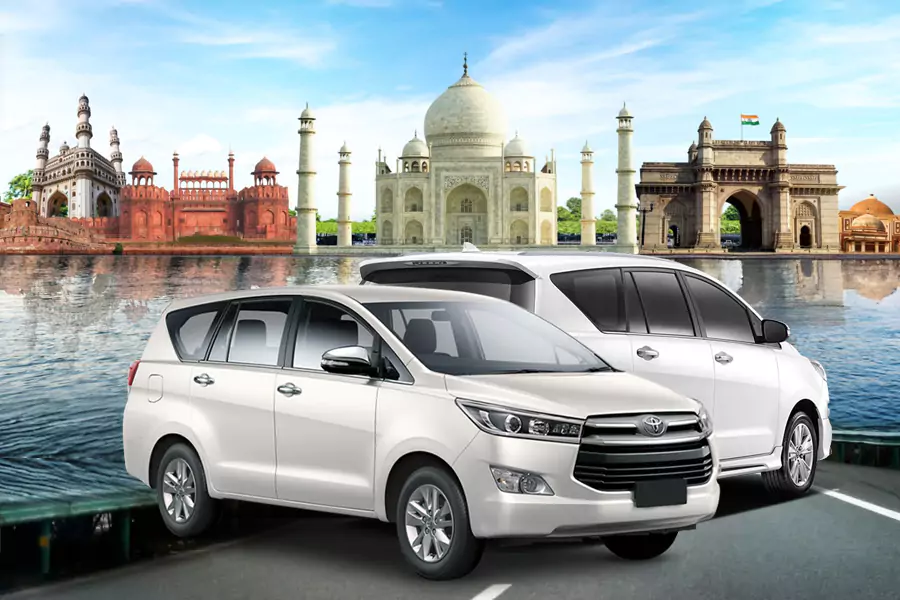
How Taxi Pricing Works in India
Unlike fixed-fare app-based cabs that charge per trip, outstation taxi fare in India is typically calculated using a combination of per-kilometer rates and minimum daily distance guarantees. This approach exists because a multi-day tour isn't predictable in terms of daily mileage—some days you might drive 200 km, other days 450 km depending on your itinerary.
Understanding per km rates and daily minimums
Most operators quote a per km rate, which ranges from ₹10 to ₹25 depending on the vehicle category and region. Along with this, they set a minimum billed distance per day—usually between 250 and 300 km—so that even if you use the car for local sightseeing and cover only 150 km, you'll still be charged for 250 km.
For example, a sedan-class car might be quoted at ₹12 per km with 250 km minimum per day. If you drive 280 km on day one, you pay for 280 km. If you drive 180 km on day two, you still pay for 250 km. This structure ensures the driver gets consistent daily income and the operator covers fuel and maintenance costs fairly.
Driver allowance and what it covers
Beyond the per km rate, nearly every operator charges a daily driver allowance (often called "driver bata" in local terminology), which typically ranges from ₹300 to ₹600 per day. This is a fixed daily charge that covers the driver's food, rest, and basic accommodation on multi-day trips.
Some operators include driver accommodation in mid-range or budget hotels within this bata; others expect you to provide the driver's stay separately. Always clarify this in writing when you book, because assumptions here lead to disagreements later. Premium operators sometimes include driver accommodation in nicer hotels; budget operators might not include accommodation at all and charge extra.
Tolls, permits, and state taxes
State expressways and national highways in India have toll plazas. These costs are passed to you either as a flat toll estimate or collected upfront. For example, a multi-day North India tour covering Delhi-Agra-Jaipur might have ₹1,500 to ₹2,500 in tolls depending on the exact route and return route.
Some states also impose one-time taxi registration or permit fees for outstation vehicles, though this is becoming less common. Green tax (pollution tax) is another regional charge, especially in metropolitan areas. Operators usually either bundle these into a final quote or add them as separate line items.
Types of Tour Taxis Available in India
India's tour taxi market isn't one-size-fits-all. Vehicles range from compact economy cars suitable for couples or small families, all the way to large tempo travellers that can seat 17 passengers. Choosing the right vehicle directly impacts your comfort, cost per person, and what India travel taxi cost actually means for your budget.
Economy sedans (Maruti Dzire, Hyundai Xcent, Tata Tigor)
These compact cars are ideal for couples, solo travelers, or small families of up to 3–4 people. Seating is basic but adequate for day trips and comfortable for longer journeys if you're not carrying excessive luggage. India tour taxi rates for economy sedans typically range from ₹11 to ₹14 per km in North India and Western India circuits.
Daily outstation taxi rates for sedans (including minimum distance) usually fall between ₹2,800 and ₹4,200 depending on the region, season, and operator reputation. These vehicles are fuel-efficient, easy to navigate through narrow lanes in heritage cities, and widely available.
Premium sedans and hatchbacks (Hyundai i20, Maruti Swift, Honda Jazz)
Slightly more spacious than economy cars, these vehicles offer better comfort for longer drives without jumping to the cost of an SUV. They're suitable for 4–5 people or 3 people with reasonable luggage. Private taxi rates in India for this category are around ₹13 to ₹16 per km.
These cars are popular with couples who want more breathing room, small families, and group tours where you can afford a bit more comfort. Daily rates typically range from ₹3,200 to ₹4,800, again depending on location and season.
SUVs and MPVs (Toyota Innova, Mahindra XUV, Renault Duster)
The sweet spot for families and small groups of 5–7 people. These vehicles offer significant comfort for long-distance touring, with more leg room, air suspension, and better load capacity for luggage. You'll find these on most multi-day tour circuits across India.
Taxi charges for India tour using SUVs or MPVs range from ₹16 to ₹20 per km, with daily rates (including minimum distance) falling between ₹4,000 and ₹6,500. The premium over sedans is justified by comfort, capacity, and the vehicle's ability to handle varied road conditions across India.
Tempo travellers and coach hire (9–17 seaters)
For groups of 8 or more, a tempo traveller becomes economical. These vehicles are essentially mini-coaches with individual seats, air conditioning, and ample luggage space. They're common for group tours, corporate outings, and extended family trips.
Outstation taxi fare in India for tempo travellers starts around ₹17 to ₹25 per km, with daily rates between ₹5,000 and ₹8,500. The cost per person drops significantly in a group, making these vehicles surprisingly economical for 10+ travelers. Larger coaches for 30+ passengers are available in major cities but are typically used for fixed-route tours rather than customized itineraries.
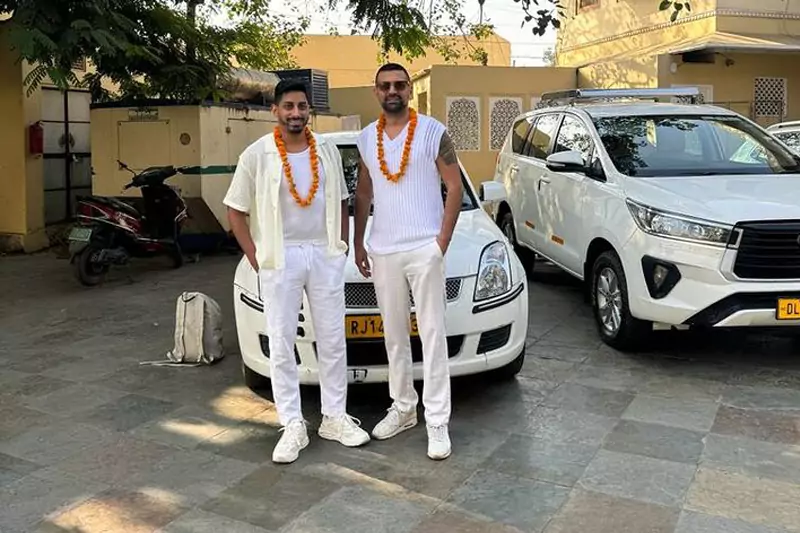
City-Wise and Region-Wise Taxi Rate Overview
India's geographic and economic diversity means taxi rates vary significantly across regions. A Rajasthan tour's per km rate might be lower than a Kerala backwater tour due to differences in demand, road conditions, and local operator margins. Understanding regional variation helps you gauge whether a quote is reasonable for your specific tour.
North India (Delhi, Agra, Jaipur, Pushkar, Fatehpur Sikri)
The Delhi-Agra-Jaipur Golden Triangle is India's most popular tourist circuit, so competition among taxi operators is high. This generally keeps rates competitive. A sedan on this circuit typically runs ₹12–₹14 per km, while an SUV is around ₹17–₹19 per km. Daily minimum distances are 250 km, and driver bata is ₹400–₹500 per day.
Extending beyond the Golden Triangle into Pushkar, Jodhpur, or Udaipur involves more remote areas with fewer operators, so rates climb slightly to ₹13–₹15 for sedans and ₹18–₹21 for SUVs. Hill routes like Delhi to Nainital or Delhi to Shimla add an extra ₹500–₹1,500 to daily costs due to challenging terrain and longer drive times.
Western India (Mumbai, Goa, Gujarat)
The Goa circuit is well-established with many budget operators, so you'll find competitive rates: ₹11–₹13 per km for sedans, ₹16–₹18 for SUVs. Mumbai to Goa outstation trips are a standard offering. Gujarat tourism in cities like Ahmedabad, Rajkot, and Bhuj has fewer foreign tourists, so rates are slightly lower: ₹10–₹12 for sedans.
The cost to hire a taxi for multi-day Goa tours is relatively budget-friendly because the circuit attracts so much seasonal tourism. Driver allowance in Goa-based tours is often ₹350–₹450 daily, lower than North India.
South India (Kerala, Tamil Nadu, Karnataka)
South India tour circuits are longer in actual touring distance, and road conditions vary widely. A Kerala backwater tour with its narrower roads and higher driving complexity commands rates at the higher end: ₹14–₹16 for sedans, ₹19–₹22 for SUVs. Tamil Nadu and Bangalore-based tours are slightly cheaper: ₹12–₹14 for sedans.
Monsoon season (June–September) sees lower demand and lower rates in South India. Post-monsoon (October–December) prices rise sharply. The private taxi rates in India in South India tend to include hill allowances (for Ooty, Munnar, Coonoor) which add ₹500–₹800 to daily costs on hilly routes.
Central India (Madhya Pradesh, Chhattisgarh)
Cities like Indore, Bhopal, Jabalpur, and the Kajuraho temple circuit attract fewer tourists, so you'll find more competitive rates: ₹11–₹13 for sedans, ₹15–₹18 for SUVs. These regions are less saturated with tour operators, meaning you might have fewer options but potentially better negotiation room.
Driver allowance in this region is often the lowest in India: ₹300–₹400 daily. Highways are well-maintained, so toll costs are predictable and generally lower than North India routes.
Outstation Taxi Rates vs Local Taxi Rates
Many travelers get confused about the difference between outstation taxis and local city cabs. Understanding this distinction helps you choose the right service for different parts of your trip.
Outstation taxis for multi-day tours
Outstation taxis are intended for point-to-point or loop journeys spanning multiple days, with overnight stays en route. The driver travels with you, stays in hotels, and is responsible for all driving. Outstation taxi rates are calculated per km (usually 250 km minimum per day) plus driver allowance, and the vehicle and driver are exclusively yours.
This is what most people book for India tours. You get personalized service, flexibility in timings, and a dedicated driver who often becomes a helpful local guide. India tour taxi rates quoted in this article primarily refer to outstation taxis.
Local city taxis and app-based cabs
Local taxis operate within city limits—think hotel pickups, airport transfers, or half-day city sightseeing. Rates are significantly lower on a per km basis (₹8–₹12 for non-AC, ₹10–₹15 for AC) because distances are short and turnaround is fast. App-based cabs (Ola, Uber) operate similarly but may require surge pricing during peak hours.
For a day's worth of local sightseeing (4–6 hours), you might pay ₹1,500–₹2,500 for local taxi service depending on the city. However, local taxis are impractical for outstation trips because drivers expect to return to their base city the same day, and you'd incur empty-return charges.
Factors That Affect India Tour Taxi Prices
Beyond the basic per km structure, several variables impact the final India travel taxi cost. Knowing these factors helps you understand quote variations and negotiate intelligently.
Vehicle age and condition
Newer vehicles (0–5 years old) command higher rates than older cars (5+ years). A 2023 Innova might be quoted at ₹19 per km while a 2018 model is ₹16 per km. Better maintenance, lower mechanical risk, and newer air-conditioning systems justify the premium. If you're budget-conscious and comfortable with slightly older but well-maintained vehicles, you can negotiate lower rates.
Driver experience and language skills
An experienced driver with English language skills or knowledge of specific regions (Rajasthan heritage, Kerala backwaters) often commands a ₹500–₹1,000 daily premium over a basic driver. For complex itineraries or if you prefer drivers who can provide cultural commentary, this premium is worth it. Budget operators often pair you with newer or less-experienced drivers.
Advance booking vs last-minute requests
Booking 2–3 months in advance gives you leverage to negotiate lower rates, especially during off-season. Last-minute bookings (1–2 weeks before) typically see a 10–20% premium. Operators have less flexibility to adjust vehicle allocation, so they charge more.
Return journey positioning
If you travel in a loop (Delhi → Agra → Jaipur → Delhi), the operator doesn't need to position the car back empty, so rates are lower. If you do a one-way trip (Delhi → Agra → Jaipur, ending in Jaipur), the operator either needs to reposition the car or charge you a one-way premium, typically ₹2,000–₹4,000 depending on distance.
Group size discounts
Groups of 4+ people often get 5–15% discounts on per km rates because the vehicle utilization is higher and the driver has one consolidated booking. Solo travelers or couples typically pay standard rates, sometimes with a solo-traveler premium of ₹500–₹1,000 daily.
Seasonal Price Differences: Peak vs Off-Season
India's tourism has pronounced seasonal patterns, and taxi prices follow demand closely. Understanding high and low seasons helps you plan your budget and timing strategically.
Peak season (October to March)
The cool, dry months are India's peak tourism period. Temperatures are pleasant across most of India, making this the ideal travel window. Demand for taxis is high, operators have limited availability, and prices are at their maximum.
Expect per km rates to be 15–25% higher than off-season. A sedan quoted at ₹12 per km during off-season might be ₹14–₹15 per km during peak season. Booking availability becomes tight by December, so early planning is essential.
Shoulder season (April–May and September)
April and early May see declining demand as heat increases in North and Central India, though South India remains warm. September is post-monsoon recovery in South and Central India. Rates are moderate—roughly 5–10% higher than off-season but noticeably lower than peak.
This is often the smartest time to travel if you're budget-conscious and can handle slightly warmer weather (North India) or wet conditions (South India, immediate post-monsoon). You get reasonable rates and less crowded destinations.
Off-season (June–August)
Monsoon affects most of India, with heavy rains in Western Ghats, Western India, and Southern regions. North India is hot and humid. International tourist numbers drop sharply, and operators slash rates by 15–30% to attract bookings.
This is the cheapest time to hire a taxi, but with caveats: roads can be challenging in rainy areas, many heritage sites close for conservation, and some hill stations become inaccessible. However, Rajasthan remains relatively dry and pleasant during monsoon, so Rajasthan-focused tours see less seasonal variation.
Private Driver with Car vs App-Based Taxis
For tour planning, the choice between a private car with driver versus app-based taxis (for city segments) comes down to your itinerary, flexibility needs, and budget.
Private car with dedicated driver (outstation model)
Pros: Exclusive service, flexible itinerary, driver becomes a local resource, luggage flexibility, no surge pricing, ideal for multi-day tours, can negotiate timings and stops.
Cons: Higher per km cost compared to per-ride city cabs, requires upfront booking, less transparency in app-based pricing, driver quality varies by operator.
Best for: Multi-day tours, flexible itineraries, small groups, travelers wanting immersive local experiences.
App-based taxis (Ola, Uber) for city segments
Pros: Transparent pricing, easy last-minute booking, no negotiation needed, familiar booking process, driver tracking and customer support.
Cons: Surge pricing during peak hours, drivers limited to city boundaries, less flexibility for multi-day tours, quality varies widely, no personalized service.
Best for: Airport transfers, city sightseeing within a single city, solo travelers comfortable with shorter rides, travelers prioritizing transparent pricing.
Hybrid approach: Private car for long routes, app cabs for cities
Many smart travelers use a hybrid model: book a private outstation taxi for multi-day intercity routes (Delhi to Agra to Jaipur), then use app-based cabs for intra-city movements in each destination. This balances cost, flexibility, and convenience. Calculate whether splitting the journey pays off, as private car minimums might apply regardless.
Sample Taxi Rate Table: Quick Reference
This table provides realistic ballpark figures for India tour taxi rates across common vehicle types and regions. Actual quotes will vary based on season, advance booking, and operator reputation, but these ranges give you a reference point for budget planning.
| Car Type | Typical Seating | Per KM Rate (₹) | Approx Daily Cost (250 KM minimum) | Best For |
|---|---|---|---|---|
| Economy Sedan (Dzire, Xcent) | 3–4 | 11–14 | ₹2,850–3,950 | Couples, solo travelers, budget trips |
| Premium Sedan (Swift, i20) | 4–5 | 13–16 | ₹3,450–4,600 | Small families, comfort seekers |
| SUV/MPV (Innova, Duster) | 5–7 | 16–20 | ₹4,400–5,750 | Families, comfort tours, mixed road conditions |
| Tempo Traveller (9–13 seaters) | 9–13 | 17–24 | ₹5,300–7,600 | Group tours, families, best cost per person |
| Coach/Large Tempo (15–17 seaters) | 15–17 | 20–28 | ₹6,500–8,700 | Large groups, corporate tours |
Note: Figures are approximate and based on North and Central India pricing. Southern India rates are typically 10–15% higher. Peak season (Oct–Mar) adds 15–25% premium. Off-season (Jun–Aug) offers 15–30% discounts. Driver allowance (₹350–600 daily) is additional to these figures in most quotes.
How to Get the Best Taxi Rates in India
Beyond understanding how pricing works, there are practical strategies to ensure you're getting genuine value and not overpaying for your India travel taxi cost.
Get multiple quotes from established operators
Don't settle on the first quote. Reach out to 3–4 operators with your exact itinerary, dates, vehicle preference, and group size. Established operators with 5+ years in business and verifiable customer reviews tend to quote more fairly than brand-new entrants hungry for market share. Compare apples to apples: ensure all quotes include the same items (tolls, driver allowance, parking fees).
Book 8–12 weeks in advance during peak season
Early booking gives you better rates and vehicle choice. Operators offering off-peak pricing discounts will apply them if you book early. Avoid booking within 2 weeks of travel; operators know you're desperate and may inflate rates.
Ask for written breakdown of all charges
Request a detailed quote email specifying: per km rate, minimum daily distance, driver allowance, estimated tolls, parking fees, state taxes, and any hill allowances. This written clarity prevents disputes later. If an operator resists providing written quotes, it's a red flag.
Negotiate for off-season and shoulder-season travel
During monsoon or summer off-season, operators have idle vehicles. Politely ask for a discount—15–25% is often negotiable, especially for bookings longer than 5 days. Peak season (Nov–Jan) has almost zero negotiation room; rates are what they are.
Consider slightly older vehicles for discounts
If you're flexible, ask if a well-maintained 2018–2019 vehicle is available instead of a 2023 model. You can save ₹2–3 per km and still get a reliable experience. Operators appreciate simplified negotiations and may offer additional courtesy like a driver who knows your destination region well.
Combine your trip with other bookings
Some operators offer package discounts if you combine taxi hire with hotel bookings or activity packages. Corporate or group travel sometimes qualifies for volume discounts. It's worth asking if such bundling is available.
Check GST and tax inclusions in the quote
A ₹15 per km rate might be pre-tax or post-tax. Always clarify if the quoted rate includes 18% GST or if it will be added. This can shift your total daily cost by ₹500–₹1,000 across a multi-day tour.
Common Pricing Mistakes Travelers Should Avoid
Learning from common mistakes saves both money and disappointment during your India tour.
Mistake 1: Comparing per km rates without considering minimums
Operator A quotes ₹11 per km while Operator B quotes ₹13 per km. Naturally, you lean towards A. But if A has a 300 km daily minimum and B has 250 km, the daily costs actually converge: A charges 300 × ₹11 = ₹3,300 daily (minimum), while B charges 250 × ₹13 = ₹3,250. The per km rate alone doesn't tell the story.
Mistake 2: Forgetting to include driver allowance in your budget
Operators sometimes quote only per km rates, and travelers assume that's the total. Driver allowance (₹300–₹600 daily) comes as a shock on the invoice. Always ask: "Is driver allowance included or additional?" and ensure you add it to your budget calculations.
Mistake 3: Underestimating tolls and highway fees
A 5-day North India tour can easily accumulate ₹1,500–₹2,500 in tolls. New travelers often skip this cost in their budget and find themselves short at the end. Ask operators for a realistic toll estimate and add a 10% buffer.
Mistake 4: Assuming fixed per km rates apply equally across routes
Some operators quote one per km rate for all routes, but many charge additional allowances for hill routes, night driving, or extra-long drives. A Rajasthan tour might have a simple per km rate, but a hill station tour might add a "mountain surcharge" of ₹500–₹1,000 per day. Ask explicitly about allowances for your specific itinerary.
Mistake 5: Not confirming vehicle and driver details before booking
Book a "Toyota Innova AC outstation taxi" but receive an older Maruti XUV. While the XUV might be acceptable, clarify vehicle models, air-conditioning type, and whether a backup vehicle is available if your booked car breaks down. Reputable operators provide these details in writing.
Mistake 6: Ignoring the operator's cancellation and modification policies
If you book 3 months in advance and need to cancel 2 months later due to unforeseen circumstances, can you get a refund? Do they charge a modification fee if you change dates by a week? Read the fine print; cheap upfront quotes sometimes come with harsh cancellation policies.
Mistake 7: Mixing expectations about driver expertise with budget hiring
Budget operators pair you with drivers who are competent but may not speak fluent English or know cultural anecdotes about each destination. If you expect a driver who provides Taj Mahal history lessons at budget pricing, you'll be disappointed. Higher-tier operators provide drivers with language skills and regional knowledge; budget operators don't.
Frequently Asked Questions About India Tour Taxi Rates
Q: What is a realistic daily budget for a private taxi on an India tour?
A: For a couple or small family, expect ₹3,000–₹5,000 daily for a sedan, or ₹4,500–₹7,000 daily for an SUV in North/Central India during off-season. During peak season (Oct–Mar), add 20–30%. For South India, add another 10–15%. These are inclusive of per km charges, minimum distance, and driver allowance but exclude personal meals and entry fees.
Q: Why do operators charge a minimum daily distance if I might drive less?
A: The minimum (typically 250–300 km) ensures the driver has guaranteed daily income, making their job economically viable. Drivers earn livelihoods from these trips, and a day where you drive only 100 km wouldn't sustain them. The minimum is set conservatively so most days you'll drive beyond it; the operator and driver share that extra mileage benefit.
Q: Can I negotiate taxi rates in India?
A: Yes, within reasonable limits. During off-season (Jun–Aug) or shoulder season (Apr–May, Sep), operators are often willing to negotiate 10–20% discounts, especially for longer bookings (7+ days) or repeat customers. Peak season (Oct–Mar) has almost zero negotiation room. Always negotiate respectfully before confirming rather than after, and have multiple quotes to reference.
Q: What's included in driver allowance, and what's extra?
A: Driver allowance (bata) typically covers the driver's basic meals and accommodation (often budget/mid-range hotels). However, clarify with your operator because some include accommodation and some don't. Your meals as a traveler, and any premium or special room requests for the driver, are always your responsibility. Tips are also not included and are at your discretion.
Q: Are app-based cabs cheaper than private outstation taxis?
A: For short city distances, yes—app-cabs are 30–50% cheaper. For multi-day outstation tours, private taxis are more economical and practical. A private Innova for 5 days of touring costs roughly ₹22,000–₹28,000 total. Using Ola/Uber for equivalent city-to-city travel would cost roughly ₹8,000–₹12,000 per day (₹40,000–₹60,000 total), making private taxis far cheaper for multi-day use.
Q: Do I need to book a return vehicle, or can I arrange one-way drops?
A: One-way drops are possible but incur a "repositioning charge" (usually ₹2,000–₹5,000) because the operator needs to bring the car back empty or park it till another booking. For tours spanning 5+ days within a region, a loop itinerary (returning to your start point) avoids this extra charge and is more economical. Plan your itinerary with this in mind.
Q: What happens if the taxi breaks down during my tour?
A: Reputable operators have backup vehicles or rapid repair arrangements to minimize disruption. Always check their breakdown policy in writing before booking. Some include breakdown assistance; others charge you extra. This is critical, especially for remote routes. Budget operators may not have backup solutions, increasing your risk.
Q: Is it better to book directly with operators or through travel agencies?
A: Booking directly with operators often gives you lower rates because you're eliminating the middleman. However, travel agencies handle itinerary planning and often provide integrated packages (taxi + hotels + activities) at negotiated rates. If you're confident planning your own itinerary, direct booking saves 10–20%. If you value integrated planning, agencies add convenience despite higher gross cost.
Q: Can I request a female driver for my tour?
A: While female drivers are increasingly common in major Indian cities for app-based services, for outstation tours, availability is limited. Some premium operators have female drivers, but it requires advance notice and may cost slightly more. Mainstream tour taxi operators are predominantly male. If this is important to you, mention it explicitly when requesting quotes.
Q: Do taxis provide child safety seats for infants and toddlers?
A: Outstation taxi operators typically don't provide child safety seats as standard. You'll need to arrange and bring your own, or check if the operator can source one (usually at an additional charge of ₹500–₹1,500 for the tour). Airport transfers sometimes offer this, but clarify in advance. Don't assume it's available.
Conclusion: Plan Your India Tour Taxi Budget Confidently
Understanding India tour taxi rates—how they're calculated, what varies by region and season, and what to watch for—transforms an intimidating booking process into a straightforward budgeting exercise. Whether you're planning a Golden Triangle circuit, a Kerala backwater exploration, or a Rajasthan desert adventure, the framework in this guide applies universally.
The key takeaway: don't chase the cheapest per km rate. Instead, seek transparent operators who provide written quotes with clear breakdowns, maintain their vehicles well, and pair you with experienced drivers who enhance your experience. A ₹2 per km premium often delivers better service, reliability, and peace of mind than a budget quote that nickel-and-dimes you later.
Use the rate tables and regional guidance here as reference points, but always request customized quotes for your specific itinerary, dates, and group size. Book 8–12 weeks in advance during peak season for better rates and vehicle selection. And remember: the most expensive taxi hire is the one that breaks down on day two or is driven by someone unfamiliar with your route.
Your India tour will create memories for a lifetime. Spending the time upfront to understand taxi pricing and negotiate fairly ensures the transportation layer complements your experience rather than detracting from it. Safe travels, and enjoy the roads of incredible India.
Popular Car Rental Options for Agra Trip


Recent Posts
 Amer Fort Boating 2026 Guide: Maota Lake Tickets & Timings
Discover Amer Fort’s new Maota Lake boating, updated 2026 ticket rates, timings, safety rules and best visiting months.
 Luxury Rajasthan Tour with Oberoi, Taj & Leela Hotels
Experience royal Rajasthan in comfort with Oberoi, Taj and Leela luxury palace stays.
 Luxury Tempo Traveller & Van Hire in India 2026 – Rates, Features & Booking
Enjoy luxury van hire in India for safe, comfortable family and group travel.
 Top 10 Vehicle Hire Companies in India for Tourists
Discover the top 10 vehicle hire companies in India offering safe, comfortable tourist travel.
 Delhi Agra Jaipur Tour by Luxury Car and Private Driver
Enjoy a Delhi Agra Jaipur tour with a luxury car, private driver and flexibility.
 Luxury Car and Driver for Comfortable Rajasthan Tour
Explore Rajasthan in comfort with a luxury car, private driver and flexible custom tour.
 Jaisalmer Travel Guide for Foreign Tourists: Best Time, Desert Tours & Tips
Plan your Jaisalmer trip with ideal seasons, desert tour packages and essential foreigner tips.
 Hidden Villages of Rajasthan: Offbeat Rural Experiences & Village Travel Guide
Hidden Villages of Rajasthan: Offbeat Rural Stays, Homestays & Authentic Village Life.
-
Amer Fort Boating 2026 Guide: Maota Lake Tickets & Timings
Discover Amer Fort’s new Maota Lake boating, updated 2026 ticket rates, timings, safety rules and best visiting months.
-
Luxury Rajasthan Tour with Oberoi, Taj & Leela Hotels
Experience royal Rajasthan in comfort with Oberoi, Taj and Leela luxury palace stays.
-
Luxury Tempo Traveller & Van Hire in India 2026 – Rates, Features & Booking
Enjoy luxury van hire in India for safe, comfortable family and group travel.
-
Top 10 Vehicle Hire Companies in India for Tourists
Discover the top 10 vehicle hire companies in India offering safe, comfortable tourist travel.
-
Delhi Agra Jaipur Tour by Luxury Car and Private Driver
Enjoy a Delhi Agra Jaipur tour with a luxury car, private driver and flexibility.
-
Luxury Car and Driver for Comfortable Rajasthan Tour
Explore Rajasthan in comfort with a luxury car, private driver and flexible custom tour.
-
Jaisalmer Travel Guide for Foreign Tourists: Best Time, Desert Tours & Tips
Plan your Jaisalmer trip with ideal seasons, desert tour packages and essential foreigner tips.
-
Hidden Villages of Rajasthan: Offbeat Rural Experiences & Village Travel Guide
Hidden Villages of Rajasthan: Offbeat Rural Stays, Homestays & Authentic Village Life.