Best Things to Buy in Rajasthan: Markets, Prices & Authentic Souvenirs
Rajasthan isn't just a destination for monuments and palaces—it's a shopper's paradise. From the bustling pink-washed bazaars of Jaipur to the desert markets of Jaisalmer, every street tells the story of centuries-old craftsmanship. The challenge isn't finding things to buy; it's knowing where to look, what's authentic, and how to avoid overpaying for mass-produced souvenirs posing as traditional handicrafts.
I've spent years navigating Rajasthan's markets with travelers, watching them either leave empty-handed from information overload or return home with beautiful authentic pieces they'll treasure. The difference comes down to strategy: understanding which bazaars specialize in what, knowing realistic prices, recognizing genuine craftsmanship, and bargaining effectively without feeling pressured or ripped off.
This guide walks you through Rajasthan's most important shopping destinations, reveals what actually merits your money, explains realistic pricing across major categories, and provides practical tips that make shopping in these bazaars genuinely enjoyable rather than stressful.
Jaipur Shopping: The Heart of Rajasthan Retail
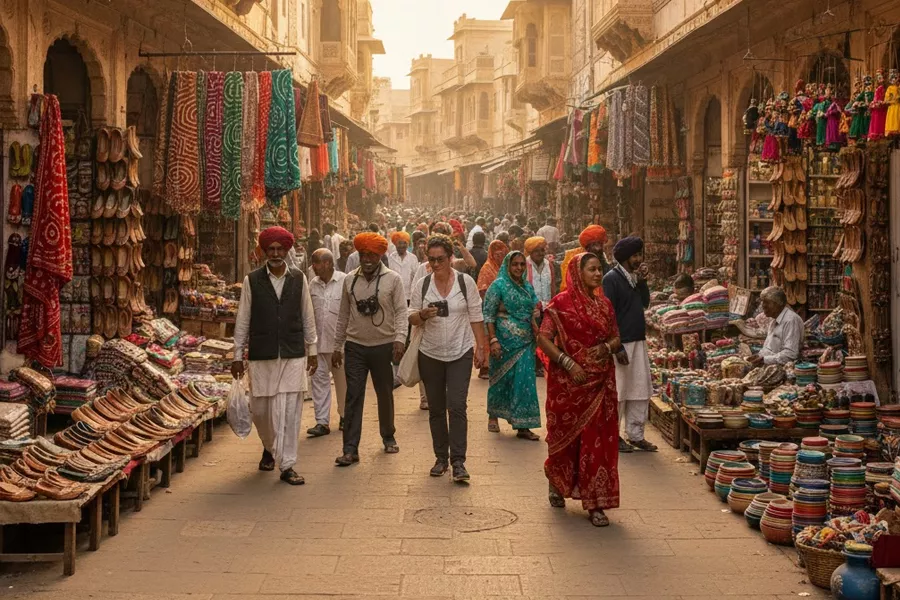
Jaipur remains Rajasthan's shopping epicenter. The pink-painted old city was designed on a grid system in 1727, creating organized neighborhoods where specific trades cluster. This traditional arrangement persists—certain bazaars remain dedicated to jewelry, others to textiles, others to handicrafts. Understanding this layout saves time and improves your shopping experience.
Johari Bazaar – Jewelry and Gemstones (10 AM–11 PM)
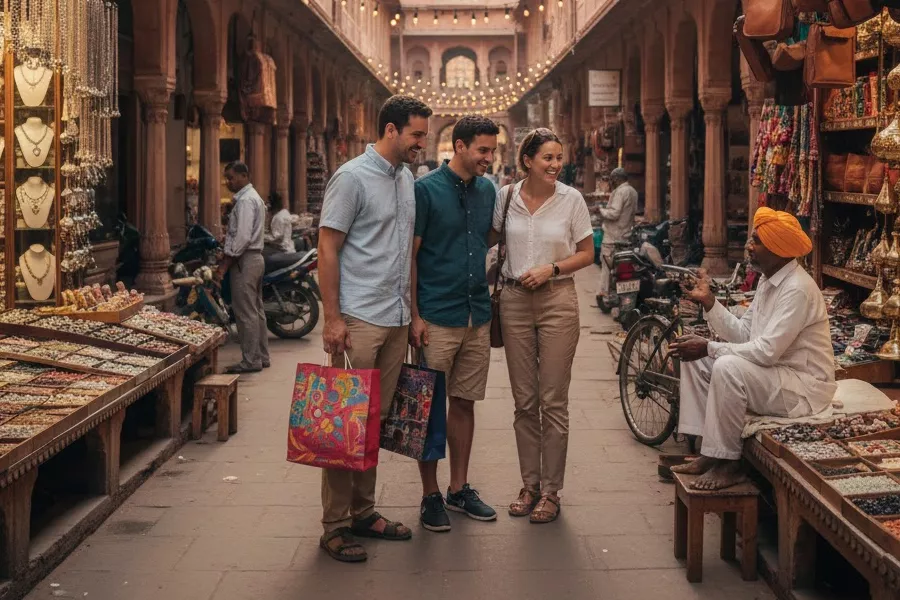
The jewel in Jaipur's shopping crown. This narrow market is lined exclusively with jewelry shops—both ground floor and upper-story establishments. Kundan and Meenakari jewelry (intricate precious stone work set in gold) is the specialty. You'll find designs ranging from traditional bridal pieces to contemporary statement jewelry. Prices vary wildly depending on whether you're buying gold-plated costume jewelry (₹500–₹2,000) or genuine precious stone pieces (₹20,000–₹2,00,000+). The market offers genuine gemstones with certification available at many shops. Bargaining is standard—expect 20–30% negotiation room. Visit afternoon/evening when natural light is better for evaluating stones. Crowds peak evenings (5–8 PM) and weekend afternoons.
Bapu Bazaar – Textiles and Handicrafts (9 AM–9 PM)
This is where authentic Rajasthan lives. Bapu Bazaar overflows with textiles, handicrafts, lac bangles, block-printed bedsheets, leather juttis (traditional footwear), embroidered wallets, and souvenirs. Prices are remarkably reasonable (₹300–₹2,000 for most items). The atmosphere is chaotic and energetic—exactly what you'd expect from an authentic bazaar. Vendors are aggressive but rarely hostile. The pink-painted buildings create an Instagram-worthy setting, particularly during golden hour (sunset). Best items: block-printed cotton suits (₹800–₹2,000), lac bangles in sets (₹300–₹800), leather juttis (₹600–₹1,500), embroidered wall hangings (₹400–₹1,200). Visit early morning (8–9:30 AM) for crowds that are manageable but the market is fully awake. Bargaining is universal here.
Tripolia Bazaar – Lac Bangles and Brassware (10 AM–7 PM)
Specialized bazaar focusing on lac bangles (colorful wax and resin bracelets), brass vessels, copper utensils, and traditional textiles. You can watch live bangle-making at some shops—artisans shape hot wax and lac into intricate patterns. This is the most authentic place to buy bangles. Prices: individual bangles ₹50–₹200, sets ₹300–₹800. Less crowded than Bapu Bazaar, more traditional. The atmosphere feels less touristic, more genuinely local. Essential if you want authentic lac bangles rather than plastic imitations sold at tourist shops.
Nehru Bazaar – Traditional Footwear and Garments (10 AM–11 PM)
The market for colorful mojaris (traditional Rajasthani shoes), ready-made garments, pottery, and decorative items. Mojaris range from simple designs (₹400–₹800) to ornately embroidered pieces (₹1,200–₹2,500). The bazaar feels less overwhelming than Bapu, more manageable for tourists. Blue pottery items (bowls, vases, decorative pieces) are reasonably priced here (₹300–₹1,500). Prices are genuinely budget-friendly compared to other bazaars.
Chandpole Bazaar – Marble and Wooden Handicrafts
If you want marble statues, miniature paintings, wooden furniture, or carved panels, this bazaar specializes in these items. Rajasthani marble work—intricate carvings and inlay patterns—is on display here. Miniature paintings on marble, paper, or ivory range from simple (₹500–₹2,000) to masterpieces (₹10,000+). This bazaar is less touristy, more art-focused. Pieces here make excellent home decor or gifts. Items are often export-quality.
Shopping Beyond Jaipur: Regional Specialties
Jodhpur – Clock Tower Market and Umaid Bhawan Palace Market
Clock Tower Market (8 AM–9 PM): Dominated by spices and textiles. The bazaar wraps around the iconic clock tower and is less touristy than Jaipur bazaars. You'll find traditional Rajasthani handicrafts, textiles, and souvenirs at lower prices than Jaipur because fewer tourists pass through. Bandhani (tie-dye) textiles are excellent value here. Prices roughly 15–20% lower than comparable Jaipur items.
Umaid Bhawan Palace Market (10 AM–4:30 PM): More upscale and curated. Located near the palace, this market features antiques, metal works, designer furniture, handicrafts with sequins and mirrors, pottery, and paintings. Prices are higher but quality is assured. Ideal if you're looking for serious art or museum-quality pieces rather than casual souvenirs.
Udaipur – Bada Bazaar and Hathi Pol Bazaar
Bada Bazaar: The main market near City Palace. Busy and chaotic, offering textiles, traditional silver jewelry, copperware, and antiques. Silver work is particularly strong here—Udaipur silversmiths have perfected techniques over generations. Traditional silver anklets and necklaces run ₹2,000–₹8,000 depending on weight and design. Also excellent for Bandhani sarees and pichwai paintings (mythological wall hangings).
Hathi Pol Bazaar: A 400-year-old market housing master artists creating miniature paintings on silk, marble, and ivory. This is where you find genuinely valuable art pieces. A simple miniature painting starts around ₹1,500–₹3,000; complex masterpieces run ₹10,000+. This bazaar feels like stepping into history. Narrow lanes hide workshops where families have practiced this art for generations. Shopping here feels more like art appreciation than commercial transaction.
Jaisalmer – Sadar Bazaar and Seema Gram
Sadar Bazaar (10 AM–6 PM): The heart of Jaisalmer shopping. You'll find everything—jewelry, shawls, wooden items, souvenirs. Camel leather juttis are particularly good value here (₹600–₹1,200). Prices are remarkably reasonable because the city is less touristy than Jaipur.
Seema Gram: A government arts complex showcasing crafts from across Rajasthan. Artisans demonstrate techniques live—pottery, block printing, embroidery. Shopping here supports actual artists directly without intermediaries. Prices are fixed (no bargaining), but you're paying fair artisan rates. Items range ₹300–₹5,000 depending on category. This is genuinely recommended if you want to ensure your money supports craftspeople rather than middlemen.
Bikaner – Kote Gate Road and Laxminath Market
Kote Gate Road: Known for camel-hide accessories (bags, belts, slippers), colorful sandals, miniature paintings, and Usta art (intricate inlay work). This is the place for camel-leather goods—quality is excellent and prices are lower than tourist centers. Prices: camel leather bags ₹800–₹2,500.
Laxminath Market: Budget-friendly for traditional clothes and handcrafted costume jewelry. Authentic Rajasthani garments (dhoti, kurta, traditional drapes) are available at exceptional prices here—₹400–₹1,200 for quality pieces. This market feels genuinely local, not designed for tourists.
What to Buy: Categories and Pricing
Jewelry and Gemstones
Kundan jewelry (precious stones set in gold): ₹5,000–₹50,000+ depending on design and stone quality. Meenakari (enameled) jewelry: ₹2,000–₹15,000. Blue pottery jewelry (ceramic, not precious): ₹300–₹800. Lac bangles: ₹50–₹200 per bangle. Silver jewelry: ₹2,000–₹10,000. Costume jewelry (imitation): ₹300–₹1,500. Best places: Johari Bazaar (Jaipur) for genuine precious; Bapu Bazaar for costume/lac options; Udaipur for silver work.
Textiles and Fabrics
Bandhani (tie-dye) sarees: ₹1,500–₹5,000. Block-printed cotton fabric: ₹300–₹800 per meter. Lehengas (traditional skirts): ₹1,500–₹4,000. Rajasthani suits: ₹800–₹2,500. Dupattas (scarves): ₹400–₹1,200. Kota Doria sarees (Kota's specialty): ₹2,000–₹6,000. Best places: Bapu Bazaar (textiles), Kishanpol Bazaar (diverse fabrics), Jodhpur Clock Tower Market (textiles at lower prices).
Handicrafts and Souvenirs
Miniature paintings: ₹1,500–₹10,000+. Blue pottery: ₹300–₹2,000. Wooden carved panels: ₹2,000–₹15,000. Metal vessels and decorative items: ₹500–₹3,000. Marble inlay work: ₹3,000–₹25,000. Puppets and dolls: ₹300–₹1,500. Brass and copper items: ₹400–₹2,500. Best places: Chandpole Bazaar (marble, wooden items), Hathi Pol (miniatures), Seema Gram (direct artisan purchases).
Footwear
Leather juttis (traditional shoes): ₹600–₹1,500. Camel leather mojaris: ₹700–₹1,800. Embroidered juttis: ₹1,000–₹2,500. Casual sandals: ₹300–₹800. Best places: Bapu Bazaar, Nehru Bazaar (Jaipur), Kote Gate Road (Bikaner).
Bargaining Guide: Strategy and Reality
Where bargaining is expected
All bazaars except government stores (Seema Gram, etc.). Starting price is typically 40–60% above actual asking price. Your counter-offer might be 30–40% below asking price. You'll meet somewhere in middle—typically 20–30% reduction from asking price is realistic. Bargaining isn't aggressive negotiation; it's cultural shopping theater. Vendors expect it. They enjoy the negotiation.
Bargaining strategy
Research prices beforehand. Visit 2–3 shops for same item before negotiating seriously. Ask genuinely interested questions ("Where is this from?" "Who made this?"). Express authentic interest rather than just price focus. Vendors respond better to interest than dismissal. Start your counter-offer at 40–50% of asking price. The vendor will likely refuse; they'll counter-offer at 60–70%. You negotiate from there. Know your limit—if final price exceeds your acceptable range after 2–3 rounds, simply walk away. Vendors often call you back with better offers. Never bargain if you're not genuinely interested in buying.
What not to bargain on
Fixed-price government stores (prices are genuinely fair). Items labeled with printed prices. Expensive art pieces (miniature paintings, serious artwork). These have legitimate high prices; aggressive bargaining here is disrespectful to artisans.
Shopping in Rajasthan: Practical Tips
Timing and crowd management
Visit bazaars early morning (8–9:30 AM) for manageable crowds and better vendor attention. Avoid peak hours (11 AM–2 PM, 5–8 PM evenings). Sunday afternoons see family shopping crowds. Weekday mornings are genuinely optimal. Monsoon season (Jul–Sep) has negligible crowds—best for unhurried shopping.
Avoiding commission shops and tourist traps
Commission shops are real. Your private driver or hotel may receive commissions if they direct you to specific shops. This isn't inherently bad—commission shops often have decent quality. However, prices are marked up 30–50% to account for commissions. If you want best prices, ask your driver directly: "I'd prefer shops without commissions." Good drivers will respect this. Traditional bazaars have no commission relationships; prices are genuinely better.
Quality assessment
Examine stitching on textiles closely. Handmade stitches are slightly irregular; perfect machine stitches suggest mass production. Test block-printed colors—genuine block prints have slight variations; perfect uniformity suggests chemical printing. For jewelry, ask about hallmarks and certifications. Request documentation for precious stones. Handmade items have slight imperfections; factory-made items are too perfect.
Packing and transportation
Buy sturdy bags—most bazaar vendors provide thin plastic bags. Textiles pack well in compression bags. Heavy items (marble, brass vessels) should be packed carefully with bubble wrap. If buying substantial quantities, ask if shops offer shipping internationally. Many do, which eliminates luggage weight concerns.
Cash considerations
Bazaar shopping operates on cash. While some modern shops accept cards, traditional vendors expect rupees. Carry ₹5,000–₹10,000 if planning substantial shopping. ATMs are plentiful in city centers. Bargaining is genuinely easier with cash—vendors offer better rates for immediate cash payment versus card transactions.
Souvenir Categories: What Actually Merits Your Money
| Item Category | Price Range | Best Place to Buy | Authenticity Tip |
|---|---|---|---|
| Kundan Jewelry | ₹5,000–₹50,000 | Johari Bazaar, Jaipur | Stones should have light refraction; weight should feel substantial. Ask for certification. |
| Bandhani Textiles | ₹1,500–₹5,000 | Jodhpur Clock Tower, Tripolia Bazaar | Real tie-dye has slight color variations; perfectly uniform suggests chemical printing. Examine edges closely. |
| Block-Printed Cottons | ₹300–₹800 per meter | Bapu Bazaar, Sanganer | Handblock prints show slight register variations; machine prints are too perfect. Feel the texture—block prints have raised print areas. |
| Miniature Paintings | ₹1,500–₹10,000+ | Hathi Pol Bazaar (Udaipur), Chandpole (Jaipur) | Real miniatures use natural pigments (slight color inconsistency). Check artist's signature. Buy directly from artist if possible. |
| Blue Pottery | ₹300–₹2,000 | Tripolia Bazaar, Nehru Bazaar | Only made in Jaipur. Check thickness—cheap versions are thin and fragile. Hand-painted designs show brush variations. |
| Leather Juttis | ₹600–₹2,500 | Bapu Bazaar (Jaipur), Kote Gate (Bikaner) | Genuine leather has natural smell and texture. Check sole flexibility—quality juttis bend easily. Stitching should be detailed. |
| Marble Inlay | ₹3,000–₹25,000 | Chandpole Bazaar, Agra (nearby) | Run fingers over surface—hand-inlay work is perfectly smooth. Check for uneven gaps or glue (machine work). Weight indicates real marble vs. composite. |
| Lac Bangles | ₹50–₹200 per bangle | Tripolia Bazaar (watch making live) | Real lac is warm to touch and slightly flexible; plastic is cold and brittle. Buy from shops doing live-making. |
Frequently Asked Questions About Shopping in Rajasthan
Q: Are prices genuinely cheaper in smaller cities (Jodhpur, Jaisalmer) than Jaipur?
A: Yes, 15–25% cheaper typically. Fewer tourists mean lower markup. However, product selection is more limited. Jaipur remains the most comprehensive shopping center. Smaller cities offer genuine local shopping experience at better prices but narrower variety.
Q: How do I know if jewelry is real or imitation?
A: Ask for hallmarks and certifications. Real gold has hallmarks (BIS certified marked on item). Real precious stones have weight and refraction—hold against light to see sparkle. If price seems too good to be true for precious jewelry, it likely is imitation. Reputable shops provide documentation.
Q: Should I buy at government handicraft stores or bazaars?
A: Government stores (Seema Gram, etc.) offer fair prices and direct artisan support but limited selection. Bazaars offer more variety and bargaining opportunity but require more effort to assess authenticity. Ideal: shop both. Bazaars for quantity/variety, government stores for guaranteed authenticity and artist support.
Q: Is bargaining expected at all shops?
A: Not at fixed-price or government stores. Traditional bazaar shops expect it. Modern upscale shops sometimes do, sometimes don't—observe other customers. If prices are printed/labeled, bargaining isn't expected. If verbal pricing, bargaining is acceptable.
Q: What's the best souvenir to buy that's authentic and practical?
A: Block-printed cotton textiles. These are genuinely handmade by regional artisans, beautiful, practical (can be used as scarves, wall hangings, bags), and reasonably priced (₹300–₹800). Lac bangles are equally good—small, packable, distinctly Rajasthani, and inexpensive.
Conclusion: Shopping as Cultural Experience
Shopping in Rajasthan isn't about maximum purchases or bargain-hunting competitiveness. It's about encountering craftsmanship that has persisted for centuries, understanding the stories behind items, supporting artisans directly, and taking home pieces that genuinely connect you to the region's culture.
Visit bazaars early morning when the market is alive but manageable. Build relationships with vendors through genuine interest rather than aggressive negotiation. Bargain respectfully—it's cultural theater, not combat. Examine items carefully for authenticity rather than rushing through purchases. Buy fewer items of genuine quality rather than many mass-produced souvenirs. Support government handicraft stores and direct artisan sales when possible to ensure your money reaches creators.
The best shopping memories from Rajasthan aren't about what you bought—they're about the vendors you met, the artisans who demonstrated their craft, the bazaar energy you experienced, and the stories behind each piece you carry home.
Recent Posts
 Amer Fort Boating 2026 Guide: Maota Lake Tickets & Timings
Discover Amer Fort’s new Maota Lake boating, updated 2026 ticket rates, timings, safety rules and best visiting months.
 Luxury Rajasthan Tour with Oberoi, Taj & Leela Hotels
Experience royal Rajasthan in comfort with Oberoi, Taj and Leela luxury palace stays.
 Luxury Tempo Traveller & Van Hire in India 2026 – Rates, Features & Booking
Enjoy luxury van hire in India for safe, comfortable family and group travel.
 Top 10 Vehicle Hire Companies in India for Tourists
Discover the top 10 vehicle hire companies in India offering safe, comfortable tourist travel.
 Delhi Agra Jaipur Tour by Luxury Car and Private Driver
Enjoy a Delhi Agra Jaipur tour with a luxury car, private driver and flexibility.
 Luxury Car and Driver for Comfortable Rajasthan Tour
Explore Rajasthan in comfort with a luxury car, private driver and flexible custom tour.
 Jaisalmer Travel Guide for Foreign Tourists: Best Time, Desert Tours & Tips
Plan your Jaisalmer trip with ideal seasons, desert tour packages and essential foreigner tips.
 Hidden Villages of Rajasthan: Offbeat Rural Experiences & Village Travel Guide
Hidden Villages of Rajasthan: Offbeat Rural Stays, Homestays & Authentic Village Life.
-
Amer Fort Boating 2026 Guide: Maota Lake Tickets & Timings
Discover Amer Fort’s new Maota Lake boating, updated 2026 ticket rates, timings, safety rules and best visiting months.
-
Luxury Rajasthan Tour with Oberoi, Taj & Leela Hotels
Experience royal Rajasthan in comfort with Oberoi, Taj and Leela luxury palace stays.
-
Luxury Tempo Traveller & Van Hire in India 2026 – Rates, Features & Booking
Enjoy luxury van hire in India for safe, comfortable family and group travel.
-
Top 10 Vehicle Hire Companies in India for Tourists
Discover the top 10 vehicle hire companies in India offering safe, comfortable tourist travel.
-
Delhi Agra Jaipur Tour by Luxury Car and Private Driver
Enjoy a Delhi Agra Jaipur tour with a luxury car, private driver and flexibility.
-
Luxury Car and Driver for Comfortable Rajasthan Tour
Explore Rajasthan in comfort with a luxury car, private driver and flexible custom tour.
-
Jaisalmer Travel Guide for Foreign Tourists: Best Time, Desert Tours & Tips
Plan your Jaisalmer trip with ideal seasons, desert tour packages and essential foreigner tips.
-
Hidden Villages of Rajasthan: Offbeat Rural Experiences & Village Travel Guide
Hidden Villages of Rajasthan: Offbeat Rural Stays, Homestays & Authentic Village Life.