Best Wildlife Sanctuaries Around Jaipur: Jhalana, Ranthambore and Sariska Complete Travel Guide
If you love wildlife and you are anywhere around Jaipur, you are seriously in luck. Within just a few hours, you can go from noisy city streets to leopard cliffs, tiger territories and silent Aravalli valleys. In this guide, you will find everything you need about the three best wildlife sanctuaries around Jaipur – Jhalana Leopard Safari Park, Ranthambore National Park and Sariska Tiger Reserve – plus honest tips on which one to pick, when to go and how to plan your safaris.
Instead of just repeating brochure-style lines, this article focuses on actual traveller experience: what the forest feels like, how safaris run, realistic chances of seeing big cats, and small details that make or break your trip. If you are a blogger, tour operator or travel company, you can use this as a solid pillar article for “Best Wildlife Sanctuaries Around Jaipur”.
Why Jaipur Is A Perfect Base For Wildlife Safaris
Most people know Jaipur for its forts, palaces and pink old city, but surprisingly few realise how good it is as a wildlife base. You are sitting in a city that has its own leopard reserve inside the urban limits, one of India’s most famous tiger parks a few hours away, and a rugged tiger reserve with lakes and old forts in another direction.
Because Jaipur is well connected by flights, trains and highways, you can fly in, do two or three wildlife destinations and still be back in time for shopping and street food. That is exactly why a lot of travellers now plan hybrid itineraries – half city, half jungle – instead of doing just one or the other.
- Fast access to three major wildlife destinations from one city.
- Easy connections to Delhi, Agra, Bharatpur and Udaipur for extended trips.
- Perfect for long weekends, family holidays and photography tours.
Jhalana vs Ranthambore vs Sariska: Quick Snapshot
If you are in planning mode and want a quick “cheat sheet” before going into details, this table will help you decide which sanctuary fits your style and time frame.
| Sanctuary | Distance from Jaipur | Main Big Cat | Best For | Ideal Duration |
|---|---|---|---|---|
| Jhalana Leopard Safari Park | About 8–10 km (inside Jaipur, near airport) | Leopard | Quick safaris, day trips, leopard lovers | Half day to 1 day |
| Ranthambore National Park | Around 180 km (near Sawai Madhopur) | Tiger | Classic tiger safaris, first-timers, photography | 2–4 days |
| Sariska Tiger Reserve | About 107–110 km (Alwar district) | Tiger & leopard | Weekend road trips, mixed wildlife & heritage | 1–3 days |
Now let us dive into each park one by one so you can clearly see what makes them special and how to plan your visit properly.
Jhalana Leopard Safari Park: Jaipur’s Own Leopard Kingdom
Jhalana Leopard Reserve is easily one of the coolest wildlife stories in India right now. It is officially recognised as India’s first leopard reserve and sits over roughly 20 square kilometres on the eastern side of Jaipur, not far from the airport and main city. The area became a dedicated leopard conservation reserve in 2017, though safari tourism here started opening up seriously around 2016.
The craziest part about Jhalana is how close it is to city life. One moment you are crossing traffic, malls and offices, and in less than half an hour you are bumping along dirt tracks, scanning rocky ridges for leopards. For travellers who do not want long transfers, this is a dream setup.
Landscape And Flora: Dry, Rocky And Surprisingly Wild
Jhalana’s landscape is dominated by low Aravalli hills, narrow valleys and rocky outcrops. It is a dry deciduous forest most of the year, with trees shedding leaves in summer and turning lush green with the monsoon. The forest feels open and rugged, which actually makes scanning for animals easier compared to very dense jungles.
You will notice a lot of hardy species like Prosopis juliflora (locally called vilayati babool), khejri or Prosopis cineraria, dhak or Butea monosperma with its bright orange “flame of the forest” flowers, and trees like salar, dhonk and acacia. These plants are adapted to the dry climate and help sustain herbivores during tough months.
- Dry deciduous forest with open views, ideal for leopard sightings.
- Rocky cliffs and hill slopes where leopards often sit and scan the valley.
- Seasonal nallahs and waterholes that draw animals, especially in summer.
Wildlife In Jhalana: Leopard Capital Of Jaipur
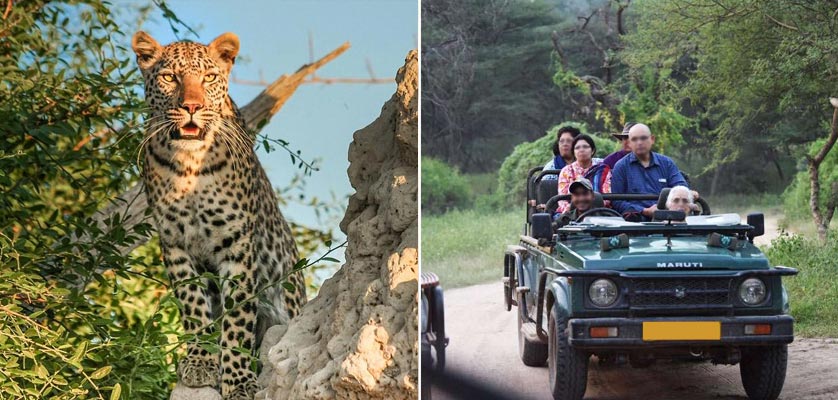
Jhalana is famous for its high leopard density in a small area. Various official and safari booking sources mention that the reserve holds more than 35–40 leopards along with several cubs, which is a very healthy number for about 20 square kilometres of habitat. That is one major reason people talk about Jhalana as one of the most reliable places to see leopards in India.
What’s impressive here is that the leopards are relatively used to vehicles. They often appear in daylight, walk along tracks, sit on rock faces or rest under trees while gypsies watch from a respectful distance. Of course, nothing in the wild is guaranteed, but your chances here are genuinely stronger than in most other parks where leopards are extremely shy and mostly nocturnal.
- High density of leopards with regular daytime sightings reported.
- Striped hyenas, jackals, desert foxes, civets and jungle cats in the supporting cast.
- Herbivores like sambar, chital, nilgai, wild boar and smaller mammals like porcupines and mongooses.
- Good birdlife including Indian pitta, owls, rollers, parakeets and winter migrants.
Jhalana Safari Experience: What To Expect
Safaris in Jhalana are done in open 4x4 gypsy-style vehicles with limited seats, accompanied by a trained naturalist and licensed driver. The park is divided into routes and zones, and you drive along predefined tracks, stopping near waterholes, ridgelines and known leopard territories. Because the area is compact, you do not waste much time in long transfers inside the forest.
A typical safari lasts around 2.5 to 3 hours. Sometimes you might see a leopard within the first 10 minutes; other times you spend the whole drive listening to peacock calls, scanning ridges and enjoying the landscape until the big moment finally happens near the end. Either way, it is an intense, focused experience rather than a very long, slow one.
- Small open jeeps for a closer and more intimate feel.
- Professional naturalists help read alarm calls and tracks.
- Popular vantage point: Shikaar Audhi, an old royal hunting lodge with great sunrise and sunset views.
Jhalana Leopard Safari Timings (Seasonal Slots)
Jhalana safaris run in two slots every day – morning and evening – with timings changing as per the season. Here is a simplified timing table based on recent schedules.
| Months | Morning Safari | Evening Safari |
|---|---|---|
| 1st Aug – 31st Oct | 06:45 am – 09:15 am | 03:45 pm – 06:15 pm |
| 1st Nov – 31st Jan | 07:00 am – 09:30 am | 03:15 pm – 05:45 pm |
| 1st Feb – 31st Mar | 06:15 am – 08:45 am | 03:45 pm – 06:15 pm |
| 1st Apr – 31st May | 05:45 am – 08:15 am | 04:15 pm – 06:45 pm |
| 1st Jun – 31st Jul | 05:45 am – 08:15 am | 04:45 pm – 07:15 pm |
Best Time To Visit Jhalana Leopard Reserve
The good news is that Jhalana is open all year, including the monsoon, which is rare among Indian reserves. In simple words, you can plan a leopard safari here in any month, you just need to be ready for seasonal changes in weather and foliage.
In terms of comfort and photography, November to April is generally considered the sweet spot. The weather is pleasant, light is beautiful, and the forest looks its best. Summer months are hotter but can be excellent for sightings because animals concentrate near water. Monsoon brings lush greenery, moody skies and a completely different vibe, great if you like atmosphere and landscapes as much as big cats.
- Best overall months: November to April for comfortable weather and great visuals.
- Summer (April–June) is hot but rewarding for serious wildlife watchers.
- Monsoon safaris are unique because most other parks in India close during this time.
How To Reach Jhalana From Jaipur
Reaching Jhalana from anywhere in Jaipur is incredibly easy. The main safari gate is only about 8–9 kilometres from central Jaipur and roughly 6 kilometres from Jaipur International Airport. For most travellers, that translates to a 20–40 minute cab or auto ride depending on traffic.
If you are flying in just for the safari, you can literally land in Jaipur, check into a hotel near the airport or in southern Jaipur, freshen up and head straight out for an afternoon drive. Travellers arriving by train at Jaipur Junction can reach the park in under an hour by taxi or cab.
- Distance from Jaipur Airport: About 6 km, roughly 15–25 minutes by car.
- Distance from city centre: Around 8–10 km depending on your hotel.
- Cabs, autos and pre‑booked transfers are easily available.
Who Should Choose Jhalana?
Jhalana is perfect if your main dream is to see a wild leopard and you do not want to travel too far out of Jaipur. It is also ideal if you are in the city for work or a family function and can spare just half a day or one morning/evening for a safari. The experience is intense, focused and easy to fit into a tight itinerary.
If you want long, varied drives, lakes and forts inside the forest, or a big “destination” feel with lots of resorts and extra activities, then Ranthambore or Sariska will suit you better. Think of Jhalana as a sharp, leopard‑centric experience rather than a full jungle holiday.
Ranthambore National Park: India’s Iconic Tiger Playground
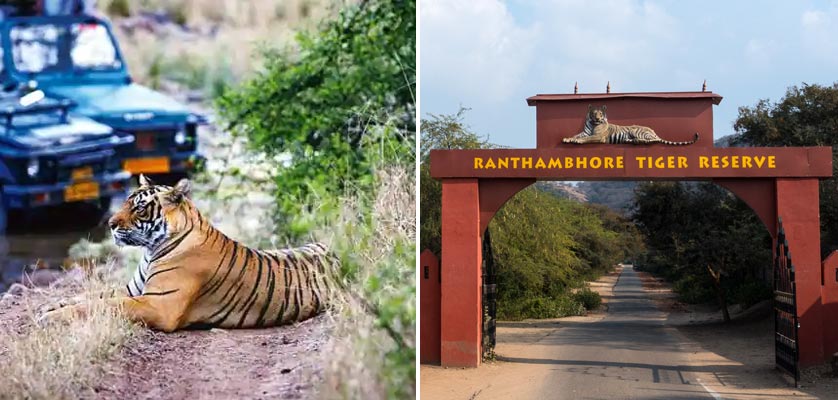
When people around the world think “tiger safari in Rajasthan”, Ranthambore is usually the first name that pops up. Located near the town of Sawai Madhopur, around 180 kilometres from Jaipur, this national park is one of India’s most famous tiger reserves and has been part of Project Tiger since the early days of the programme.
The park is a blend of dry deciduous forest, rocky ridges, lakes and wide open valleys, all watched over by the dramatic Ranthambore Fort sitting on a hill. It is this combination – royal history, bold tigers and big vistas – that makes the place feel genuinely cinematic.
Landscape, Zones And Layout
Tourist safaris in Ranthambore are organised into numbered zones. Traditionally, zones 1–5 formed the core tourism area, with additional zones added to spread pressure and open up more habitat to visitors. Each zone has its own feel – some are dominated by lakes and marshy edges, others by narrow valleys and plateaus, and some by more open grassy stretches.
Over the years, certain tigers became strongly associated with specific zones, but territories shift, cubs grow up, tigers move, and the “hot zone” keeps changing. That is why most regulars will tell you to focus on doing more safaris rather than obsessing about one particular zone number.
- Zones 1–5 historically considered prime tiger areas, but all zones can produce sightings.
- Scenery ranges from lakes and marshes to cliffs and dry plateaus.
- Fort views and old ruins add a unique character to the drives.
Wildlife In Ranthambore: Tigers And Beyond
Ranthambore is primarily known for its tiger population. Over different years, numbers have fluctuated, but strong protection and habitat management have kept the reserve on the map as one of India’s best places to see wild tigers in a natural setting.
Apart from tigers, the park is rich in other wildlife – leopards (though seen less frequently than tigers), sloth bears, striped hyenas, jungle cats, caracals in some patches, sambar, chital, nilgai, wild boar, langurs and marsh crocodiles along lakes. Birders have plenty to enjoy too, with more than 270 bird species recorded in and around the park.
- One of India’s best-known tiger reserves with good sighting potential.
- Healthy populations of deer, boar, langurs and crocs support the big cats.
- Excellent birding in winter with both resident and migratory species.
Ranthambore Safari Timings (Seasonal Schedule)
Safari timings in Ranthambore vary across the year based on sunrise and sunset, but the standard pattern is one morning and one evening slot. The jungle safari timing chart below is based on commonly used schedules.
| Months | Morning Safari | Evening Safari |
|---|---|---|
| 1st Oct – 31st Oct | 06:30 am – 10:00 am | 02:30 pm – 06:00 pm |
| 1st Nov – 31st Jan | 07:00 am – 10:30 am | 02:00 pm – 05:30 pm |
| 1st Feb – 31st Mar | 06:30 am – 10:00 am | 02:30 pm – 06:00 pm |
| 1st Apr – 15th May | 06:00 am – 09:30 am | 03:00 pm – 06:30 pm |
| 16th May – 30th Jun | 06:00 am – 09:30 am | 03:30 pm – 07:00 pm |
Core zones usually close during the monsoon (July–September), while some outer zones may still operate depending on current rules and road conditions. Every year, fresh notices come out when zones reopen for the new tourist season.
Best Time To Visit Ranthambore
The main Ranthambore safari season runs from October to June, but each part of the season has its own flavour. November to March is very popular because the weather is crisp and pleasant, mornings are cool and afternoons are comfortable. Light is soft, the sky is often clear and the forest has a mix of green and golden tones that look great in photos.
For hard‑core tiger photography, late March to June is prime time. Water sources shrink, tigers start using favourite pools and tracks more predictably, and leaves fall, improving visibility. The trade‑off is heat, so you should be ready for high temperatures, especially on afternoon safaris. Monsoon is generally off‑season for core zones due to safety and conservation reasons.
- Best overall for comfort: November to February.
- Best for intense tiger sightings: March to June (but it is hot).
- Core zones usually shut July–September during monsoon.
Gypsy vs Canter: Which Safari Vehicle To Choose
In Ranthambore you can book either a gypsy (6-seater open jeep) or a canter (20-seater open vehicle). Both are authorised by the forest department and use the same zone system. A lot of travellers prefer gypsies because they feel more private and can navigate narrow tracks more easily.
Canters are a good option for larger groups or when you want to keep costs relatively lower. Sightings from a canter can be just as good as from a gypsy if you get a decent seating position and a good guide. The main thing is to book through authorised platforms and confirm your vehicle type at the time of reservation.
- Choose gypsy for smaller groups, photographers and more flexibility.
- Choose canter for bigger groups and budget-friendly travel.
- Book early in peak season as seats fill up fast.
How To Reach Ranthambore From Jaipur And Other Cities
From Jaipur, Ranthambore is an easy 3.5–4.5 hour drive (around 180 km) depending on the route and road conditions. Most people hire a private cab or join an organised tour so they can reach in time for an afternoon or next‑morning safari.
By train, you need to reach Sawai Madhopur Junction, which is the main access station for the park. It lies on a major trunk route and also connects to cities like Kota and Jaipur by regular trains. From the station, resorts and hotels are usually 10–20 km away and arrange pick‑up on request.
- Road: Approx. 180 km from Jaipur, 3.5–4.5 hours by car.
- Rail: Sawai Madhopur Junction is the nearest railway station.
- Air: Jaipur International Airport is the nearest major airport; combine a flight with a road transfer.
Stay Options Around Ranthambore
Ranthambore has grown into a full wildlife destination, so you will find everything from ultra‑luxury lodges with spas and private sit‑outs to simple guesthouses close to the main road. Many resorts are spread out with gardens, pools and open courtyards, creating a camp-like feel between safaris.
When choosing where to stay, look for properties that understand safari timings – early breakfasts, packed tea and snacks, wake‑up calls and reliable vehicle coordination. A simple, well-run lodge with a good naturalist is genuinely more valuable than a fancy property that struggles with basic safari logistics.
- Luxury resorts for high-end experiences and curated nature activities.
- Mid-range tented camps and hotels for comfortable, value-for-money stays.
- Budget guesthouses near Sawai Madhopur for backpackers and budget travellers.
Sariska Tiger Reserve: Tigers, Hills And Hidden Temples
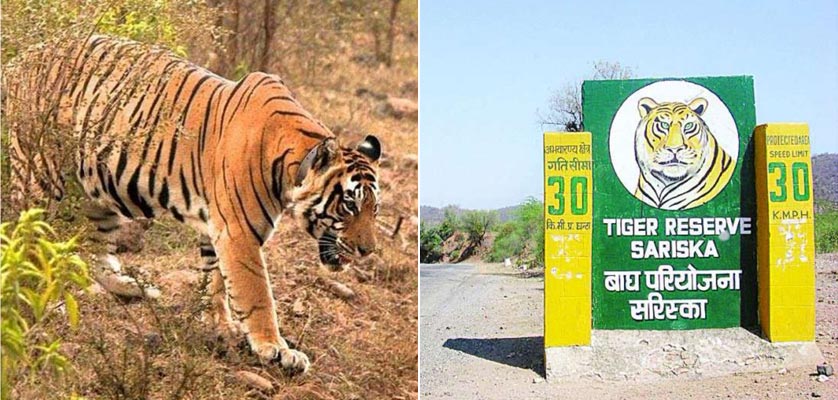
Sariska Tiger Reserve, in Alwar district, is another excellent wildlife choice near Jaipur. Spread over roughly 800+ square kilometres, this reserve lies within the dramatic folds of the Aravallis and mixes rugged hills, plateaus, valleys, lakes and old ruins. It has a quieter, more offbeat feel than Ranthambore but still offers real chances of seeing tigers and leopards.
Sariska has a long, mixed history – from being a royal hunting ground to facing a full tiger wipe‑out and then becoming a textbook example of tiger reintroduction and recovery. Today, the park is an important node in Rajasthan’s larger tiger landscape and a favourite weekend escape for people from both Jaipur and Delhi.
Forest And Flora: Dhok Country
Sariska’s forest is mainly dry deciduous, dominated by dhok trees that cover the slopes and form much of the canopy. These trees are tough and hold their own in harsh summers, feeding herbivores when grass dries out. On steeper slopes you will find salar, while valley bottoms and moist patches support trees like khair, jamun, arjun and bahera.
During the peak dry season, the forest can look rugged and brown, which actually helps with visibility. When the monsoon arrives, the same hills become lush and almost unrecognisable. That seasonal change is part of the charm – visiting Sariska in different months can feel like visiting completely different parks.
- Dry deciduous forest dominated by dhok trees.
- Green, lush look in monsoon and post‑monsoon months.
- Rocky cliffs, ravines and valleys create dramatic views on safari routes.
Wildlife In Sariska: Reintroduced Tigers And More
Sariska made national headlines when its original tigers vanished in the early 2000s due to poaching. After that crisis, a systematic relocation programme started, translocating tigers from other reserves and allowing them to breed naturally. Over the last several years, the number of tigers has gradually increased with cubs and sub‑adults emerging from these relocated lineages.
Beyond tigers, Sariska is home to leopards, jungle cats, striped hyenas, jackals and occasional wild dogs. Herbivores include sambar, chital, nilgai, wild boar and four‑horned antelope (chausingha), along with langurs and rhesus macaques. Bird lovers can expect over 200 species including grey partridges, sandgrouse, raptors, owls and a good variety of woodland and scrub birds.
- Reintroduced tiger population that is slowly but steadily growing.
- Leopards, hyenas and jungle cats share the same rugged terrain.
- Rich birdlife around lakes, waterholes and forest clearings.
Heritage Inside The Reserve
One of Sariska’s unique charms is the amount of history scattered inside the forest. Old temple complexes like Garh-Rajor date back almost a thousand years and sit in scenic clearings among the hills. Kankwari Fort, perched on a hilltop, offers sweeping views of the forest and sky and is a favourite spot for vultures and eagles.
There are also mythological links to stories from the Mahabharata, with local traditions mentioning that the Pandavas spent time in these forests during their exile. Shrines dedicated to Hanuman and other deities continue to attract pilgrims, so you sometimes see a mix of safari jeeps and local visitors on certain routes, especially on special days.
- Garh-Rajor temple ruins hidden deep inside the forest.
- Kankwari Fort with stunning hilltop views and raptor sightings.
- Mythological and religious significance linked to local traditions.
Sariska Safari Timings (Seasonal Schedule)
Like other big reserves, Sariska runs two safari slots daily – morning and evening – with timings adjusted to sunrise and sunset. The current time pattern is broadly similar to other tiger reserves in Rajasthan.
| Months | Morning Safari | Evening Safari |
|---|---|---|
| 1st Oct – 31st Oct | 06:30 am – 10:00 am | 02:30 pm – 06:00 pm |
| 1st Nov – 31st Jan | 07:00 am – 10:30 am | 02:00 pm – 05:30 pm |
| 1st Feb – 31st Mar | 06:30 am – 10:00 am | 02:30 pm – 06:00 pm |
| 1st Apr – 15th May | 06:00 am – 09:30 am | 03:00 pm – 06:30 pm |
| 16th May – 30th Jun | 06:00 am – 09:30 am | 03:30 pm – 07:00 pm |
Best Time To Visit Sariska Tiger Reserve
Tourists typically visit Sariska from October to June. Within that window, November to February is most comfortable – cool mornings, fairly warm afternoons and cold nights. Visibility is good and drives are pleasant, which is great for families and older travellers.
For higher tiger activity around water, March to June is the preferred window, although heat becomes a big factor. Morning and late afternoon safaris are still manageable if you dress and hydrate wisely. Core zones usually close in the heart of the monsoon for safety and forest protection, just like other tiger reserves.
- Comfortable: November to February with mild to cold weather.
- Best for concentrated sightings near water: March to June.
- Monsoon: Core safaris generally remain closed; always check latest updates.
How To Reach Sariska From Jaipur And Delhi
From Jaipur, the drive to Sariska is roughly 107–110 kilometres and usually takes about 2.5 to 3 hours. You can take a private cab, self-drive or join a small group tour. Starting early in the morning helps you reach in time for a mid‑morning or afternoon safari on the same day.
From Delhi, many travellers reach Sariska via Alwar or directly on the highway network, treating it as a 2–3 day break. The nearest major railway station is Alwar Junction, about 35–40 kilometres away from the reserve, linked to cities like Delhi, Mumbai and Jaipur. Jaipur Airport remains the closest major airport for air travellers.
- Distance from Jaipur: Around 107–110 km, roughly 3 hours by road.
- Nearest railway station: Alwar (about 35–40 km).
- Nearest major airport: Jaipur International Airport.
Where To Stay Near Sariska
Accommodation around Sariska includes nature resorts, heritage-style hotels, tented camps and simple lodges. Many of them sit in villages or countryside patches not far from the main gates, giving you that semi‑wild feel even when you are just relaxing by the pool or sitting under a tree in the afternoon.
Wildlife camps are especially popular because they combine tented stays with real beds, attached bathrooms and basic comforts like swimming pools, gazebos and lawns. They sit close enough to the reserve that you can hear jackals or sometimes even deer alarm calls at night, while still having the comfort of hot water and proper meals.
- Nature camps with tented accommodation and open spaces.
- Resorts with pools, lawns and gazebos for relaxed afternoons.
- Basic lodges and guesthouses for budget-conscious travellers.
Detailed Comparison: Jhalana vs Ranthambore vs Sariska
To make things super clear, here is a more detailed comparison of all three sanctuaries. This can help your readers decide based on what matters most to them: distance, big cats, vibe or budget.
| Factor | Jhalana Leopard Safari Park | Ranthambore National Park | Sariska Tiger Reserve |
|---|---|---|---|
| Main Focus | Leopards in a compact urban forest | Tigers in a classic national park setting | Tigers, leopards and heritage landscape |
| Distance From Jaipur | 8–10 km (inside Jaipur, near airport) | About 180 km (3.5–4.5 hours) | About 107–110 km (around 3 hours) |
| Safari Duration | Roughly 2.5–3 hours per drive | Roughly 3–3.5 hours per drive | Roughly 3–3.5 hours per drive |
| Safari Vehicles | Open gypsies | Gypsies and canters | Gypsies and canters |
| Best For | Short trips, leopard lovers, city-based travellers | First-time tiger visitors, photographers & long weekends | Weekend escapes, offbeat feel, mix of wildlife and forts |
| Ideal Trip Length | Half day to 1 night with 2–3 safaris | 2–4 nights with 4–6 safaris | 1–3 nights with 2–4 safaris |
| Landscape | Dry Aravalli hills, rocky ridges, scrub | Lakes, cliffs, dry forests, Ranthambore Fort backdrop | Rugged hills, valleys, lakes and temple ruins |
| Seasonal Access | Open all year, including monsoon | Mainly Oct–Jun, core closed in monsoon | Mainly Oct–Jun, core closed in monsoon |
| Overall Vibe | Compact, intense, surprisingly wild within a city | Big, legendary tiger reserve with strong tourism infrastructure | Quieter, more spread out, with strong heritage flavour |
Practical Tips For Planning Your Jaipur Wildlife Trip
A good safari experience is 50% jungle and 50% planning. The more realistically you plan, the more you enjoy whatever the forest decides to show you. Here are some simple but important tips to keep in mind.
Booking Safaris: Do It Right
Always book safaris through authorised websites, reliable local operators or your hotel. You will be asked for your full name, age, gender and ID details because permits are issued in your name and checked at the gate. Peak dates like New Year, long weekends and holiday periods can sell out weeks in advance, especially for Ranthambore.
Try not to leave bookings for the last minute, particularly if you are coming from far away or have fixed flight/train tickets. Confirm vehicle type (jeep or canter), number of safaris and which sanctuary you are doing on which dates before you lock other travel elements.
- Use official safari booking portals or trusted local partners.
- Book 4–6 weeks in advance for peak season, especially Ranthambore.
- Double-check names and ID details before final payment.
What To Pack For Safaris Around Jaipur
Packing for a Jaipur wildlife trip is more about practicality than style. You will be in open vehicles with dust, wind and changing temperatures, sometimes in the same day. Comfortable, neutral-coloured clothes are your best friend.
Dress in layers, especially in winter. Morning safaris can start extremely cold and then warm up quickly, so it is easier to peel off layers than to shiver for three hours. In summer, light cottons, a cap, sunglasses and sunscreen are essential.
- Neutral-coloured T‑shirts, shirts and trousers (avoid bright neon shades).
- Warm jacket, scarf, beanie and gloves for winter safaris.
- Cap, sunglasses and sunscreen for summer.
- Reusable water bottle, small snack, basic medicines and ORS.
- Camera with telephoto lens if you are into photography, plus dust cover.
- Binoculars if you enjoy birding.
Staying Safe And Respectful In The Wild
All three sanctuaries around Jaipur are generally safe for responsible travellers, including families with children. The key is to respect rules and understand that you are in the animals’ home, not the other way round. Guides and drivers know the park and the behaviour of wildlife; listen to them.
Never ask your driver to break rules, take the vehicle off‑track or go too close to animals. Not only is it illegal, it also spoils the experience for everybody and can disturb wildlife. A calm, patient approach almost always leads to better and more natural sightings.
- Stay seated inside the vehicle at all times unless asked otherwise by the guide.
- Keep voices low, especially during big cat sightings.
- Do not litter, smoke or play music inside the forest.
- Avoid flash photography at close range.
Handling Early Mornings And Long Drives
Wildlife trips mean early alarms and sometimes late dinners. If you are doing back‑to‑back safaris, build in rest periods – long brunches, afternoon naps or just sitting quietly on your balcony watching birds in the resort garden. Travel fatigue hits faster if you try to do too much city sightseeing in between every safari drive.
For kids and older travellers, aim for a balance. Two safaris a day are great, but even one really good safari can be more satisfying than three half‑awake ones. Treat the journey, the anticipation and the forest itself as part of the experience, not just the moment you see a tiger or leopard.
- Plan some downtime each day instead of packing every hour.
- Keep kids engaged with binoculars, checklists and bird spotting.
- Hydrate well, especially in the hotter months.
Sample Itineraries For Wildlife Around Jaipur
To make it even easier to visualise your trip, here are a few sample itineraries you can plug straight into your travel page or customise for your clients.
1. One-Day Jaipur + Jhalana Leopard Safari
Perfect if you are in Jaipur for something else and want to add one serious wildlife experience without leaving the city.
- Morning: Easy breakfast, light sightseeing or rest.
- Early afternoon: Transfer to Jhalana gate (20–40 minutes depending on where you stay).
- Afternoon: Evening safari in Jhalana focused on leopards and hyenas.
- Evening: Return to Jaipur, dinner at a local restaurant, overnight in the city.
2. Long Weekend Jaipur – Ranthambore Tiger Trip
Great for a Friday to Sunday break if you are starting from Jaipur, Delhi or nearby cities.
- Day 1: Morning drive/train to Sawai Madhopur, check in, evening safari.
- Day 2: Morning safari, relaxed brunch, rest, evening safari, bonfire or nature talk.
- Day 3: Optional final morning safari, breakfast, checkout and drive back.
3. Jaipur – Sariska Weekend Escape
Ideal if you want something nearer than Ranthambore, with wildlife plus old forts and lakes.
- Day 1: Drive from Jaipur to Sariska, check into resort or camp, evening safari.
- Day 2: Morning safari, visit Kankwari Fort or other viewpoints, relax at the property.
- Day 3: Optional extra safari or lake visit, then drive back to Jaipur or onwards to Delhi.
4. Full Circuit: Jhalana, Ranthambore And Sariska In One Trip
For travellers with a week or more, this is a dream route – leopard, tiger and rugged hills all in one loop.
- Day 1: Arrive in Jaipur, evening Jhalana safari.
- Day 2: Morning Jhalana safari, afternoon transfer to Ranthambore.
- Days 3–4: Multiple safaris in Ranthambore, trying different zones.
- Day 5: Drive to Sariska, evening safari.
- Day 6: Morning safari or heritage visit inside Sariska.
- Day 7: Drive back to Jaipur for departure or onward travel.
FAQ: Best Wildlife Sanctuaries Around Jaipur
Which is the best wildlife sanctuary near Jaipur for a one-day trip?
For a pure one‑day trip from Jaipur, Jhalana Leopard Safari Park is the most practical. You do not waste time on long roads, the safari is focused, and you are back in the city by dinner. Sariska is also possible in a long day if you leave early, but it is more tiring and better enjoyed as an overnight trip.
Where do I have the best chance to see tigers – Ranthambore or Sariska?
Ranthambore has a stronger and more visible tiger population overall and is widely considered one of the best places in India for tiger sightings, especially if you do multiple safaris. Sariska has a smaller, reintroduced population that is growing, and sightings are very possible but generally need more patience and good luck.
Is Jhalana Leopard Safari safe for children?
Yes, Jhalana is generally safe for children as long as basic rules are followed. Safaris are conducted in open jeeps with experienced drivers and guides, and you are not allowed to get off the vehicle. Because drives are shorter, kids usually handle them better than very long safaris.
Can I do Jhalana and Ranthambore in the same trip?
Absolutely. Many travellers land in Jaipur, do a Jhalana leopard safari on day one, and then drive to Ranthambore for tigers the next day. That way they experience both big cats in one holiday. With 4–5 days in hand, you can comfortably fit in at least two safaris in Jhalana and four in Ranthambore.
Do I need to carry original ID during safaris?
Yes, you should carry the same ID you used while booking your safari permit, especially in Ranthambore and Sariska where gate staff often check it before allowing entry. Aadhar card, passport or driving licence copies usually work depending on what you used for booking.
Are night safaris allowed in these sanctuaries?
Regular tourists are generally not allowed night safaris inside core tiger reserve zones. Safaris are limited to official morning and evening slots. Occasionally, certain buffer areas or special programmes might allow controlled night drives, but those are rare and totally dependent on current forest department policies.
Which sanctuary is better for budget travellers?
All three can be done on a budget if you choose simple accommodation and shared vehicles. Sariska and Jhalana can work out slightly cheaper because of shorter travel distances from Jaipur. Ranthambore tends to have more high‑end options, but you can still find affordable guesthouses and canter safaris if you plan early.
Is it worth visiting these parks in peak summer?
If you can handle heat, summer can be fantastic for sightings. Tigers and leopards concentrate near water, foliage is thin and visibility is high. You just need to be mentally prepared for hot winds, carry enough water and choose morning and late afternoon safaris rather than mid‑day activities.
Can I self-drive inside these wildlife sanctuaries?
No, self‑drive safaris are not allowed inside these reserves for wildlife viewing. You must use authorised jeeps or canters with licensed drivers and guides. This protects both visitors and wildlife and helps keep traffic under control.
Is advance booking mandatory for Jhalana, Ranthambore and Sariska?
Technically there may be some on‑the‑spot or last‑minute options in shoulder season, but in reality, advance booking is strongly recommended for all three, especially on weekends and holidays. For Ranthambore and Sariska in popular months, treat advance booking as mandatory if you want specific dates and time slots.