Jhalana Leopard Safari Price 2026: Latest Ticket Cost, Timings & Complete Booking Guide
If you’re dreaming of a wild experience in Jaipur without driving hours into deep jungle, Jhalana Leopard Safari is exactly the kind of adventure that hits the sweet spot. It’s close to the city, pocket-friendly, and has one big highlight that keeps everyone hooked – seriously high chances of spotting leopards in the wild. This blog goes deep into everything you need to know about Jhalana Leopard Safari price in 2026, how to book online, when to go, what to expect, and a lot of casual, real-world tips so you don’t feel lost when you reach the gate.
Think of this as a friendly traveler’s guide rather than a stiff brochure. You’ll get the actual numbers, practical hacks, and simple breakdowns so you can quickly decide: how much to spend, which slot to book, whether to go with shared jeep or full gypsy, and how to plan your Jaipur itinerary around the safari. By the time you scroll down to the FAQs at the end, you’ll feel fully ready to lock your dates and hit that “Book Now” button with zero confusion.

Where Exactly Is Jhalana Leopard Safari in Jaipur?
Jhalana Leopard Reserve sits on the eastern side of Jaipur, spread across roughly 20 square kilometers of forest and scrubland tucked inside the Aravalli hills. The beauty of this place is that it feels wild and raw, but you’re still very much in reach of the city – most hotels in Jaipur are just a 30–45 minute drive away. For travelers landing at Jaipur Airport or staying around areas like Malviya Nagar and Jagatpura, the drive is even shorter.
The reserve is accessed mainly through two sides – the traditional Jhalana gate and newer routes linked with Amagarh side safaris. Each side has its own charm, but the core experience remains similar: open jeep, expert guide, and leopard country all around you. Because Jhalana is not a massive national park, you don’t waste time driving long distances for a possible sighting – the action can start pretty quickly once you enter.
How Big Is Jhalana Compared to Other Parks?
In terms of area, Jhalana is much smaller than big names like Ranthambore or Jim Corbett, but that actually works in your favor. The leopards here are concentrated in a smaller zone, which means better chances of spotting them across a 2–2.5 hour safari. While it’s not a “big five” kind of national park, it’s a specialist destination for leopard sightings, bird watching, and experiencing Jaipur’s rugged Aravalli landscape without long travel time.
Official Jhalana Leopard Safari Price 2026
Let’s talk money, because that’s usually the first thing people search – “Jhalana Leopard Safari price 2026” or “Jhalana jeep safari cost Jaipur.” As of 2026, the official Jhalana Leopard Safari booking system lists clear rates for Indians and foreign tourists, with a maximum of 6 people allowed in one jeep. The cost structure is simple: you either book a single seat in a shared jeep or pay for an entire gypsy.
Below is a neat, updated price overview for 2026 that reflects the typical tariff you’ll see across official and authorized booking platforms. Minor service charges and seasonal variations are possible, but this will give you a solid baseline to plan your budget. Always remember that GST and operator service fees may come on top, especially if you book via a tour agency instead of directly on the official portal.
| Visitor Type | Safari Option | Approx. 2026 Price | Notes |
|---|---|---|---|
| Indian Tourist | Shared Jeep (Single Seat) | ₹1250–₹1350 per person | Max 6 visitors per jeep; price varies slightly by operator and season. |
| Indian Tourist | Full Jeep (Private Gypsy) | ₹6700–₹7000 per jeep | Ideal for families or groups up to 6 people. |
| Foreign Tourist | Shared Jeep (Single Seat) | ₹2100–₹2500 per person | Different portals quote slightly different rates. |
| Foreign Tourist | Full Jeep (Private Gypsy) | ₹12,000–₹12,600 per jeep | Popular with photographers and private groups. |
| All Visitors | Half-Day / Long Safari | ₹8000–₹15,000+ per jeep | Only on request; depends on zone and operator. |
| All Visitors | Tatkal / Last-Minute Booking | ₹5500+ per jeep (Indians) | Limited quota; higher cost due to demand. |
If you’re traveling as a couple or group of friends, a full gypsy often works out cheaper per person than buying individual seats, and it also gives you more freedom to move around and take photos without feeling cramped. On the other hand, solo travelers or backpackers usually go for shared jeep seats to keep costs low but still get the full safari experience.
What’s Included in the Jhalana Safari Price?
The base safari price usually includes your forest permit, jeep, and driver, and in many cases a naturalist or guide is bundled in as well. On some portals or with certain operators, you might see guide charges as an add-on, anywhere around ₹500–₹1000 per jeep, especially if you specifically request a senior naturalist or photography-focused guide. Keep an eye on the inclusions section so you don’t get surprised at the gate.
Professional video cameras, high-end lenses, or commercial shoots sometimes attract additional camera charges, but for normal travelers with a DSLR or phone, authorities are largely relaxed. If you’re booking through an agent or hotel concierge, ask clearly whether the price they’re quoting already includes all fees and taxes or if you’ll have to pay something extra at the boarding point.
Extra Costs You Should Budget For
The ticket price is just one part of your overall cost. When you add everything up – transport, snacks, tips, and little add-ons – the final amount can be quite different from the sticker price. It’s better to know this upfront so your “budget-friendly safari” doesn’t suddenly feel expensive on the day.
- Transport from your hotel to the gate and back (cab, taxi, or self-drive fuel).
- Guide or naturalist charges if not already included in your booking.
- Refreshments like tea, coffee, bottled water, or snacks near the gate.
- Optional camera fee if you’re carrying professional gear.
- Tips for driver and guide (not compulsory, but a nice gesture if they work hard to get you sightings).
If you’re staying in central Jaipur and using a private cab, expect to spend anywhere between ₹1000 and ₹1500 for a round trip, depending on timing and operator. For couples, a realistic ballpark for a single Jhalana safari, including everything from hotel pickup to snacks and tips, usually comes to around ₹4000–₹6000.
Jhalana Safari Timings & Shifts in 2026
Safaris at Jhalana run in two main daily shifts – one early in the morning and one in the late afternoon. The exact start and end times move slightly every few months based on sunrise and sunset, but the basic pattern stays the same: roughly 2–2.5 hours per safari, starting about half an hour after sunrise and wrapping up around half an hour before sunset.
Here’s a season-wise timing chart you can quickly refer to while planning your trip. Even if you’re booking on an external portal, their available slots and reporting times are usually synced with this schedule.
| Months | Morning Safari | Evening Safari |
|---|---|---|
| 1st Aug – 31st Oct | 06:45 am – 09:15 am | 03:45 pm – 06:15 pm |
| 1st Nov – 31st Jan | 07:00 am – 09:30 am | 03:15 pm – 05:45 pm |
| 1st Feb – 31st Mar | 06:15 am – 08:45 am | 03:45 pm – 06:15 pm |
| 1st Apr – 31st May | 05:45 am – 08:15 am | 04:15 pm – 06:45 pm |
| 1st Jun – 31st Jul | 05:45 am – 08:15 am | 04:45 pm – 07:15 pm |
You need to report at the boarding point roughly 25–30 minutes before the safari time. This buffer is important because the staff needs to verify your ID, allot you a jeep, and get everyone organized. If you arrive late, there is a very real chance your permit will be considered a no-show, and the amount won’t be refundable.
Best Slot: Morning vs Evening
Morning safaris are usually considered better for serious wildlife lovers and photographers because the light is softer and leopards are naturally more active during cooler hours. You also get that fresh, slightly chilly breeze which feels great in winter. Evenings, on the other hand, are more relaxed – the heat mellows, and the golden hour gives you beautiful silhouettes and landscape shots, even if you don’t see a big cat.
If your main goal is just “leopard sighting at any cost,” many regular visitors recommend combining one morning and one evening safari on consecutive days. That way, you get a wider window of time in the park, multiple chances to catch movement, and different lighting conditions for photos.
Best Season to Visit Jhalana for Leopard Sightings
You can visit Jhalana Leopard Reserve throughout the year, but your experience will change dramatically with the season. Some months are cooler and more comfortable, some are brutally hot but excellent for sightings, and others are lush and green but a bit unpredictable weather-wise. Understanding this helps you match your expectations with reality.
- October to March: Peak tourist season with pleasant weather, ideal for families and casual travelers.
- April to June: Very hot but great for concentrated leopard activity around waterholes.
- July to September: Monsoon greenery, occasional showers, fewer crowds, photogenic landscapes.
If you want a comfortable, balanced trip with good odds of sightings and mild weather, November to February is your sweet spot. Just be ready for slightly higher demand and more competition for prime slots, especially around long weekends and festival holidays.
How Many Leopards Are in Jhalana?
Jhalana is known for having one of the highest densities of leopards in a relatively small area. Recent updates suggest that there are more than 40 leopards in and around the reserve, including territorial adults and frequently spotted sub-adults. For a 20 sq km zone, that’s an impressive concentration, and it’s exactly why Jhalana has become a sort of leopard specialist destination in India.
Of course, no wildlife sighting is guaranteed – these are free-roaming wild animals, and sometimes they just don’t feel like showing up. But regular visitors and guides often talk about a high “sighting success” rate compared to many bigger parks, especially when you club morning and evening safaris over one or two days.
Other Wildlife You Can Expect
While leopards are the clear headliners, Jhalana has a fun supporting cast of wildlife that keeps your jeep rides interesting even when the big cat is hiding. You’ll often spot shy striped hyenas, jungle cats, jackals trotting down dusty tracks, and herds of nilgai or sambar deer that act as both prey and alarm systems. Birders also get their money’s worth here.
- Striped hyena, jungle cat, jackal, and desert fox in some patches.
- Nilgai, sambar, and other antelopes in open areas.
- Owls, eagles, rollers, bee-eaters, and the colorful Indian pitta in monsoon season.
- Monitor lizards, smaller reptiles, and occasional snakes crossing the path.
If you’re into bird photography or just enjoy spotting different species, it’s worth telling your guide in advance so they can pay attention to calls, tree lines, and water bodies where bird activity is higher. Many guides in Jhalana now double as bird experts thanks to repeat visitors asking more than just “Where is the leopard?”
How Jhalana Leopard Safari Booking Works (Step by Step)
Booking a Jhalana Leopard Safari has become far more organized over the last few years. Most visitors either use the official website and state-run OBMS platform or go through reliable private operators that plug into the same inventory. The core rule remains simple: limited jeeps, first-come-first-served, and full payment in advance to secure your spot.
Here’s an easy, no-jargon walkthrough of how to grab your seat without feeling lost in forms and drop-down menus. Whether you’re booking from home weeks in advance or sitting in a Jaipur hotel trying for a last-minute slot, the logic is the same – date, shift, seats, details, payment, and then reaching on time with ID.
- Visit the official Jhalana Leopard Reserve site or the Rajasthan OBMS platform and search for the reserve under wildlife or safari booking options.
- Select your preferred date and choose between morning or evening shift; availability will show up in real-time with seat counts.
- Decide whether you want a full jeep or single seats in a shared vehicle, then enter visitor details exactly as they appear on ID cards.
- Complete online payment using card, net banking, or UPI and download the e-permit or confirmation page as PDF or screenshot.
- On safari day, reach the boarding point at least 25–30 minutes early with your original ID and digital/printed permit to get your assigned jeep.
The online permit is non-transferable and typically non-refundable, so double-check dates and timings before clicking “Pay.” If you’re not comfortable with online booking, some authorized tour operators and hotels in Jaipur will arrange the whole thing for you – they may charge a service fee, but you get hand-holding from start to finish.
Tatkal & Last-Minute Jhalana Bookings
If your trip is spontaneous and you hadn’t planned Jhalana in advance, you still have a shot through limited last-minute quota. Some seats or jeeps become available close to the date due to cancellations or reserved quotas. These are usually pricier and get snapped up quickly by agents and hotels, but it’s still worth asking around or checking the portal.
In high season, same-day bookings are tricky, but if you’re flexible about morning vs evening and don’t mind paying a bit more than the base safari price, agents can often squeeze you in. Just make sure you’re dealing with a genuine, authorized operator and not someone trying to sell you a “guaranteed sighting” package – no one can honestly promise what a wild leopard will do.
Jhalana vs Other Leopard & Wildlife Safaris
A lot of travelers planning a Rajasthan trip get stuck deciding: Jhalana or Ranthambore? Jhalana or some other leopard zone like Jawai or Bera? The comparison really depends on what you want – a quick, convenient safari close to Jaipur, or a longer, more immersive national park experience with tigers and multi-day stays.
| Destination | Main Focus | Approx. Cost (Per Person) | Travel Time from Jaipur |
|---|---|---|---|
| Jhalana Leopard Safari | Leopards, urban wildlife, short safaris | ₹1250–₹2500 | 30–45 mins within Jaipur city. |
| Ranthambore National Park | Tigers, large forest landscape | ₹1800–₹3500+ | 3–4 hours by road. |
| Jawai/Bera (Leopard area) | Leopards on rocky hills near villages | ₹3000–₹6000+ | 4–6 hours by road. |
If you’re in Jaipur for just a couple of days and don’t want to spend half your time in a car, Jhalana is almost a no-brainer. You get the thrill of a proper open-gypsy safari, serious leopard potential, and the comfort of returning to your city hotel within an hour. If you have more days and a larger budget, you can always combine Jhalana with a multi-day Ranthambore or Jawai trip.
What the Actual Safari Experience Feels Like
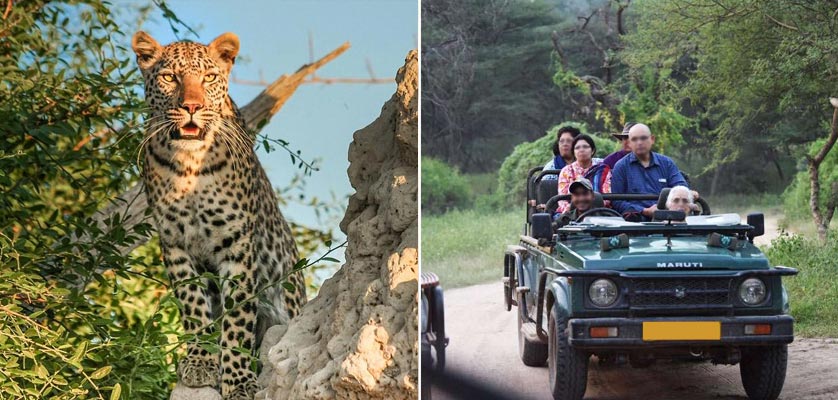
Now, let’s skip the technical side for a moment and talk about what it’s like to actually sit in that gypsy and roll through the reserve. You hop into a 6-seater open jeep, buckle in (or at least hang on), and your guide gives a quick briefing about safety, silence zones, and the rough route. As the gate opens and you drive into the forest, the noise of the city slowly drops away.
The first 15–20 minutes are usually all about scanning – the forest, the bushes, the tree branches, the tracks on the ground. Your guide will be listening to bird calls and alarm calls from deer or monkeys, checking for fresh pugmarks, and sometimes stopping suddenly to pick up signs. It’s like solving a live puzzle, where the answer is hopefully a spotted cat perched on a rock, tail flicking lazily.
How Long is Each Safari?
Each standard safari lasts around 2 to 2.5 hours from gate entry to gate exit. That’s enough time to explore key zones, stop for sightings, and return without feeling too rushed. You won’t get off the jeep inside the core safari area for safety reasons, but you’ll have enough space to stand, lean, and shift within your vehicle while observing wildlife.
Some tour operators also offer extended or half-day safaris that allow you to spend more time inside the reserve, sometimes with a break near a safe spot. These usually cost more and need to be arranged in advance, often with special permits and fewer total vehicles allowed.
Route, Zones & Jeep Capacity
Jhalana doesn’t use a complex “zone lottery” system like some larger parks, but there are defined routes and sectors that jeeps follow. This avoids crowding and ensures that vehicles are distributed across the landscape instead of all piling up in one spot. Permits usually highlight the entry side or gate rather than a strict numbered zone system.
Each jeep typically carries a maximum of 6 visitors plus driver and guide, which keeps things reasonably comfortable even when you have cameras, backpacks, and winter layers. If you’re booking a full gypsy for photography, you can request specific seating arrangements – for example, three people instead of six in the back to allow more space for lenses and quick movement from one side to another.
How to Reach Jhalana Leopard Reserve from Different Parts of Jaipur
Reaching Jhalana is thankfully very straightforward. If you’re staying in common tourist hubs like MI Road, C-Scheme, Bani Park, or around the Hawa Mahal area, you can either ask your hotel to arrange a cab or simply book an Ola/Uber towards the Jhalana safari side. Most local drivers know the broad area, and navigation apps handle the finer directions.
From Jaipur International Airport, the drive is short and relatively hassle-free. You can easily schedule an evening safari on the day you land if your flight arrives by late morning, or plan a morning safari on the day you leave if your flight is in the evening – just make sure you’re not cutting it too close on either side.
- City center (old Jaipur) to Jhalana: about 30–40 minutes by cab.
- Airport to Jhalana: around 30–45 minutes depending on traffic.
- Popular stay hubs like Malviya Nagar: usually less than 25–30 minutes.
Public transport options can get you close but not always all the way to the exact boarding point, so if you’re new to the city or traveling with family, a pre-booked cab or hotel-arranged transfer is usually worth the convenience.
What to Wear and Carry on Jhalana Safari
You don’t need to dress like a full-on wildlife documentary host, but a bit of thought goes a long way here. Neutral colors like olive, brown, beige, and dark green blend better with the environment and draw less attention than bright reds or neon shades. It’s not just about aesthetics; sudden bright colors can sometimes disturb or distract wildlife.
- Comfortable, breathable clothes in neutral shades.
- A light jacket or fleece for winter mornings and evenings.
- Cap or hat, sunglasses, and sunscreen for summer safaris.
- Closed shoes instead of slippers – it gets dusty and uneven.
- Water bottle, small snacks, and a basic mask or scarf for dust.
For gear, a basic pair of binoculars and a camera with at least a mid-range zoom (say 200–300mm) can completely upgrade your experience. Even phone cameras can work wonders at closer distances, but leopards often prefer sitting slightly away from the track, so zoom really helps. Just remember not to use flash at any point – it’s harsh, distracting, and generally discouraged in wildlife viewing.
Is Jhalana Leopard Safari Good for Families and Kids?
Yes, Jhalana is actually a great choice if you’re traveling with family or younger kids. The safari ride is not too long, the approach from city hotels is short, and the roads, while bumpy in parts, are not extreme off-road nightmares. Kids older than 5 usually enjoy the thrill, the jeep, and the excitement of spotting deer, birds, and hopefully a leopard.
Children are allowed in Jhalana without strict age restrictions, though those under around 5 years may travel free or at a reduced rate depending on the operator. From a practical standpoint, it’s smart to carry an extra layer of clothing for them, some water, and maybe a quiet snack so they don’t get cranky toward the end of the ride. Always keep them seated in the middle or on the safer side when the jeep is moving.
Safety Rules & Etiquette Inside the Reserve
Even though Jhalana is close to the city and reasonably controlled, it is still a wild habitat with free-roaming predators. The rules exist for your safety as well as the welfare of the animals, and guides are quite strict when visitors push boundaries. Breaking rules doesn’t just risk fines – it can spoil sightings for everyone in the area.
- Don’t stand up dramatically or lean far out when the jeep is moving.
- Keep your voice low, especially when animals are nearby.
- No feeding animals, no throwing food or plastic, no playing music.
- Follow your guide’s instructions immediately, especially if a leopard is close.
- Never ask the driver to go off the designated track just for a better shot.
Guides and drivers who work regularly in Jhalana are protective about the leopards and the ecosystem. They know individual territories, family stories, and typical routines, and their main priority is long-term conservation. Treat them as partners in your safari, not just drivers, and you’ll enjoy much richer stories and sightings.
How Many Jeeps Are Allowed Per Shift?
To avoid overcrowding, Jhalana limits the number of jeeps allowed in during each shift. Typical policy allows a limited number of 6-seater jeeps in one shift, though exact numbers may change over time or differ slightly by gate or special permits. This limitation is a good thing for both visitors and wildlife: fewer vehicles mean a quieter, more immersive experience and less stress on animals.
Because the number of vehicles is capped, popular weekends and holidays often sell out days or even weeks in advance. If your dates fall around New Year, Christmas, or big Indian festivals, locking in your permits early makes the difference between a smooth safari day and standing outside the gate trying your luck with cancellations.
Why Jhalana Leopard Safari Is Perfect for Short Jaipur Trips
If you’re doing a 2–3 day Jaipur itinerary, Jhalana fits in beautifully without disrupting your city sightseeing. You could do an early morning safari and still be back in time for breakfast and a late-morning trip to Amer Fort, or flip the plan and spend the day exploring Hawa Mahal, City Palace, and local markets before heading for an evening safari.
Many Golden Triangle packages (Delhi–Agra–Jaipur) now include Jhalana as an optional add-on instead of or along with Ranthambore, simply because it saves travel time and fits better into tight schedules. For first-time visitors, that mix of history, culture, and a proper wildlife ride in one city is a big win.
Conservation Impact: Your Ticket Money Matters
Beyond personal thrills and Insta-worthy photos, there’s a bigger story behind every Jhalana safari ticket. Revenue from safaris helps fund patrols, habitat management, waterhole maintenance, and community engagement, all of which are crucial in a landscape that sits right next to a growing urban city.
Leopard numbers at Jhalana have grown and stabilized thanks to active conservation policies. Every responsible visitor, every rule followed, and every plastic bottle you choose not to bring into the forest plays a small role in keeping this urban wilderness alive for the next generation.
Quick Recap: Who Is Jhalana Best For?
If you like the idea of a real wildlife safari but don’t have the time or budget to plan an entire trip around a national park, Jhalana is a great match. You get a strong chance of seeing leopards, minimal travel time from the city, and flexible options for solo travelers, families, and photography lovers.
- Short city breaks where you want one big “wow” outdoor experience.
- Family trips with kids who’ve never done a safari before.
- Couples or friends looking to add something unique to a Jaipur itinerary.
- Wildlife and bird photographers testing new gear or adding leopard shots to their portfolio.
With tickets starting roughly around ₹1250 per person for Indians and a very manageable full-jeep cost compared to many other parks, Jhalana gives a lot of value for money – especially when you factor in how close it is to Jaipur’s hotels, cafes, and heritage spots.
FAQ – Jhalana Leopard Safari Price & Booking
What is the current Jhalana Leopard Safari price for Indians in 2026?
For Indian tourists in 2026, single-seat prices typically fall around ₹1250–₹1350 per person in a shared jeep, while a full private jeep for up to 6 people usually costs around ₹6700–₹7000 per safari. Taxes and service charges may be extra depending on where you book.
How much do foreign tourists pay for Jhalana Safari?
Foreign visitors can expect to pay roughly ₹2100–₹2500 per person for a shared seat and about ₹12,000–₹12,600 for a full gypsy that accommodates up to 6 people. These rates vary slightly by operator and seasonal demand.
Can I book Jhalana Leopard Safari online?
Yes, you can book online through the official Jhalana Leopard Reserve website and Rajasthan’s OBMS portal, as well as through authorized private operators that integrate with the same permit system. Online booking requires full advance payment and valid ID details.
How early should I book my safari?
Permits often open around 90 days before the safari date, and weekends or holiday slots can sell out quickly. It’s wise to book at least 2–3 weeks in advance for popular dates, and even earlier if you’re traveling in peak winter season.
Is Jhalana Leopard Safari safe for children?
Yes, Jhalana is generally considered suitable for children when proper supervision and safari rules are followed. Kids are allowed without strict age restrictions, though they must be counted in the total jeep capacity, and those above around 6 years are usually charged the same as adults.
What happens if I don’t see any leopards?
Wildlife sightings can never be guaranteed, even in a leopard-rich area like Jhalana. If you don’t spot a leopard, you still experience the landscape, other animals, and birdlife, but your permit will not be refunded. Many regulars recommend doing two safaris (one morning, one evening) to boost your chances.
Are there any offline or spot bookings available?
Limited last-minute or spot bookings may be available at the counter or through authorized agents if some quota remains or cancellations happen. However, it’s not something you should rely on for peak dates, so advance online booking is always the safer choice.
Can I visit Jhalana and Amer Fort on the same day?
Yes, combining a Jhalana safari with Amer Fort is a popular plan. Many travelers do an early morning safari, return to the hotel for breakfast and a quick rest, and then head out to Amer Fort and nearby attractions for the rest of the day.
What ID documents are accepted at the gate?
Commonly accepted IDs include Aadhaar card, passport, and voter ID, and the details you enter during online booking must match the physical ID you carry. Keep a digital or printed copy of your permit along with the original ID when you report at the boarding point.
Is there any age or health restriction for visitors?
There are no strict age restrictions, but elderly visitors or those with back issues should be prepared for bumpy tracks and open jeeps. If you have a serious medical condition, it’s best to consult your doctor and inform your operator in advance so they can suggest the most comfortable possible arrangements.