Amber Fort Jaipur: The Definitive 2026 Guide to the Rajput Citadel

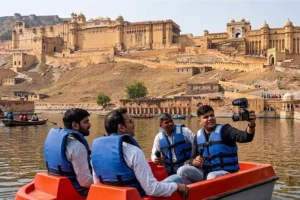
Rising from the rugged Aravalli hills like a golden sandstone crown, Amber Fort is not merely a monument; it is the soul of Jaipur's royal history. This UNESCO World Heritage Site, a magnificent fusion of Rajput valor and Mughal elegance, has guarded the plains of Rajasthan for centuries. More than a fort, it was a lavish palace complex, a strategic stronghold, and the seat of the powerful Kachwaha dynasty. As you walk through its grand gates, you step into a world of mirrored palaces, whispering halls, and stories of maharajas and emperors. This comprehensive 2026 guide will take you deep into the heart of Amber Fort, revealing its secrets, guiding your visit with the latest practical information, and ensuring you experience the full grandeur of Rajasthan's most iconic fortress.
The Living History of Amber Fort: From Warrior Citadel to Royal Abode
The history of Amber is the history of the Kachwaha Rajputs, who trace their lineage back to the sun god himself. Long before Jaipur was founded, Amber (pronounced Amer) was their capital. The fort you see today is the culmination of centuries of ambition, beginning with Raja Man Singh I in 1592.
The Architect-Kings: Man Singh I and Jai Singh I
Raja Man Singh I, one of the 'Navaratnas' (nine jewels) in Emperor Akbar's court, was a legendary warrior and diplomat. The fort he initiated was a bold statement of Kachwaha power, built with the spoils of war and designed to impress both allies and rivals. His successors, particularly Mirza Raja Jai Singh I, expanded the fort into a sprawling palace complex. The design brilliantly incorporated the existing rugged hills, creating a defensive masterpiece that was also a paradise of art and architecture.
The Pivot to Jaipur: A Vision for the Future
By the early 18th century, the growing needs of the state and the limitations of the hilltop location became clear. The visionary Maharaja Sawai Jai Singh II made the historic decision to move the capital to the plains, founding the meticulously planned city of Jaipur in 1727. Amber Fort transitioned from a primary capital to a ceremonial and defensive outpost, but its significance as the ancestral home of the royals never faded. The City Palace in Jaipur became the new administrative heart, but Amber remained the spiritual and historical core.
Architectural Symphony: A Tour of Amber's Palaces and Pavilions
Amber Fort's architecture is a breathtaking dialogue between Hindu Rajput and Islamic Mughal styles. The robust, fortified exterior gives way to an interior of astonishing delicacy. The journey through the fort is a carefully choreographed ascent from public spaces to private royal quarters.

The Sequential Journey: Key Structures Unfold
- Jaleb Chowk (The Main Courtyard): Your first stop after the Sun Gate (Suraj Pol). This vast courtyard was where the army assembled and victories were celebrated. The simple, robust architecture here sets the stage for the opulence within.
- Ganesh Pol (The Ganesh Gate): The stunning gateway to the inner palaces. Adorned with frescoes of Lord Ganesh and delicate lattice work, it served as a screen from where royal women could view proceedings in the Diwan-e-Aam unseen.
- Diwan-e-Aam (Hall of Public Audience): An open pavilion with double rows of columns, where the Maharaja would hear petitions from his subjects. The simplicity is deliberate, focusing on the function of governance.
- The Sheesh Mahal (Mirror Palace): The undisputed jewel of Amber. Its walls and ceiling are clad in myriad tiny mirrors and painted frescoes. A single candle lit here would be reflected a thousand times, creating a starry sky indoors. This was the private chamber of the Maharaja and his queen.
- Sukh Niwas (Hall of Pleasure): Adjacent to the Sheesh Mahal, this chamber was designed for cool comfort. A channel once carried water from the mountains through the room, acting as a natural air conditioner—a marvel of ancient climate engineering.
- The Zenana (Women's Quarters): A secluded section with separate suites for the queens and princesses, arranged around a common courtyard. The design ensured privacy while allowing shared social space.
Essential 2026 Visitor Information: Tickets, Timings, and Planning
Planning is key to enjoying Amber Fort, especially with significant updates to ticketing for 2026. Here is everything you need to know for a seamless visit.
Updated 2026 Entry Fees & Ticketing
Effective January 1, 2026, the Government of Rajasthan has revised entry fees for major monuments. Amber Fort now operates on a two-tier pricing system.
| Visitor Category | 2026 Entry Fee (in Indian Rupees) | Notes |
|---|---|---|
| Indian Visitors | ₹ 200 | A significant increase from previous rates. Concessions may apply for students (carry valid ID). |
| Foreign Visitors | ₹ 1000 | Double the previous fee. Includes access to the fort complex. |
| Children (below 7 years) | Free | For both Indian and foreign nationals. |
💡 Pro Tip: The Jaipur Composite Ticket is highly recommended if you plan to visit multiple sites. Priced around ₹1500 for foreigners and ₹600 for Indians (2026 rates), it includes entry to Amber Fort, Jantar Mantar, Hawa Mahal, Albert Hall Museum, and several other monuments over 2 consecutive days, offering substantial savings.
Opening Hours and Best Time to Visit
Fort Hours: 8:00 AM to 5:30 PM, daily. The last entry is typically 30 minutes before closing.
Light & Sound Show: Held every evening in Hindi and English. Timings vary seasonally; check at the ticket counter.
Best Season: October to March offers ideal weather. Summers (April-June) are extremely hot.
Best Time of Day: Arrive right at 8:00 AM opening. You'll avoid the overwhelming heat, experience the fort in soft morning light perfect for photography, and beat the large tourist groups that arrive by 10:00 AM.
How to Reach Amber Fort
- From Jaipur City Center: Amber is about 11 km north. A taxi or auto-rickshaw will take 30-45 minutes and cost ₹300-500 for a round trip with waiting time.
- Elephant Ride: The famous elephant ascent from the base of the hill to the Sun Gate is a iconic but controversial experience. If you choose this, book the ticket at the counter below the fort. Be aware of animal welfare concerns.
- Jeep Ride: A faster and more readily available alternative to elephants, costing around ₹100-150 per person for a return trip.
- On Foot: A steep but rewarding 10-15 minute climb up the main ramp offers great views.
Your Amber Fort Exploration: A Practical Itinerary and Pro-Tips
A Suggested 3-Hour Itinerary
- 8:00 AM - Arrive & Ascend: Take a jeep or walk up to the Sun Gate. Enter Jaleb Chowk.
- 8:15 AM - The Public Spaces: Pass through Ganesh Pol and explore the Diwan-e-Aam.
- 8:45 AM - The Private Palaces: Spend quality time in the Sheesh Mahal and Sukh Niwas. Marvel at the craftsmanship.
- 9:30 AM - The Zenana & Gardens: Explore the quieter zenana quarters and the terraced gardens.
- 10:15 AM - Ramparts & Views: Walk the fortress walls for breathtaking views of Jaigarh Fort (perched above) and the valley below.
- 11:00 AM - Descent & Next Stop: Head to your next destination, like Jaigarh Fort or Panna Meena Ka Kund.
Local Insights for an Enriched Experience
- Look for the Magic Flower: In the Sheesh Mahal, a guide can show you a unique fresco of a lotus carved in marble. When covered, it reveals the petals of a lotus; when uncovered, it shows a fish tail and other designs—a hidden masterpiece.
- The Secret Tunnel: Legend speaks of a strategic underground tunnel connecting Amber Fort to Jaigarh Fort. While not accessible, it's a fun piece of lore that highlights the fort's defensive genius.
- Visit the Shila Devi Temple: Just inside Jaleb Chowk, this temple dedicated to Goddess Kali was established by Raja Man Singh I. The ornate silver doors and marble reliefs are stunning.
Shopping and Souvenirs Near Amber
The pathway from the parking area to the fort is lined with shops.
- What to Buy: Miniature paintings, blue pottery, lac jewelry, embroidered textiles (bandhani, gota patti), and marble inlay pieces.
- Bargaining: Expected. Start by offering 40-50% of the quoted price and negotiate with a smile.
- For Authentic Crafts: Consider returning to Jaipur's government emporiums (like Rajasthali on MI Road) for fixed-price, guaranteed quality items, or visit the reputable shops at the Anokhi Museum in Amer town for beautiful block prints.
Beyond Amber: Crafting Your Perfect Day in Amer
Amber Fort is the centerpiece of a rich historical landscape. A perfect day in the area could include:
- Amber Fort (8:00 AM - 11:00 AM): As detailed above.
- Jaigarh Fort (11:30 AM - 1:00 PM): The formidable fortress above Amber, built to protect it. Don't miss the Jaivana, the world's largest cannon on wheels, and the breathtaking views.
- Lunch in Amer Town (1:00 PM): Try Anokhi Cafe for organic fare or a local dhaba for a classic Rajasthani thali.
- Panna Meena Ka Kund (2:00 PM): A photogenic, ancient stepwell just a 5-minute drive away.
- Jal Mahal (On the drive back to Jaipur): A perfect sunset photo stop at the "Water Palace" in Man Sagar Lake.
Frequently Asked Questions (FAQ)
What are the exact 2026 ticket prices for Amber Fort?
As per the latest revision, Indian visitors pay ₹200, and foreign visitors pay ₹1000. Children below 7 enter free.
Is the elephant ride at Amber Fort still available?
Yes, but its availability is subject to weather, animal welfare checks, and time of day. It is a separate ticket purchased at the foothill. Many travelers now opt for jeeps due to ethical considerations and practicality.
How much time do I need to explore Amber Fort properly?
A thorough visit requires a minimum of 2.5 to 3 hours. Rushing through in less than 2 hours means you'll miss the details and atmosphere.
Can I visit Jaigarh Fort on the same ticket?
No, Jaigarh Fort requires a separate entry ticket. However, a combined ticket for both forts is sometimes available; check at the Amber Fort ticket counter.
What is the best way to beat the crowds?
Arrive at opening time (8:00 AM) is the single most effective strategy. Most tour groups arrive between 9:30 AM and 11:00 AM.
Conclusion: The Eternal Fortress
Amber Fort is more than stone and mortar; it is the enduring symbol of Rajput pride, artistry, and strategic genius. It invites you not just to see, but to imagine—the clatter of horse hooves in Jaleb Chowk, the whispered politics in the Diwan-i-Khas, the glitter of a thousand mirrors in the Sheesh Mahal. With the practical insights from this 2026 guide, you're equipped to move beyond the crowds and connect with the soul of this magnificent place. Let its walls tell you their stories, and carry a piece of Rajasthan's indomitable spirit with you long after you descend the hill.