Attractive Places To Visit Near Jaipur In One Day: Complete Local’s Style Guide
Planning a quick escape from Jaipur and want to pack your day with forts, haunted ruins, stepwells, temples, wildlife, and small-town vibes? You’re in the perfect place. This long, easy-to-read guide walks you through the most attractive places to visit near Jaipur in one day with a relaxed, conversational tone that feels like a local friend sharing all the good stuff.
From the infamous Bhangarh Fort and the mind-bending Chand Baori stepwell in Abhaneri to spiritual Pushkar, historic Ajmer, wild Sariska, Ranthambore, and heritage villages like Mandawa and Kesroli – you’ll find everything here in one single, copy-paste-ready blog. All you need to do is pick your vibe: haunted, spiritual, royal, or wildlife.
Most of these places are easily doable as a day trip from Jaipur by car. Many local operators already offer ready-made one-day packages combining two or three nearby spots, especially Abhaneri with Bhangarh, or Ajmer with Pushkar. So think of this as your long-form, casual, on-call guide to the best one-day trips from Jaipur.

Why Day Trips From Jaipur Are Totally Worth It
Jaipur itself is packed with icons like Amer Fort, Hawa Mahal, Jal Mahal, and City Palace, but the real magic of Rajasthan starts when you step just outside the city limits. Within a two to four hour radius, you’ve got haunted forts, tiger reserves, hidden stepwells, Sufi shrines, desert villages, and old trade towns that still look like living museums.
The good thing is that road connectivity from Jaipur is excellent, which makes it super easy to book a cab for a day or hire a professional driver and do a comfortable day trip without feeling rushed. Most routes have dhabas, fuel stations, and tea stalls along the way, so you’re never too far from chai, snacks, and washrooms.
- Perfect for travelers with tight schedules who still want to taste “real Rajasthan” beyond Jaipur’s main sights.
- Ideal if you’re traveling with family or friends and want a flexible, private car itinerary instead of a fixed bus tour.
- Great for content creators and photographers – you get forts, wildlife, lakes, ghats, and desert landscapes in a single day.
Quick Overview: Best Places Near Jaipur For One-Day Trips
Before diving into detailed descriptions, here’s a quick at-a-glance overview of the major places near Jaipur that work well for a one-day trip. Distances are approximate road distances and can vary depending on the exact route you take.
| Destination | Approx. Distance From Jaipur | Best For | Ideal Season |
|---|---|---|---|
| Bhangarh Fort | About 80–90 km | Haunted fort, legends, ruins, photography | October to March |
| Abhaneri (Chand Baori) | About 90–100 km | Stepwell architecture, symmetry, film-style shots | October to March |
| Sariska National Park | About 130–150 km | Tiger reserve, safari, forest landscapes | October to June |
| Alwar | About 150–160 km | Palaces, forts, lakes, heritage streets | October to March |
| Ajmer | About 130 km | Ajmer Sharif Dargah, heritage, Sufi culture | All year; winter more pleasant |
| Pushkar | About 145–150 km | Sacred lake, Brahma Temple, ghats, cafes | October to March |
| Ranthambore | About 170–180 km | National park, tiger safari, fort | October to June |
| Kesroli | About 155 km | Hill fort stay, countryside, birding | October to March |
| Mandawa | About 190–200 km | Havelis, fresco art, heritage walks | October to March |
| Bharatpur | About 180–190 km | Birdwatching, cycling, wetlands | November to February |
You obviously can’t do all of these in a single day, but you can easily pick one primary spot plus a nearby add-on if you start early and book a reliable cab. Popular combinations are Bhangarh with Abhaneri, Ajmer with Pushkar, or a full day focused only on Ranthambore or Sariska for safaris.
Bhangarh Fort: Rajasthan’s Legendary Haunted Fortress
If spooky stories, abandoned ruins, and dramatic Aravalli backdrops sound exciting, Bhangarh Fort should definitely be on your Jaipur day-trip list. The fort sits near the Sariska region and is widely known as one of the most “haunted” places in India, with enough legends floating around to give anyone goosebumps.
Where Exactly Is Bhangarh Fort?
Bhangarh Fort is located in the Alwar district of Rajasthan, on the edge of the Sariska forest belt and roughly a two to three hour drive from Jaipur. It lies in a quiet valley surrounded by low hills of the Aravalli range, which adds a slightly eerie charm to the whole setting, especially when the light is softer in the early morning or late afternoon.
Even the approach road feels different from a typical fort visit: you pass through small villages, ruins, and open fields before the massive stone fortification appears in front of you. Once you cross the main gate, you enter what feels like a ghost town – with old temples, empty market streets, and crumbling havelis lining the way towards the main fort complex.
History Of Bhangarh Fort
The story of Bhangarh Fort goes back to the late 16th and 17th centuries and is tied to the rulers of the Amber state, whose capital was near present-day Jaipur. One widely shared account says Raja Bhagwant Singh of Amber built the fort town for his younger son Madho Singh, while his elder son Man Singh served as a general in the Mughal court.
Bhangarh grew into a bustling settlement under Madho Singh and his successors, with houses, markets, temples, and palaces spread across the valley. Over time, due to wars, shifting power centers, and possibly issues related to resources and water, the town was gradually abandoned. What remains now is a vast area of ruins that hints at how grand the place once was.
The Famous Curse Legends And Haunted Stories
What truly made Bhangarh famous across India and on the internet is not just its history but the legends connected with it. Two stories are especially popular and almost every local guide will narrate some version of them.
- One story talks about a local sage who agreed to the fort’s construction only on the condition that no building should cast its shadow on his dwelling. A later ruler supposedly ignored the warning and raised the walls too high. The sage’s curse, people say, led to the fort town’s downfall.
- The second story revolves around Princess Ratnavati and a sorcerer who tried to bewitch her using enchanted perfume. When the plot failed and he was crushed under a boulder, the dying sorcerer cursed Bhangarh, predicting it would be destroyed and never flourish again.
Whether you believe these tales or not, walking through the silent bazaar, roofless houses, and broken temple complexes does feel intense. To add to the mood, entry is officially restricted between sunset and sunrise, which has only strengthened Bhangarh’s reputation as a haunted site.
What To See Inside Bhangarh Fort
Bhangarh is not just a single fort building; it’s an entire ruined town. If you’re into photography or urban exploration, you could spend several hours wandering around.
- Old temples dedicated to various deities, many still standing with carved pillars and stone platforms.
- The main palace ruins at the far end, where you can climb parts of the structure and get sweeping views of the valley and scattered ruins below.
- Remains of bazaars and residential clusters that give a sense of how the town was laid out.
- Massive outer walls and gates with a raw, rugged look that makes every frame feel cinematic.
There are a few basic signboards and a roughly defined pathway, but overall the site still feels wild and untouched, which is exactly what most visitors love about it.
Travel Tips For A Bhangarh Day Trip
If you’re planning Bhangarh as a day trip from Jaipur, an early start will make your life much easier and give you the flexibility to add another stop.
- Plan to leave Jaipur early morning so you can reach before the harsh afternoon sun.
- Carry plenty of water, sunscreen, and a cap – there’s very little shade once you’re inside.
- Wear comfortable covered shoes as the terrain is uneven and dusty.
- Combine Bhangarh with Abhaneri or a short Sariska detour if you want a full, activity-packed day.
Abhaneri Stepwell (Chand Baori): Geometric Wonder In Stone
Just when you think you’ve seen every kind of fort and palace Rajasthan can offer, Chand Baori at Abhaneri resets the bar. This stepwell looks like an optical illusion: thousands of steps arranged in perfect symmetry, descending into a deep water tank like a stone-made pyramid in reverse.
Why Abhaneri Is So Famous
Abhaneri is a small village on the Jaipur–Agra route, but its Chand Baori stepwell has become famous worldwide as one of the deepest and most striking stepwells in India. The structure plunges roughly 30 meters into the ground and has several thousand steps spread over many levels, which is an engineering achievement considering when it was built.
The stepwell is believed to date back over a thousand years, to the time of early Rajput rulers of the region. It served as a water source and a community gathering space in an area that sees extremely hot and dry weather for much of the year.
Architecture And Design Of Chand Baori
Chand Baori is often described as an upside-down pyramid because of the way its steps are arranged. Three sides are completely covered with a dense grid of narrow steps, while the fourth side is built as a pavilion with pillared galleries and shrines.
The stepwell has multiple levels of steps that zigzag down in a precise, repeating pattern. When you look at it from the top, the lines and angles play tricks on your eyes and create a hypnotic geometric effect that photographers absolutely love.
- Three sides of pure steps, forming a dramatic zigzag pattern.
- Fourth side used as a multi-storey pavilion with arches, corridors, and sculptures.
- Stone carvings, including figures of deities, scattered around the complex.
You usually view the well from the upper platforms and corridors, which still give you more than enough angles to capture its unique design in your photos or videos.
Role Of Stepwells In Rajasthan’s Life
In a state where summer temperatures soar and rainfall can be unpredictable, stepwells were not a luxury but a necessity. Structures like Chand Baori helped store rainwater and groundwater so that people could access it throughout the year by walking down to the right level.
Beyond functionality, stepwells also worked as social and cultural hubs. People sat on the steps in the shade, chatted, rested, and sometimes held religious or community gatherings. Chand Baori, with its attached temple complex, follows the same pattern of blending utility with worship and community life.
How To Plan Abhaneri As A Day Trip
Abhaneri is roughly a two to two-and-a-half hour drive from Jaipur, depending on where you start in the city and how traffic behaves. Many travelers visit Chand Baori either as a standalone half-day trip or in combination with Bhangarh Fort.
- Start early to avoid the harsh midday sun and tour bus crowds.
- Plan at least an hour at the site to really take in the stepwell and the surrounding temple area.
- Respect safety railings; going down the steps is usually restricted to protect visitors and the structure.
- Carry water and a hat; shade is limited on open platforms.
Sariska: Forests, Safaris, And A Dose Of Green
If you’re craving a break from stone walls and city traffic noise, Sariska National Park offers exactly that. Located in the Aravalli hills, Sariska combines rugged landscapes, open grasslands, and patches of dense forest, making it a refreshing day escape from Jaipur.
Sariska was first declared a wildlife sanctuary in the mid-20th century and later brought under the Project Tiger umbrella as a tiger reserve. Over the years, it has become a popular choice for quick safaris among people from Jaipur, Delhi, and nearby cities.
What Sariska Is Known For
Sariska is primarily known for its tigers and other wildlife, but the experience is more than just ticking off animals from a list. The hilly terrain, old ruins, and forest atmosphere make safaris here feel like a mix of nature and history.
- Home to tigers, leopards, deer species, wild boar, jackals, and a variety of birds.
- Scattered ruins and temples inside and around the park add a layer of mystery.
- Easy access from Jaipur makes it a convenient short wildlife break.
Even if you don’t see a tiger, spotting deer herds, langurs, peacocks, and raptors against dramatic landscapes is still a solid reward for the drive.
Experiences To Try In Sariska
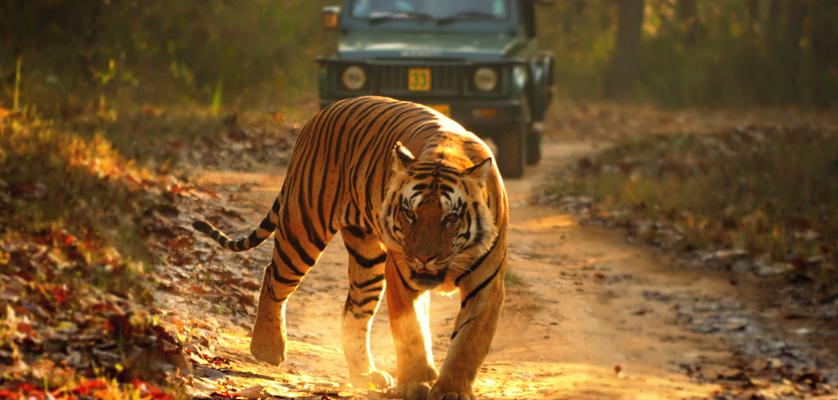
The classic way to experience Sariska is through a jeep or canter safari. Safaris are usually conducted in fixed time slots, typically early morning and late afternoon.
- Early morning safari to catch wildlife at their most active.
- Afternoon safari for golden light and moody forest views.
- Relaxing in a forest lodge or resort outside the core zone if you decide to stay overnight.
- Short nature walks in designated areas, listening to birds and the sounds of the forest.
If you only have a day, you can drive from Jaipur, do one safari, grab a meal at a lodge, and return by evening. If your schedule allows, stretching it into a one-night trip gives you a more relaxed pace and chances for two safaris.
Alwar: Quiet City With Strong Royal Roots
Alwar is one of those places that quietly delivers more than you expect. Sitting in the greener part of the Aravalli range, it offers a blend of palaces, forts, lakes, and laid-back small-city vibes, without the heavy crowds you see in bigger tourist hubs.
The region has a long history, with references that connect it to ancient kingdoms, and over the centuries it saw different rulers and dynasties shape its architecture and culture. Today, Alwar feels like a mix of old-world charm and a modern Rajasthani town.
The Fairy Queen Connection
One of the coolest pieces of trivia about Alwar is its association with the Fairy Queen, considered one of the world’s oldest functioning steam locomotives. Built in the 19th century, this locomotive has been used for special heritage runs that often involve a route between Delhi and Alwar.
For railway and history enthusiasts, this heritage connection adds another dimension to Alwar beyond its forts and markets. Even if you’re not able to experience a heritage run yourself, just knowing this little story gives the city a nicely nostalgic touch.
Why Alwar Works As A Day Trip
Alwar is doable as a long day trip from Jaipur if you’re comfortable with some time on the road. You can explore the main palace, old city streets, lakeside spots, and then either return or move on to Sariska if you’ve planned an overnight stay.
- Good option for travelers who like historical cities but prefer less crowded alternatives to the major tourist magnets.
- Can be paired with a Sariska safari for a history plus nature combo.
- Offers plenty of options to sample local sweets and snacks in old markets.
Ajmer: Sufi Soul Of Rajasthan
Ajmer is known across India for the Ajmer Sharif Dargah, a Sufi shrine that draws pilgrims from all backgrounds. But once you’re there, you quickly realize the city has many more layers – from historic mosques and old streets to lakefront views and hilltop forts.
The city grew around the base of Taragarh Hill and has seen various rulers, from early Rajput chiefs to Delhi Sultanate and Mughal influences. That layered history is still visible in its architecture and urban layout.
Location And Meaning Behind The Name
Ajmer lies west of Jaipur and is set in a valley surrounded by low hills. The name is often linked to the term “Ajay Meru,” which roughly translates to “invincible hill” and refers to the strong position of the Taragarh fort above the town.
Today, Ajmer balances its identity as a spiritual hub with its role as an active city, with busy bazaars, education institutions, and transport connections making it a natural stop on many Rajasthan circuits.
Top Places To Visit In Ajmer
Even if you just have half a day in Ajmer as part of a Jaipur day trip, you can still cover its greatest hits comfortably.
- Ajmer Sharif Dargah: The shrine of Khwaja Moinuddin Chishti, a revered Sufi saint, and the soul of the city’s spiritual life.
- Adhai Din Ka Jhonpra: A historic mosque structure with beautiful stone arches and carved details.
- Ana Sagar Lake: A wide man-made lake where you can walk along the edge and catch sunset views or simply chill for a while.
Ajmer is best paired with Pushkar for a full, power-packed day trip from Jaipur that covers both Sufi and Hindu spiritual traditions.
Pushkar: Sacred Lake And Relaxed Town Vibes
Pushkar is one of those places where you can feel the energy shift as soon as you enter. The pace slows down, the streets get narrower, and everything revolves around the holy lake and ghats. At the same time, cafés, shops, and colorful homes give it a fun, backpacker-friendly vibe.
The town sits at around 510 meters above sea level and is surrounded by gentle hills, including the famous Nag Pahar or Snake Mountain, which forms a natural barrier between Ajmer and Pushkar. The drive from Jaipur via Ajmer usually takes around three hours one way.
Mythology And Spiritual Importance Of Pushkar
According to ancient stories, Pushkar was created when Lord Brahma dropped a lotus flower on the earth and a lake appeared at the place where it touched the ground. The town that grew around this sacred lake took its name from that mythological moment.
Pushkar is especially important because it is home to one of the very few major temples dedicated to Lord Brahma in the world. For many devotees, visiting Pushkar, taking a ritual bath in the lake, and offering prayers at the Brahma Temple are considered important steps on their spiritual journey.
Things You Shouldn’t Miss In Pushkar
Pushkar is compact, walkable, and full of small experiences that add up to a memorable day. You don’t need a rigid checklist here – just a sense of openness and time to walk around.
- Walk around Pushkar Lake and spend time at the ghats, watching rituals and soaking in the atmosphere.
- Visit the Brahma Temple and a few other temples around the town.
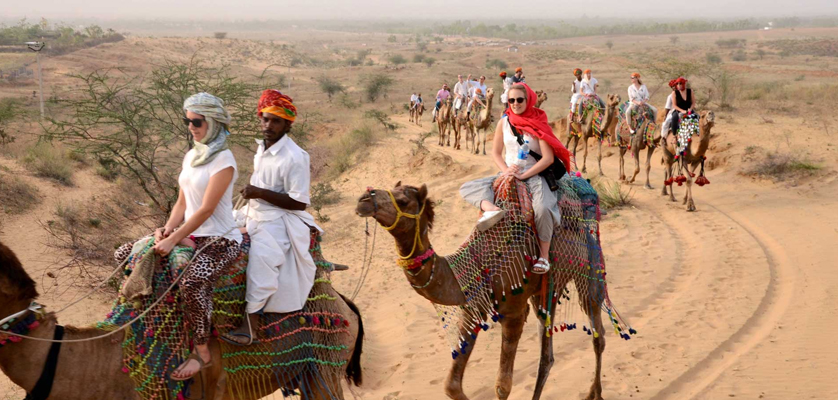
- Try a camel ride or jeep ride in the nearby dunes for that classic desert touch.
- Hang out in a rooftop café with lake or hill views, sipping chai or coffee and people-watching.
If you happen to be here during the Pushkar Fair, the energy multiplies with livestock markets, cultural shows, and an explosion of color and activity, but even on regular days the town has plenty of charm.
Ranthambore: Tigers, Fort Walls, And Wild Energy
Ranthambore is one of India’s most iconic tiger reserves and a dream destination for wildlife lovers. While it is a bit farther from Jaipur compared to some other day-trip spots, many travelers still choose to wake up early and make the journey for a safari.
The park wraps around the ancient Ranthambore Fort and includes lakes, dense bush, open meadows, and rocky hills. This combination of wild nature and crumbling ruins creates a setting that feels straight out of a movie.
Why Ranthambore Is So Popular
Ranthambore got its fame largely because of its tiger population and the relatively good chances of sighting them in certain zones. Photographs of tigers walking past old stone archways or resting by lakes under the fort’s shadow have become iconic.
Over the years, some individual tigers have become small legends among wildlife fans, with names and family histories tracked by guides and visitors. This storytelling element makes safaris even more engaging because you’re not just looking at an animal, you’re following local characters.
What Else To Do Besides Safari
While the safari is the main highlight, there are a few other experiences that you can include around it if your schedule allows.
- Climb up to Ranthambore Fort to get panoramic views of the forest and surrounding landscape.
- Spend time by the park’s lakes, watching birds, deer, and sometimes crocodiles.
- Explore local markets in Sawai Madhopur for snacks and small souvenirs between safari slots.
For a day trip from Jaipur, focus on a single safari and keep in mind that you’ll spend a good chunk of time on the road. If you can stretch your schedule, staying overnight for two safaris and a fort visit is a lot more relaxed.
Kesroli: Hilltop Calm And Heritage Charm
Kesroli is a tiny, quiet village in Alwar district that offers a completely different kind of day trip – more about peace, views, and heritage than checklists and crowds. Its star attraction is a hill fort that rises above the surrounding fields and now often functions as a heritage hotel.
The area’s roots are associated with the old Matsya region and over time, rulers from the Yaduvanshi Rajput line are believed to have built and expanded the fort. That makes Kesroli one of the older fortified sites in Rajasthan, even if it isn’t as famous as Amer or Mehrangarh.
Why Kesroli Is Worth The Drive
Kesroli is perfect if your ideal day trip is about slowing down rather than running from one “spot” to another. You can climb the fort ramparts, sit with a view of green fields, and just enjoy the quiet.
- Stay or dine in a heritage fort with thick stone walls and rustic courtyards.
- Enjoy countryside views that change with the season – from dry golden fields to lush green patches.
- Spot local birds and small wildlife if you’re patient and observant.
It’s a great pick for couples, families, or solo travelers who want a calm, aesthetic break that still feels very Rajasthani but not overly touristy.
Mandawa: Painted Havelis Of Shekhawati
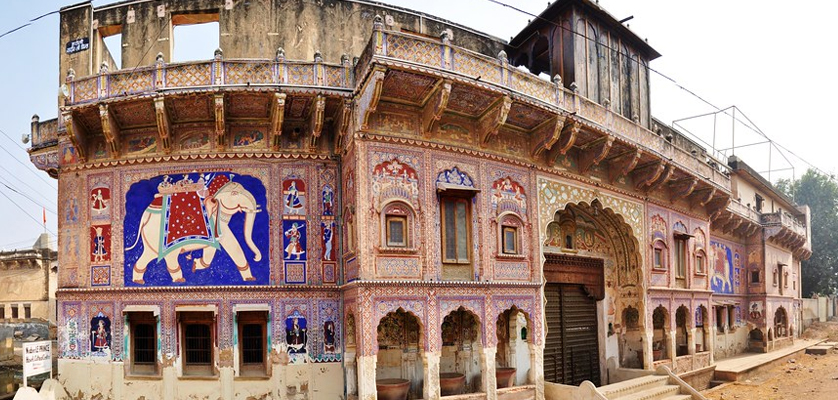
Mandawa, in the Shekhawati region, is like an outdoor gallery of painted mansions. This small town is lined with havelis whose walls are covered in elaborate frescoes – mythological scenes, royal processions, daily life, and even early modern themes like trains and European figures.
The town’s rise is linked to merchants who made fortunes through trade routes connecting inland India to ports and beyond. They invested heavily in their homes, turning their walls into canvases that silently narrate their wealth and tastes.
Origins And Name Of Mandawa
Traditions mention an early settler called Mandu, who dug a well and started a small hamlet here centuries ago. The village was known by names like “Mandu ki Dhani” and “Mandu ka Bas” before evolving into Mandawa as it grew in prominence.
By the 18th century, Mandawa had developed as an important thikana, or estate, with a fort and flourishing merchant homes. That legacy is exactly what you walk through today when you roam the narrow streets.
Why Mandawa Is Great For A Heritage Day
Mandawa is best suited for travelers who genuinely enjoy old architecture and don’t mind a slightly longer drive from Jaipur. Once there, every corner seems to offer a frame-worthy shot.
- Endless photo opportunities with intricately painted walls, archways, and old doors.
- A sense of stepping into a different time, with slow-paced streets and minimal modern clutter in older quarters.
- Plenty of raw, authentic feel, especially if you wander off the main tourist trail.
If you’re building a visual story or a travel reel, Mandawa can easily give you a huge variety of content in just a few hours.
Salasar Dham: Powerful Pilgrimage On The Highway
Salasar Dham, in the Churu district, is one of Rajasthan’s key pilgrimage destinations dedicated to Salasar Balaji, a revered form of Hanuman. It sits along the Jaipur–Bikaner highway and is often visited as part of a circuit that includes famous temples like Khatu Shyamji and Rani Sati Dadi Mandir.
The main temple is considered a powerful Shakti Sthal and a swayambhu site, meaning the deity is believed to have manifested on its own. Devotees visit in huge numbers, especially on special days, to seek blessings related to strength, protection, and the removal of obstacles.
How Salasar Fits Into A Jaipur Itinerary
From Jaipur, you can reach Salasar in roughly two-and-a-half to three hours by road. Many pilgrims treat it as a focused day trip – drive in the morning, have darshan, participate in rituals, and return by evening.
- Can be clubbed with Khatu Shyamji if you start very early and plan your route well.
- Highway is dotted with dhabas and rest stops, so breaks are easy.
- Best suited when your main aim is spiritual, not sightseeing.
If you’re creating a religious or spiritual travel circuit around Jaipur, Salasar sits nicely alongside Ajmer Sharif and Pushkar for a multi-day spiritual trail.
Bharatpur: Bird Paradise And Royal Backdrop
Bharatpur is a historic city that today is world-famous primarily because of the Keoladeo Ghana National Park. This compact wetland reserve has earned its reputation as one of the best birdwatching destinations on the planet.
Historically, the region was linked with early kingdoms and figures from epic traditions, and the city’s name is often traced to Bharat, the brother of Lord Ram. The other brother, Lakshman, is also deeply honored here, to the point that his name appears on royal emblems and seals.

Keoladeo Ghana National Park
Keoladeo started as a man-made wetland when rulers constructed embankments to manage seasonal flooding and create a hunting and waterfowl habitat. Over time, it evolved into a crucial stopover and wintering ground for migratory birds from as far as Central Asia.
The park spreads over roughly 29 square kilometers and is home to hundreds of bird species, including ducks, geese, storks, egrets, herons, raptors, and songbirds. The peak season in winter turns the park into a buzzing, chirping world of feathers and calls.
- Best explored by walking, cycling, or riding in a cycle-rickshaw with a local guide.
- Ideal months are November to February, when migratory birds arrive and the weather is pleasant.
- Suitable for all age groups, from serious birders to families with kids on their first nature trip.
Apart from the park, nearby Deeg Palace offers a glimpse into the architectural tastes of Bharatpur’s rulers, making it easy to combine nature and heritage in one visit.
Comparing Popular One-Day Destinations Near Jaipur
To make your choice easier, here’s a simple comparison table of the most popular places you might be considering. Pick what matches your mood and travel style.
| Place | Main Vibe | Highlight Experiences | Ideal Traveler Type |
|---|---|---|---|
| Bhangarh Fort | Haunted ruins | Exploring abandoned town, fort views, spooky stories | Adventurous travelers, content creators |
| Abhaneri (Chand Baori) | Architectural marvel | Stepwell views, symmetry shots, temple complex | Architecture fans, photographers |
| Sariska | Wildlife & forest | Safari, nature stay, birdwatching | Wildlife lovers, nature seekers |
| Ajmer + Pushkar | Spiritual & cultural | Dargah, lake, Brahma Temple, ghats, cafés | Pilgrims, culture lovers, backpackers |
| Ranthambore | Safari & fort | Tiger sightings, Ranthambore Fort, lakes | Safari enthusiasts, photographers |
| Mandawa | Heritage art | Fresco havelis, fort, heritage walks | Art and history lovers |
| Kesroli | Quiet countryside | Hill fort views, birding, relaxed stay | Slow travelers, couples, families |
| Bharatpur | Birding & wetlands | Keoladeo cycling, birdwatching, Deeg Palace | Birders, families, nature photographers |
| Salasar Dham | Pilgrimage | Temple darshan, part of temple circuit | Devotees, spiritual travelers |
If you have just one day and want maximum variety, Bhangarh with Abhaneri or Ajmer with Pushkar are usually the most balanced and satisfying combinations. For pure wildlife, Sariska or Ranthambore are better as focused trips where you don’t try to squeeze in anything else.
Sample One-Day Itineraries From Jaipur
To convert all this information into something you can actually use, here are a few ready-made day plans. Feel free to tweak timings based on your pace and season.
Bhangarh + Abhaneri: Haunted Meets Heritage
This route is perfect if you want your day to be a mix of “wow, this is beautiful” and “okay, this feels a little spooky.”
- 06:30–07:00: Start from Jaipur towards Abhaneri.
- 09:00–10:30: Explore Chand Baori and the temple area; click your photos and enjoy the views.
- 11:00–13:00: Drive towards Bhangarh with a lunch stop at a roadside dhaba.
- 13:00–16:00: Explore the Bhangarh Fort complex and ruins at a relaxed pace.
- 16:00–19:00: Drive back to Jaipur before it gets too dark.
Ajmer + Pushkar: Spiritual Double Hit
If you enjoy spiritual energy, historic streets, and chilled cafés, this duo is unbeatable for a one-day run from Jaipur.
- 07:00–09:30: Drive from Jaipur to Ajmer.
- 09:30–11:30: Visit Ajmer Sharif Dargah and Adhai Din Ka Jhonpra; take a short walk around old lanes.
- 11:30–12:00: Cross over the hill to Pushkar.
- 12:00–15:00: Explore Pushkar Lake, Brahma Temple, and grab lunch at a rooftop café.
- 15:00–17:00: Optional camel ride or short hike for views.
- 17:00–20:00: Return drive to Jaipur.
Sariska Wildlife Escape
This one is for days when all you want is trees, animals, and silence.
- 05:00–08:00: Early morning drive from Jaipur to Sariska.
- 08:00–11:00: Morning safari inside the national park.
- 11:00–13:00: Brunch and rest at a lodge or nearby restaurant.
- 13:00–15:00: Short local exploration or rest; optional quick visit to a nearby temple or viewpoint.
- 15:00–18:00: Return drive to Jaipur, or stay overnight if you’ve booked an evening safari.
Best Time To Plan Day Trips From Jaipur
Weather has a huge impact on how enjoyable your day trip feels, especially when most of your time is spent outdoors. In general, the cooler months from October to March are ideal for nearly all the destinations mentioned in this guide.
Summer (April to June) can be extremely hot in the daytime, so if you’re traveling then, focus on early-morning and late-afternoon activities and carry protection against the sun. Monsoon (July to September) brings more greenery and clouds but may mean occasional road and safari disruptions.
- Wildlife parks like Sariska and Ranthambore: October to June, with winter being comfortable and late summer offering strong chances for sightings.
- Heritage sites like Bhangarh, Abhaneri, Mandawa, Alwar, and Kesroli: October to March for easy walking and photography.
- Birding in Bharatpur: November to February for maximum migratory bird diversity.
- Ajmer and Pushkar: Pleasant year-round, but winter is extra nice for walking and evenings by the lake.
Practical Tips For Smooth Jaipur Day Trips
A bit of smart planning goes a long way in turning these trips from “tiring but okay” into “wow, that was a perfect day.”
- Start early: A 6:30–7:00 am departure gives you flexibility and cooler weather.
- Book a reliable cab or driver: Comfort matters when you’re covering longer distances and multiple stops.
- Pre-book safaris and guides: Essential for parks like Sariska, Ranthambore, and helpful for Bharatpur and heritage sites.
- Carry basics: Water, sunscreen, cap, sunglasses, light snacks, and a power bank.
- Dress smart: Light, breathable clothes and comfortable walking shoes are your best friends.
- Check timings: Temples, forts, and parks may have fixed opening hours and weekly closing days.
FAQ Section
Which is the best one-day trip from Jaipur for first-time visitors?
For first-time visitors, Ajmer plus Pushkar is a fantastic combo. You get Sufi spirituality at Ajmer Sharif, the sacred lake and Brahma Temple at Pushkar, and plenty of cafés and views, all within one long but comfortable day.
Is Bhangarh Fort really haunted?
Bhangarh’s haunted reputation comes from centuries of local legends and the eerie look of the abandoned town. Official rules that restrict entry between sunset and sunrise add to the spooky image, but whether it feels haunted or not depends a lot on your own mindset.
Can Abhaneri and Bhangarh be covered in one day from Jaipur?
Yes, you can comfortably cover Abhaneri’s Chand Baori and Bhangarh Fort in a single day from Jaipur. Start early, visit the stepwell first, break for lunch on the way, and then explore Bhangarh before heading back in the evening.
Is Ranthambore practical as a day trip from Jaipur?
Ranthambore is on the longer side for a day trip, but it is still doable if you plan well and pre-book a safari. For a more relaxed experience and better chances of multiple wildlife sightings, turning it into an overnight stay is usually a smarter choice.
What makes Pushkar so special?
Pushkar’s charm lies in its unique blend of spirituality and chill town energy. You have the sacred lake, the rare Brahma Temple, dozens of ghats, street food, and easygoing cafés, all wrapped up in a compact, walkable town surrounded by hills.
When is the best time to visit Bharatpur’s Keoladeo National Park?
The best time to visit Keoladeo is winter, especially from November to February. Migratory birds arrive in huge numbers, the weather is pleasant for cycling or walking, and the park turns into a vibrant, living bird encyclopedia.
Is Mandawa worth visiting if I am short on time?
Mandawa is absolutely worth it if you love old architecture and fresco art and don’t mind longer drives. But if you’re extremely short on time, closer options like Bhangarh, Abhaneri, Ajmer, or Pushkar might fit better into your schedule.
Which day trips are best for kids and families?
Families with kids often enjoy Bharatpur for cycling and easy birdwatching, and Sariska or Ranthambore for jeep safaris. Ajmer–Pushkar also works well if your family likes a mix of culture, food, and moderate walking without too much physical strain.
Do I need a guide at these places?
Guides aren’t compulsory, but they can add a lot of value. At heritage sites like Bhangarh, Mandawa, Ajmer, and Pushkar, guides bring stories and context to life. In wildlife and birding destinations like Sariska, Ranthambore, and Bharatpur, naturalist-guides help you spot and understand much more than you would on your own.