Hiring a Private Driver in India: Cost, Safety Tips & Complete Guide
India's chaos hits you the moment you arrive. The noise, the traffic, the crowd density, the sensory overload—it's genuinely overwhelming for first-time visitors. You're standing at your hotel, ready to explore, and suddenly you're paralyzed by logistics. How do you safely navigate to the Taj Mahal? How do you get to markets without getting lost? How do you know if a taxi driver is legitimate? How much should you actually pay?
This is where a private driver transforms everything. Not because you're avoiding India—quite the opposite. A good driver becomes your cultural translator, your safety net, your window into how things actually work on the ground. You're not isolated in an air-conditioned bubble; you're experiencing India with someone who understands it and can guide you through it.
I've watched hundreds of first-time visitors arrive nervous and depart transformed. The difference between anxiety-filled trips and genuinely wonderful ones almost always comes down to one decision: hiring a reliable private driver. This guide covers everything you need to make that decision confidently—what to expect, how much to budget, where to find trustworthy drivers, how to communicate effectively, and what actually happens once you're on Indian roads.
Understanding What a Private Driver Actually Does
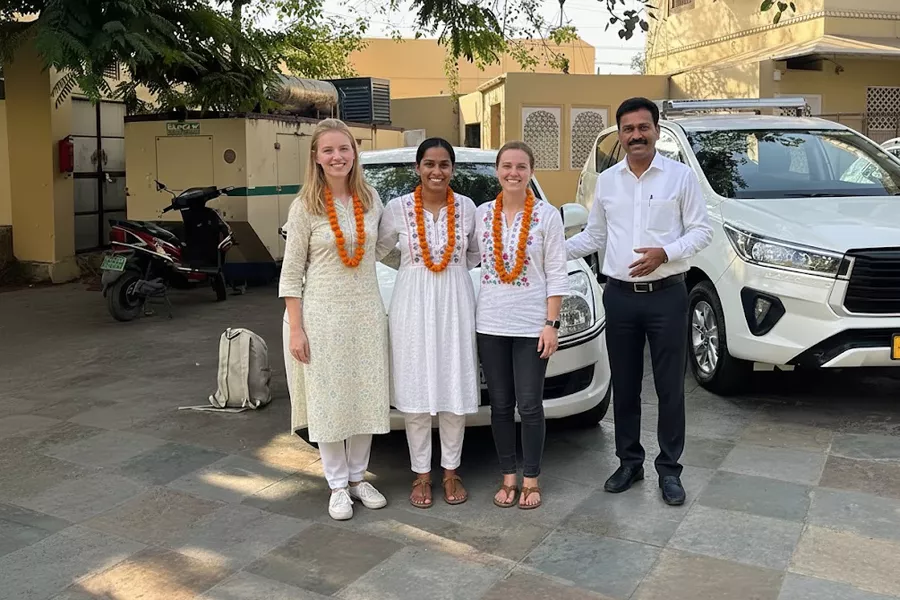
A private driver in India isn't a taxi. Taxis drop you at a location and leave. A private driver becomes your transportation partner for hours or days. They navigate traffic, manage your luggage, know routes, handle parking, suggest restaurants, and respond to your changing preferences. They're part transportation, part guide, part security presence.
On your first day in Delhi, your driver becomes invaluable. You want to see Red Fort, but the streets are chaotic and you're disoriented. Your driver navigates directly, parks strategically, explains what you're seeing, and knows exactly where to stop for lunch. Without a driver, you're lost in an auto-rickshaw with no common language and no way to communicate your destination clearly. With a driver, you're comfortable and oriented.
What drivers handle vs. what they don't
Drivers handle: navigation, parking, knowing routes and timing, suggesting restaurants and shops, managing your schedule, communicating with hotel staff. Drivers do NOT typically provide deep historical context or expert archaeological knowledge. That's where guides come in. A driver gets you to the Taj Mahal safely; a guide explains its architecture and Mughal history.
Private Driver vs. Tour Guide: Do You Need Both?
Private driver alone: When it's sufficient
You're visiting major monuments like the Taj Mahal, Agra Fort, or Jaipur's City Palace. You hire a guide for 2-3 hours at each location (₹500-₹800). You rest between monuments. You move at your pace. The driver handles transportation; the guide handles specific sites. This approach works perfectly for most first-timers and gives you both flexibility and expertise.
Private driver without guide works when you're comfortable with self-directed exploration and using guidebooks or apps for context. Many travelers prefer this—it's more flexible and genuinely economical.
Tour guide alone: Less common for first-timers
You hire a guide who arranges transportation (usually through their network). The guide becomes your primary contact. This works for specific interests (architecture-focused tours, wildlife tours, cultural immersion). However, for first-time visitors unfamiliar with India's pace and logistics, having your own driver provides comfort that shared guides cannot.
Driver plus guide combination: Optimal for first-timers
Your private driver handles transportation, logistics, and comfort. Your hired guide appears for specific monuments and provides expertise. This combination removes stress while providing depth. Your driver becomes your reliable constant; guides become specialized resources. Cost: driver ₹28-₹40/km daily, plus guide ₹500-₹800 per location. Worth every rupee for first-time visitors.
Real Benefits of Private Drivers for First-Time Visitors
Comfort in chaos
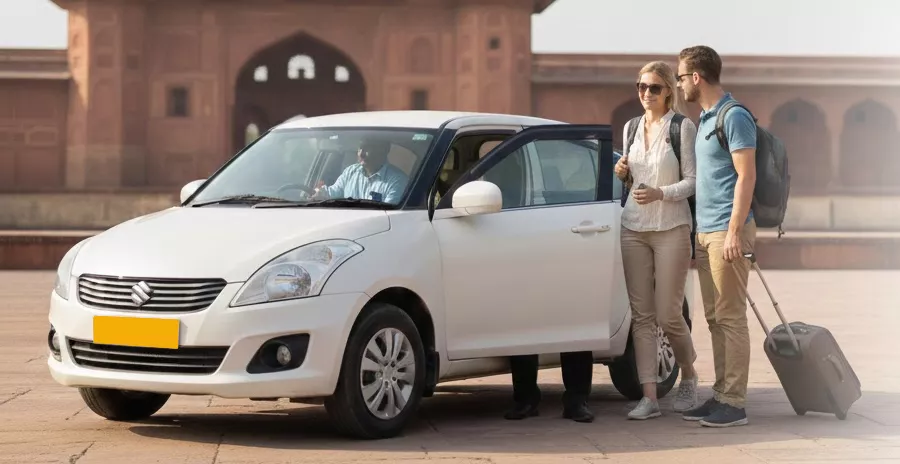
Indian traffic is genuinely chaotic by international standards. Autorickshaws are cramped. Public buses are overcrowded. App-based taxis feel impersonal. A private car with a familiar driver becomes your sanctuary. You're in a controlled environment, comfortable temperature, music if you want it, bathroom breaks when needed. This comfort enables genuine exploration rather than survival mode.
Safety and peace of mind
A vetted driver with commercial license, insurance, and background verification removes numerous safety concerns. You're not negotiating with random taxi drivers. You're not navigating unfamiliar neighborhoods alone. You're not vulnerable to exploitation. Your driver becomes your security presence—someone who knows you, knows where you're going, and has professional reputation to maintain.
Time efficiency and flexibility
Public transport requires waiting, figuring out routes, managing crowds. A private driver leaves when you're ready, goes where you want, stops when you want. You spend 30 minutes appreciating a monument view instead of 15 minutes hustling to catch a bus. You eat lunch where you choose instead of wherever is convenient to the train schedule. Flexibility is freedom in travel.
Cultural translation and insider access
Your driver is your cultural interface. They understand Indian etiquette in ways guidebooks cannot convey. They know which neighborhoods are genuinely safe, which restaurants tourists should skip, which bazaars have better prices. They translate not just language but cultural context. This transforms you from isolated tourist to informed participant.
How to Choose a Reliable Private Driver
License and legal verification
A legitimate private driver holds a commercial tourist license issued by the state Road Transport Authority. This is non-negotiable. It means they're insured for paying passengers, trained for intercity travel, and registered with authorities. Ask to see the license—a good driver shows it proudly. If someone says "it's not necessary" or "we'll figure it out," walk away immediately.
Vehicle condition and age
Request specific vehicle details: make, model, year, current mileage. A well-maintained 2020 Toyota Innova with 60,000 km is excellent. A 2010 vehicle with 180,000 km is concerning—mechanical reliability decreases substantially above 150,000 km. Ask about recent servicing (last 1-2 months is ideal). Check for obvious wear: tires, AC function, seatbelt operation. A clean interior indicates care; a filthy interior indicates neglect.
English communication skills
Test this during initial contact. Can the driver describe their vehicle clearly? Can they answer questions about routes? Can they understand your accent and speech patterns? You need functional English—not fluent conversation, but clear enough to discuss routes, timing, and needs. If communication feels strained before you book, it will be difficult during your trip.
Experience and references
Ask: "How many international tourists have you driven?" The answer matters. A driver with 5+ years experience and 100+ trips has navigated virtually every scenario. Ask for references—actual names, WhatsApp contacts, email addresses of recent travelers. Contact them directly. Ask specifically: "Would you hire this driver again?" Their hesitation tells you everything.
Personality and cultural fit
You'll spend 8-10 hours daily with this person. You don't need best friends—you need respectful, professional, pleasant individuals. During initial conversations, do they seem genuinely interested in your comfort, or are they rushing you? Do they answer questions patiently, or do they seem annoyed? Trust your instinct about whether this person will be good company for extended driving.
Finding Reliable Drivers: Where to Look
Established tour operators
Companies specializing in private driver tours vet drivers, maintain insurance, provide 24/7 support, and offer standardized pricing. Cost: 5-15% premium versus direct driver booking. Value: reduced risk, professional infrastructure, backup if your driver cancels. Best for: first-timers who prioritize reliability over cost-saving.
Hotel recommendations
Your hotel concierge can connect you with trusted drivers they've worked with repeatedly. These are usually reliable—the hotel's reputation depends on it. Pricing may have hotel markup. This method is convenient but potentially expensive.
Direct driver networks
WhatsApp groups, Facebook travel communities, and driver referral websites connect travelers directly with drivers. Lower cost because no intermediaries. Higher risk because no institutional backing. If using this method, require references, verify license meticulously, and confirm insurance details.
Digital platforms
Apps and websites like Viator, GetYourGuide, and regional Indian platforms connect travelers with drivers. These platforms provide dispute resolution and traveler protection. Cost is comparable to direct booking. Recommended for first-timers prioritizing safety.
Pricing: What You'll Actually Pay
Per-kilometer rates and daily minimums
Economy sedans (Maruti Dzire, Hyundai Xcent): ₹9.50-₹11 per km. Standard sedans (Honda City, Maruti Swift): ₹10.50-₹12 per km. SUVs (Toyota Innova, Mahindra XUV): ₹14-₹16 per km. Most operators specify "250 km minimum daily"—if you drive fewer than 250 km, you pay for 250 km anyway. This prevents operators losing money on short local tours.
What is included in quoted rates
Fuel costs, driver salary, basic vehicle maintenance, depreciation. Usually NOT included: tolls (₹500-₹2,500 depending on route), parking (₹100-₹300 per site), driver meals (₹300-₹500 daily), GST (18%), and driver overnight allowance (₹300-₹500 daily if traveling multi-day with hotel stays).
Real-world example pricing
Delhi to Agra round-trip (460 km total, 2 days) for couple using sedan: ₹11/km × 460 = ₹5,060 base. Add tolls ₹900, parking ₹400, driver allowance 1 night ₹400, GST 18% on ₹6,760 = ₹1,217. Total: ₹8,377 (₹4,189 per person). Compare to: train tickets ₹1,000-₹1,500 per person + local autos ₹1,500 + hotel transport ₹500 = ₹3,000-₹3,500 per person. Private car is competitive and vastly more comfortable.
Tipping and extra appreciation
Tips are genuinely appreciated but not mandatory. Standard: ₹100-₹300 daily for normal service, ₹400-₹500 for exceptional service (driver went above-and-beyond, helped with difficult logistics, provided excellent company). This money reaches the driver directly—it's not administrative fee.

Common Mistakes First-Time Travelers Make
Booking too late
Waiting until a week before arrival to hire a driver limits your options. Peak season (Oct-Mar), quality drivers book 4-8 weeks ahead. Last-minute bookings mean available drivers only—not necessarily the best ones. Book immediately when you finalize travel dates.
Choosing based on price alone
A driver quoting ₹8/km instead of ₹11/km is operating below sustainable cost—either the vehicle is in poor condition, the driver is inexperienced, or they're hoping for heavy tipping. Cheapest is rarely best. Evaluate price within context of vehicle quality, driver experience, and references.
Not clarifying routes and timings upfront
Misunderstandings create frustration. Confirm before hiring: "I want to visit Taj sunrise, then Agra Fort afternoon, leaving Agra at 4 PM." Get written confirmation. Drivers sometimes interpret "Agra tour" as 3-hour local tour when you meant full-day sightseeing. Clarity prevents disappointment.
Assuming all drivers speak English equally
English proficiency varies widely. Some drivers are highly fluent; others struggle with accents. Before booking, have a phone call—real-time conversation reveals actual communication capability. Chat messages can hide communication difficulties that become apparent during 8-hour driving days.
Not verifying documentation
Ask to see: commercial license (photo), vehicle insurance certificate, GST registration (if quoted with tax). Legitimate drivers have all three readily available. Reluctance to show documentation is a red flag.
Safety and Comfort on Long Drives
Night travel considerations
Indian highways at night present different risks than daytime travel. Visibility is reduced, fatigue is greater, emergency services are less accessible. Avoid intercity travel between 11 PM and 5 AM if possible. If necessary, hire an additional relief driver to rotate every 3-4 hours. Single drivers shouldn't drive more than 6 hours continuously.
Luggage management
Agree upfront on luggage handling. Standard: driver helps load/unload but isn't responsible for safeguarding. Valuable items stay with you. Excessive luggage (more than 2 large suitcases per person) creates logistical issues. Pack realistically—overstuffed vehicles affect AC efficiency and fuel economy.
Comfort during long drives
Stop every 2-2.5 hours for rest breaks, bathroom, hydration. Stretch, walk, use restrooms. Even the most comfortable car becomes uncomfortable on 10+ hour drives without breaks. Your driver will remind you to stop—listen. Dehydration and fatigue accumulate gradually but affect your experience substantially.
Scenario-Based Guidance: Different Traveler Types
Solo travelers
You benefit most from private drivers. Public transport involves multiple negotiations alone. Taxis create safety concerns traveling solo at night. A driver provides both logistics and security presence. Budget: anticipate solo surcharge (drivers less eager to undertake single-person trips). Negotiate friendly tone—drivers respond to genuine respect and interest. Tip well—solo travelers often report drivers giving exceptional service when treated well.
Couples
Optimal for private driver sharing. Costs divide evenly. You can negotiate flex timing—rest when tired, drive when ready. Communication is easier with two people discussing preferences. Sedan vehicles are sufficient. Budget: ₹4,500-₹6,500 per day for sedan, ₹1,500-₹2,000 per night accommodation, ₹800-₹1,200 meals daily = approximately ₹250-₹350 per person daily for all costs.
Families with children
Private driver eliminates concerns about child safety in public transport. Children can rest during drives. Bathroom breaks happen when needed. Food timing is flexible. However, require larger vehicles (SUVs for space), confirm AC functionality, ensure seatbelts work. Budget additional 20-30% because you're using larger vehicles. Children tire more easily—plan shorter driving days (4-5 hours maximum).
Senior travelers
Private drivers are genuinely important. Managing luggage, navigating crowds, dealing with inconsistent infrastructure—all become harder with age. SUVs are preferable to sedans (easier entry/exit, better suspension). Confirm driver patience and willingness to accommodate slower paces. Budget for guides at every monument—seniors benefit from sitting while guides explain. Expect to drive fewer hours daily—5-6 hours maximum.
Comparison Table: Transportation Options for First-Timers
| Option | Cost Per Day | Best For | Pros | Cons |
|---|---|---|---|---|
| Private Driver | ₹2,500–₹4,000 | First-timers, comfort-focused | Door-to-door, flexible timing, security, comfort, local knowledge | Higher cost than trains/buses |
| Trains | ₹500–₹1,500 | Budget travelers, experienced India travelers | Very cheap, authentic Indian experience | Fixed schedules, luggage hassle, local transport needed in cities |
| App-Based Cabs (Ola/Uber) | ₹12–₹18/km (cities only) | City exploration, short distances | Transparent pricing, app tracking, spontaneous | Surge pricing, not available intercity, driver varies each time |
| Autorickshaws | ₹8–₹12/km (negotiable) | Budget travelers, short city trips, adventurous | Very cheap, authentic, navigates narrow lanes | Uncomfortable, price negotiation stress, safety concerns for solo women |
| Tour Bus Groups | ₹1,500–₹2,500 | Budget groups, first-timers wanting structure | All-inclusive, guided, social, cheap | Rigid itineraries, no flexibility, crowded, rushed pace |
Frequently Asked Questions About Hiring Private Drivers
Q: Is it safe to hire a private driver in India?
A: Yes, if you hire through established operators or verify credentials thoroughly. Commercial license, background verification, insurance—these indicate legitimacy. Hiring through hotel recommendations or tour operators reduces risk substantially. Like any travel anywhere, some precautions are sensible, but India's private driver industry is mature and professional.
Q: How much does a private driver actually cost in 2026?
A: ₹28-₹40 per km for luxury vehicles, ₹9.50-₹16 per km for standard vehicles. Daily minimums typically 250 km. Plus tolls (if applicable), parking, and GST. Budget ₹2,500-₹6,000 daily depending on vehicle type. This includes driver salary and fuel but excludes extras like tolls and overnight allowance.
Q: Do Indian drivers speak English?
A: Many do—enough for basic communication. Quality varies. Test English during initial contact before hiring. What matters is understanding regarding routes, timing, and needs—not fluent conversation. Drivers with 5+ years international tourism experience usually have functional English.
Q: Can a single driver handle multiple cities over several days?
A: Yes. Drivers commonly undertake Delhi-Agra-Jaipur circuits. However, fatigue accumulates on multi-day driving. Confirm driver has adequate rest between long drives. Most professional operators handle this through pre-planned rest days and driving hour limits.
Q: What if I'm uncomfortable with my assigned driver?
A: Professional operators will reassign within reason. You have legitimate reasons to request changes: safety concerns, communication difficulties, poor vehicle condition. Request reassignment politely but firmly. You're paying for service; comfort matters.
Conclusion: Investing in Comfort and Confidence
Hiring a private driver for your first India trip isn't extravagance—it's a practical investment in comfort, safety, and experience quality. You'll move through India with orientation, security presence, and local knowledge. You'll avoid logistical stress and actually enjoy sightseeing instead of surviving it.
Choose a driver through established operators or thorough verification. Confirm commercial license, vehicle condition, and English communication. Clarify pricing including tolls and extras. Treat your driver with respect—you'll receive respect in return. Build comfortable rapport; you'll spend 8-10 hours daily together.
The difference between an exhausting, chaotic first trip to India and a transformative, wonderful one often comes down to this single decision. A good driver becomes your guide, your security, and often your most valued India contact. That's worth every rupee invested.
Recent Posts
 Amer Fort Boating 2026 Guide: Maota Lake Tickets & Timings
Discover Amer Fort’s new Maota Lake boating, updated 2026 ticket rates, timings, safety rules and best visiting months.
 Luxury Rajasthan Tour with Oberoi, Taj & Leela Hotels
Experience royal Rajasthan in comfort with Oberoi, Taj and Leela luxury palace stays.
 Luxury Tempo Traveller & Van Hire in India 2026 – Rates, Features & Booking
Enjoy luxury van hire in India for safe, comfortable family and group travel.
 Top 10 Vehicle Hire Companies in India for Tourists
Discover the top 10 vehicle hire companies in India offering safe, comfortable tourist travel.
 Delhi Agra Jaipur Tour by Luxury Car and Private Driver
Enjoy a Delhi Agra Jaipur tour with a luxury car, private driver and flexibility.
 Luxury Car and Driver for Comfortable Rajasthan Tour
Explore Rajasthan in comfort with a luxury car, private driver and flexible custom tour.
 Jaisalmer Travel Guide for Foreign Tourists: Best Time, Desert Tours & Tips
Plan your Jaisalmer trip with ideal seasons, desert tour packages and essential foreigner tips.
 Hidden Villages of Rajasthan: Offbeat Rural Experiences & Village Travel Guide
Hidden Villages of Rajasthan: Offbeat Rural Stays, Homestays & Authentic Village Life.
-
Amer Fort Boating 2026 Guide: Maota Lake Tickets & Timings
Discover Amer Fort’s new Maota Lake boating, updated 2026 ticket rates, timings, safety rules and best visiting months.
-
Luxury Rajasthan Tour with Oberoi, Taj & Leela Hotels
Experience royal Rajasthan in comfort with Oberoi, Taj and Leela luxury palace stays.
-
Luxury Tempo Traveller & Van Hire in India 2026 – Rates, Features & Booking
Enjoy luxury van hire in India for safe, comfortable family and group travel.
-
Top 10 Vehicle Hire Companies in India for Tourists
Discover the top 10 vehicle hire companies in India offering safe, comfortable tourist travel.
-
Delhi Agra Jaipur Tour by Luxury Car and Private Driver
Enjoy a Delhi Agra Jaipur tour with a luxury car, private driver and flexibility.
-
Luxury Car and Driver for Comfortable Rajasthan Tour
Explore Rajasthan in comfort with a luxury car, private driver and flexible custom tour.
-
Jaisalmer Travel Guide for Foreign Tourists: Best Time, Desert Tours & Tips
Plan your Jaisalmer trip with ideal seasons, desert tour packages and essential foreigner tips.
-
Hidden Villages of Rajasthan: Offbeat Rural Experiences & Village Travel Guide
Hidden Villages of Rajasthan: Offbeat Rural Stays, Homestays & Authentic Village Life.