Ranthambore Travel Guide 2026
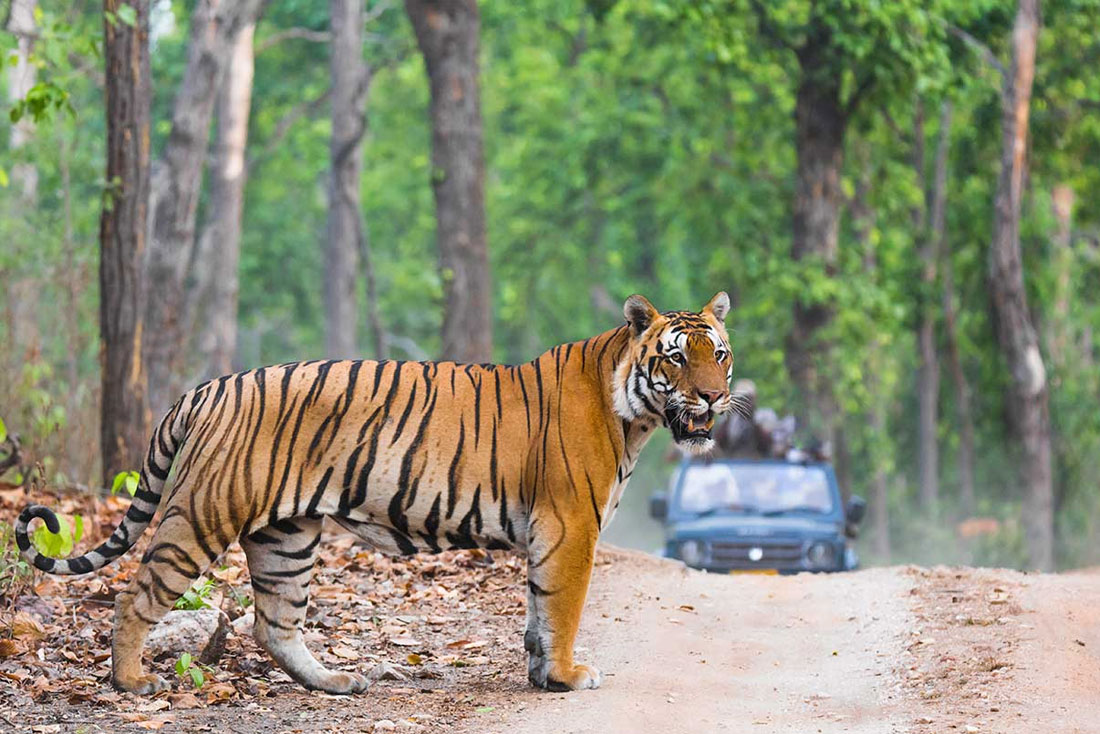
Try this picture for a second: you are in an open jeep, rolling slowly past an old stone gate that looks like it has lived through a few hundred stories, and a tiger just wanders by as if you are not even worth a second glance. Or maybe it is lying half in the shade beside a quiet jungle lake, tail flicking lazily while everyone in the vehicle forgets how to breathe. When people imagine scenes like that, most of them do not realise it, but they are usually imagining Ranthambore. This national park in Rajasthan throws together wild forest, rocky hills, still lakes and crumbling ruins in a way that feels less like a neat “tourist spot” and more like a movie set that never shut down. A safari here is not simply about ticking the word “tiger” off a list; it is about driving through a place that still feels slightly unpredictable, properly wild and full of tiny surprises you were not smart enough to plan for.
In this guide I want to talk you through Ranthambore in a way that is actually useful if you are planning a trip in 2026, not just repeating the same brochure lines you have already seen. We will go over what jeep and canter safaris really cost right now, how the timings change across the year, how the online booking system behaves in real life, how to think about zones without overcomplicating it, and which months make more sense if you care about comfort as much as sightings. I will also get into the boring but important details — what to throw into your bag, which common mistakes quietly ruin people’s trips, how to keep your expectations realistic without killing the excitement, and how to squeeze the most out of even a short visit. Read this like a long, honest conversation with someone who has already gone a couple of times and learned a few lessons the hard way, not like yet another polished paragraph written to fill space on a travel site.
Where Exactly Is Ranthambore and Why Is It So Famous?
Ranthambore National Park lies in eastern Rajasthan, near the town of Sawai Madhopur, roughly in the triangle between Jaipur, Agra and Delhi. It is one of the most accessible tiger reserves in India, which is a big reason it shows up in so many Golden Triangle itineraries and quick weekend plans. You can reach Sawai Madhopur by train from major cities like Jaipur and Delhi, or by road if you prefer driving, and then the park gates are a short drive away from town and most resorts.
The park itself is part of the larger Ranthambore Tiger Reserve and covers dry deciduous forest, open meadows, rocky outcrops, several lakes and the impressive Ranthambore Fort sitting high on a hill. The combination of wildlife and history is what really makes it stand out: you might see a tiger walking along a fort wall, sambar deer feeding near ruined temples, or crocodiles basking below crumbling stone steps. It is one of those rare places where nature, history and photography all come together naturally.
A Quick Look at Ranthambore’s History
Before it became a protected tiger reserve, Ranthambore was once the royal hunting ground of the maharajas of Jaipur. That history is still visible in the landscape: old hunting pavilions, watchtowers, temples and walls dotting the forest and hillsides. Once India started focusing seriously on tiger conservation under Project Tiger, Ranthambore was converted into a national park and strict rules were put in place to control human activity and poaching.
Today, tourism here is regulated through fixed zones, set safari timings and controlled vehicle numbers per route. You cannot drive your personal car inside the park, and you cannot wander off tracks on foot during safaris. You enter with a trained guide and driver in an approved safari vehicle, and you follow a designated zone route for each drive. This system is what allows visitors to enjoy the forest while still giving wildlife some breathing space.
How Ranthambore Safaris Work (In Simple Terms)
Ranthambore runs safaris twice a day during the main season: one in the morning and one in the afternoon. For each safari, you book a seat (or an entire vehicle) either in a 6‑seater open jeep (often called Gypsy) or a 20‑seater open canter. Once you reach the gate, you are assigned your guide and your final zone (if not already pre‑assigned), and then you head into the park for around 3 to 3.5 hours.
You are not allowed to get off the vehicle inside the forest except at designated points if the forest department allows it on that particular route. There is a strict time window: vehicles must enter and exit within the given slot, and drivers are heavily fined if they overstay. This is why your guide might feel a bit rushed at the end even if a tiger is lazily blocking the track — they still have to make it out on time.
Jeep vs Canter: The Two Safari Vehicle Types
Most first‑time visitors get confused about which vehicle to choose, so let us clear that up early. Both options take you inside the same forest and work under the same overall park rules. The main differences are size, feel and cost per person.
Gypsy Jeep Safari (6‑Seater)
The Gypsy is a smaller open 4x4 jeep that carries up to six visitors plus a guide and driver. Because it is compact, it can move more easily on narrow or slightly rougher tracks, and you usually feel closer to the guide, which is great if you love asking questions or want help with photography angles. Many repeat visitors and serious wildlife lovers prefer jeeps because of this more personal vibe.
- Maximum 6 tourists plus guide and driver.
- More flexible in tight or rocky areas, easier to reverse or reposition.
- Feels more private; easier to hear the guide and react quickly.
- Higher cost per person, but you can also book the entire jeep.
Canter Safari (20‑Seater)
The canter is a bigger, bus‑like open vehicle that usually carries around 20 visitors plus guide and driver. The seats are higher, which can be a plus for views over bushes or if you are towards the back of a convoy. It is popular with bigger groups, budget travellers, and people who do not mind sharing their experience with a lot of others in the same vehicle.
- Seats around 20 tourists plus guide and driver.
- Good for large groups, college trips, office outings or budget travellers.
- Less intimate, more “public transport” feeling, but you still get good views from the higher seating.
- Cheaper cost per person compared to a jeep seat.
Ranthambore Safari Price in 2026 (Latest Typical Ranges)
Safari prices in Ranthambore change whenever the forest department revises fees or local operators adjust service charges, so you will always see slightly different numbers across websites. As of early 2026, the broad pattern is consistent: jeeps cost more per seat than canters, and foreigners pay higher charges than Indian citizens due to different park fee slabs. Always double‑check current rates right before booking because tariffs can be tweaked mid‑season.
Based on recent 2026 rate cards from leading Ranthambore safari booking platforms, typical prices per person for regular (non‑tatkal) safaris look something like this:
| Safari Type | Visitor Category | Approx. Per Person Price (Regular) | Notes |
|---|---|---|---|
| Gypsy (6‑seater) | Indian | Around ₹1,800–₹1,900 per seat | Some operators list ₹1,900 as standard; a few still show ~₹1,800. |
| Gypsy (6‑seater) | Foreigner | Around ₹3,700–₹4,000 per seat | Different portals quote ₹3,700–₹4,000 depending on service fees. |
| Canter (20‑seater) | Indian | Around ₹1,200–₹1,300 per seat | Many sites now show ₹1,300 as the typical base. |
| Canter (20‑seater) | Foreigner | Around ₹2,700–₹3,000 per seat | Some list ₹2,700, others ₹3,000 depending on taxes and margins. |
These figures usually include the forest entry fee, vehicle fee, guide fee and basic service charge by the booking portal or operator. The exact breakup is rarely shown to visitors, but it is there in the background when permits are issued. Some operators might offer a slightly cheaper rate if you book multiple safaris through them or stay in their partner hotel, while premium operators may charge more for added services like private pick‑ups or customised assistance.
Full Vehicle Booking and Tatkal Prices
If you are travelling as a family or a small group and want the jeep entirely to yourselves, you can book a full Gypsy for a fixed amount instead of paying per seat. In 2026, full jeep prices for Indian citizens are often quoted in the ₹11,000–₹12,000 range for a regular slot, while foreigner full‑jeep rates are higher and can cross ₹24,000 depending on the portal and season. Many sites also offer “Premium” or “Tatkal” options at a much higher cost if you are booking very close to the safari date and regular quotas are almost full.
For canters, tatkal or last‑minute prices can almost double the basic per‑seat rate, especially on weekends and during peak holiday months like December and long weekends. This is why it is smarter to plan safaris at least a few weeks in advance instead of hoping to grab cheap last‑minute seats after reaching Ranthambore. Once a seat is confirmed, remember that most bookings are non‑refundable and non‑transferable, so book only what you are reasonably sure you will use.
Ranthambore Safari Timings 2025–2026 (Month‑Wise)
Ranthambore follows fixed safari time windows that shift slightly across the year to match sunrise and sunset. You always get two main rounds per day in the core season: a morning safari and an afternoon safari. Each drive lasts roughly 3 to 3.5 hours, but your actual time inside the core zone can be a bit less once you factor in entry formalities at the gate.
Here is the commonly used timing chart that most official and private sites follow for the 2025–2026 season:
| Months | Morning Safari | Afternoon Safari |
|---|---|---|
| 1 Oct – 31 Oct | 06:30 am – 10:00 am | 02:30 pm – 06:00 pm |
| 1 Nov – 31 Jan | 07:00 am – 10:30 am | 02:00 pm – 05:30 pm |
| 1 Feb – 31 Mar | 06:30 am – 10:00 am | 02:30 pm – 06:00 pm |
| 1 Apr – 15 May | 06:00 am – 09:30 am | 03:00 pm – 06:30 pm |
| 16 May – 30 Jun | 06:00 am – 09:30 am | 03:30 pm – 07:00 pm |
These are the standard timings that most visitors will experience in the main zones (1–10) during the open season. In the monsoon months (usually July to September), core zones are typically closed, and only some buffer or special zones may open with altered timings, if at all. If you are planning a very off‑season monsoon visit, you must check the latest official update just before your trip because things can change based on rainfall and forest conditions.
Which Safari Slot Is Better: Morning or Afternoon?
There is no universally “best” slot because both morning and afternoon have their own charm. Morning safaris, especially in winter, start in chilly air but gradually warm up, and you often see mist over lakes, fresh animal tracks and birds in full activity. The light is beautiful for photography, although it can be a bit low at the very start, especially in deep forest patches.
Afternoon safaris start when the sun is higher and hotter, but as you approach sunset, temperatures dip slightly and many animals move towards water or open areas again. In the hotter months (March to June), late afternoon can be excellent around waterholes, but you will also be sitting in an open vehicle in strong sun for the first hour or two. If you can, mix it up: do at least one morning and one afternoon safari to feel the forest in different moods.
Best Time to Visit Ranthambore in 2026
Ranthambore is generally open for regular tourism safaris from 1 October to 30 June. The park is usually closed during the core monsoon (July, August, September), though the exact dates may shift slightly depending on local decisions and rainfall. Every season offers a different vibe, so the “best time” really depends on what you care about more: comfort, landscape, crowds, or the highest chance of concentrated sightings near water.
To keep things simple, we can break the year into three broad phases: cool and comfortable (November–February), warm but excellent for wildlife (March–early May), and extremely hot but potentially action‑packed (late May–June). Let us look at each in more detail so you can match it to your style.
November to February: Cool, Pleasant and Popular
These winter months are when Ranthambore feels the most comfortable for casual travellers. Early mornings are cold enough to need a jacket, but once the sun is out, you get bright, pleasant days that make it a joy to sit in an open jeep or wander around your lodge. The park looks fresh after the monsoon, with more greenery, full lakes and a softer overall look in photos.
Wildlife sightings are still good in winter, though because there is more foliage, animals can sometimes be partially hidden. The flip side is that you get a beautiful mix of landscapes and animals — birds, deer, crocodiles, langurs, and, with some luck, tigers relaxing or patrolling in the softer sunlight. If you are travelling with kids, parents, or anyone not happy in extreme heat, this is usually the safest and most balanced time to come.
March to Early May: Hotter Days, Clearer Sightings
From March onwards, temperatures start climbing and the forest gradually dries out. Leaves fall from many trees, undergrowth thins, and visibility improves dramatically, which is pure gold from a wildlife spotting point of view. Animals start depending more on fixed water sources, so guides can sometimes predict areas of higher activity more confidently.
The downside, of course, is the heat. Morning safaris are still relatively pleasant, but the latter half of the afternoon safari can feel intense, especially in open stretches without much shade. If you are prepared with light clothing, a cap, sunglasses, sunscreen and enough water, this season can be incredibly rewarding. Many serious wildlife photographers actually prefer these months because the forest is more open and animals are more visible against the dry, golden background.
Late May to June: Extreme Heat, Serious Wildlife Time
By late May, Ranthambore gets seriously hot. Daytime temperatures can shoot up, the ground looks almost bleached, and water becomes the single most important magnet for animals. If you can handle the furnace‑like conditions, this can be an intense and memorable time for wildlife watching. Tigers and other animals often hang around or visit waterholes in more predictable patterns, and sightings around lakes and streams can be dramatic.
However, this period is not ideal for very young children, elderly travellers, or anyone who struggles with high heat. You have to be okay with sweating, dust, and the occasional hot wind slapping your face in the jeep. Lodges often run coolers or air‑conditioning, but during the safari itself you are fully exposed. If you decide to come in this window, plan fewer safaris per day and focus on quality over quantity so you do not burn out.
Quick Summary: Month‑Wise Experience
| Months | Weather | Landscape | Wildlife Feel |
|---|---|---|---|
| Oct – Nov | Pleasant to slightly warm | Fresh, greener after rains | Great mix of scenery and sightings |
| Dec – Feb | Cool to cold mornings | Still greenish, soft light | Comfortable safaris, good family time |
| Mar – mid‑May | Warm to hot | Drier, better visibility | Strong chances around water, excellent for enthusiasts |
| Late May – Jun | Very hot, harsh sun | Very dry, stark but dramatic | Intense wildlife action for those who can handle heat |
Understanding Ranthambore Safari Zones (1–10 and Beyond)
Ranthambore is divided into numbered tourism zones, each with its own entry gate and fixed network of tracks. For most visitors, zones 1 to 10 are the main game‑viewing areas that come up when you book a normal jeep or canter safari. Some newer or extended zones may also be mentioned by operators or on specific websites, but 1–10 remain the classic set you hear discussed in most trip reports.
When you book a safari, you pick your vehicle type, date, and shift (morning or afternoon), and often a preferred zone list. However, the final zone allocation is handled by the booking system and forest department and is not guaranteed, especially for last‑minute or highly crowded dates. On the day of the safari, your permit will clearly mention which zone you are allowed to enter, and your vehicle must stay inside that zone’s route during the entire drive.
Do Some Zones Really Have Better Tiger Sightings?
You will hear a lot of chatter online like “Zone 3 is best” or “Zone 4 always has tigers”, but reality is more fluid. Specific individual tigers claim territories, shift them over time, and sometimes disappear or move to neighbouring areas. A zone that was famous for a certain tiger a couple of years ago might feel quieter later, while another zone suddenly becomes hot because of a new dominant cat or a litter.
Local guides do track these changes closely and often have strong opinions about which zones are “on fire” at any given time. If you are booking through an experienced local operator or a good lodge, they might suggest certain zones based on fresh sightings and patterns. That said, there are no absolute guarantees. The forest is not a theme park ride, and even the best zone can be silent on a particular day while a “less popular” one throws up an incredible sighting.
How Many Safaris Should You Plan?
If you truly want a reasonable chance of seeing a tiger while also enjoying the overall forest experience, think in terms of at least 3–4 safaris spread across different slots. For example, you could plan:
- Day 1: Afternoon safari.
- Day 2: Morning safari + afternoon safari.
- Day 3: Morning safari before departure.
With this kind of plan, you expose yourself to different times of day, possibly different zones, and different weather moods. You might spot big cats on your first drive or only on your last, but you will also notice how much more relaxed and observant you become by your third or fourth trip inside. Your eyes start picking up smaller details: birds, tracks, alarm calls, behaviour changes, and all the things that make a safari interesting even without a tiger in the frame.
Official Online Safari Booking vs Operator Booking
You have two primary ways to book a Ranthambore safari: directly through official government booking portals or indirectly through a trusted tour operator or your hotel. Both methods are widely used, and neither is “wrong”; it just depends on how comfortable you are with online forms, payments and a bit of uncertainty.
Booking Through Official Online Portals
The Rajasthan forest department runs official websites where you can book seats for Ranthambore safaris. On these portals, you choose the date, vehicle type (jeep or canter), shift (morning or afternoon), number of seats and sometimes a zone preference. You then enter guest names and ID details, pay the full amount online and receive a confirmation slip or permit reference.
- You must enter accurate ID details (Aadhaar, passport, etc.) and carry the same original ID to the gate.
- Most bookings are non‑refundable and non‑transferable, even if your plans change later.
- Zone preference is not always guaranteed; some systems auto‑allocate zones closer to the date.
- Payment issues or technical glitches can be annoying if the site is slow or overloaded.
The main advantages of booking officially are transparency of base rate and a sense of dealing directly with the system. However, you handle everything yourself: payment, follow‑up, coordinating with your hotel for entry gate timing, and making sure you reach the right gate at the right time with the correct documents.
Booking Through a Tour Operator or Hotel
The second route is to let a trusted local operator or your hotel handle the entire permit and seat booking process for you. Ranthambore has dozens of agencies and almost every decent resort has tie‑ups with a few. You tell them your preferred dates, how many safaris you want, whether you prefer jeep or canter, and they take care of the practical work of getting permits and assigning a vehicle.
- Ideal if you are not comfortable dealing with government websites or online payment errors.
- They often coordinate pick‑up and drop from your hotel to the right gate and back.
- Prices may be slightly higher than raw portal numbers because of service and convenience fees.
- Good agents may advise you on zones, best slots and how to structure your safaris.
For many travellers, the extra cost is worth the reduced hassle and the guidance of someone who deals with Ranthambore bookings every single day. Just make sure you choose a reliable operator with genuine reviews rather than the first random name that appears in a search result or WhatsApp forward.
Step‑by‑Step: How to Book Your Ranthambore Safari
If you are the kind of person who likes a clear checklist, here is a simple step‑by‑step way to approach this:
1. Fix Your Dates and Rough Budget
First decide how many days you want to spend in Ranthambore and roughly how many safaris you can afford. Remember that a single safari is rarely enough to do the place justice. If possible, plan at least 2 nights and 3–4 safaris. Multiply the per‑person cost (jeep or canter) by the number of safaris and number of people to figure out your rough safari budget before you start booking hotels or trains.
2. Choose Vehicle Type: Jeep or Canter
Next, decide whether you want to prioritise a more private, flexible experience (jeep) or a more budget‑friendly one (canter). If you are a couple or a group of 3–4 who value photography and quiet, try to book jeep seats or even a full jeep. If you are a group of 8–15 on a budget or do not mind a louder, more social vibe, canter is perfectly fine and still takes you into the same forest.
3. Pick Morning or Afternoon Safaris
Ideally, mix both. If your schedule is tight, you can start with one afternoon safari on arrival day (if you reach before lunch) and then do a morning safari the next day. If you have two full days, a common pattern is two safaris per day (morning + afternoon) with an easy break at your lodge in between. Just be honest about your own energy levels, especially in summer — four back‑to‑back safaris in scorching May can feel exhausting.
4. Decide Whether to Use Official Site or Operator
If you are comfortable with online forms and do not mind a bit of trial‑and‑error, you can use the official booking website. If you prefer a smoother experience, book your hotel first and then ask them to arrange safaris for you, or contact a recommended Ranthambore operator. In either case, try to secure permits at least a couple of weeks in advance for weekends and peak holiday periods.
5. Share Accurate Details and Keep Copies
When submitting booking details, use the exact names and ID numbers that will be on the physical IDs you carry on the trip. Double‑check spellings and digits before payment. After booking, keep digital copies (PDFs or screenshots) of your confirmation and ID photos handy on your phone, plus a backup in email or cloud in case of network issues on the day of the safari.
6. Reach the Gate on Time
On safari day, plan to reach your hotel or the gate at least 30–45 minutes before your slot. Vehicle allocation, grouping, guide assignment and checking IDs all take time. If you are staying at a lodge, they usually tell you what time to be ready in the lobby, and the jeep or canter will pick you up. Do not wander off for a long shower or breakfast and keep everyone waiting; the forest gate will not delay entry for you.
What to Expect on the Actual Safari
Knowing what a typical safari feels like helps you set realistic expectations and relax into the experience. That way, you are not sitting on the jeep thinking, “Wait, is this it?” while everyone else is quietly listening for alarm calls and scanning the bushes.
The First Half Hour: Gate Formalities and Settling In
When you arrive at the gate, jeeps and canters line up while guides check permits and IDs with forest staff. You show your original ID, your guide confirms your names against the list, and once everything is clear, the barrier opens and vehicles roll in. The first few minutes may feel a bit like organised chaos, with multiple vehicles entering at once, but soon each one heads off along its own zone route and the forest sound slowly takes over.
You will notice fellow travellers adjusting cameras, pulling on jackets or caps, and asking the guide the classic question: “Tiger dekhne ka chance kitna hai?” (What are the chances of seeing a tiger?). A good guide will gently remind everyone that while tiger sightings are possible and sometimes frequent, this is still a wild jungle, not a guaranteed show.
Inside the Zone: Searching, Listening, Waiting
Once your vehicle is properly inside the zone, the real fun begins. Your guide and driver constantly scan the track, tree lines, and waterholes for fresh tracks (pugmarks), animal movement and listening cues like langur alarm calls or sambar deer calling. They also keep an eye on other vehicles — if a jeep has stopped ahead or drivers are signalling something, it might mean they have spotted something interesting.
You will see herds of spotted deer, sambar standing in water, peacocks displaying, crocodiles near the lakes, and a variety of birds. Some parts of the drive might feel quiet, but that is normal; wild animals are not on a fixed schedule. The more you allow yourself to enjoy the overall forest atmosphere, the less anxious you will feel about “getting value” only if you see a tiger.
A Tiger Sighting: How It Usually Plays Out
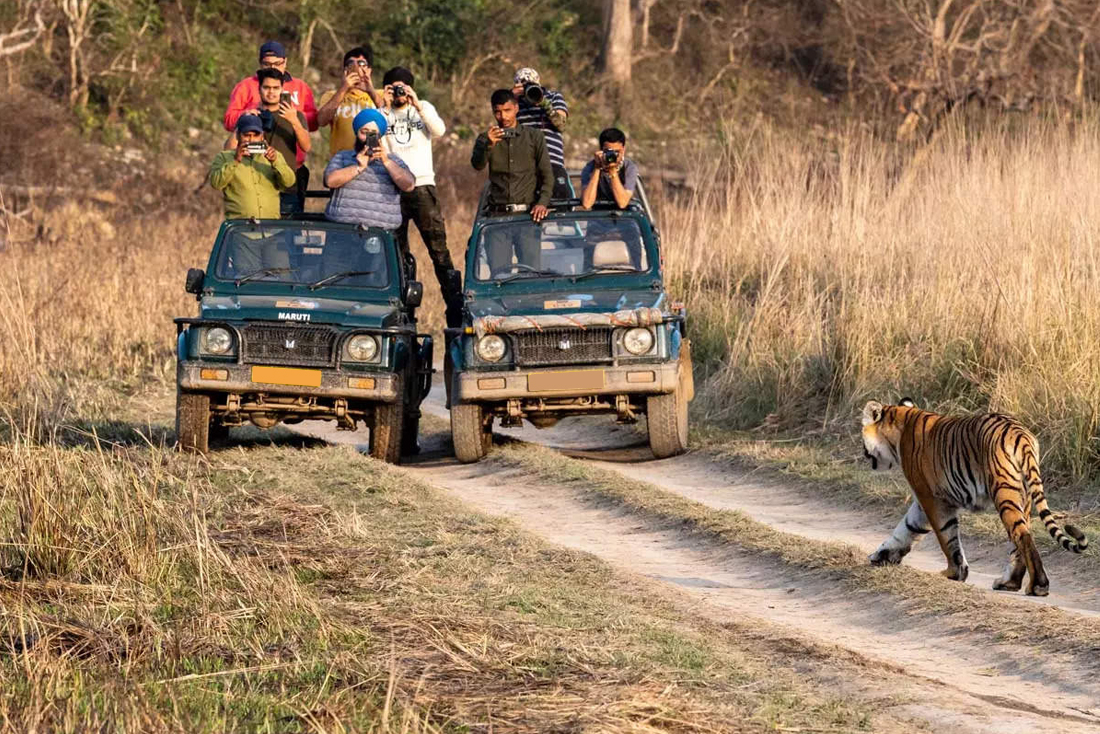
When a tiger is sighted or strongly suspected to be nearby, the energy in the area changes instantly. Vehicles may stop and wait near a bend, a waterhole or a thick patch of forest, with everyone peering through gaps in the trees. Your guide might ask for silence or low voices so the animal is not spooked. Sometimes the tiger emerges casually and crosses the track like it owns the place; sometimes it just sits in the shade or in water, half‑hidden by bushes, while cameras go crazy.
The sighting may last a few seconds or stretch into 30–40 minutes if the tiger is relaxed and the situation is controlled. Forest rules usually limit how many vehicles can gather in one spot, and guides are expected to give each other turns rather than causing a traffic jam. Once your driver decides it is time to move on or leave to respect time limits, you will continue exploring other parts of the zone until it is time to exit.
Packing List for a Comfortable Ranthambore Safari
You do not need to buy a whole “jungle outfit” unless you want to. A few smart choices, though, can make you much more comfortable and help you blend into the environment better than neon sportswear would. Here is a simple, practical packing list for Ranthambore.
Clothing and Accessories
- Neutral‑coloured clothes (olive, brown, beige, grey) instead of bright reds, whites or neon shades.
- Light cotton or breathable shirts and trousers; avoid noisy fabrics that rustle too much.
- A light jacket, fleece or shawl for winter mornings (Dec–Feb).
- A cap or wide‑brim hat for sunny months; a scarf can help with dust.
- Sunglasses with good UV protection.
- Comfortable closed shoes or sports shoes; avoid heels or slippery soles.
Sun, Dust and Health Basics
- Sunscreen with decent SPF, especially from February onwards.
- A refillable water bottle; some lodges send water with the vehicle, but carry your own backup.
- Basic medicines you personally need (headache, motion sickness, allergies).
- A small packet of tissues or a handkerchief for dust and occasional sneezes.
Gear for Wildlife Watching
- Binoculars if you enjoy birds or want to watch animals from a distance without leaning dangerously forward.
- A camera with decent zoom if you care about photography; otherwise, a modern phone is fine for memories.
- Extra camera battery and memory card if you are a serious shooter; safari days are not the time to run out.
- A small, quiet bag to keep everything organised; avoid giant backpacks that take over half the seat.
What You Should Avoid Carrying
- Plastic bags that can fly away — use reusable cloth or zip pouches instead.
- Strong perfumes or body sprays; animals have far better noses than we do.
- Loud gadgets or speakers; the forest is not the place for your playlist.
- Food items that leave crumbs or strong smells; if your lodge sends snacks, keep them discreet.
Etiquette and Rules Inside the Park
Ranthambore is not just another tourist attraction; it is a living ecosystem where animals actually live, hunt, rest and raise young. Your behaviour inside the park affects not only other visitors but also the wellbeing of wildlife. The forest department lays down clear rules, and following them is basic respect, not an optional suggestion.
Do’s on a Ranthambore Safari
- Stay seated in the vehicle unless your guide specifically says it is okay to stand for a moment.
- Speak softly; sudden loud voices can startle animals and spoil sightings for others.
- Listen to your guide’s instructions; they know the rules and the local context.
- Keep your belongings inside the vehicle so nothing falls or flies out.
- Use cameras without flash; many animals, especially at close range, can react badly to flashes.
Don’ts on a Ranthambore Safari
- Do not litter — ever. Take everything back out with you, including snack wrappers.
- Do not try to feed any animal, including monkeys or birds at rest points.
- Do not ask your driver to go off‑route or enter “just a little ahead” beyond the allowed track.
- Do not play animal sounds or calls from your phone; it is stressful and unethical.
- Do not make sudden movements or lean dangerously out of the vehicle for selfies.
Quick Comparison: Jeep vs Canter Safari
Still not sure which vehicle to pick? Use this simple table as a cheat sheet while planning your Ranthambore trip.
| Feature | Gypsy (Jeep) | Canter |
|---|---|---|
| Capacity | Up to 6 visitors | About 20 visitors |
| Feel | More private, closer to guide | More social, bus‑like experience |
| Flexibility | More nimble on narrow or rough tracks | Less flexible, bigger turning radius |
| Price per person | Higher | Lower |
| Best suited for | Families, small groups, photographers, serious wildlife fans | Budget travellers, student groups, corporate groups |
| Chances of sightings | Similar overall; more about guide, zone and timing than vehicle type | Similar overall; you just share the moment with more people |
Suggested 2–3 Day Itineraries for Ranthambore
To make all of this easier to visualise, here are a couple of practical itinerary ideas you can adapt for your own trip, depending on how much time and budget you have.
Weekend Itinerary: 2 Days / 1 Night
This works well if you are coming from Jaipur, Delhi or Agra and have just a short window.
- Day 1 morning: Travel to Sawai Madhopur and check into your hotel or resort.
- Day 1 afternoon: Afternoon safari (prefer canter if on a tight budget, jeep if you can stretch).
- Evening: Relax at the property, early dinner, maybe a short talk or documentary if your lodge hosts one.
- Day 2 early morning: Morning safari, then return for breakfast.
- Late morning/noon: Check‑out and travel back to your city.
With two safaris, you have a reasonable chance of at least one good sighting, plus you get a feel for the forest in two different time slots. Just keep your expectations open and your schedule relaxed.
Ideal Itinerary: 3 Days / 2 Nights
If you can spare an extra day, your experience improves dramatically.
- Day 1: Arrive before lunch, check‑in, afternoon safari, evening at leisure.
- Day 2 morning: Morning safari followed by breakfast and rest.
- Day 2 afternoon: Second afternoon safari or a visit to Ranthambore Fort if you want a break from constant game drives.
- Day 3 morning: Optional last morning safari if budget and energy allow, then depart.
Three to four safaris over two nights give you time to explore different zones, experience various moods of the forest and not feel rushed. You are more likely to walk away with that satisfying combination of big moments and quiet memories.
Common Mistakes to Avoid When Visiting Ranthambore
Even smart travellers fall into a few predictable traps when planning their first Ranthambore trip. Being aware of these in advance can save you money, stress and disappointment.
1. Expecting a Guaranteed Tiger Show
Ranthambore is famous for its tigers, but it is still a natural habitat. No guide, operator or website can promise you a guaranteed sighting, and anyone who does is overselling. Some lucky visitors see tigers on their first safari; others might do four drives and only hear alarm calls and see fresh pugmarks without an actual sighting.
If you go in with a “tiger or nothing” mindset, you risk spoiling the entire experience for yourself. If you treat tigers as the ultimate bonus and let yourself enjoy birds, deer, crocodiles, landscapes and ruins, you will enjoy every safari, tiger or not.
2. Booking Only One Safari
One safari sounds like enough on paper, but in reality it is just a teaser. If something goes wrong — a noisy vehicle, weak sightings, bad weather — your only memory will be that one imperfect experience. Planning at least two or three safaris gives you a buffer and usually leads to a much more satisfying overall impression of Ranthambore.
3. Ignoring Season and Heat
People sometimes look at their calendar, see “long weekend in June” and book a Ranthambore trip without thinking about what 45°C and hot wind actually feels like in an open jeep. If you or your family do not handle heat well, avoid the hottest weeks and pick November to February instead. Conversely, if you are fit and flexible and want the best chances around waterholes, aim for March to early May and prepare for warmth.
4. Packing the Wrong Stuff
Bright white clothes, heavy perfume, flashy jewellery and big backpacks that hog space are all more trouble than they are worth. You will be much happier in comfortable, neutral‑coloured clothing with a light jacket in winter or light layers in summer. Minimalist packing almost always feels better on an open vehicle.
5. Being Late or Disorganised on Safari Day
It sounds simple, but many people cut it too close and end up rushing, skipping breakfast or annoying fellow travellers with last‑minute delays. Keep your clothes ready the previous night, charge your camera and phone, and set an alarm that gives you enough time to freshen up and reach the lobby without stress. You want to start your safari relaxed, not breathless.
Ranthambore Travel Tips: Before You Go
Beyond safari logistics, a few small travel decisions can have a big impact on how smooth your trip feels from the moment you leave home.
How to Reach Ranthambore
- By train: Sawai Madhopur railway station is well‑connected to Jaipur, Delhi, Mumbai and other major cities. Many travellers prefer the train because it is comfortable and drops you close to the park; most hotels offer station pick‑ups.
- By road: You can drive or hire a cab from Jaipur (around 3.5–4 hours), Agra or Delhi depending on your route. Roads are mostly good, but plan for breaks and traffic near towns.
- By air: The closest major airport is Jaipur. From there, you continue by road or train to Sawai Madhopur.
Where to Stay in Ranthambore
Accommodation options range from budget guesthouses in Sawai Madhopur town to mid‑range resorts just outside the park and high‑end luxury lodges with all the bells and whistles. Your choice depends on budget and how important comfort and atmosphere are to you. If safaris are your main focus, look for a property that understands wildlife travellers — early breakfast, flexible meal timings and good coordination with drivers make a difference.
Many lodges also have naturalists on staff who can answer your questions about animals, birds and local ecology, which makes evenings much more enriching than just scrolling on your phone. Check reviews specifically mentioning safari coordination, not just room decor and pool photos.
FAQ: Ranthambore Safari Price, Timings, Booking & Best Time
How much does a Ranthambore safari cost in 2026?
As of 2026, regular jeep safari seats for Indian visitors usually fall in the ₹1,800–₹1,900 per person range, while canter seats are generally around ₹1,200–₹1,300 per person. Foreign visitors pay higher charges due to different park fee slabs, with jeep seats often around ₹3,700–₹4,000 per person and canter seats roughly ₹2,700–₹3,000. Exact prices can vary by operator and may change if the forest department revises tariffs, so always confirm current rates when you book.
What are the safari timings in Ranthambore?
Ranthambore runs two safaris a day during the main season: one in the morning and one in the afternoon. In broad terms, morning safaris start between 6:00–7:00 am and finish around 9:30–10:30 am depending on the month, while afternoon safaris usually run from around 2:00–3:30 pm to 5:30–7:00 pm. Each drive lasts roughly 3–3.5 hours, and timings shift slightly through the year to follow sunrise and sunset.
When is the best time of year to visit Ranthambore?
The park is normally open from 1 October to 30 June and closed in the core monsoon months. Most travellers prefer visiting between November and April because the weather is manageable and sightings can be good throughout this period. Winter months are more comfortable for families and casual visitors, while March and April offer clearer views and strong chances of activity near water sources for those who do not mind some heat.
Is a jeep safari better than a canter safari?
Neither is automatically “better” — it depends on what you value. Jeeps feel more intimate and flexible, with fewer people and closer interactions with the guide, which many photographers and wildlife fans prefer. Canters are cheaper per person, more social and perfectly fine if your main goal is simply to experience the park, especially when travelling in a big group or on a tighter budget.
Can I be sure of seeing a tiger in Ranthambore?
No wildlife reserve can offer a 100 percent guarantee, and Ranthambore is no exception. The park has a healthy tiger population and many visitors do see tigers, sometimes even multiple times on one trip, but others may complete several safaris without a big cat sighting. Go in with an open mind, enjoy the overall forest, and treat a tiger sighting as a bonus rather than the only measure of success.
How many safaris should I book for Ranthambore?
If you genuinely want a fair chance at good sightings and a relaxed experience, aim for at least 3–4 safaris spread over 2–3 days. One safari is usually just a quick taste and is very dependent on luck, while multiple drives let you experience different zones and times of day. More safaris also reduce the pressure on each individual drive to deliver everything at once.
Are children allowed on Ranthambore safaris?
Yes, children are generally allowed, but parents need to use judgment. Very young kids may find the early starts, dust, heat and long periods of quiet waiting difficult, and their boredom or restlessness can disturb other guests and wildlife. If you bring children, prepare them in advance, bring light snacks and water, and choose seasons with comfortable weather for their sake.
Do I need a guide, or can I drive my own car inside?
You cannot drive your private vehicle inside Ranthambore’s core safari zones. Entry is only allowed in authorised jeeps and canters with a registered guide and driver who know the rules, routes and safety protocols. This system protects both visitors and wildlife and keeps traffic inside the park under some control.
Is Ranthambore safe for solo travellers?
Yes, Ranthambore is generally safe for solo travellers, including solo women, as long as you follow normal common‑sense travel precautions. Safaris are always in shared vehicles with guides and other tourists, and most lodges are used to hosting solo guests. Booking through a reliable operator or hotel and sharing your basic itinerary with someone you trust back home is usually enough to feel secure.
Do I need to tip my guide or driver?
Tipping is not mandatory but is appreciated if you are happy with the effort your guide and driver put in during the safari. There is no fixed rule, but people commonly tip a modest amount per person or per vehicle at the end of the trip, especially if they felt well taken care of or had particularly memorable sightings. Always tip discreetly and never feel pressured to do so if the service was genuinely poor.