Top 10 Places to Visit in Rajasthan for Your Next Epic Trip
Rajasthan trip planning? Man, I've been there—totally overwhelmed by choices. Every 20 minutes, the whole scene flips. Fresh hills. Crazy legends. Street food that hits different. But somehow those massive palaces, crazy colorful lanes, and people treating you like old pals tie it all together. Morning chaos at Jaipur markets. Jaisalmer dunes lighting up at sunset. Mount Abu when you just need hill air. One trip and boom—you're already plotting round two.
Put together this no-BS list of Rajasthan's top 10 spots. Real talk tips. Local secrets nobody tells you. Routes that actually work without killing you. First timer? Or already hooked on that winter chai with hot kachori? You're covered. These aren't random picks—they're what every Indian bucket list screams about. Forts that'll drop your jaw. Lakes that feel like movie sets. Tigers. Desert magic.
Keeping it dead simple: Jaipur, Udaipur, Jodhpur, Jaisalmer, Bikaner, Chittorgarh, Ranthambore, Pushkar, Bundi, Mount Abu. Real travelers who've done the loop swear by these combos. No influencer hype. Just stuff that works.

Why Rajasthan Should Be On Your Travel List This Year
If you like the idea of living inside a history book without sacrificing creature comforts like good coffee, rooftop dinners and stylish homestays, Rajasthan is almost built for you. The state pulls in millions of domestic and international tourists every year, thanks to its mix of heritage cities, wildlife sanctuaries, desert adventures and spiritual sites.
Rajasthan’s big win is variety. In one trip you can stay in a former palace in Udaipur, do a tiger safari in Ranthambore, hop on a camel in the Thar Desert near Jaisalmer, wander through blue lanes in Jodhpur and end your day with sunset aarti on the ghats of Pushkar Lake. It’s also very well connected by road, rail and air, with Jaipur, Udaipur and Jodhpur acting as major gateways backed by recommended itineraries from both government and private operators.
- Rich royal history and architecture across multiple famous forts and palaces.
- Unique landscapes: deserts, hills, lakes, forests and tiger reserves.
- Strong craft traditions including textiles, jewellery, blue pottery, miniature art and leather work.
- Year-round travel potential, with different regions shining in different seasons.
Best Time to Visit Rajasthan
You can technically visit Rajasthan any time of the year, but your experience will change a lot depending on the season. Most travellers still prefer the cooler months between October and March, especially for city walks and desert trips, while hill and forest destinations work well for beating the summer heat.
Winter (October to March)
Winter is the classic Rajasthan season – clear skies, comfortable days, and pleasantly cool nights that make forts, bazaars and desert safaris far more enjoyable. Popular winter picks include Jaipur, Udaipur, Jodhpur, Jaisalmer, Bikaner and Ranthambore, with many festivals and fairs also lined up during this period.
- Ideal for desert safaris around Jaisalmer and Bikaner.
- Great time for tiger safaris in Ranthambore with higher chances of sightings near water sources.
- Perfect for walking tours, cycling and rooftop dinners in the cities.
Summer (April to June)
Summer in most of Rajasthan can get seriously hot, especially in the desert belt and low-lying cities, but that doesn’t mean you have to cancel your plans entirely. This is the time when Mount Abu, Kumbhalgarh and forested pockets like Ranakpur and some wildlife areas feel like a relief, while prices in cities can dip and crowds thin out.
- Mount Abu becomes a favourite for families and couples escaping the plains.
- Some wildlife reserves may have limited safari slots but sightings can be good near water.
- You’ll need early morning and late evening sightseeing, with long afternoon breaks indoors.
Monsoon (July to September)
Monsoon changes the colour palette of Rajasthan in a way many first-time visitors don’t expect. Parts of the state turn surprisingly green, lakes brim with water in Udaipur and Mount Abu, and crowd levels remain manageable. However, some desert and wildlife activities can be limited due to rains and park closures.
- Good time for Udaipur, Mount Abu and Bundi’s stepwells and surrounding countryside.
- Some tiger reserves remain closed for core-zone safaris during peak monsoon months for conservation and safety.
- Expect occasional heavy showers but also dramatic clouds and moody landscapes.
Top 10 Places to Visit in Rajasthan
Let’s get into the heart of this guide – the destinations themselves. You can’t go wrong with any of these, but the way you combine them will depend on how many days you have and what kind of trip you’re dreaming about.
1. Jaipur – The Pink City That Has It All

Jaipur is usually the first point of entry into Rajasthan, and there’s a solid reason it ranks high on almost every “best cities in Rajasthan” list. It blends old-world charm with a very real, very lively modern character, where you can spend your morning at Amber Fort and your evening at a craft brewery or a rooftop lounge. Key attractions like Hawa Mahal, City Palace, Jantar Mantar and Jal Mahal are instantly recognisable and genuinely impressive in person.
Must-see attractions in Jaipur
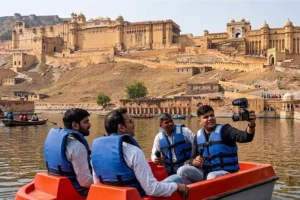
- Amber Fort – A hilltop fort-palace overlooking Maota Lake, known for its courtyards, Ganesh Pol gate and mirror-filled Sheesh Mahal.
- Hawa Mahal – The iconic “Palace of Winds” with hundreds of small windows designed for royal women to watch street life unseen.
- City Palace – A royal complex still partly occupied by the Jaipur royal family, housing museums, courtyards and ornate gates.
- Jantar Mantar – An 18th-century astronomical observatory and a UNESCO World Heritage Site.
- Nahargarh Fort – A favourite for sunset views over the city lights.
Local experiences you shouldn’t skip
Beyond the big monuments, Jaipur is a playground for anyone who loves food, markets and small cultural encounters. The old city lanes are packed with sweet shops, snack joints and local eateries serving kachoris, lassi, ghevar and more, while newer neighbourhoods offer cafés, designer boutiques and co-working-friendly spots.
- Walk through Johari Bazaar and Bapu Bazaar for jewellery, fabrics and mojari shoes.
- Try a guided heritage walk or cycling tour in the old city to understand its layout and planning.
- Catch a traditional performance or folk dance at one of the cultural centres or heritage hotels.
How long to stay in Jaipur
If this is your first time, plan at least two full days in Jaipur; three days feel perfect if you like to move at an easy pace or add side trips like Galta Ji (Monkey Temple) or Sanganer for block printing. Jaipur also works very well as a start or finish point because of its airport, rail links and road connections to Delhi and Agra.
2. Udaipur – The City of Lakes and Endless Sunsets

If Jaipur is loud and lively, Udaipur is romantic, calm and almost cinematic. Nicknamed the “City of Lakes” and sometimes even compared to Venice, Udaipur is set around man-made lakes like Pichola and Fateh Sagar, with hills forming a scenic backdrop and palaces reflected in the water at sunrise and sunset. It is widely regarded as one of India’s most romantic cities, especially for couples and honeymooners.
Best things to do in Udaipur
- City Palace – A huge complex overlooking Lake Pichola with museums, courtyards, terraces and arches framing lake views.
- Lake Pichola boat ride – Sunset boat rides are a favourite for views of the City Palace, Jag Mandir and lakefront ghats.
- Fateh Sagar Lake – Perfect for evening strolls, local snacks and casual boating.
- Saheliyon-ki-Bari – A historic garden with fountains and greenery, built for royal women.
- Jagdish Temple – A prominent Hindu temple near City Palace with detailed carvings.
Day trips from Udaipur
Udaipur also works beautifully as a base for visiting Kumbhalgarh Fort and Ranakpur Jain Temple, both of which often feature in winter and culture-focused Rajasthan itineraries. Kumbhalgarh is known for its massive walls and hilltop layout, while Ranakpur’s marble Jain temple is famous for its hundreds of intricately carved pillars.
- Kumbhalgarh Fort – Part of the group of celebrated hill forts of Rajasthan, with city-wall style fortifications stretching for kilometres.
- Ranakpur Jain Temple – A large marble temple complex with hundreds of beautifully carved pillars, each slightly different from the next.
How many days in Udaipur?
Two to three days is a good range for most travellers. Two days cover the main city sights and a sunset boat ride, while three days let you squeeze in a day trip to either Kumbhalgarh or Ranakpur. Udaipur also connects well with Jodhpur, Mount Abu and Chittorgarh, so it often sits in the middle of classic loop itineraries.
3. Jodhpur – The Blue City Beneath Mehrangarh

Jodhpur is where the desert starts to feel closer, but the city itself is defined by a sea of blue houses and one of the most impressive forts in India – Mehrangarh. The fort’s bulk, dramatic location on a rocky hill and carefully curated museum make it a regular feature in “must-visit forts” lists. Below it, the old town wraps around in a maze of lanes full of spices, textiles, rooftop cafés and homestays.
Top experiences in Jodhpur
- Mehrangarh Fort – With thick walls, courtyards, viewpoints and a museum, this fort gives some of the best city views in Rajasthan.
- Jaswant Thada – A white marble cenotaph set by a lake, often described as a peaceful counterpart to the fort’s ruggedness.
- Clock Tower & Sardar Market – A busy bazaar area for spices, teas, fabrics and a very local everyday vibe.
- Umaid Bhawan Palace – Part royal residence, part heritage hotel and part museum.
Why Jodhpur works so well in a Rajasthan route
Jodhpur often acts as a bridge between Udaipur and Jaisalmer or between central Rajasthan and the desert belt. Popular 10–14 day itineraries use it as a slow, central stop where you can explore not only the city but also surrounding villages and stepwells. Its location and road connections make it one of the most frequently recommended hubs in Rajasthan travel plans.
Ideal stay duration in Jodhpur
Two nights usually gives you enough time for Mehrangarh Fort, the old city and one or two sunset spots. If you’re into photography or want to include a rural jeep safari or Bishnoi village visit, push it to three nights so you don’t end up rushing through your days.
4. Jaisalmer – Golden Fort and Thar Desert Magic
Jaisalmer is Rajasthan’s desert postcard. The city’s golden sandstone buildings, crowning fort and surrounding dunes almost feel custom-made for sunset shots, and yet there’s a lot of real, lived-in history here too. The Jaisalmer Fort itself is still inhabited, with homes, guesthouses, temples and cafés inside its walls, which is quite rare among major Indian forts.
Highlights of Jaisalmer
- Jaisalmer Fort – A living fort rising out of the desert, with narrow alleys, viewpoints and old Jain temples.
- Havelis – Patwon Ki Haveli, Nathmal Ki Haveli and Salim Singh Ki Haveli are known for intricate sandstone carving and merchant history.
- Gadsisar Lake – A peaceful waterbody on the edge of the city, often used for short boat rides and sunrise or sunset walks.
- Sam and Khuri dunes – Popular bases for camel or jeep safaris, desert camps and evening cultural programmes under the stars.
Desert safari tips
Most travellers opt for at least one night in a desert camp, especially between October and February when evenings are cool and skies are clear. Many reputable operators offer options ranging from simple tented stays with local food and folk music to more luxurious camps with private bathrooms and curated experiences. Whenever you book, try to choose operators who prioritise responsible waste management and respect for dunes and local communities.
How long to stay in Jaisalmer
Aim for a minimum of two nights: one for the city and one for a desert stay. If you’re coming from far away or travelling by train or long bus routes, three nights can help you slow down, nap off the night journeys and still get both fort and dunes properly covered.
5. Bikaner – Forts, Camels and Fewer Crowds

Bikaner sits in the northern desert belt of Rajasthan and is often quieter than Jaisalmer, which is exactly why some people fall in love with it. The city is known for Junagarh Fort, one of the few major Rajasthani forts built on the plains instead of a hilltop, and for its links with camel breeding and desert life. It’s also famous for distinctive snacks and sweets that travellers tend to carry back home.
Key places to see in Bikaner
- Junagarh Fort – A richly decorated complex with palaces, balconies and courtyards featuring a mix of styles.
- Lalgarh Palace – Built in Indo-Saracenic style with detailed stonework and now partly run as a heritage hotel with a museum.
- National Research Centre on Camel – A camel breeding and research facility where visitors can learn about the animals and try camel milk products.
- Karni Mata Temple – A unique temple near Deshnok, known for its population of rats considered sacred by devotees.
Why include Bikaner in your plan?
Bikaner works especially well in longer, loop-style itineraries that already include Jaisalmer and Jaipur, often forming part of 10–14 day routes. It’s also a good choice for travellers looking for a desert city that still feels more local than touristy and for those curious about the camel culture of Rajasthan.
6. Chittorgarh – A Massive Fort Full of Legends
Chittorgarh (or Chittor) is home to one of India’s largest fort complexes, Chittorgarh Fort, which sprawls across a hilltop plateau and is packed with palaces, towers, temples and water bodies. The fort carries stories of battles, sieges and Rajput courage that show up again and again in regional history and folklore.
What to see inside Chittorgarh Fort
- Vijay Stambh (Victory Tower) – A tall, intricately carved tower celebrating military victories, with views from the top for those who climb.
- Kirti Stambh – Another tower associated with Jain heritage and detailed stonework.
- Rana Kumbha Palace – Ruins of an old palace complex linked to several important historical figures.
- Meera Temple – Associated with the poet-saint Meera Bai, a key figure in devotional literature and bhakti traditions.
Planning your visit to Chittorgarh
Chittorgarh is often visited as a long day trip from Udaipur or as a one-night stop on the way between Udaipur and Kota or Bundi. Since the fort complex is huge, hiring a local guide and a vehicle to move between points makes the day far smoother, especially if you want to cover both main towers, temples and key palaces without rushing.
7. Ranthambore – Tigers, Lakes and a Crumbling Fort

Ranthambore, located near Sawai Madhopur in eastern Rajasthan, is one of India’s best-known tiger reserves and a major reason wildlife lovers add Rajasthan to their plans. The national park combines lakes, grasslands, rocky ridges and ruins from the old Ranthambore Fort, creating a dramatic setting for safaris.
What to expect on a Ranthambore safari
- Safaris are done in open jeeps (smaller, more flexible) or canters (larger, shared vehicles).
- The park is divided into multiple zones, each with different landscapes and water bodies.
- Along with tigers, you might spot leopards, sloth bears, spotted deer, sambar, crocodiles and many bird species.
Ranthambore Fort
Inside the larger protected area lies Ranthambore Fort, which dates back centuries and has temples, gateways and viewpoints overlooking the forest. Many travellers combine a safari with a visit to the fort for a double dose of history and wild landscapes in a single destination.
When and how to book Ranthambore
Peak visiting season runs roughly from October to April, with the park partially or fully closed in core areas during the monsoon for conservation. Because safari permits are limited and popular dates book out quickly, it’s strongly recommended to secure your slots in advance, either directly through official booking portals or via trusted tour operators and hotels.
8. Pushkar – Sacred Lake, Temples and the Camel Fair

Pushkar is a small, compact town built around a holy lake ringed by ghats and temples, and it carries a very different vibe from Rajasthan’s big cities. It’s especially famous for one of the very few major temples dedicated to Lord Brahma and for its annual camel fair, which draws traders, pilgrims and tourists from across India and abroad. The town is also popular with backpackers and spiritual travellers looking for yoga, vegetarian cafés and slow days by the water.
Things to do in Pushkar
- Walk around Pushkar Lake and its ghats during sunrise or sunset for a calm, spiritual atmosphere.
- Visit the Brahma Temple, a key pilgrimage site and an important part of the town’s identity.
- Explore narrow streets full of handicraft stores, cafés and rooftop views of the lake and hills.
- If you visit during October–November, experience the Pushkar Camel Fair with its livestock trading, cultural shows and competitions.
How Pushkar fits into your Rajasthan route
Pushkar is roughly a few hours from Jaipur by road and also connects well with Ajmer, which has its own important religious sites. Many travellers spend one or two nights here, often between Jaipur and Jodhpur or Udaipur, as a slower, more introspective break from the hustle of bigger cities.
9. Bundi – Stepwells, Murals and Small-town Calm

Bundi might not be the first name that pops up when people plan Rajasthan, but travellers who go there often call it one of their favourite stops. The town is known for its stepwells (baoris), quiet lanes, painted palaces and an easy-going pace that feels very different from Jaipur or Jodhpur. It’s a place where you can still sit on a rooftop, look at the fort and hear birds more than traffic.
What makes Bundi special
- Raniji Ki Baori – A 17th-century stepwell known for its ornate pillared corridors and arches.
- Taragarh Fort and Garh Palace – Overlooking the town, these offer old murals, courtyards and views over blue-washed houses.
- Laid-back lanes where you can actually hear the sound of your own footsteps and not just honking traffic.
Who will enjoy Bundi the most?
Bundi is perfect if you like architecture, old-world streets and destinations that still feel more lived-in than polished for tourism. It also works well as a stop between Jaipur and Udaipur or as a detour from Kota, especially for travellers exploring central and southern Rajasthan in more depth.
10. Mount Abu – Rajasthan’s Cool Hill Station

Mount Abu is Rajasthan’s only major hill station and a complete change of scenery from the state’s deserts and dry plains. With its cooler temperatures, forested slopes and lakeside promenade, it’s a favourite for families and couples looking for a relaxed climate break. It’s also home to the famous Dilwara Jain Temples, widely praised for exquisite marble carving and fine architectural details.
Key attractions in Mount Abu
- Nakki Lake – A central lake ringed by walking paths, paddle boats and snack stalls, very lively in the evenings.
- Guru Shikhar – The highest peak in the Aravalli range, offering wide panoramas and a popular viewpoint for sunrises and sunsets.
- Dilwara Jain Temples – Temples dating from the 11th–13th centuries, known for finely carved marble ceilings, pillars and domes.
- Treks, rock climbing and other soft adventure activities available in the surrounding hills.
Where Mount Abu fits into your route
Mount Abu sits within reach of Udaipur and also acts as a link towards parts of Gujarat, so it often features in itineraries that mix Rajasthan with western India. Two nights here are usually enough for the main temple visit, lake time and at least one viewpoint or hike.
Rajasthan Itinerary Ideas: How to Combine These Places
Knowing the top places is one thing; stringing them into a smooth trip is another. Fortunately, years of tourism have produced plenty of routes starting from Delhi, Jaipur, Jodhpur and Udaipur, and official itineraries often suggest sample routes for different trip lengths.
Classic 7–8 day “First Time” Rajasthan route
For a first trip with roughly a week in hand, focus on a smaller cluster of big hitters and leave the rest for your second round. You’ll enjoy more and rush less, which is key in a state with heavy storytelling and layered history.
- Day 1–3: Jaipur – forts, palaces, bazaars and food walks.
- Day 4–5: Pushkar – lake, temples and relaxed café time.
- Day 6–7: Udaipur – lakes, City Palace and a sunset boat ride.
- Optional day 8: Day trip to Kumbhalgarh or Ranakpur from Udaipur.
10–12 day “Forts and Desert” loop
If you’ve got a bit more time, you can add the desert belt and one wildlife stop, creating a loop that feels like a highlight reel of Rajasthan’s diversity. Many travellers choose similar 10–12 day routes combining Jaipur, Jodhpur, Jaisalmer, Bikaner and Ranthambore.
- Jaipur – 2 nights.
- Ranthambore – 2 nights for 2–3 safaris.
- Jodhpur – 2 nights.
- Jaisalmer – 2–3 nights including a desert camp.
- Bikaner – 1–2 nights.
14+ day “Deep Rajasthan” route
With two weeks or more, you can finally slow down and mix the big cities with smaller towns like Bundi and Chittorgarh, plus a hill break in Mount Abu. Longer itineraries often follow some form of this broader loop, tailored based on interests like wildlife, monuments or offbeat experiences.
- Jaipur, Pushkar, Udaipur and Jodhpur as your core cities.
- Add Jaisalmer and Bikaner for the desert side of things.
- Include Chittorgarh and Bundi for forts and stepwells.
- Top it off with Mount Abu for cooler weather and Jain temples.
Travel Distances Between Key Rajasthan Cities
Rajasthan is large, but the main routes are well established. Knowing typical distances will help you avoid backtracking and make your travel days more realistic.
| Route | Approx. Distance | Typical Drive Time |
|---|---|---|
| Jaipur to Ranthambore (via Sawai Madhopur) | About 200 km | Around 4.5 hours by road |
| Chittorgarh to Udaipur | About 120 km | Roughly 2.5 hours by road |
| Jodhpur to Jaisalmer | About 350 km | Approximately 7 hours by road |
| Jaisalmer to Bikaner | About 250 km | Roughly 5.5 hours by road |
| Bikaner to Jaipur | Similar long-day drive | Plan for most of the day including stops |
| Udaipur to Mount Abu | Short hill drive | Often done as a 3–4 hour transfer |
How Many Days Do You Really Need in Rajasthan?
The honest answer: as many as you can spare. But if we park the dream trip for a minute and talk practical numbers, Rajasthan starts feeling satisfying from about 7 days and becomes seriously memorable once you hit the 10–14 day mark. Two weeks gives you enough breathing space to combine cities, deserts, wildlife and smaller heritage towns without feeling like you’re living in your car.
- 5–6 days: Focus on Jaipur, Pushkar and Udaipur or Jaipur and Jodhpur with a quick stop somewhere in between.
- 7–9 days: Add either Ranthambore or Jaisalmer for wildlife or desert experience.
- 10–14 days: Include Bikaner, Chittorgarh, Bundi and possibly Mount Abu, with rest days built in.
Accommodation: From Heritage Palaces to Homestays
One of the fun parts of travelling through Rajasthan is the sheer range of places you can sleep. You’ll find everything from luxury palace hotels and boutique havelis to simple guesthouses and homestays in both big cities and small towns.
Popular stay styles in Rajasthan
- Heritage hotels – Restored palaces, forts and havelis with old architecture and modern comforts.
- Boutique guesthouses – Stylish, smaller places in city centres, often run by local families.
- Budget hostels – Common in Jaipur, Jodhpur, Udaipur and Pushkar, popular with backpackers.
- Desert camps – Tented stays near dunes in Jaisalmer and Bikaner, ranging from basic to luxury.
Food and Local Flavours You Should Try
Rajasthan’s food is hearty, colourful and often built to survive harsh climates – think rich gravies, long-lasting snacks and lots of local spices. Even if you’re usually cautious about trying new dishes, this is one state where experimenting pays off.
- Dal Baati Churma – Baked wheat balls with dal and a sweet crumble, a classic Rajasthani plate.
- Gatte ki Sabzi – Gram flour dumplings in a tangy yoghurt gravy.
- Laal Maas – Spicy red mutton curry, especially associated with Jodhpur and surrounding areas.
- Kachoris, samosas and mirchi vada – Popular snacks in Jaipur, Jodhpur and Jaisalmer.
- Traditional sweets like ghevar, rasgullas (Bikaner style), malpua and more.
Shopping in Rajasthan: What to Take Home
Shopping and Rajasthan go hand in hand. The state’s handicrafts, textiles and jewellery are a huge draw, with each city having its own specialties. It’s easy to blow your luggage limit here, so plan ahead if you’re a serious shopper.
- Jaipur – Gemstone jewellery, block-printed textiles, blue pottery.
- Jodhpur – Handicrafts, antiques, leather goods and textiles.
- Udaipur – Miniature paintings, silver jewellery, handcrafted paper and souvenirs.
- Jaisalmer and Bikaner – Embroidered textiles, camel leather products, desert-inspired décor.
- Pushkar – Boho clothing, jewellery, incense and spiritual souvenirs.
Is Rajasthan Safe and Easy to Travel?
Rajasthan is one of India’s most visited tourist regions, which means basic infrastructure for visitors is well established. Major cities like Jaipur, Udaipur and Jodhpur have airports, busy train connections and a wide range of hotels, and there are plenty of licensed guides and tour operators available.
As with any busy destination, you’ll want to take normal precautions: keep valuables secure, use trusted transport, double-check prices before confirming services, and be respectful of local customs at religious sites and small villages. Many solo travellers visit every year and manage smoothly with standard common-sense safety habits.
Quick Pros and Cons of a Rajasthan Trip
Still on the fence about whether Rajasthan fits your current travel mood? Here’s a quick, honest snapshot of what you’re signing up for and where you might want to think twice, depending on your preferences.
| What You’ll Probably Love | What Might Challenge You |
|---|---|
| World-class forts, palaces and lakes in compact clusters of cities. | Heat in late spring and summer, especially in desert regions. |
| Unique mix of desert, hills, wildlife and spiritual towns in one state. | Crowds at top sights and festivals during peak season. |
| Great value accommodation spectrum from homestays to palaces. | Long travel days between some cities if you try to cover too much too fast. |
| Strong craft traditions, colourful markets and memorable food. | Need to pre-book safaris and some popular activities well in advance. |
FAQ: Planning Your Rajasthan Trip
Is Rajasthan really worth visiting right now?
Absolutely. Rajasthan continues to be one of India’s most loved states for tourism and easily justifies a dedicated trip. It offers a mix of heritage, wildlife, desert landscapes and living culture that few other regions can match in a single itinerary.
How many days should I spend in Rajasthan?
If you want a quick but solid introduction, aim for 7–8 days covering Jaipur, Udaipur and either Pushkar, Jodhpur or Ranthambore. For a more in-depth experience that includes deserts, smaller towns and maybe a hill station, plan for 10–14 days.
What is the best time of year to visit Rajasthan?
The most comfortable time for most travellers is from October to March, when days are cooler and outdoor sightseeing is far more pleasant. Summer and monsoon months can still work for specific destinations like Mount Abu, Udaipur and some wildlife zones, but you’ll need to plan your days around the heat and possible showers.
Is it safe to do a solo trip in Rajasthan?
Rajasthan is one of India’s more established tourist regions, and many solo travellers visit every year using a mix of trains, buses, hired drivers and guided tours. As long as you follow regular safety basics – like choosing well-reviewed stays, arriving before very late at night and being aware of your belongings – solo visits can be both manageable and rewarding.
Do I need to book hotels and safaris in advance?
For peak season (especially November to February), it’s wise to book popular hotels and all Ranthambore safaris well ahead of time, since official permits and sought-after rooms can sell out. In shoulder seasons you can sometimes be more flexible with accommodation, but wildlife experiences and special festival dates still benefit from early planning.
Which city is the best base if I have to pick just one?
If you absolutely have to pick just one base, Jaipur is usually the most practical, thanks to its airport, strong connectivity and variety of day-trip options. Udaipur runs a close second if your focus is more on lakes, palaces and relaxed sightseeing than on broader road trips and multiple city hops.