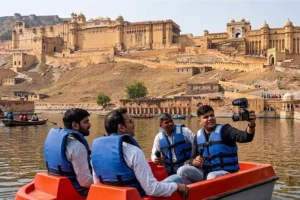
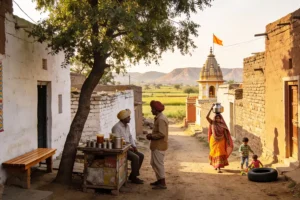
Golden Triangle Food Tour Guide: What To Eat In Delhi, Agra & Jaipur (And Where To Find It)
Let’s be honest, most people say they’re visiting the Golden Triangle for the Taj Mahal and the forts. But if you really think about it, the trip is just as much about what you end up eating along the way.
Delhi, Agra and Jaipur are close on the map, but they don’t taste the same at all. One evening you’re standing in a crowded Old Delhi lane, trying not to drop your chaat. The next morning you’re half sleepy after a sunrise Taj visit, biting into soft petha in Agra. A couple of days later you’re in Jaipur, wondering how you’re ever going to finish that massive Rajasthani thali they’ve just placed in front of you.
When this guide was put together, the idea was simple: plan the Golden Triangle like a hungry traveller would, not like a checklist of monuments. You’ll see suggestions on what to try in each city, which areas actually feel good for walking and snacking, how to mix street stalls with safer restaurant meals, and a 5–6 day flow that doesn’t leave you exhausted. Read it the way you’d listen to a friend who has already done the trip and is telling you what they’d repeat and what they’d skip next time.
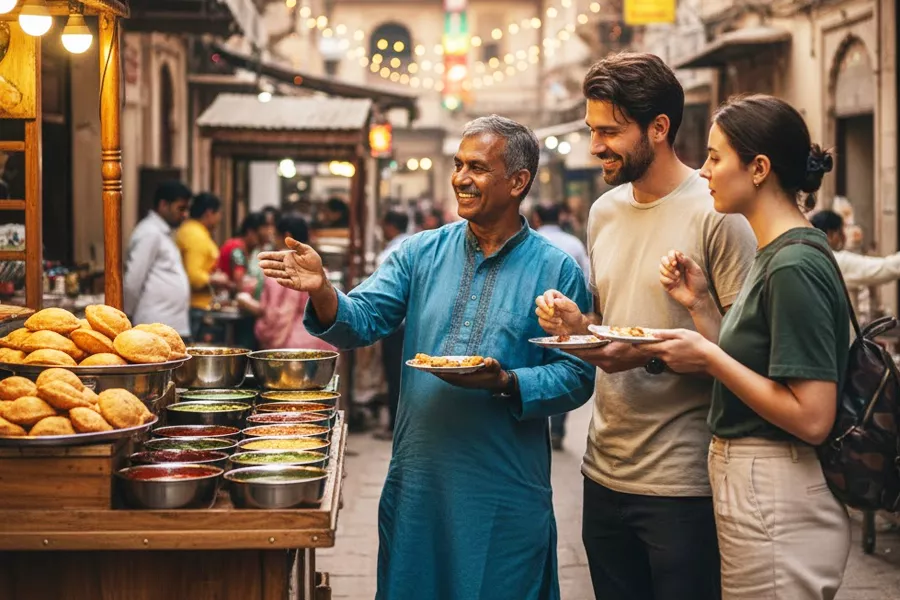
Whether you are travelling as a couple, a family with kids, or a solo foodie with a serious street food addiction, you can use this guide to match your meals to your comfort level. The idea is simple: eat like a local, stay reasonably healthy, and come home with stories that start with “We were in this tiny lane in Delhi…” and end with “…and that was the best thing we ate in India.”
Why Plan A Food-Focused Golden Triangle Tour?
Most first-time visitors arrive in Delhi with a checklist of big sites in their head: the Red Fort, Humayun’s Tomb, Qutub Minar, the Taj Mahal, Amber Fort, City Palace. Food is usually somewhere down the list, a vague “we’ll see what we find”. Once you land, it becomes obvious that food is not a side character here. It is centre stage, just as important as domes and marble.
Planning the Golden Triangle with food in mind changes how you experience the route. Instead of rushing from monument to monument, you start noticing tea stalls, mithai shops, tandoors glowing in tiny doorways and families sharing giant plates of chole bhature on plastic stools. You start scheduling stops for samosas and lassi between forts and bazaars, and the whole trip feels more grounded and human.
Three Cities, Three Distinct Food Personalities
The Golden Triangle looks clean and geometric on a map, but each city has its own personality when it comes to food. Delhi is the big-city mix: Punjabi, Mughlai, street snacks, café culture, everything layered on top of everything else. Agra leans into rich gravies, Mughlai history and sugary happiness. Jaipur feels more rooted in tradition, with desert-inspired ingredients and royal-style spreads.
- Delhi is where you chase chaats, kebabs, stuffed parathas, butter chicken, chole bhature and all kinds of late-night snacks.
- Agra is where you slow down over Mughlai curries, simple breakfasts and the city’s famous sweets, especially petha and rich milk-based desserts.
- Jaipur is where Rajasthani thalis, dal baati churma, gatte ki sabzi, laal maas and crunchy tea-time snacks steal the show.
Planning with this in mind helps you avoid repeating similar dishes every day. Instead of eating butter chicken in all three cities, for example, you can focus on chaats and parathas in Delhi, petha and kebabs in Agra, and big Rajasthani spreads in Jaipur. Your stomach gets variety, and your memories do too.
Food With Stories, Not Just Flavour
The older parts of Delhi, Agra and Jaipur are full of shops that have been around long enough to see entire governments and technologies come and go. Some are still run by the grandchildren or great-grandchildren of the original founders. When you sit down on a simple bench in a tiny shop and bite into a dish they have been serving for decades, you’re not just eating. You are stepping into a slow, living story.
Many recipes here grew around festivals, royal courts, seasons and local produce. Talking to shop owners, watching how a dish is prepared, and seeing who eats there at different times of day add layers that a fancy menu in a random hotel simply cannot offer. A thoughtful Golden Triangle food tour is really about collecting these stories one plate at a time.
How To Use This Golden Triangle Food Guide
This article is designed so you can either read it start to finish or jump directly to the parts you need while planning. If you already know Delhi well, you can skip ahead to Agra and Jaipur. If you just want a ready-made 6-day food-focused plan, scroll to the sample itinerary and tweak it to match your dates.
- Use the city sections to list out what you absolutely want to eat in each place.
- Use the neighbourhood suggestions to match dishes to areas you are already visiting for sightseeing.
- Use the safety, hygiene and diet sections to adjust your comfort level if you are travelling with kids, elders or first-timers to India.
- Use the itinerary section to see how food, travel time and monuments can fit naturally into your day.
Feel free to mix and match. The Golden Triangle is popular for a reason: roads are good, distances are manageable, and you genuinely can taste a lot without exhausting yourself if you pace it right.
Delhi: Chaats, Kebabs And Classic North Indian Comfort
Delhi is usually your entry point into the Golden Triangle, and it sets the tone. It is noisy, busy, intense and packed with more food than any single person can realistically try in one trip. The trick is to be selective. Go in with a rough plan, leave some room for surprises and do not try to eat everything in two days unless you want to spend half your holiday lying in your hotel room.
Signature Dishes To Try In Delhi
You could spend a month in Delhi and still discover new dishes every week, but certain classics are too good to skip, especially for first-time visitors. You will see many of these repeated across cities, but Delhi’s version often has its own character thanks to the city’s mix of Punjabi, Mughlai and street food traditions.
- Chaat: This is the umbrella word for all those glorious sweet-sour-spicy-crunchy things Delhi is famous for. Aloo tikki, papdi chaat, dahi bhalla, bhalla papdi, raj kachori, golgappe (pani puri) – they all fall under this family. Good chaat is all about balance: crisp base, bright chutneys, fresh yoghurt, a bit of spice, a bit of crunch, and just enough sweetness to tie it together.
- Stuffed parathas: Thick, griddled flatbreads filled generously with potato, paneer, cauliflower, radish or mixed vegetables. They are usually served with curd, butter and pickles. These make for a heavy but very satisfying breakfast or brunch, especially in cooler months.
- Kebabs and rolls: Seekh kebabs, chicken tikka, malai tikka, boti kebab and other skewers are everywhere. Many places roll them up in thin roomali rotis or parathas so you can eat them on the go while moving between sights.
- Butter chicken and dal makhani: These are the poster children of North Indian restaurant food for a reason. When done right, butter chicken has a smoky, slightly tangy tomato base with soft morsels of chicken, and dal makhani is silky, slow-cooked black lentils with a deep, comforting flavour.
- Chole bhature: Fluffy deep-fried bread with spicy chickpeas. It is one of those dishes that probably tastes best when you are slightly hungry and not thinking about calories. Locals often eat it as brunch rather than a late-night meal.
- Sweets and drinks: Hot jalebi straight from the kadai, creamy rabri, kulfi falooda, thick lassis and endless cups of masala chai. Delhi is full of sweet shops, from tiny counters to full sit-down mithai places.
If you only have two days in Delhi, pick two or three of these to focus on, then add a couple of drinks and sweets. The rest can wait for your “next time in Delhi” bucket list.
Neighbourhoods To Explore For Food In Delhi
Delhi looks huge and confusing on the map, but from a food traveller’s perspective you can think of it in a few useful zones. You will probably end up passing through most of these anyway for sightseeing or shopping, so it makes sense to tie your meals to your plans.
- Old Delhi (Chandni Chowk and Jama Masjid area): This is the intense, full-volume, classic food district. Narrow lanes, crowded shops, vendors yelling, fresh food being fried or grilled right in front of you. You will find chaats, parathas, jalebis, kebabs, nihari, halwa, kulfi and a lot more packed into a relatively small area.
- Connaught Place: A more formal, central district lined with restaurants and cafés. Good if you want proper seating, menus, air-conditioning and clean washrooms without leaving the heart of the city.
- South and Central Delhi (Hauz Khas, Khan Market, Lodhi, Safdarjung): These areas are full of modern Indian bistros, coffee shops, bars and international chains. You still get Indian food, but often with slightly updated presentations and predictable hygiene standards.
For many travellers, a nice balance is to do one Old Delhi evening with a guide or on a properly organised food walk, and another evening in a quieter restaurant in South or Central Delhi where you can actually hear each other talk about everything you just ate.
Old Delhi Food Walk: What To Expect
If you do only one proper “food experience” in Delhi, make it a guided Old Delhi food walk. You can of course wander on your own, but having someone who already knows which shops are trustworthy, which streets to avoid at certain times and which dishes are seasonal can make a big difference. It also helps if you are travelling with children or older parents who might feel overwhelmed by the chaos.
- You will usually meet your guide at a metro station or landmark and then walk or take a rickshaw into the lanes.
- Expect to sample small portions from multiple shops: a chaat here, a kebab there, a piece of jalebi somewhere else.
- Most walks last around 3–4 hours and cover 6–10 different stops, though exact numbers vary.
- Good tours pay attention to hygiene, use mineral water, and avoid anything that has been sitting uncovered for too long.
If you are worried you will not be able to handle the spice or oil on day one, let your guide know at the start. They can tone things down, choose milder options or warn you when something is “properly spicy” rather than tourist-spicy.
Balancing Street Food And Sit-Down Meals In Delhi
One common mistake in Delhi is to treat street food and restaurants as separate worlds. In reality, you want both. Street food gives you high flavour and local life; sit-down meals give you comfort, washrooms, slower conversations and a chance to reset your system with something a little gentler.
A simple, practical rhythm that works for many visitors is to keep street food mostly in the evenings when markets come alive, and rely on hotel or recommended restaurants for breakfast and one main meal earlier in the day. That way your stomach is not processing too many “unknowns” at once, and you still get your share of golgappe, samosas and grills.
Agra: Petha, Breakfasts And Mughlai Comfort
Agra is almost always on the Golden Triangle route because of the Taj Mahal, but it deserves attention as a food stop too. The city’s Mughal history shows up in its curries and grills, while its sweet shops keep bakers busy from early morning till late at night. Compared to Delhi, Agra feels a little slower, which matches its food style quite well.
Agra Specialities You Should Try
You will see familiar North Indian dishes on menus in Agra, but a few things are especially worth looking out for. Plan at least one breakfast and one evening specifically around Agra’s local favourites rather than eating everything in hotel restaurants.
- Petha: This is Agra’s most famous sweet, made from ash gourd. It can be plain, saffron-flavoured or combined with nuts and other flavours. Good petha is soft but not soggy, mildly sweet and slightly translucent.
- Bedai and jalebi: A classic Agra breakfast. Bedai is a fried bread stuffed with spiced lentils, eaten with a simple but flavourful potato curry. Jalebi, crisp and soaking in sugar syrup, often follows.
- Mughlai curries: Think creamy gravies, gentle spices, slow cooking and a touch of nuts or dried fruits. You can find both vegetarian and non-vegetarian versions, from paneer pasanda to rich chicken and mutton dishes.
- Tandoori platters: Agra’s grills tend to be a little less fiery than some Delhi versions, which works well if you are travelling with spice-sensitive people. Look for tandoori chicken, grilled fish, paneer tikka and mixed platters.
- Snacks and lassi: Samosas, kachoris and simple chaats are easy to find around main markets. Thick lassi in a clay cup after a long, hot day of sightseeing is one of those small pleasures that stays in your memory for a long time.
Because many travellers only stay a night or two in Agra, it is easy to leave without tasting anything beyond the hotel buffet. Setting aside even one dedicated food outing in the evening changes that completely.
Where People Usually Eat In Agra
You do not need to run across the whole city to eat well in Agra. Most tourists naturally end up in a few key pockets that work nicely for both food and sightseeing. Knowing what each area is good for helps you decide where to go instead of just walking into the first place with a big sign outside.
- Taj Ganj: The area close to the Taj Mahal is full of cafés, rooftops and mid-range restaurants. Many people like to come here after a sunrise visit, grab breakfast or coffee, and recover from their early alarm.
- Sadar Bazaar: This is one of Agra’s best-known markets for evening walks. You will find sweet shops, snack stalls and small restaurants. It is a good spot if you want to sample a few quick bites, buy some petha to take home, and do a little people-watching.
- Hotel and recommended restaurants: After a sunrise Taj visit and trips to Agra Fort or Mehtab Bagh, many travellers are ready for an early, relaxed sit-down meal. Picking one trusted place for a Mughlai dinner is usually enough; you do not need to run around trying multiple spots in one night.
A common pattern is to see the Taj Mahal at sunrise, grab a traditional breakfast afterwards, rest in the hotter hours, and then go out again to Sadar Bazaar or a known restaurant for an evening of snacks and dinner.
Sunrise Taj Visit Plus Food: A Sample Flow
The sunrise slot at the Taj Mahal is popular because the light is softer, the crowds are a touch lighter and the temperature is kinder. It also sets you up nicely for a very “Agra” kind of breakfast. Here is how a simple, realistic morning can look:
- Reach the Taj Mahal early, with tickets sorted and minimum luggage.
- Spend 2–3 hours exploring the complex, taking photos and simply sitting quietly for a bit to take it in.
- Exit and head directly to a local place that serves bedai and jalebi, or another traditional breakfast you have picked in advance.
- Return to the hotel after breakfast, rest, shower and avoid heavy food until late afternoon.
This simple structure keeps your day balanced. You get your big monument when it is at its prettiest, you eat something genuinely local afterwards, and you give yourself enough downtime before your next round of food.
Jaipur: Rajasthani Thalis, Laal Maas And Addictive Snacks
Jaipur, the Pink City and capital of Rajasthan, has its own clear personality when it comes to food. Portions feel generous, flavours are bold, and many dishes are designed to be shared around a table rather than eaten alone. You see the influence of both desert conditions and royal kitchens in how meals are constructed.
Must-Try Rajasthani And Jaipur Dishes
If Delhi is the city of chaats and Agra the city of petha, Jaipur is the city of the grand thali and the irresistible evening snack. Many travellers who think they “know Indian food” realise here that Rajasthani cooking is its own universe, especially on the vegetarian side.
- Dal baati churma: Firm baked wheat balls (baati) that are broken and mixed with ghee, eaten with spiced lentils (dal) and a sweet, crumbly mixture (churma). It is hearty, rich and best enjoyed on a relatively relaxed day when you are not rushing.
- Gatte ki sabzi and ker sangri: Gatte are gram flour dumplings cooked in a yoghurt-based gravy, while ker sangri uses local desert beans and berries. These appear on most serious Rajasthani thalis and are key if you want to understand the region’s vegetarian strength.
- Laal maas: A fiery red mutton curry made with local chillies and yoghurt. It is not subtle, but it is full of character. Many groups share one bowl with a pile of rotis rather than ordering individual portions.
- Pyaaz kachori and mirchi vada: Deep-fried onion-filled pastries and whole green chillies coated in batter and fried. These are classic evening snacks in Jaipur and taste best when eaten hot with chutneys.
- Rajasthani sweets: Ghevar (a festive disc-shaped sweet), mawa kachori and traditional kulfi are easy to find in Jaipur’s sweet shops. Many visitors carry boxes of these back home as edible souvenirs.
Even if you are not a huge eater, try to plan at least one proper Rajasthani thali in a reliable restaurant or heritage property. It gives you a compact way to taste multiple dishes in one sitting.
Best Areas For Food In Jaipur
Being based in Jaipur yourself, you already know how the city is laid out, but for a visitor on a Golden Triangle plan, it helps to think in simple zones. Each area has its own food personality and fits into different parts of the day.
- Old City (Bapu Bazaar, Johari Bazaar and surrounding lanes): This is where you go for street snacks, sweets and busy evening scenes. Locals stop for pyaaz kachori, samosas, lassi, kulfi and a variety of small bites while shopping or just strolling.
- C-Scheme and MI Road: These parts of Jaipur are known for sit-down restaurants, cafés and sweet shops. If you want an air-conditioned Rajasthani thali, North Indian menu or a reliable coffee stop, this is where many people head.
- Heritage hotels and havelis: Jaipur has plenty of restored mansions and palaces that now run as hotels. Many of them offer evening thali-style dinners in courtyards or on rooftops, sometimes with live folk music or dance performances.
From a food-tour perspective, a nice balance in Jaipur is one night in a heritage or classic restaurant with a big Rajasthani spread, and one night where you slowly hop between snack stalls in the old city, stopping wherever something smells or looks inviting.
Street Food vs Restaurants vs Hotels: How To Choose Each Day
On a Golden Triangle trip, food decisions are not just about what you feel like eating. They are also about temperature, energy levels, hygiene comfort and how much driving you are doing that day. Getting this balance right tends to be the difference between “Best trip ever” and “We spent two days feeling unwell.”
| Option | Best For | Advantages | Things To Keep In Mind |
|---|---|---|---|
| Street stalls and carts | Curious foodies, budget-conscious travellers, repeat visitors | Very local experience, strong flavours, great value, lively atmosphere. | Hygiene can vary; stick to busy stalls, freshly cooked items and bottled water. |
| Simple local restaurants | Everyday meals, mixed-age groups, family travel | Local dishes with proper seating, menus, fans or AC, basic washrooms. | Quality is not identical everywhere; ask your driver or guide for current favourites. |
| Hotel and heritage dining | Special evenings, sensitive stomachs, older travellers | More controlled kitchens, safer water and ice, comfortable seating and service. | Higher prices, and flavours may be milder than traditional street versions. |
The point is not to choose one category and stick with it. A strong food plan mixes all three. You might start a day with a hotel breakfast, grab a simple thali in a local restaurant at lunch and then follow a street food trail in the evening. The next day, you might do breakfast on the street and a quieter dinner in your hotel.
Sample 5–6 Day Golden Triangle Food Itinerary
If you are the type who likes a clear plan, this section will probably be your favourite. Here is a sample six-day Golden Triangle route built around food, which you can easily shorten to five days by trimming one city slightly. It assumes you start in Delhi, move on to Agra and finish in Jaipur, which is how most classic tours are structured.
| Day | City | Day Highlights | Food Focus |
|---|---|---|---|
| Day 1 | Delhi | Arrival, light orientation drive, India Gate or local market walk, overnight in Delhi. | Easy breakfast or lunch at hotel, casual café or local restaurant. Evening Old Delhi food walk for chaats, kebabs, sweets and chai. |
| Day 2 | Delhi | Mix of Old and New Delhi sightseeing: Jama Masjid, Raj Ghat, Humayun’s Tomb, Qutub Minar or similar cluster. | Stuffed paratha or idli-dosa breakfast. Simple local lunch near one of the monuments. Relaxed North Indian dinner in Connaught Place or South/Central Delhi. |
| Day 3 | Agra | Drive to Agra, visit Agra Fort and viewpoint, explore an evening market such as Sadar Bazaar. | Tea and highway snacks on the way. Petha tasting and local snacks in the market. Mughlai dinner with kebabs and classic curries. |
| Day 4 | Agra to Jaipur | Sunrise Taj Mahal visit, drive to Jaipur with optional stops, evening orientation drive in Jaipur. | Traditional Agra breakfast (bedai and jalebi or similar). Simple lunch en route or at a highway restaurant. Light evening snack trail in Jaipur’s old city. |
| Day 5 | Jaipur | Amber Fort, Hawa Mahal (from outside), City Palace, observatory and markets. | Breakfast at hotel or popular local joint. Rajasthani thali for lunch or dinner with dal baati churma, gatte ki sabzi, laal maas (optional) and regional breads and sweets. |
| Day 6 | Jaipur / Departure | Free morning for shopping or an optional experience, then departure to next destination. | Light breakfast. Optional cooking class followed by tasting. Final snack and sweet shopping to carry home. |
If you have an extra day, you can either spend more time in Jaipur for village visits and additional food walks, or return to Delhi and explore a different neighbourhood’s food scene. For a shorter five-day version, many people trim Delhi or Agra by half a day while keeping Jaipur intact for the thali and market experiences.
Food Safety And Hygiene: Staying Comfortable While You Explore
The Golden Triangle is surprisingly friendly for first-time visitors, but it is still India. Temperatures can be high, spices can be strong and your stomach might not be used to this exact mix of oil, masalas and street conditions. The goal is not to avoid everything interesting, but to choose wisely.
Practical Hygiene Habits That Actually Help
You do not need to travel in constant fear. A few simple, consistent habits cut down most common problems and let you enjoy more dishes with confidence. Think of them as your invisible shield while you roam from stall to stall.
- Choose busy places: Stalls and eateries with a steady line of local customers are usually turning over food quickly. Freshly cooked, high turnover food is your friend.
- Focus on hot and fresh: Pakoras straight from the oil, kebabs directly off the skewer, chai just poured, rotis coming out of the tandoor – all of these are usually safer than cold salads or cut fruit sitting around.
- Go slow on day one: Let your system adjust. Start with milder dishes and smaller portions, then increase spice and variety on day two or three when you know how your body is reacting.
- Stick to bottled or trusted filtered water: Keep a bottle with you, and be a little cautious with ice in tiny outlets if you are unsure about the source.
- Carry a basic health kit: Simple medicines for acidity and upset stomachs, oral rehydration salts, hand sanitiser and tissues go a long way.
If you have a private driver or local guide, do not hesitate to ask where they personally like to eat with their own family. That one question often gives you a shortlist of safer spots that are still local and full of character.
Vegetarian, Vegan And Non-Vegetarian Options On The Golden Triangle
One of the easiest parts of travelling the Golden Triangle is how well it handles mixed dietary groups. You can have a hardcore meat-eater, a lifelong vegetarian and a cautious eater all sitting at the same table and still find enough options to keep everyone happy.
Vegetarian Travellers
Vegetarian visitors often say they have never had this much variety in their lives. Between paneer dishes, lentil preparations, vegetable curries, breads, chaats, snacks and sweets, you can eat for ten days without repeating much. Pure vegetarian restaurants and mithai shops are common in Delhi, Agra and Jaipur.
From a practical point of view, being vegetarian can even feel like an advantage here because many of the most interesting local dishes – chaats, dal baati, gatte ki sabzi, bedai, pyaaz kachori – are naturally meat-free. You are also less likely to run into undercooked meat issues.
Vegan Travellers
Vegan travel in India needs a little more explanation at the start of each meal, but it is absolutely possible. Many North Indian dishes can be adapted once you clearly explain that you do not take ghee, butter, yoghurt, cream or paneer. Mention this gently but firmly when you order and repeat it with a smile if needed.
South Indian places serving dosas, idlis and uttapams are often straightforward choices because many items are naturally dairy-free or can be easily adjusted. In larger cities like Delhi and Jaipur, you will also find cafés that clearly mark vegan options. Pack a little patience along with your appetite, and you will do fine.
Non-Vegetarian Travellers
If you enjoy meat and fish, the Golden Triangle will keep you busy. Delhi and Agra, in particular, have strong kebab and Mughlai traditions. You will find chicken tikka, seekh kebab, boti, mutton curries, biryanis and grilled fish in many places. Jaipur adds its own twist with dishes like laal maas and jungle-style preparations in some restaurants.
The only real advice here is not to overdo it. Alternate heavier non-vegetarian meals with lighter vegetarian ones, especially on hotter days or when you have a long car journey ahead. Your stomach (and fellow travellers) will thank you.
Making The Most Of Food Walks, Cooking Classes And Market Visits
You can have a good Golden Triangle trip by simply eating wherever you land up, but adding a few structured experiences lifts the entire journey. They turn food from “what we ate” into “what we learned and who we met along the way.”
Guided Food Walks
Food walks are available in Old Delhi, parts of New Delhi, Agra markets and Jaipur’s old city. They work especially well at the beginning of your trip because they help you understand how to order, what to look for and what your spice comfort level looks like in real-world conditions.
- They usually include multiple stops, each with a small tasting rather than full meals.
- Guides often share bits of history, explain ingredients and show you small details you might miss alone.
- For families, guided walks are a safe way to explore street food without worrying constantly about every stall.
If your time or budget allows only one, Old Delhi is the classic choice. For repeat visitors or those who already know Delhi fairly well, a Jaipur old city walk adds a fresh Rajasthani angle.
Cooking Classes And Home-Style Meals
Cooking classes or home-hosted meals are another way to add depth to your food tour. Instead of just eating dal or paneer in a restaurant, you see how it is made on a normal stove, with ingredients pulled out of an ordinary Indian kitchen.
- Many sessions are hands-on, so you knead dough, stir curries, roll rotis or assemble chaats yourself.
- You can ask all those questions you might hesitate to ask in a busy restaurant: “What spice is that?”, “How long do you cook this?”, “Can I reduce the oil here at home?”
- Sitting down afterward to eat what you helped make with the host family often becomes one of the trip’s most personal memories.
If you plan to do just one cooking experience on the Golden Triangle, Jaipur is often a good pick because Rajasthani dishes translate beautifully to home cooking and use a lot of pantry-friendly ingredients.
Spice, Fruit And Vegetable Markets
Visiting a local bazaar – especially one with spices and fresh produce – is like walking into the behind-the-scenes section of every meal you have eaten on the trip. You see mounds of chillies, sacks of lentils, piles of seasonal vegetables and all those powders that give Indian curries their signature colours.
You do not need to buy huge quantities. Even a small bag of whole spices, some tea, or a box of local pickles can become a souvenir that continues your Golden Triangle story in your kitchen back home.
Practical Tips To Eat Like A Local (Without Overdoing It)
It is very easy to get overexcited on a food-focused trip, especially if you are that person who spends half the year watching food videos from India and finally has a chance to try everything in person. A few easy habits can keep your enthusiasm from turning into regret.
- Ask your driver or guide where they eat with their families, not just “where tourists go”. You will often get surprisingly simple, honest suggestions.
- Plan for at least one local breakfast in each city instead of defaulting to the hotel buffet every morning. Many of the most interesting things are available before 11 a.m.
- Share dishes rather than ordering one heavy plate per person at every stop. It lets you taste more without feeling uncomfortably full.
- Keep your schedule slightly flexible. Some snacks are best only in the evening, some breakfasts sell out early. A rigid timetable can make you miss the sweetest spot.
- Stay open to dishes that do not look Instagram-pretty. Many of the most memorable flavours are found in simple bowls and steel plates.
The idea is not to “conquer” the Golden Triangle food scene but to travel through it at a pace where your stomach feels included in the planning process, not bullied by it.
Planning Your Food-Focused Golden Triangle Tour With A Local Operator
All of this might sound like a lot to manage on your own, especially if it is your first time in India or you are travelling with family members who need a little extra comfort. That is where a local tour operator who genuinely understands both roads and recipes can make a big difference.
A good operator will not just book hotels and drivers. They will help you thread together your food interests, sightseeing must-dos, travel times, and dietary needs into one smooth plan. They will also know which food walks, cooking sessions or specific restaurants are currently performing well for travellers, which is something that changes over time.
If you are keen to build a Golden Triangle tour where meals are a core part of the story, not a rushed afterthought, it is worth reaching out to a team that already lives and works along this route every day. Share your dates, number of days, dietary preferences and any must-eat dishes, and ask for a proposed itinerary that balances food and rest sensibly.
FAQ: Golden Triangle Food Tours
How much should I budget per day for food on a Golden Triangle trip?
For a mix of street food tastings and restaurant meals, many travellers find that a range of roughly ₹800 to ₹2,000 per person per day (excluding alcohol and very high-end hotel dining) is comfortable. If you lean heavily on simple local eateries and snacks, you can stay toward the lower end of this range. If you prefer air-conditioned restaurants and hotel dinners most nights, plan on the higher side.
Is all the food extremely spicy?
No, not everything is going to set your mouth on fire. Spice levels can usually be adjusted if you say clearly that you prefer “less spicy” or “mild” food. Start with gentler dishes in your first couple of days and then increase the heat gradually as your system gets more comfortable. Most kitchens are happy to tone things down a little for guests who ask politely.
Can children handle the food on a Golden Triangle route?
Many children do just fine if you choose dishes with familiar textures and skip the extra-spicy items. Mild paneer curries, plain dal and rice, simple rotis, grilled chicken, cutlets, fries and light sweets usually work well. It is wise to avoid raw street food for very young kids and to carry a small stash of snacks from home that you already know they like.
Are there options for travellers who are cautious about Indian food?
Yes. Most hotels and many restaurants in Delhi, Agra and Jaipur offer a selection of international-style dishes such as pasta, grilled meats, sandwiches and salads. At the same time, a food-focused Golden Triangle trip is an ideal chance to introduce a few carefully chosen Indian dishes in milder, cleaner environments, so even cautious eaters can gently expand their comfort zone.
When is the best time of year to book a food-focused Golden Triangle tour?
The most popular season runs from around October to March, when the weather is more pleasant and outdoor food walks feel comfortable. If you plan to travel in this period, it is sensible to finalize your bookings two to four months in advance, especially if you have fixed dates or want specific experiences like certain cooking classes. In shoulder or off-peak months, you generally have more flexibility and can book with shorter notice.
Is tipping expected during food walks and other food experiences?
In sit-down restaurants, a small tip is common but not strictly compulsory, especially if service was good. For structured activities like guided food walks, cooking sessions or home-hosted dinners, many travellers choose to tip the guide or host as a way of saying thank you for the extra care and insight. The amount is always up to you; there is no fixed rule, but even a modest tip is appreciated.
Can I do a Golden Triangle food tour if I have allergies or strict dietary rules?
It is possible, but you will need to communicate clearly and repeatedly. One practical trick is to carry a small printed card that states your allergies or dietary rules in simple English and, if possible, translated into Hindi. You can hand this to restaurant staff or show it to your guide or driver so they can help you explain. Choosing well-reviewed spots and avoiding very busy, chaotic stalls on your first few days also helps.
How many days do I really need for a relaxed food-focused Golden Triangle trip?
Five days is the absolute minimum if you want even a basic tasting of Delhi, Agra and Jaipur. Six days feels far more comfortable because it gives you at least one relatively slow, indulgent day in Jaipur or Delhi. If you are a serious foodie or travelling in peak season when crowds and traffic slow things down, seven days lets you add extra walks, markets or a second thali meal without rushing.
Can I customise a normal Golden Triangle package into a food-focused itinerary?
In most cases, yes. Many standard Golden Triangle tours can be tweaked by shifting a few meal timings, adding dedicated food walks, including a cooking session, and adjusting hotel locations so that evening food areas are easier to reach. When you talk to a tour planner, mention clearly that food is a priority so they can build in enough time around markets, snack stops and relaxed dinners.