Complete Guide to Luxury Car and Driver Hire for Rajasthan Tours: Private Chauffeur Service 2026
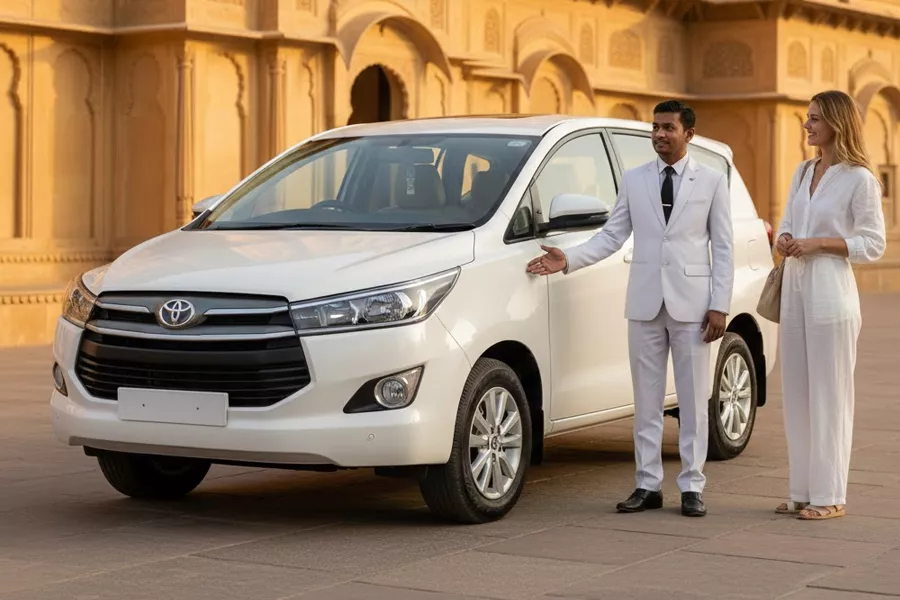
Rajasthan's sprawling deserts, maze-like old cities, hilltop forts, and scattered palace hotels create a travel landscape where having your own car and professional driver transforms the entire experience. Instead of coordinating between taxis, dealing with train schedules, or navigating unfamiliar roads, you settle into a comfortable vehicle while a skilled chauffeur manages every logistical detail. This guide explains exactly how luxury car-and-driver services work for Rajasthan tours, helps you understand realistic pricing, guides you through operator selection, and shows you how to design itineraries that leverage this flexibility.
The Fundamental Advantage: Why Private Chauffeur Service Transforms Rajasthan Travel
Rajasthan is not a destination where point-to-point transportation suffices—it's a journey through dramatically different cities separated by 4-8 hour drives, connected by excellent highways but requiring navigation knowledge, rest management, and timing coordination. Public transport (buses, trains) operates on fixed schedules that rarely align with natural sightseeing rhythms. App-based taxis demand repeated negotiations in each city. Self-driving, for visitors unfamiliar with Indian roads, creates unnecessary stress.
A private car with professional driver eliminates these friction points entirely. You travel door-to-door from airport to hotel, hotel to monument, monument to restaurant, without vehicle changes. Your driver manages fuel, tolls, parking, and traffic while you rest, observe landscapes, photograph, or work. This continuity—one vehicle, one trusted driver—across multiple days and cities creates something psychologically valuable: the sense that someone experienced is handling complex logistics while you remain free to actually experience Rajasthan.
The practical advantages accumulate. Want to stop at a roadside chai stall for 30 minutes? Your car waits. Discover an unexpected viewpoint? Your driver knows how to reach it safely. Need to rest during afternoon heat? The car becomes your sanctuary. These small flexibilities, impossible with public transport or apps, become the texture of genuine travel rather than tourist checking.
- Complete schedule flexibility—depart when ready, adjust daily timings based on energy and interest.
- Consolidated luggage management—no repeated packing/unpacking across multiple transport modes.
- Spontaneous exploration—stop for photos, detours, village visits without time pressure.
- Professional support—driver handles navigation, parking, local information, cultural etiquette.
- Family/group efficiency—no separate negotiations for each person; one driver coordinates for entire group.
Realistic Pricing: Understanding 2026 Market Rates for Rajasthan Car Hire
Pricing transparency prevents disappointment. Current January 2026 market rates reflect vehicle type, inclusivity levels, season, and operator professionalism. Understanding these rates helps you evaluate quotes properly and avoid underpriced offers that signal quality compromises.
Standard vehicle pricing (per day rates, typically include 250-300km daily allowance):
Budget sedans (Maruti Dzire, Toyota Etios, Hyundai i10): ₹2,500–₹3,600 daily ($30–$43 USD). These compact vehicles seat 4 people comfortably for long drives, offer good fuel efficiency, and navigate narrow city lanes easily. Suitable for couples or small groups prioritizing cost.
Mid-range SUVs/MPVs (Maruti Ertiga, Kia Carens, Toyota Innova): ₹3,500–₹5,000 daily ($42–$60 USD). These 6-7 seater vehicles provide superior legroom for families, better ground clearance for varied terrain, and more spacious luggage areas. Most family travellers and groups prefer this category.
Premium SUVs (Toyota Innova Crysta, Toyota Hycross, Mahindra Fortuner): ₹5,000–₹7,000 daily ($60–$84 USD). These represent the top standard tier—modern interiors, smooth ride quality, excellent climate control, and genuine luxury feel without extreme premium pricing. Preferred by honeymooners, special occasions, and those valuing comfort above budget.
Luxury brands (BMW, Audi, Mercedes): ₹14,500–₹20,000+ daily ($174–$240+ USD). Premium vehicles primarily for special occasions, corporate travel, or ultra-luxury experiences. Not necessary for standard Rajasthan sightseeing.
What daily rates typically include: Professional driver salary, vehicle fuel for planned distance allowance, highway tolls, parking at major monuments and hotels, driver's daily meal and accommodation allowance (either hotel-covered or reimbursed), basic vehicle insurance, vehicle maintenance. Most reputable operators structure daily rates to be all-inclusive, avoiding hidden costs.
What requires separate payment: Monument entry tickets (Taj Mahal ₹250 for foreigners, Amber Fort ₹100-300, others ₹50-150 per site), licensed guide services if hired separately (₹500–₹1,500 per guide daily), your personal meals at restaurants, desert camp bookings (if applicable), tips for excellent service (₹300–₹500 per day appreciated but not mandatory).
Realistic total cost example—7 day Rajasthan tour for couple: Premium SUV car-and-driver package ₹35,000 ($420), mid-range accommodation 2 nights × ₹8,000 = ₹16,000 ($192), fine restaurants daily = ₹7,000 ($84), monument entries + guide = ₹2,500 ($30), miscellaneous = ₹2,000 ($24). Total per couple: approximately ₹62,500 ($750). Per-person cost: ~₹31,250 ($375) for 7 days including accommodation and all experiences.
Pricing variability factors: Peak season (November-February) commands 10-20% premiums; off-season (April-June, September-October) offers 20-30% discounts. Last-minute bookings (within 1 week) sometimes charge surge premiums; advance bookings (2+ months) occasionally offer discounts for commitment certainty. Group size affects per-person cost—larger groups (5+) qualify for multi-vehicle packages with better rate structures.
Best Seasons: When to Plan Your Luxury Rajasthan Car Tour
Season profoundly affects comfort, visual beauty, and pricing. Rajasthan experiences extreme temperature variations that directly impact your willingness to exit the vehicle and explore.
Winter Season (October–March): Ideal conditions. Daytime temperatures range 15–28°C (59–82°F) with clear skies and excellent visibility. Early mornings (6-8am) are cool; midday (11am-3pm) is pleasant; evenings pleasantly crisp. This 6-month window attracts maximum tourists—hotels operate 85-90% occupancy, guides are readily available, and operators offer premium rates due to demand. Book 6-10 weeks ahead for peak dates (December-January). Despite higher costs, the comfortable travel conditions and excellent sightseeing light justify premium pricing for most visitors.
Summer Season (April–June): Challenging but manageable. Temperatures 35–45°C (95–113°F) regularly, with May-June reaching extremes. Outdoors becomes uncomfortable; sightseeing requires very early starts (5-6am departures) and late afternoon visits (after 5pm). Midday activities confine you to air-conditioned spaces (vehicles, restaurants, hotels). Your car becomes essential sanctuary—without AC comfort during driving, summer becomes genuinely unpleasant. Hotels and operators offer 30-40% discounts due to minimal tourist demand. Suitable only for budget-conscious travellers with high heat tolerance or those specifically seeking crowd-free monument experiences. Fuel costs increase due to heavier AC usage throughout the day.
Monsoon/Shoulder Seasons (July–September): Underrated option. Rainfall transforms landscapes to vibrant green; temperatures moderate to 25–35°C (77–95°F). Roads remain fully navigable—highways don't close; minor delays possible during heavy downpours. Tourist numbers drop dramatically, permitting near-solitary fort exploration. Hotels offer substantial 40-50% discounts. Primary disadvantage: unpredictable weather requires schedule flexibility; photography becomes challenging with cloud cover; humidity increases noticeably. Best for: nature photographers, budget travellers with flexible timelines, those seeking authentic experiences without crowds.
Optimal window recommendation: October-November and February-March offer the sweet spot—comfortable weather, manageable crowds, and better pricing than December-January peak. October has added advantage of post-monsoon landscape freshness; March features pre-summer clarity without extreme heat.
Major Rajasthan Routes and What Your Driver Needs to Manage
Understanding key routes helps you plan realistic daily distances and comprehend why experienced drivers are invaluable.
The Classic Golden Triangle Extension (9-11 days): Delhi → Agra → Jaipur → Pushkar → Jodhpur → Jaisalmer → Udaipur (or reverse). This covers Rajasthan's architectural highlights plus desert experience. Daily driving: Delhi-Agra 4 hours, Agra-Jaipur 5 hours, Jaipur-Pushkar 3 hours (detour), Pushkar-Jodhpur 4 hours, Jodhpur-Jaisalmer 5.5 hours, Jaisalmer-Udaipur 7 hours. Your driver manages toll booths (₹400-800 depending on vehicle class), navigates highway congestion near cities, identifies optimal rest stops, and coordinates timing for sunrise/sunset experiences.
The Desert Circuit (7-8 days): Jaipur → Bikaner → Jaisalmer → Jodhpur → Jaipur. Emphasizes desert landscape and smaller cities. Distances: Jaipur-Bikaner 6 hours, Bikaner-Jaisalmer 4.5 hours, Jaisalmer-Jodhpur 5.5 hours, Jodhpur-Jaipur 5.5 hours. Drivers must understand sandy terrain approach to desert camps, coordinate timing with camp operators, and manage fuel availability in less-developed areas.
The Royal Heritage Circuit (8-10 days): Jaipur → Ranthambore National Park → Bundi/Kota → Chittorgarh → Udaipur → Ranakpur/Kumbhalgarh → Jodhpur → Jaipur. Focuses on less-crowded forts and smaller heritage cities. Distances longer; roads occasionally narrower. Drivers need specific knowledge of rural routes, temple town parking, and lesser-known monument approaches. This route especially justifies experienced local drivers.
What experienced drivers provide across these routes: Real-time traffic awareness (avoiding peak congestion times), knowledge of safe rest stops with clean facilities, familiarity with toll payment procedures across states, understanding of optimal photography times for major landmarks, ability to coordinate timing with separate guides at each monument, local restaurant recommendations aligned with traveller preferences, cultural etiquette guidance at religious sites, emergency contact networks and nearby hospital knowledge.
Top Five Rajasthan Destinations and How Your Driver Enhances Each Experience
Jaipur (The Pink City): India's seventh-largest city with 3 million residents creates navigational complexity that solo travellers struggle with. Your driver's value here is immediate: they know efficient routes through old and new city, understand parking at major sites (Amber Fort's chaotic lot, havelis' narrow lane access), coordinate with guide timing, and remain on standby while you explore. A professional driver makes the difference between 4 hours stress-managing the city versus 4 hours actually enjoying it. Jaipur city tours with private drivers are standard recommendations for good reason—the city benefits enormously from professional transport coordination.
Udaipur (City of Lakes): Romantic atmosphere undermined by traffic confusion and scattered attractions. Your driver coordinates hotel-to-monument transfers, navigates waterfront parking challenges, delivers you to precise gate entrances for lake boat rides, and manages timing for sunset experiences when timing matters psychologically. For Udaipur's private car and driver services, the real value emerges in evening logistics—getting to restaurants safely after dark, coordinating late returns from cultural shows, managing luggage between multiple accommodation shifts if extending your stay.
Jodhpur (The Blue City): Historic old city features narrow lanes that regular vehicles cannot navigate; your driver knows precise drop points near Mehrangarh Fort, understands parking constraints, and provides crucial context about the blue-painted houses' historical significance. Luxury car and driver services across Rajasthan particularly shine in complex city navigation like Jodhpur.
Jaisalmer (Golden City & Desert Gateway): Desert regions require specific driver knowledge about sand track approaches, dune camp logistics, timing for sunset/sunrise experiences at Sam or Khuri dunes, and real-time communication with camp operators. Your main vehicle usually parks at dune access points; camp operators' jeeps handle final sandy stretches. Your driver maintains luggage security, coordinates your return timing, and ensures smooth transitions to next-destination travel. This is where standard city-only transportation fails—desert trips genuinely require professional driver knowledge.
Pushkar (Sacred Town & Pilgrimage Center): Spiritual atmosphere with camel market requires respectful navigation and cultural understanding. Drivers familiar with Pushkar know how to approach temples appropriately, where to park for bazaar exploration, and which local experiences merit visiting versus tourist-targeted venues. Hidden villages and offbeat Rajasthan experiences are discovered through driver local knowledge—these aren't guidebook recommendations but genuine local insights.
Vehicle Types and Honest Assessment of What Fits Your Needs
Vehicle choice depends on three practical factors: passenger count, luggage volume, and comfort expectations. Choosing correctly improves experience; choosing wrongly creates daily frustration.
Sedan Class (Maruti Dzire, Toyota Etios, Hyundai Elite i20): 4-passenger comfortable, 5 possible but cramped for long drives. Luggage: modest—fine for couples with 2 suitcases, challenging for families or multiple large bags. Fuel efficiency excellent (12-15 km/litre). Highway ride quality acceptable but not luxurious; speed breakers cause noticeable bumps. City parking easy. Cost advantage significant (₹2,500–₹3,600 daily). Best for: budget-conscious couples, solo travellers, those prioritizing cost over comfort. Avoid if: carrying large group, significant luggage, or prioritizing ride smoothness.
SUV/MPV Class (Maruti Ertiga, Kia Carens, Toyota Innova): 6-7 passengers comfortably, spacious legroom especially for long drives. Luggage: excellent—handles family travel with multiple large suitcases. Higher seating position reduces motion sickness susceptibility (psychological advantage for some). Ground clearance better for varied terrain. AC performance superior in extreme heat. Ride quality noticeably smoother on highways. Fuel efficiency moderate (8-12 km/litre, but included in daily rate). Cost 30-40% premium over sedans. Best for: families with children, groups 4+, travellers prioritizing comfort, multi-day road trips, those with significant luggage. Standard recommendation for most Rajasthan tours.
Premium SUV Class (Toyota Innova Crysta, Toyota Hycross, Mahindra Fortuner): 6-7 passengers with upgraded comfort. Modern interiors, latest technology features, superior audio systems, individual reading lights, better seat design for posture support during long drives. Genuinely comfortable even on 7-8 hour driving days. Fuel consumption higher (8-10 km/litre) but included in quoted rates. Costs approximately 40-60% premium over standard SUVs. Best for: honeymoons/special occasions, luxury-focused travellers, those valuing visible comfort, corporate travel. Worth the premium primarily for romantic journeys or when budget comfortably accommodates increase.
Luxury Brands (BMW 3-Series, Audi A4, Mercedes C-Class): Premium interiors, distinctive brand prestige, maximum comfort amenities. Limited practical advantage over premium SUVs for Rajasthan travel (forts and deserts don't require luxury brand vehicles). Costs 50-100% premium (₹14,500–₹20,000+ daily). Best for: extremely wealthy travellers for whom brand image matters, specific special occasions where statement value justifies cost. Generally not recommended for standard Rajasthan tours—excellent premium SUVs offer 95% of the comfort at 60% of the cost.
Honest assessment: For 90% of Rajasthan travellers, a quality premium SUV (Innova Crysta or Hycross) represents optimal choice—genuine comfort improvement over sedans without excessive luxury pricing. This category consistently receives highest satisfaction ratings across operator reviews.
How to Evaluate and Select Reliable Operators
Operator quality dramatically affects your experience. The cheapest quote rarely delivers best value; mid-range professional operators usually offer superior balance of service and cost.
Red flags signaling unreliable operators: Quoted price 40-50% below market (₹15,000 for 7-day tour when market shows ₹25,000+ suggests hidden costs or vehicle quality compromise). No written contract or agreement. Driver details unavailable until 24 hours before departure. Non-responsiveness to communication (replies to WhatsApp/email take 48+ hours). Strong pressure to pay full amount upfront rather than deposit-then-balance structure. Primarily Facebook reviews without independent platform presence. Vague about driver experience or vehicle maintenance schedules. No clear cancellation policy provided in writing.
Green flags indicating professional operators: Specialization in tourist travel (not just local point-to-point taxis). Clear, detailed website explaining vehicle options, pricing structure, and services. Response times 2-4 hours to email inquiries. Driver name, photo, mobile number provided 3-5 days before tour. Vehicle make, model, year, registration provided in advance. References to driver training, background verification, or long-term employment. Transparent cancellation policy with specific terms. Recent reviews (within 6 months) on established platforms (TripAdvisor, Google, Viator) mentioning specific details beyond generic praise. 5+ years in business verifiable through website/registration records. Clear email communication demonstrating professionalism in language and detail.
Verification process before final booking: Read minimum 15 recent reviews, not just 5. Focus on reviews mentioning safety, cleanliness, professionalism, and driving quality. Call operator (don't just email) to assess communication and responsiveness live. Ask specific questions: What happens if vehicle breaks down mid-journey? Is replacement vehicle guaranteed? What's the driver's average experience level and qualifications? Request a reference customer willing to discuss their experience. Confirm commercial vehicle permits and insurance details. Ask about driver training programs and how often vehicles are serviced. Cross-check company registration if claimed. Make final decision only after feeling genuinely confident—this is a week-long commitment.
Top-tier operators in 2026 Rajasthan market (verified through consistent positive reviews): Professional private car hire with driver services often integrate multiple value-adds like guide coordination and monument pre-booking. Research locally-based Jaipur, Jodhpur, and Udaipur operators as well as national agencies—each has distinct advantages (local operators: deeper knowledge; national agencies: consistency and backup resources).
Daily Reality: What Happens During an Actual Multi-Day Rajasthan Tour
Day start routine: Driver arrives hotel lobby 10-15 minutes before agreed time. Vehicle is clean; AC pre-cooled; water bottles available. Driver helps load luggage (without expecting payment for this basic service). Brief discussion: today's route, expected arrival time, planned stops, traveller preferences (music, conversation level, temperature). If jetlagged or tired, drivers respect quiet; if chatty, comfortable conversation ensues about local culture, history, or practical information.
Highway driving rhythm: Professional drivers maintain 90–110 km/hour on expressways (legal limit 120 but professionals drive slightly conservatively). Stops every 2–2.5 hours at rest areas. Rest areas in Rajasthan typically include clean washrooms, chai/coffee, light food, and parking security. Drivers handle fuel strategically, parking efficiently, and navigate around heavy truck traffic using accumulated experience.
City navigation: Speeds reduce to 15–30 km/hour in congested areas. Drivers know efficient routes through traffic, understand parking logistics at monuments, drop passengers close to entrances. Confirmed pickup meeting point established before you explore. Drivers wait with vehicle (typically parked in designated areas), respecting privacy while remaining available.
Sightseeing coordination: Drivers don't enter monuments (this belongs to licensed guides if hired separately), but they wait nearby or at pre-agreed pickup points. For first-time India visitors with private drivers and guides, coordination between driver and guide is seamless—driver ensures guide arrives on time, coordinates next-location transfers, manages luggage if exploring multiple sites.
Afternoon patterns: Many drivers suggest 1–2 hour hotel rest during 1–4pm heat peak (sensible physiologically, not laziness). Evening drives preferred for scenic routes—cooler temperatures, lighter traffic, more pleasant experience. Drivers typically finish work days around 8–9pm (some accommodate later pickups for specific plans with advance notice, occasionally for small additional payment).
Evening conclusion: Driver drops you at hotel, confirms tomorrow's timing, departs for own accommodation (pre-arranged by operator). Remains contactable via phone for genuine emergencies but respects your evening privacy completely.
Sample 7-Day Rajasthan Car Tour Itinerary: Jaipur-Jodhpur-Jaisalmer-Udaipur
This framework demonstrates how private car-and-driver service enables smooth multi-city exploration:
Day 1 – Arrival & Jaipur Orientation: Airport pickup, hotel check-in, afternoon gentle city introduction—India Gate drive, Rajpath views, Connaught Place market walk. Evening: rest and acclimatization. Driving: 15-20km within city.
Day 2 – Jaipur Heritage: Early Amber Fort visit (8am departure avoids crowds), City Palace courtyard, Jantar Mantar observatory, Hawa Mahal photo point. Afternoon bazaar (Bapu for textiles, Johari for jewellery—driver waits at designated point). Evening: cultural show or rooftop dinner. Driving: 30-40km within city.
Day 3 – Jaipur to Jodhpur (5.5 hours): 8am departure, mid-journey chai stop (11:30am), arrive Jodhpur 1pm. Afternoon: hotel rest, evening Mehrangarh Fort external sunset views. Driving: 260km highway.
Day 4 – Jodhpur Exploration: Mehrangarh Fort interior tour (2-3 hours), Jaswant Thada cenotaph, clock tower area exploration, blue city rooftop walks, evening market visit. Driving: 25-30km within city.
Day 5 – Jodhpur to Jaisalmer (5.5 hours): 8am departure (enjoy scenery and desert transition), arrive Jaisalmer 1:30pm. Afternoon: hotel settlement, evening Jaisalmer Fort exploration. Transfer to Sam Sand Dunes for sunset camel safari and overnight camp (camp operator arranges final transfer; main vehicle waits at designated point). Driving: 240km highway + 30km to dunes.
Day 6 – Jaisalmer Desert Experience: Sunrise over dunes, return from desert camp to city (11am). Rest afternoon, evening city exploration (Patwon Ki Haveli, bazaars, rooftop cafés). Driving: 30km local + camp transfers.
Day 7 – Jaisalmer to Udaipur (7-8 hours): Early 7am departure (enjoying desert landscape transition). Lunch stop 3pm. Arrive Udaipur 5-6pm. Evening: Lake Pichola sunset boat ride. Driving: 350km mixed highway/rural roads.
Day 8 – Udaipur Leisure and Departure: City Palace, Jagdish Temple, lakefront exploration, shopping, spa. Afternoon: either continue onward or end tour here depending on flight/train connections. Driving: flexible based on exit point.
This itinerary covers approximately 1,300km with one 7-8 hour driving day (manageable with proper breaks). Your driver manages everything; you focus on experiences. Each city gets genuine exploration time rather than rushed monument-checking.
Practical Daily Management for Smooth Travel
Communication clarity: Share mobile numbers with driver first day. Confirm their number functions (test via WhatsApp). Send hotel name, address, and distinctive landmark descriptions so driver locates you reliably if navigation apps fail. Simple language for plan changes: "Tomorrow start 30 minutes later" clearer than "maybe morning" for non-native speakers.
Luggage organization: Keep one small day bag (valuables, documents, medications, phone charger)—this stays with you. Heavy suitcases go in vehicle boot. Many travellers use TSA-approved locks on suitcase zippers for psychological comfort; theft from locked vehicle boots is negligible in professional tourism context.
Health considerations: Hotel-provided water bottles are safe (filtered/purified); trust these over roadside vendors. Carry electrolyte powder or coconut water mix for long drives (dehydration reduces enjoyment significantly). If motion-sensitive, take medication 30 minutes before morning departure. Indian road conditions are smooth on highways but somewhat bumpy on secondary roads.
Respectful interaction: Drivers are service professionals, not servants. Learning 3-4 Hindi phrases (thank you = shukriya, hello = namaste, yes = haan) genuinely delights drivers. Occasional chai purchases during stops are kind but never obligatory. Tips at tour end (₹300–₹500 per day for reliable good service) are standard and appreciated; 5-10% of daily car rate is reasonable guideline.
Cultural awareness: Drivers advise on temple dress codes (shoulders/knees covered), appropriate photography behavior, and food customs. Heeding this advice prevents awkward situations and shows genuine respect.
Frequently Asked Questions About Rajasthan Car and Driver Tours
Q: Is hiring a luxury car and driver worth the cost compared to public transport? A: For families, multi-city travel, and first-time India visitors, absolutely yes. You save logistical stress, gain schedule flexibility, improve safety, and actually relax during travel. Families especially find tremendous value. Solo budget backpackers might find public transport cheaper, but even they appreciate the convenience factor.
Q: How far in advance should I book? A: Peak season (November-February) requires 6-10 weeks advance booking for preferred vehicle/driver. Shoulder seasons (October, March) work with 4-6 weeks notice. Off-season (May-September) often available with 2-3 weeks notice. Earlier booking always provides more flexibility and occasionally better pricing for advance commitments.
Q: Can I truly customize my itinerary with a private driver? A: Yes—this is one of the primary advantages. Customizable tour packages with private drivers allow you to design routes, adjust daily timings, add/remove stops, and change plans based on your group's energy and interests. Most experienced operators will suggest practical improvements while respecting your core preferences.
Q: Will my driver speak English? A: Many drivers working regularly with tourists speak basic to good English, especially in major cities (Jaipur, Udaipur, Jodhpur, Jaisalmer). If fluent English is essential for detailed conversation, request this specifically during booking. Some operators can arrange separate licensed guides in each city for historical depth while driver focuses on logistics.
Q: What about tips—what's appropriate? A: Tipping is not mandatory but is appreciated as gratitude for safe driving and good service. For multi-day tours, many travellers tip at the end proportional to trip length and satisfaction—approximately ₹300–₹500 per day is standard. Handing it personally with sincere thanks for what you appreciated is more meaningful than treating it as mechanical transaction.
Q: Is private car travel safe for solo female travellers? A: With reputable companies and well-reviewed drivers, absolutely. Safe Golden Triangle tours for women travelers specifically highlight the security advantage of dedicated driver arrangements. Sharing itinerary with friends/family, maintaining normal precautions, and using established operators creates safe framework. Many solo women report feeling more secure with professional private drivers than in unregistered taxis.
Q: What if I want to extend the tour or change the route mid-journey? A: This is precisely why private car hire excels. Tell your driver the desired change, confirm timing and feasibility. Most operators accommodate reasonable deviations (adding an unexpected site, departing earlier/later, staying extra night) without major cost increases. Document agreements via WhatsApp to prevent misunderstandings.
The Investment Case: Why This Travel Style Delivers Genuine Value
A luxury car-and-driver Rajasthan tour represents premium-budget travel—not ultra-luxury, not shoestring, but the optimal equilibrium between comfort, control, and reasonable cost. The experience justifies the investment because you're not just paying for transportation; you're purchasing flexibility, local expertise, cultural mediation, and the psychological security of not managing complex logistics yourself.
First-time India visitors especially find tremendous value—the learning curve of understanding Indian roads, traffic patterns, negotiation culture, and local etiquette becomes irrelevant. You focus entirely on the experience while someone experienced manages the complexity. Families similarly benefit—reduced stress, improved safety, better luggage management, and shared family time in the vehicle itself becomes bonding opportunity rather than logistical frustration.
Rajasthan's geographic scale and cultural intensity demand this kind of supported travel for most visitors. Self-driving creates unnecessary stress; public transport forces schedule compromises; shared taxis involve repeated negotiations. Private car-and-driver service elegantly solves all these friction points, leaving you free to actually experience this extraordinary state in genuine relaxation and proper pace.
Recent Posts
 Amer Fort Boating 2026 Guide: Maota Lake Tickets & Timings
Discover Amer Fort’s new Maota Lake boating, updated 2026 ticket rates, timings, safety rules and best visiting months.
 Luxury Rajasthan Tour with Oberoi, Taj & Leela Hotels
Experience royal Rajasthan in comfort with Oberoi, Taj and Leela luxury palace stays.
 Luxury Tempo Traveller & Van Hire in India 2026 – Rates, Features & Booking
Enjoy luxury van hire in India for safe, comfortable family and group travel.
 Top 10 Vehicle Hire Companies in India for Tourists
Discover the top 10 vehicle hire companies in India offering safe, comfortable tourist travel.
 Delhi Agra Jaipur Tour by Luxury Car and Private Driver
Enjoy a Delhi Agra Jaipur tour with a luxury car, private driver and flexibility.
 Luxury Car and Driver for Comfortable Rajasthan Tour
Explore Rajasthan in comfort with a luxury car, private driver and flexible custom tour.
 Jaisalmer Travel Guide for Foreign Tourists: Best Time, Desert Tours & Tips
Plan your Jaisalmer trip with ideal seasons, desert tour packages and essential foreigner tips.
 Hidden Villages of Rajasthan: Offbeat Rural Experiences & Village Travel Guide
Hidden Villages of Rajasthan: Offbeat Rural Stays, Homestays & Authentic Village Life.
-
Amer Fort Boating 2026 Guide: Maota Lake Tickets & Timings
Discover Amer Fort’s new Maota Lake boating, updated 2026 ticket rates, timings, safety rules and best visiting months.
-
Luxury Rajasthan Tour with Oberoi, Taj & Leela Hotels
Experience royal Rajasthan in comfort with Oberoi, Taj and Leela luxury palace stays.
-
Luxury Tempo Traveller & Van Hire in India 2026 – Rates, Features & Booking
Enjoy luxury van hire in India for safe, comfortable family and group travel.
-
Top 10 Vehicle Hire Companies in India for Tourists
Discover the top 10 vehicle hire companies in India offering safe, comfortable tourist travel.
-
Delhi Agra Jaipur Tour by Luxury Car and Private Driver
Enjoy a Delhi Agra Jaipur tour with a luxury car, private driver and flexibility.
-
Luxury Car and Driver for Comfortable Rajasthan Tour
Explore Rajasthan in comfort with a luxury car, private driver and flexible custom tour.
-
Jaisalmer Travel Guide for Foreign Tourists: Best Time, Desert Tours & Tips
Plan your Jaisalmer trip with ideal seasons, desert tour packages and essential foreigner tips.
-
Hidden Villages of Rajasthan: Offbeat Rural Experiences & Village Travel Guide
Hidden Villages of Rajasthan: Offbeat Rural Stays, Homestays & Authentic Village Life.