Best Time to Visit Rajasthan in 2026: Weather, Seasons, Festivals and Complete Travel Guide
Rajasthan has been on a lot of people’s wishlists for a long time – huge forts, old palaces, busy bazaars, desert sunsets. The one question that always comes up before booking tickets is very basic: when is the right time to go? This guide is for that exact question. Instead of giving you one fixed answer, we’ll look at the whole year, season by season and month by month, so you can pick dates that match your budget and how much heat or cold you are okay with.
The state is big and the weather does not behave the same everywhere. In the colder months, mornings can feel very sharp, especially out in the desert or on open fort walls. In the hotter months, the afternoon sun can be strong enough to make you want to run back to your room after a short walk. On top of that, big festivals like Diwali, Holi and the Pushkar fair change the mood, the traffic and even hotel prices. In this practical guide, we’ll go through which months feel comfortable, when it gets crowded, and how you can plan a simple Rajasthan trip in 2026 if it is your first time here.
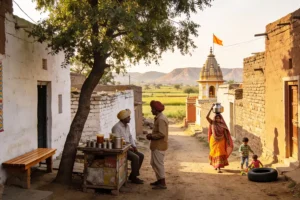
Think of this as the “friend in Rajasthan” explanation: honest, casual, and focused on what you’ll really experience on the ground, not just theory. By the end, you’ll know exactly which months suit you best – whether you’re chasing winter vibes in Jaipur, sunsets in Jaisalmer, lake views in Udaipur or wildlife in Ranthambore.
Quick Answer: Overall Best Time to Visit Rajasthan
Let’s start with the straight answer, then we’ll go deeper into details. For most travellers, especially first-timers, the best time to visit Rajasthan is from October to March. During these months, the weather is cooler and more pleasant, days are usually sunny and dry, and evenings are perfect for walking around old bazaars or enjoying rooftop dinners.
- Peak tourist window: November to February – the classic “Rajasthan winter” with cool, crisp air and busy tourist season.
- Shoulder months: October and March – slightly warmer but still comfortable, with fewer crowds than absolute peak winter.
- Off-season: April to June (very hot) and July to September (monsoon) – cheaper stays, fewer tourists, but tougher weather.
Within this bigger window, each month and season has its own pros and cons. If you want festivals and buzzing cities, your timing will be different from someone who wants quiet palaces and low hotel prices. That’s exactly what we’ll break down next.
Rajasthan Seasons Explained: Winter, Summer and Monsoon
Rajasthan doesn’t behave like a typical hill station or a beach destination. It’s a desert-heavy state, so temperatures and comfort levels change fast between day and night. Understanding the three main seasons will help you decide what you’re really signing up for.
Winter in Rajasthan (October to February)
Winter is the king of Rajasthan tourism. From late October, the heat starts dropping, and by November, the weather becomes genuinely pleasant in most cities. Days are sunny and comfortable, while nights and early mornings can get quite cold – especially in desert areas like Jaisalmer and Bikaner.
- Typical daytime temperatures: Around 20°C to 28°C in most cities.
- Night temperatures: Can drop below 10°C, and in some desert regions it can feel even colder because of the dry air.
- Best for: Sightseeing, city walks, heritage stays, festivals, desert camps, and wildlife safaris.
- Downside: This is peak season, so expect higher hotel prices and more tourists at major sights.
If you’re planning your very first Rajasthan trip and want that postcard-perfect experience – blue skies, fort visits, evening markets, bonfires in desert camps – winter is the safest and most satisfying choice.
Summer in Rajasthan (March to June)
Summer in Rajasthan hits hard, especially from April onwards. March can still feel okay in the evenings, but by May and June, the afternoons are genuinely scorching.However, this is also the time when the state feels more empty and quiet, hotel deals get better, and sunrise and sunset hours are absolutely magical.
- Typical daytime temperatures: Often 35°C to 45°C, sometimes higher in desert areas.
- Night temperatures: Stay warm but more bearable than the afternoon.
- Best for: Budget travellers who can handle heat, photographers chasing dramatic light and empty forts.
- Downside: Sightseeing in the afternoon can be exhausting; you must pace yourself and stay hydrated.
If you’re someone who wilts in heat, summer will be tough for you. But if you plan your day smartly – early mornings and late afternoons for going out, mid-day rest indoors – you can still have a great, less crowded Rajasthan experience.
Monsoon in Rajasthan (July to September)
When most people imagine Rajasthan, they picture dry brown hills and golden desert. Monsoon changes that mood almost completely. From July to September, different parts of the state receive scattered rainfall, the air feels fresher, and trees and hills take on a much greener tone.
- Typical daytime temperatures: Drop compared to peak summer, often in the 28°C to 35°C range, with more humidity.
- Best for: People who love clouds, green landscapes, fewer tourists and lower prices.
- Downside: Some days can be very humid, occasional heavy showers may affect road trips, and a few rural areas can get waterlogged.
Monsoon is not the “classic” Rajasthan for first-timers, but it has its own romantic and peaceful vibe. Udaipur, for example, looks particularly beautiful with full lakes and grey skies, and Jaipur’s hills also turn surprisingly green during this time.
Month-by-Month Guide: Best Time to Visit Rajasthan
Instead of just saying “October to March is best” and leaving you hanging, let’s walk through the year month by month. This will help you match your dates with your personal preferences and travel style.
| Month | Weather Feel | Tourist Level | Overall Travel Rating |
|---|---|---|---|
| January | Cold mornings, pleasant days | High | Excellent for sightseeing |
| February | Cool and comfortable | High | Great balance of weather and crowds |
| March | Warm days, cooler nights | Medium | Good shoulder month |
| April | Hot | Low | Okay if you manage heat |
| May | Very hot | Very low | Only for heat-tolerant travellers |
| June | Extreme heat, pre-monsoon | Very low | Not ideal for first-timers |
| July | Warm, humid, starting monsoon | Low | Scenic but sticky |
| August | Monsoon, greener landscapes | Low | Nice if you like clouds and calm |
| September | Humid but improving | Medium | Transition into main season |
| October | Pleasant days, cooler nights | Rising | Very good time to start the season |
| November | Cool and dry | High | One of the best months |
| December | Cold mornings, crisp air | Very high | Classic winter Rajasthan |
Rajasthan in November to February: The Classic Winter Window
From November to February, Rajasthan feels like it was designed for travellers. The sun is out most days, the sky stays mostly clear, and the dry air makes the colours of the forts, fabrics and markets pop beautifully in photos. This period is ideal for city-hopping across Jaipur, Jodhpur, Udaipur, Jaisalmer and Pushkar.
- Pros: Comfortable for all age groups, great for outdoor sightseeing, evening walks and rooftop cafés.
- Cons: Highest hotel and flight prices, popular attractions can get crowded during holidays and weekends.
- Who should pick this: Families, couples, first-time foreign or Indian travellers, and anyone who wants an “easy” weather experience.
If you’re planning a big Rajasthan circuit – say Jaipur, Jodhpur, Jaisalmer and Udaipur in one trip – this is the best stretch to do it without feeling drained by the weather.
Rajasthan in March and October: Underrated Shoulder Months
March and October often get ignored because travellers focus on peak winter, but both are actually great months in their own way. October marks the beginning of the main season after the monsoon, while March is the “just before summer” month where the days start to warm up but haven’t reached peak heat yet.
- Pros: Slightly fewer crowds than deep winter, more chances of getting good hotel deals, still comfortable for sightseeing.
- Cons: Some afternoons can feel warm, especially in March in more open or desert areas.
- Who should pick this: People who like balance – not too crowded, not too extreme weather.
If your dates are flexible and you want to avoid the Christmas–New Year rush, an October or March trip can feel calmer and often more affordable.
Rajasthan in April to June: Intense Heat but Big Savings
April is the real start of Rajasthan summer, and by May and June you are fully in the “only fans and AC can save you” territory. But this is exactly why hotels drop prices and many places that were almost impossible to book in January suddenly become accessible.
- Pros: Lowest room rates of the year in many places, fewer tourists, emptier forts, and quiet city streets in the afternoon.
- Cons: Daytime heat can be harsh; you can’t comfortably roam outside between late morning and late afternoon.
- Who should pick this: Budget-conscious travellers, repeat visitors who know how to pace themselves, and photographers who want fewer people in their shots.
If you do choose these months, plan your day smartly: go out for sunrise, take a break indoors between 11 am and 4 pm, then go out again for golden hour and evenings. Drink lots of water, and don’t underestimate the sun even if you’re used to heat.
Rajasthan in July to September: Monsoon Mood
Monsoon is the wildcard season. Rajasthan doesn’t get the kind of heavy rainfall that coastal regions see, but it does get enough to change the whole atmosphere. Hills around Jaipur and Udaipur become greener, lakes fill up, and the dust settles, leaving the air clearer.
- Pros: Unique, romantic mood with clouds and occasional showers, lower prices, fewer tourists.
- Cons: Humidity can be high; some rural roads may be affected by rains; outdoor plans can be interrupted by sudden showers.
- Who should pick this: Couples who like a cozy, rainy vibe, slow travellers who don’t mind changing plans, and people who have already seen Rajasthan in winter once.
If your dream Rajasthan is golden desert under bright blue skies, stick to winter. If you love the smell of rain on earth, reflections in lakes and quieter cities, monsoon might surprise you in a very good way.
City-Wise Best Time to Visit in Rajasthan
Because Rajasthan is so big, different cities feel slightly different across the year. Let’s look at the most popular destinations one by one and see when they’re at their best.
Best Time to Visit Jaipur
Jaipur, the Pink City, is usually the starting point for many Rajasthan trips. With its forts, markets and cafes, you’ll spend a lot of time outdoors here. That’s why winter and the shoulder months are ideal.
- Best months: October to March for comfortable sightseeing.
- Good months if you don’t mind some heat: April and early May.
- Avoid if possible: Late May and June afternoons – they can be brutally hot.
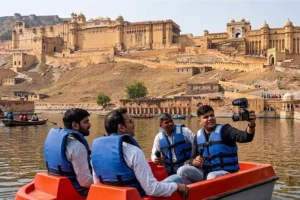
In winter, climbing up to Amer Fort, exploring Nahargarh, walking through the old city or browsing Bapu Bazaar and Johri Bazaar all feel enjoyable instead of exhausting. Evenings are perfect for rooftop thalis and chai with a view of illuminated forts.
Best Time to Visit Udaipur
Udaipur, the City of Lakes, is one of those places that feels magical almost all year, but the experience changes with the seasons. Winter is comfortably cool and dry, while monsoon gives you dramatic lake views and misty hills around town.
- Best months: October to March for classic sightseeing and boat rides.
- Also beautiful: July to September, when the lakes are full and surroundings turn green.
- Less ideal: May and June afternoons can get quite hot and glarey around the water.
If you want that “perfect Udaipur postcard” – sunset views over Lake Pichola, chilly evenings, cosy terraces – winter and the shoulder months will make you very happy.
Best Time to Visit Jaisalmer
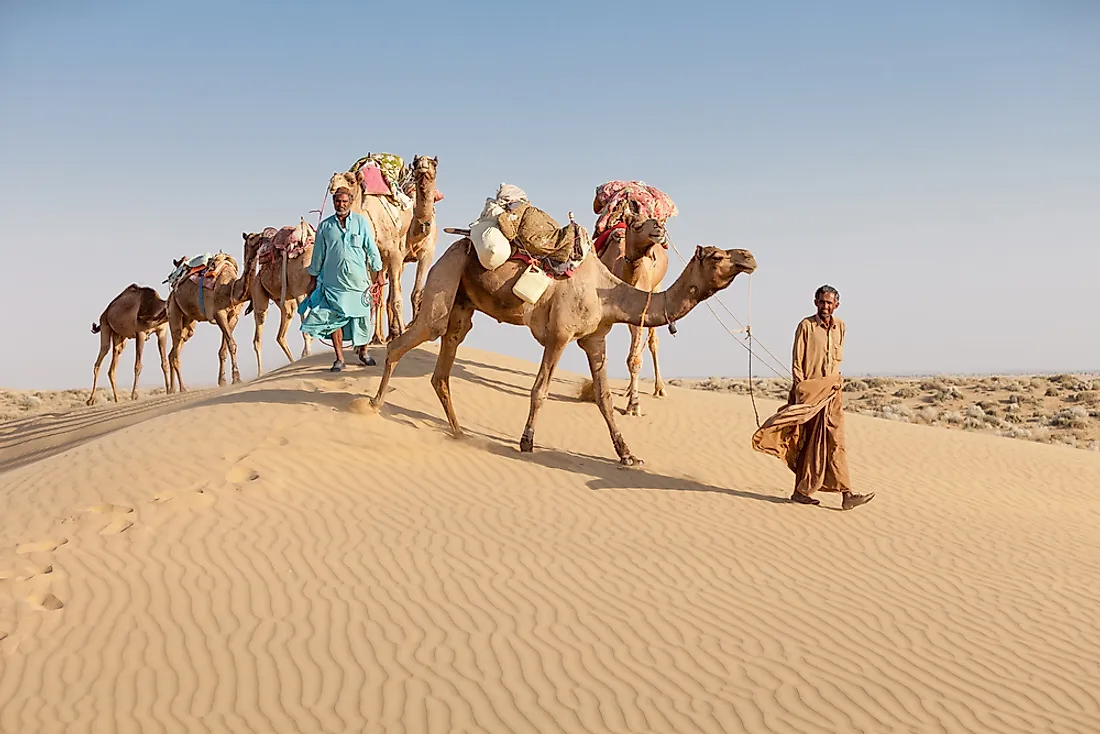
Jaisalmer is deep in the Thar Desert, so temperatures here are more extreme than many other cities. Desert camps, dunes, camel rides and open jeep safaris are all much more enjoyable when it’s not boiling hot.
- Best months: November to February for desert stays and safaris.
- Okay: October and March, if you don’t mind slightly warmer days.
- Avoid: April to June for outdoor desert activities, unless you’re extremely comfortable with heat.
In winter, sitting around a bonfire at your desert camp, watching folk performances or stargazing under clear skies is magical. In summer, the same experience can become uncomfortable because of the heat, even late at night.
Best Time to Visit Jodhpur
Jodhpur, the Blue City, is known for Mehrangarh Fort, old blue lanes, and rooftop views. You spend a lot of time climbing, walking and exploring outdoor spaces, so cooler months work best here too.
- Best months: November to February for fort visits and old town walks.
- Good shoulder period: October and March.
- Hardest months: May and June when stone surfaces heat up quickly.
If you visit in winter or early spring, you can explore Mehrangarh leisurely, enjoy zip-lining if you like a little adventure, and walk through the old markets without feeling like you’re stuck inside an oven.
Best Time to Visit Pushkar
Pushkar is famous for its lake, temples and the big Pushkar Camel Fair. The fair itself usually happens around October–November (dates vary because it follows the Hindu lunar calendar), and that naturally becomes one of the busiest and most interesting times to visit.
- Best months: October to March.
- Special: Pushkar Camel Fair period in late October or November.
- Avoid: Peak summer afternoons for walking around the lake.
If you love festivals and markets, visiting during the fair can be unforgettable. If you prefer quiet, pick a non-fair winter month.
Best Time to Visit Ranthambore National Park
Ranthambore adds a wildlife twist to your Rajasthan journey thanks to its tigers, lakes and dramatic fort views. The park is usually open from October to June, with core zones closed during the peak monsoon months.
- Best months for comfort: November to February – cool safaris, pleasant days.
- Best months for tiger activity near water: March to early June – hotter but better visibility and concentration around waterholes.
- Closed or restricted: Core monsoon months typically see closures in some zones.
If your top priority is comfortable safaris for the whole family, pick winter. If you’re a photographer willing to brave the heat, late March to May can give you dramatic sightings.
Festivals and Events: Planning Your Trip Around Rajasthan’s Calendar
One of the biggest bonuses of visiting Rajasthan at the right time is getting to experience its festivals. These events transform cities with lights, music, markets and traditional performances. If you time your trip with at least one big festival, your experience instantly becomes richer.
Major Festivals to Consider
- Diwali (Oct/Nov): The festival of lights turns cities like Jaipur and Udaipur into glowing dreamscapes with illuminated palaces, decorated markets and fireworks.
- Holi (Feb/Mar): The festival of colours is celebrated across Rajasthan; small towns and cities alike come alive with colour play and celebrations.
- Pushkar Camel Fair (Oct/Nov): A massive cultural and livestock fair with traders, decorated camels, music and competitions – especially popular with photographers.
- Desert Festival Jaisalmer (Jan/Feb): A celebration of Rajasthan’s desert culture with performances, camel races and folk events in and around the Golden City.
- Teej and Gangaur (monsoon and spring): Women-centric festivals that bring processions, traditional dress and special rituals to cities like Jaipur and Udaipur.
Festival dates shift each year, so always check the calendar before booking. Also keep in mind that festivals bring more crowd and higher prices, but the cultural payoff is huge if you enjoy that kind of energy.
How to Choose the Best Time Based on Your Travel Style
“Best time” is not the same for everyone. A travel photographer, a honeymooning couple, a family with kids and a budget backpacker all have different priorities. Here’s a quick way to match your travel personality with the right season.
If You’re a First-Time Visitor
Go for November to February or late October and March. You’ll get the iconic Rajasthan experience – pleasant weather, lively cities, full access to most attractions and lots of tour options. Yes, it’s busier and costlier, but it’s also less stressful and more “wow” for a first trip.
If You’re on a Tight Budget
Consider March, early April, or late September. Hotel prices can be noticeably lower than peak winter, trains and flights are easier to get, and the weather, while warmer, is still manageable if you plan your day carefully.
If You Love Photography
You get great light and clear skies in winter and shoulder months. For dramatic skies and reflections, monsoon is fantastic, especially in Udaipur and around Jaipur’s hills. For strong contrast and empty forts, late March and April also work, provided you handle the heat.
If You Prefer Less Crowd
Avoid Christmas–New Year and long holiday weekends. Instead, pick early December (excluding big holidays), January mid-week, March, or October before Diwali rush kicks in. Monsoon also has fewer tourists but is more weather-dependent.
Sample Rajasthan Itineraries Matched with Best Time
To make this even more practical, let’s look at a few sample itineraries and the months that work best for each.
1. Classic Rajasthan Circuit (10–12 Days)
Route idea: Jaipur – Pushkar – Jodhpur – Jaisalmer – Udaipur Best time: November to February
- Jaipur: Forts, markets, and city palaces are all comfortable to explore in cool weather.
- Pushkar: Lake walks and temple visits feel peaceful in winter light.
- Jodhpur and Jaisalmer: Desert and old town explorations are perfect in chilly mornings and evenings.
- Udaipur: Boat rides and rooftop dinners are ideal when the evenings are crisp instead of sticky.
2. Quick Winter Getaway (5–6 Days)
Route idea: Jaipur – Jodhpur – Udaipur Best time: December to February
- Jaipur: 2–3 days for Amer Fort, city palace, local food and shopping.
- Jodhpur: 1–2 days for Mehrangarh and blue lanes.
- Udaipur: 2–3 days for lakes, city palace and relaxed walks.
This kind of short trip shines in winter, when you can pack more into each day without worrying about the sun knocking you out by noon.
3. Romantic Monsoon Rajasthan (5–7 Days)
Route idea: Jaipur – Udaipur – Kumbhalgarh or a nearby countryside stay Best time: July to early September
- Jaipur: Enjoy moody skies over Amer Fort and Nahargarh.
- Udaipur: Full lakes, green hills, and soft light for photos.
- Kumbhalgarh or countryside: Misty hills, quiet stays and no tourist rush.
If you don’t like crowds and don’t mind a little rain, this style of trip can feel incredibly peaceful and romantic.
Practical Tips for Matching Your Trip Dates to Rajasthan Weather
Knowing the best time is one thing; planning around it smartly is another. Here are some practical, on-ground tips to help you get the maximum out of whichever month you choose.
1. Plan Your Day Around the Sun
In winter, mornings and evenings can be chilly but still perfect for sightseeing with a light jacket. In summer, late mornings to mid-afternoons are brutally hot, so plan indoor breaks (museums, hotel rest, long lunches) during those hours and do outdoor visits early and late in the day.
2. Pack for Layers, Not Just One Type of Weather
Even in winter, afternoons can feel warm but early mornings in Jaisalmer, Bikaner or even Jaipur might be cold enough for a sweater, jacket and scarf. In shoulder and monsoon seasons, breathable clothes plus a light outer layer and a compact umbrella make life easier.
3. Watch Out for Festival Surge
If your trip falls during Diwali, New Year, Holi or the Pushkar Fair, book accommodation and trains well in advance. These periods can be crowded but also incredibly beautiful and fun if you’re prepared and not hunting for last-minute rooms.
4. Don’t Underestimate Desert Nights
Heat in the day does not guarantee warm nights in the desert. In Jaisalmer and similar areas, winter nights at camps can be very cold – carry proper warm layers if you’re staying in tents or open desert accommodations.
5. Adjust Your Itinerary to the Season
If you’re coming in peak summer, consider spending slightly more time in places like Udaipur and hill-surrounding areas compared to exposed desert regions. In monsoon, add more lake and countryside destinations where the greenery shines.
Frequently Asked Questions: Best Time to Visit Rajasthan
What is the absolute best month to visit Rajasthan?
If you want one single month, January or February are usually excellent for most travellers. The weather is cool, skies are mostly clear, and you can comfortably visit almost every city and attraction without worrying about extreme heat or heavy rain.
Is December a good time to visit Rajasthan?
Yes, December is a fantastic time to visit. Days are sunny and pleasant, although mornings and nights can be quite cold, especially in desert areas. The only thing to watch for is higher prices and crowds around Christmas and New Year, so book early if you’re travelling in that period.
Can I visit Rajasthan in summer?
You can, but you need to be realistic about the heat. Sightseeing in May and June can be tough in the afternoon. If summer is your only option, plan early morning and late afternoon sightseeing, choose hotels with good air conditioning and possibly a pool, and drink plenty of water throughout the day.
Is monsoon a bad time for Rajasthan?
Monsoon isn’t “bad”, it’s just different. You won’t get the classic golden desert look every day, but you’ll see greener hills, fuller lakes and fewer tourists. If you enjoy moody skies and don’t mind a bit of rain, monsoon can be very rewarding – especially in Udaipur and Jaipur.
Which is better for a first trip: November or February?
Both months are excellent. November often has some leftover post-monsoon freshness and festival energy, while February can feel slightly less crowded than peak holiday season and has very comfortable weather. Choose based on your preferred festival dates, flight prices and personal schedule.
Is it too cold in January in Rajasthan?
January mornings and nights can be cold, especially in Jaisalmer, Bikaner and even Jaipur at times. However, daytime temperatures are usually very pleasant for sightseeing. With the right layers – a warm jacket, scarf and maybe a beanie for early mornings or desert camps – most travellers are comfortable and actually enjoy the crisp winter feel.
When should I visit if I want to see festivals?
For big festivals, look at dates around October and November for Diwali and the Pushkar Camel Fair, January or February for Jaisalmer’s Desert Festival, and February or March for Holi. These periods offer a strong mix of culture, colour and celebration, but you’ll need to book early and expect more crowd.
What is the cheapest time to visit Rajasthan?
Generally, late April to September is the cheapest period in terms of hotel and often flight prices. The trade-off is either heat (April–June) or humidity and some rainfall (July–September). March and October can also offer better deals than deep winter while still giving you reasonably comfortable weather.
Can I plan a Rajasthan trip at the last minute?
If you’re travelling in off-season or shoulder season, last-minute planning is usually possible. For peak months like December, early January, and festival weeks, last-minute plans can become expensive and stressful. For a smooth experience in winter, it’s better to plan at least a few weeks in advance.
Which months should I avoid completely?
There is no month you must absolutely “never” visit, but if you’re a first-time visitor who hates heat, try to avoid May and June. If you’re allergic to humidity and don’t like sudden showers, then peak monsoon months might not feel ideal. For most travellers, though, the main thing is awareness and planning, not strict avoidance.